
Insurance companies are increasingly moving customer journeys online.
Customers can request quotes, purchase policies, submit information, make payments, and manage their coverage without visiting an office or speaking with an agent. That convenience creates a better digital experience, but it also creates an important security challenge: how can an insurer establish that the person applying for coverage is genuinely who they claim to be?
This is where insurance identity verification becomes important.
Identity verification during insurance onboarding can help organizations establish a customer’s identity, validate supporting documents, reduce impersonation, and create stronger controls against fraud. When biometric verification and liveness detection are added, the insurer can also create a stronger connection between the identity being presented and the individual completing the application.
The need is particularly relevant because insurance fraud can occur during different stages of the insurance lifecycle. The National Association of Insurance Commissioners notes that insurance fraud can occur during buying, using, selling, or underwriting insurance and can affect multiple lines of insurance. (NAIC)
A strong verification process should therefore not be treated as a simple document upload. It should be designed as a broader insurance onboarding workflow that balances identity assurance, fraud prevention, regulatory requirements, and customer experience.
Why Insurance Onboarding Needs Strong Identity Verification
Insurance applications can contain significant amounts of personal information.
Depending on the product, an insurer may need information about the applicant’s name, address, date of birth, contact details, financial circumstances, vehicle, property, health, or other characteristics relevant to underwriting.
This creates opportunities for fraudsters who obtain personal information and attempt to use it to create or modify policies.
Identity theft can also affect insurance accounts and insurance-related information. The NAIC identifies personal and financial information, including medical insurance account numbers, among information that can be misused in identity theft. (NAIC)
For insurers, the objective is therefore not simply to confirm that the information supplied by an applicant looks plausible.
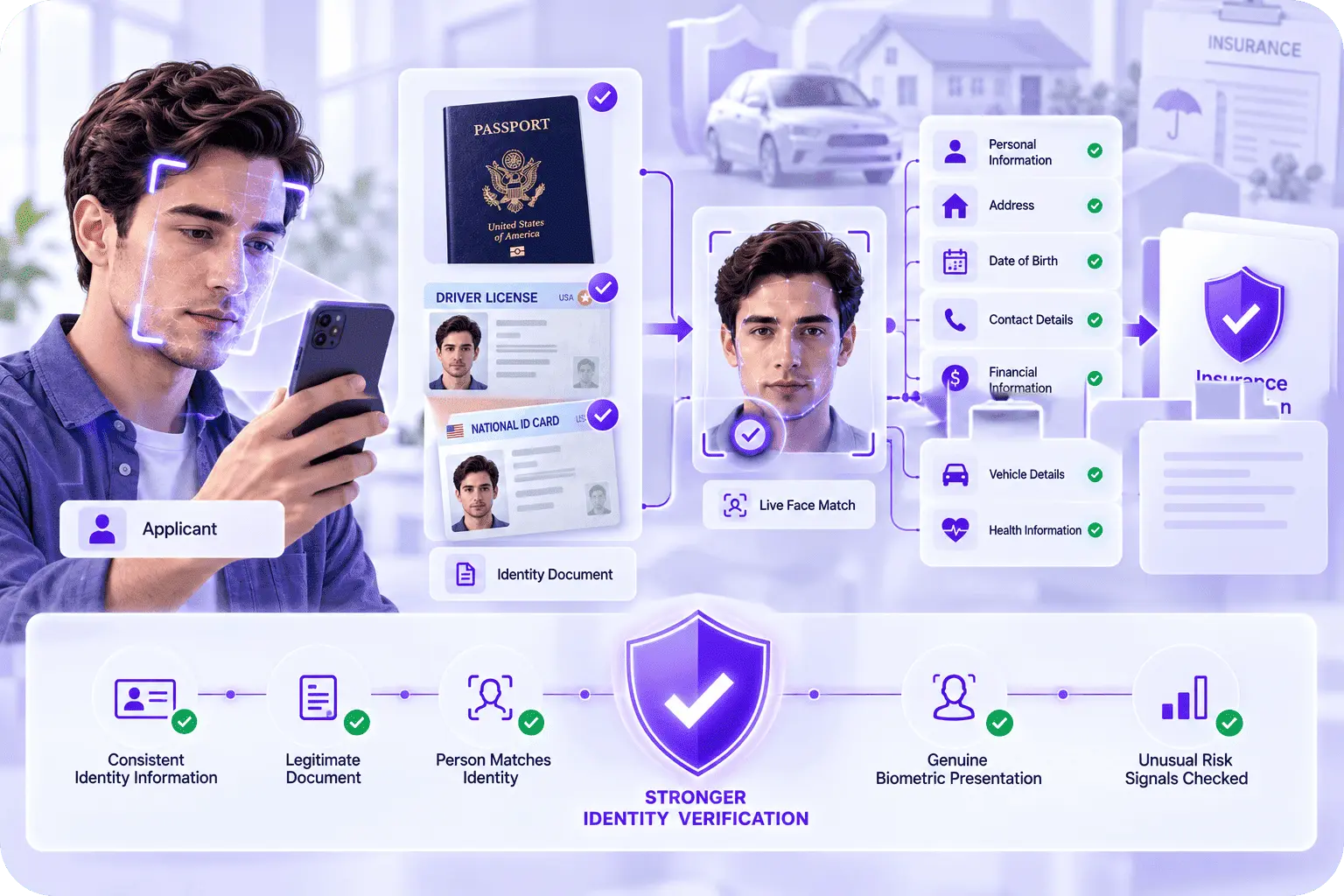
The verification process should establish whether:
- The applicant’s identity information is consistent
- The submitted identity document appears legitimate
- The person corresponds with the identity being presented
- The biometric presentation appears genuine
- Other application signals indicate unusual risk
This creates a layered approach rather than relying on one identity check.
What Is Insurance Identity Verification?
Insurance identity verification is the process of establishing that a person applying for or accessing an insurance service corresponds to the identity they claim.
The exact workflow depends on the insurance product, jurisdiction, risk level, and stage of the customer relationship.
During initial onboarding, an insurer may collect identity information and a government-issued identity document. The document can then be analyzed and its information compared with the application.
For higher-assurance workflows, facial verification can add another layer by comparing the customer’s captured face with the trusted photograph associated with the identity.
This can be particularly useful when the insurer needs stronger protection against impersonation or stolen identity information.
The most effective process is therefore not necessarily the one with the most checks. It is the one that applies the right checks at the right point in the customer journey.
The Role of ID Document Verification
Identity documents are often an important source of evidence during insurance onboarding.
An applicant may provide a passport, national identity card, driver’s license, or another accepted credential. The verification system can extract relevant information and assess available authenticity indicators.
An ID document recognition SDK can support this stage of the workflow by providing document analysis capabilities that can be integrated into the insurer’s own application.
The document stage can help identify issues involving:
- Unsupported or invalid documents
- Expired credentials
- Inconsistent identity information
- Image-quality problems
- Potential document manipulation
- Mismatches between document data and application data
However, an important limitation remains.
A genuine document does not necessarily prove that the person presenting it is the legitimate holder.
That is where biometric verification can provide additional assurance.
How Biometric Verification Strengthens Policyholder Verification
Facial verification adds a person-to-identity layer to the onboarding process.
The applicant provides a facial sample, which can then be compared against the trusted image associated with the identity document or another verified identity reference.
For an insurer, this can help address situations where a fraudster has legitimate identity information but is not the person associated with it.
A facial recognition SDK can provide the biometric matching component within an insurer’s application rather than requiring the customer to leave the insurer’s digital experience.
This can support a smoother customer journey while allowing the insurer to maintain control over the broader verification and risk workflow.
Biometric verification should still be tested under realistic conditions because lighting, camera quality, facial pose, image quality, and other factors can influence performance.
Why Liveness Detection Matters for Insurance
Facial matching alone does not establish that the person is physically present.
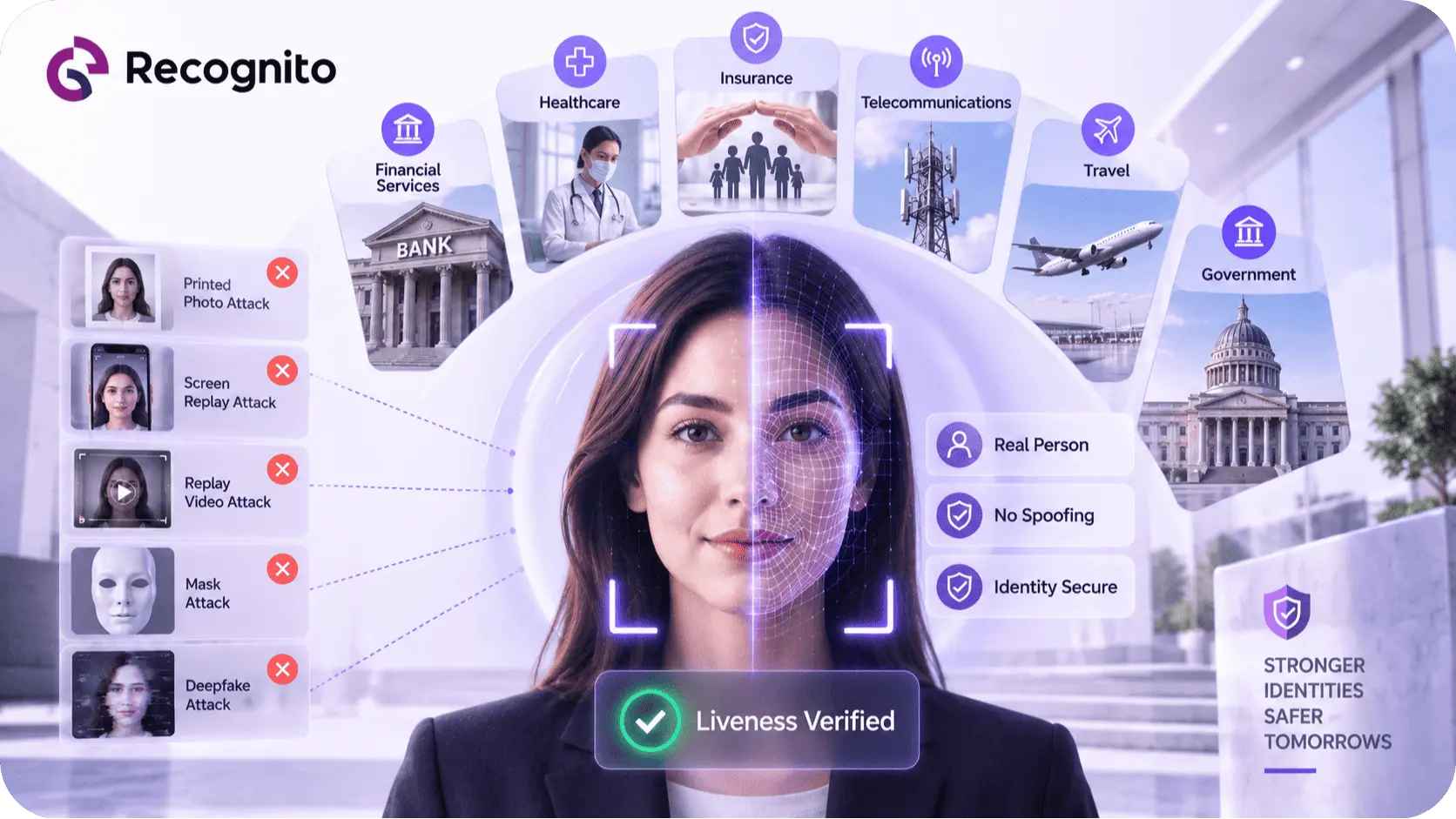
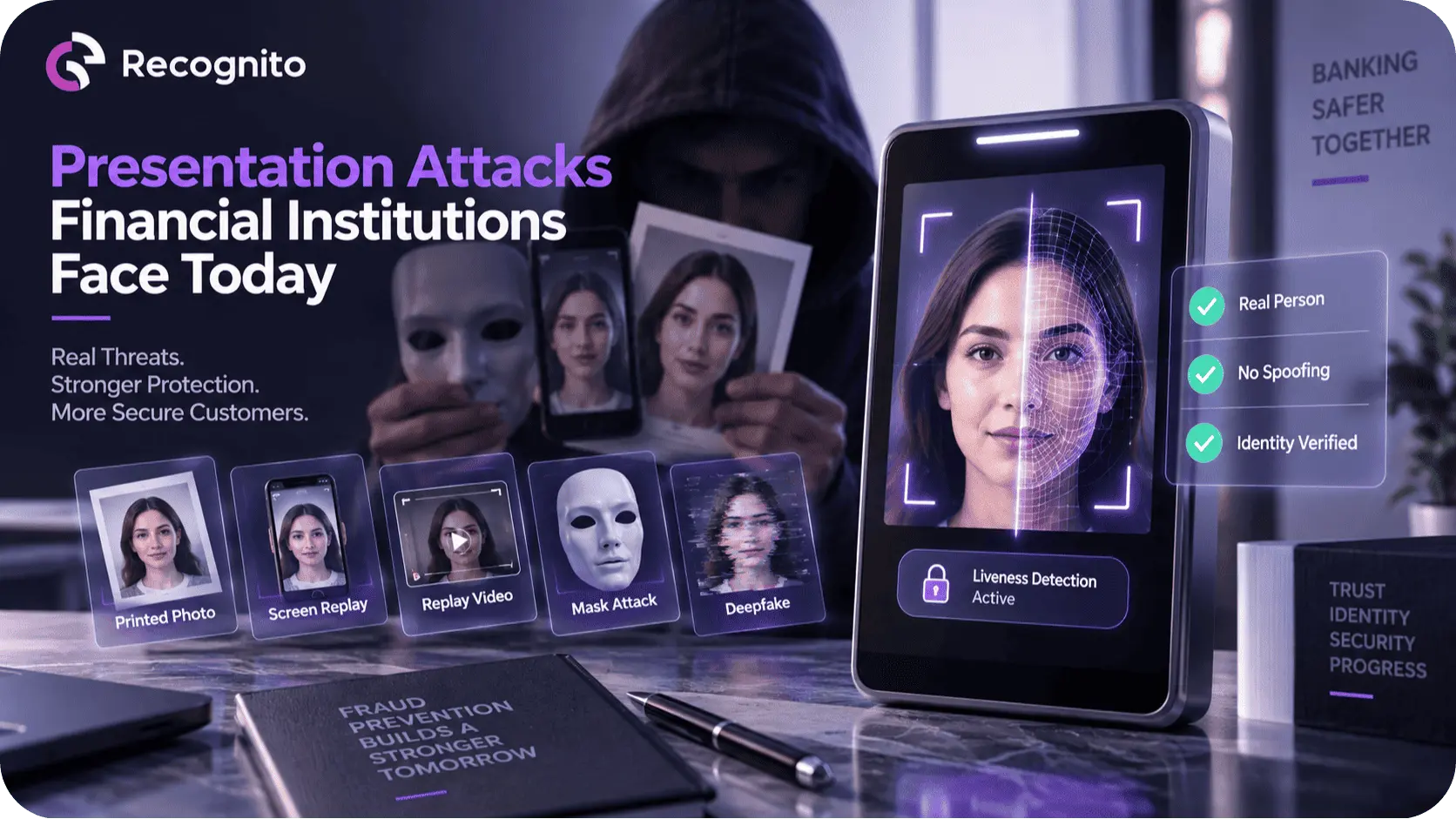
An attacker may attempt to use a photograph, replayed video, image displayed on another device, mask, or synthetic facial media during remote verification.
This is where liveness detection becomes a useful additional layer.
A liveness detection SDK can help assess whether a facial presentation appears to originate from a genuine live subject.
The two technologies solve different problems.
Facial verification helps determine whether the person corresponds with the trusted identity.
Liveness detection helps determine whether the biometric presentation itself appears genuine.
This distinction is important for insurers using remote verification because a strong facial match does not automatically mean the capture process was secure.
Common Insurance Fraud Risks During Onboarding
Insurance fraud is broader than identity fraud, but identity verification can address several risks that occur when policies or accounts are established digitally.
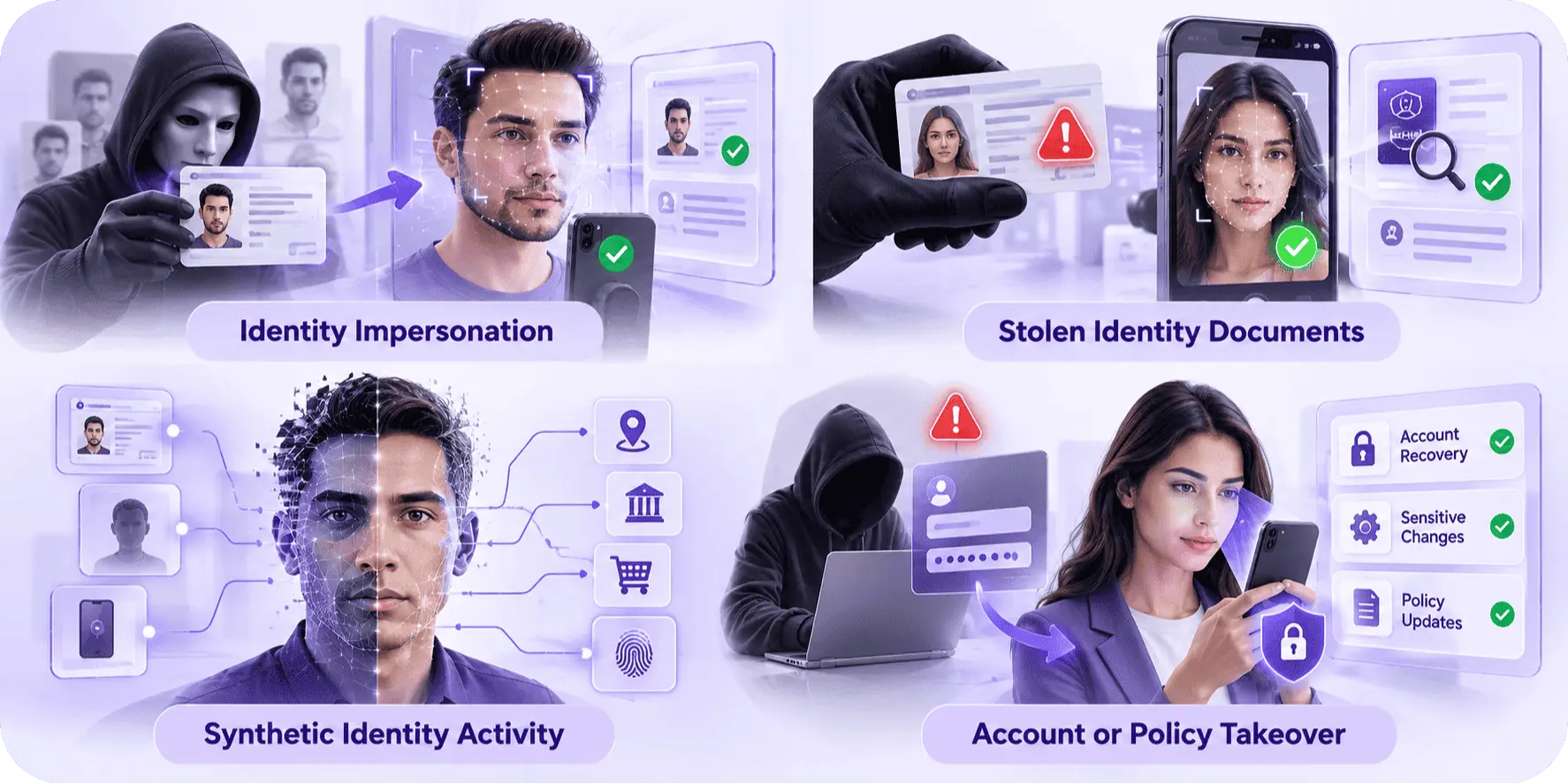
Identity Impersonation
A fraudster may use another person’s identity information to apply for insurance.
Document verification can help establish whether the credential appears legitimate, while biometric verification can help establish whether the applicant corresponds to the person represented by the credential.
Stolen Identity Documents
A genuine document can still be used by someone other than the legitimate owner.
Combining document analysis with facial verification creates an additional barrier against this type of impersonation.
Synthetic Identity Activity
Fraudsters may combine legitimate and fabricated information to construct apparently credible identities.
Identity verification becomes more effective when document, biometric, device, and behavioral information are considered together instead of evaluating one attribute independently.
Account or Policy Takeover
Identity verification may also remain relevant after onboarding.
An insurer may need stronger verification when a customer attempts to make sensitive account changes, recover an account, or perform another high-risk action.
This is why identity assurance should be considered across the policyholder lifecycle rather than only during initial registration.
Building an Insurance Onboarding Workflow
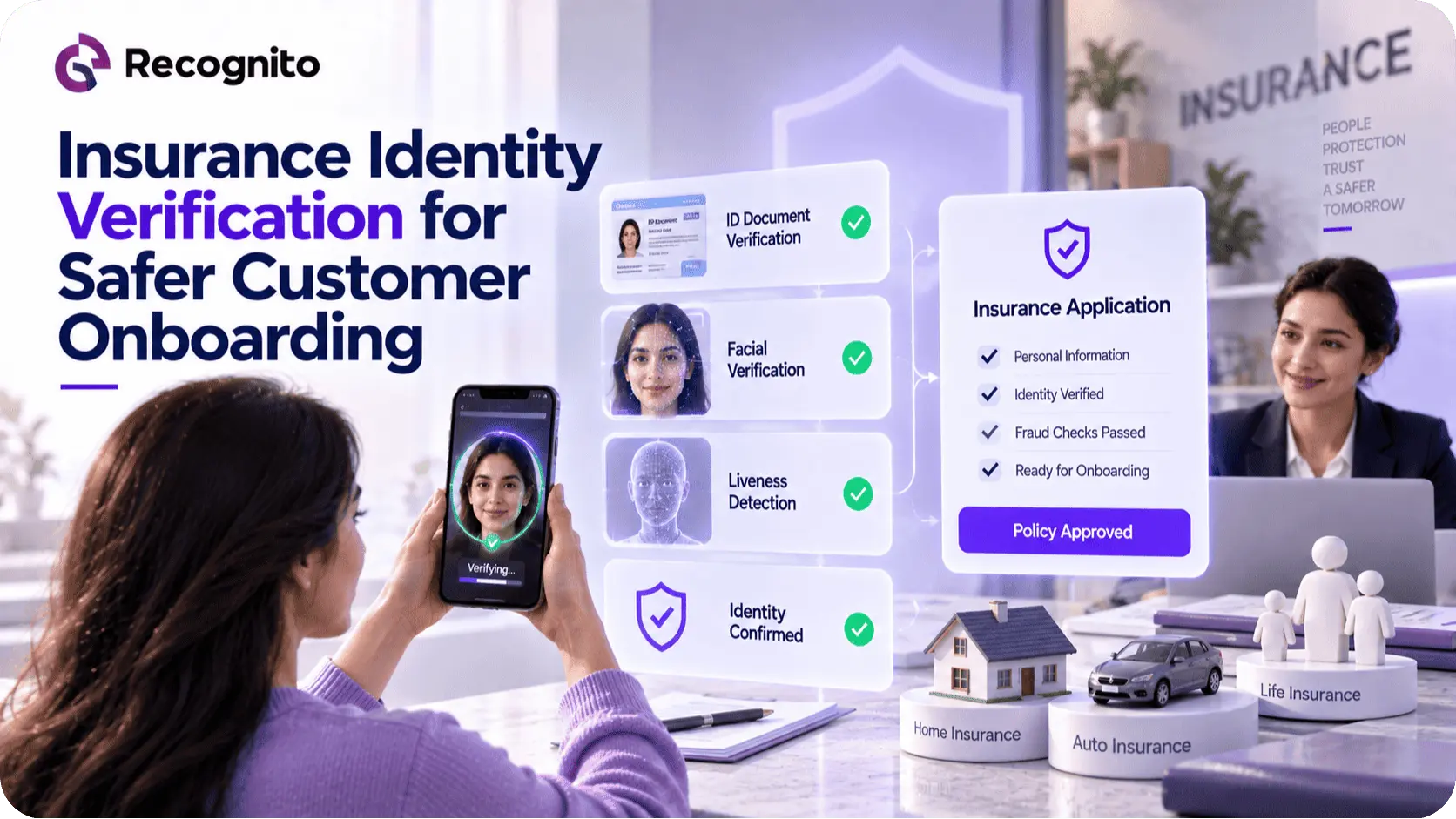
A practical onboarding workflow can be structured around several stages.
1. Collect Required Identity Information
The customer provides the information needed to create the application and begin the identity process.
The insurer should avoid collecting unnecessary information simply because its systems can support it.
2. Capture and Verify the Identity Document
The customer captures the relevant document, which is then analyzed and checked against the information provided.
If the document cannot be processed, the system should distinguish technical problems from genuine identity concerns.
3. Capture the Customer’s Face
The applicant provides a facial sample through the device camera.
Clear capture instructions are important because poor lighting or positioning can create unnecessary verification failures.
4. Perform Facial Verification
The captured face can be compared with the trusted photograph associated with the identity document.
5. Apply Liveness Detection
Where the risk profile requires stronger biometric security, liveness can assess whether the facial presentation appears genuine.
6. Combine the Results
The insurer can combine identity, document, biometric, device, and other risk signals before deciding what should happen next.
7. Approve, Escalate, or Review
Low-risk applications may proceed automatically, while inconsistent or elevated-risk cases can receive additional verification or manual review.
This structure allows each technology to perform a clearly defined role.
Identity Verification and Insurance Customer Experience
Insurance onboarding needs to be secure without becoming unnecessarily difficult.
Customers may already need to provide considerable information during an application. Adding multiple complicated verification steps can increase abandonment and create unnecessary support requests.
A well-designed verification process should make the experience understandable.
Customers should know:
- Why identity verification is required
- What document they need
- How to capture it correctly
- Why a facial capture may be requested
- What happens if verification fails
- What they should do next
This is particularly important when biometric verification is introduced.
The technology should work largely in the background while the user receives clear instructions rather than being exposed to unnecessary complexity.
Handling Failed Verification
Not every failed verification attempt is evidence of fraud.
An applicant may fail because of poor lighting, an unsuitable camera, document damage, image compression, or another technical problem.
The workflow should therefore distinguish between different failure types.
A practical response might include:
- Another capture attempt
- Better image guidance
- An alternative supported document
- Additional identity information
- Manual review
- Enhanced verification
This prevents legitimate customers from being rejected simply because the first capture was unsuccessful.
It also gives the insurer better information for improving the system.
Risk-Based Policyholder Verification
Not every insurance customer needs identical verification.
The risk may differ depending on the product, policy value, customer profile, application behavior, or type of transaction being performed.
A risk-based model could therefore apply different levels of verification.
Standard risk: identity and document checks.
Elevated risk: document verification plus biometric matching.
Higher risk: biometric matching plus liveness and additional review.
This approach can provide stronger security without forcing every customer through the most demanding process.
It also gives insurers a way to increase verification when the available evidence becomes inconsistent.
Using Fraud Signals Beyond Identity Verification
Identity verification should not operate independently from the wider fraud prevention system.
An insurer can combine identity results with other signals to establish whether an application appears normal or unusual.
Potential signals can include:
- Identity information consistency
- Document verification results
- Facial verification results
- Liveness results
- Device characteristics
- Geographic signals
- Application behavior
- Previous customer information
- Multiple related applications
A single unusual signal may have a legitimate explanation.
Several signals pointing in the same direction are more useful for risk assessment.
This allows the insurer to make a more informed decision rather than automatically treating every anomaly as fraud.
Privacy and Biometric Data in Insurance
Insurance companies may process significant amounts of personal information, making data governance an important part of the verification architecture.
When biometric technologies are used, organizations should understand where facial images are processed, whether biometric representations are stored, how long information is retained, who can access it, and how deletion is handled.
For organizations processing European personal data, the GDPR framework is an important reference when assessing privacy requirements.
The principle should be to design data handling around the actual purpose of verification.
If temporary capture information does not need to be retained after the verification decision, the architecture should not automatically preserve it indefinitely.
Privacy, security, and customer experience should therefore be considered together when designing insurance identity verification.
One Verification Workflow Can Support Multiple Insurance Stages
Identity verification does not necessarily end when a policy is issued.
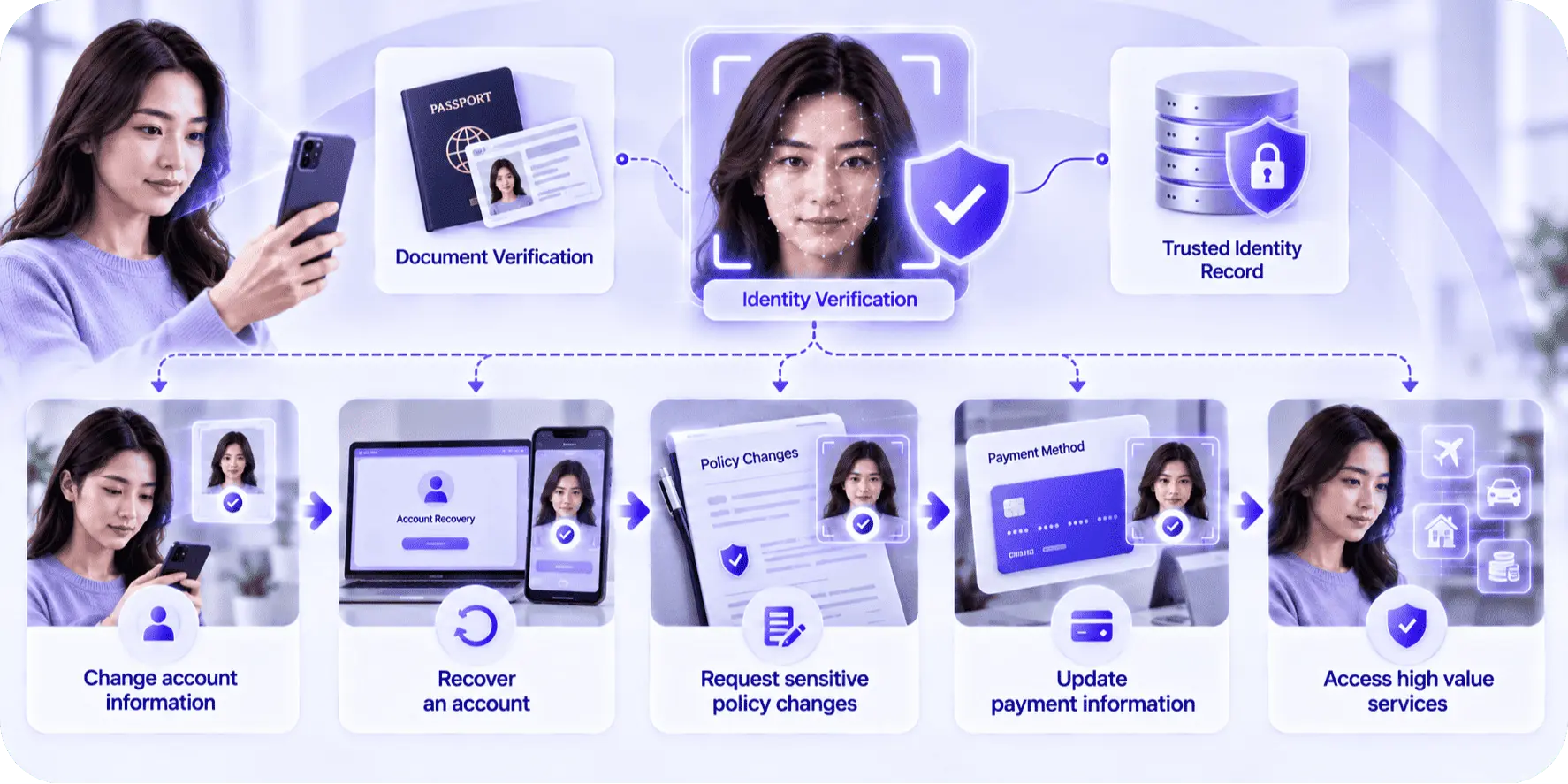
The same identity assurance architecture can support other high-risk interactions during the policy lifecycle.
For example, an insurer may want stronger verification when a customer:
- Changes important account information
- Recovers an account
- Requests sensitive policy changes
- Updates payment information
- Accesses certain high-value services
The specific controls should depend on the risk of the action.
This creates a broader policyholder verification strategy rather than treating identity verification as a one-time onboarding event.
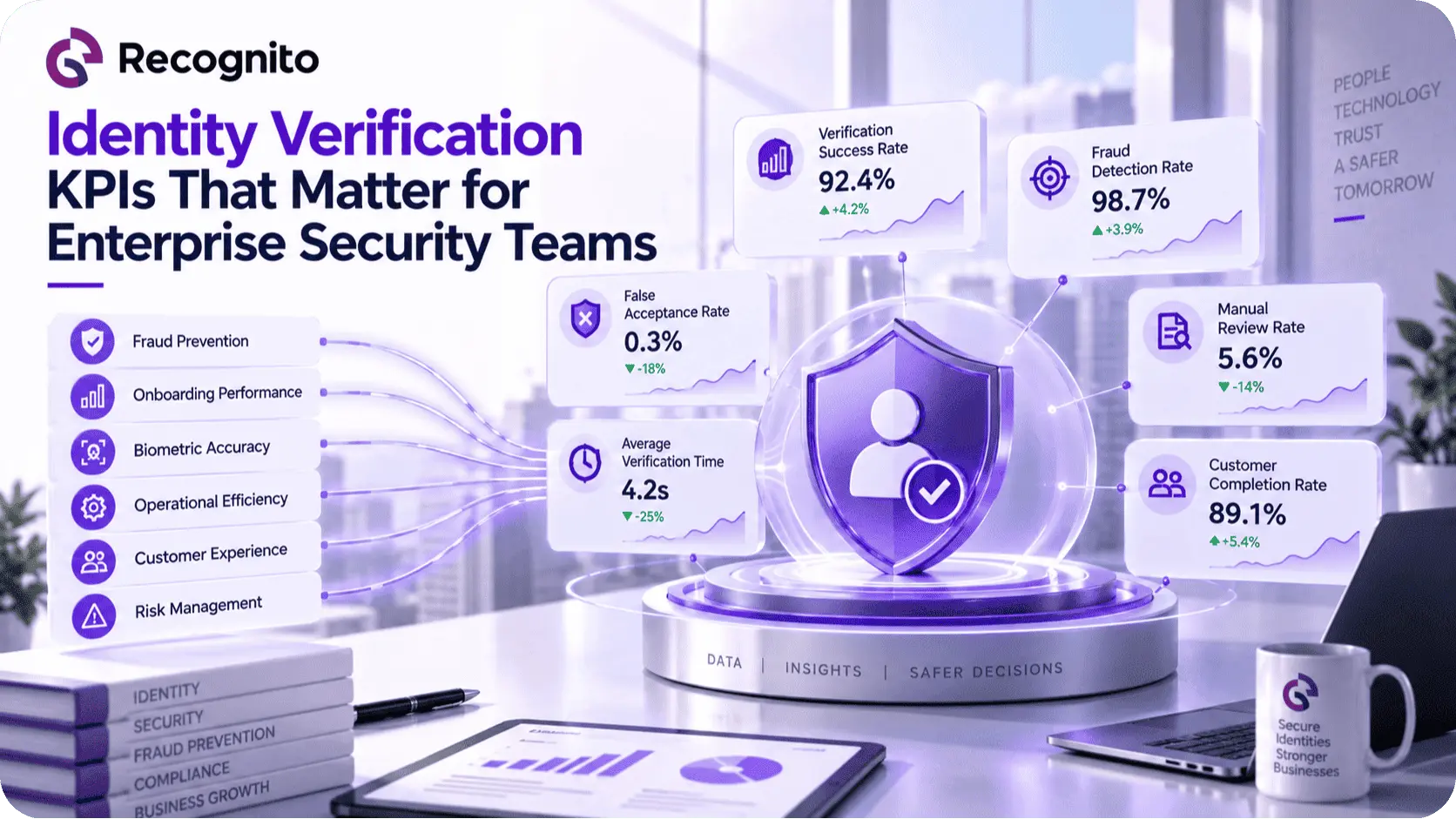
Measuring Insurance Identity Verification Performance
Insurance companies should monitor both security and customer-experience outcomes.
Useful measures include:
- Verification completion rate
- First-attempt success
- False rejection rate
- Manual review rate
- Average verification time
- Document failure rate
- Biometric verification failure
- Liveness failure
- Fraud detection outcomes
- Customer abandonment
The relationship between the metrics is particularly important.
A sudden increase in verification failure may be caused by a software update, new device population, capture-flow change, or actual increase in suspicious applications.
Breaking results down by stage helps identify the cause.
Insurance Identity Verification Technology Comparison
Different components address different parts of the customer verification process.
| Verification Layer | Primary Question | Role in Insurance Onboarding |
| Identity information | Does the application provide consistent identity details? | Establishes the customer’s claimed information |
| Document verification | Does the identity credential appear legitimate? | Establishes trusted identity evidence |
| Facial verification | Does the applicant correspond with the identity? | Helps prevent impersonation |
| Liveness detection | Does the biometric presentation appear genuine? | Helps protect against presentation attacks |
| Risk decisioning | Do the combined signals indicate elevated risk? | Determines approval, escalation, or review |
| Manual review | Does an ambiguous case require human assessment? | Handles exceptions and higher-risk cases |
The insurer can then connect these layers into a single customer experience rather than presenting them as unrelated security checks.
Choosing SDK-Based Verification Technology
Insurance companies with their own digital applications may prefer SDK-based technology because it provides greater control over the customer experience and application architecture.
A biometric SDK can be integrated directly into the insurer’s onboarding flow, allowing the organization to decide when facial verification and liveness should occur.
For document-heavy workflows, the document capability can be integrated alongside the biometric components.
Technical teams can also use the Face Biometric Playground to explore biometric functionality during evaluation.
For developers, the Recognito GitHub repository can provide additional technical resources during implementation research.
The right architecture depends on the insurer’s customer journey, risk model, regulatory obligations, expected scale, and internal development capabilities.
How Insurers Should Evaluate a Biometric Solution
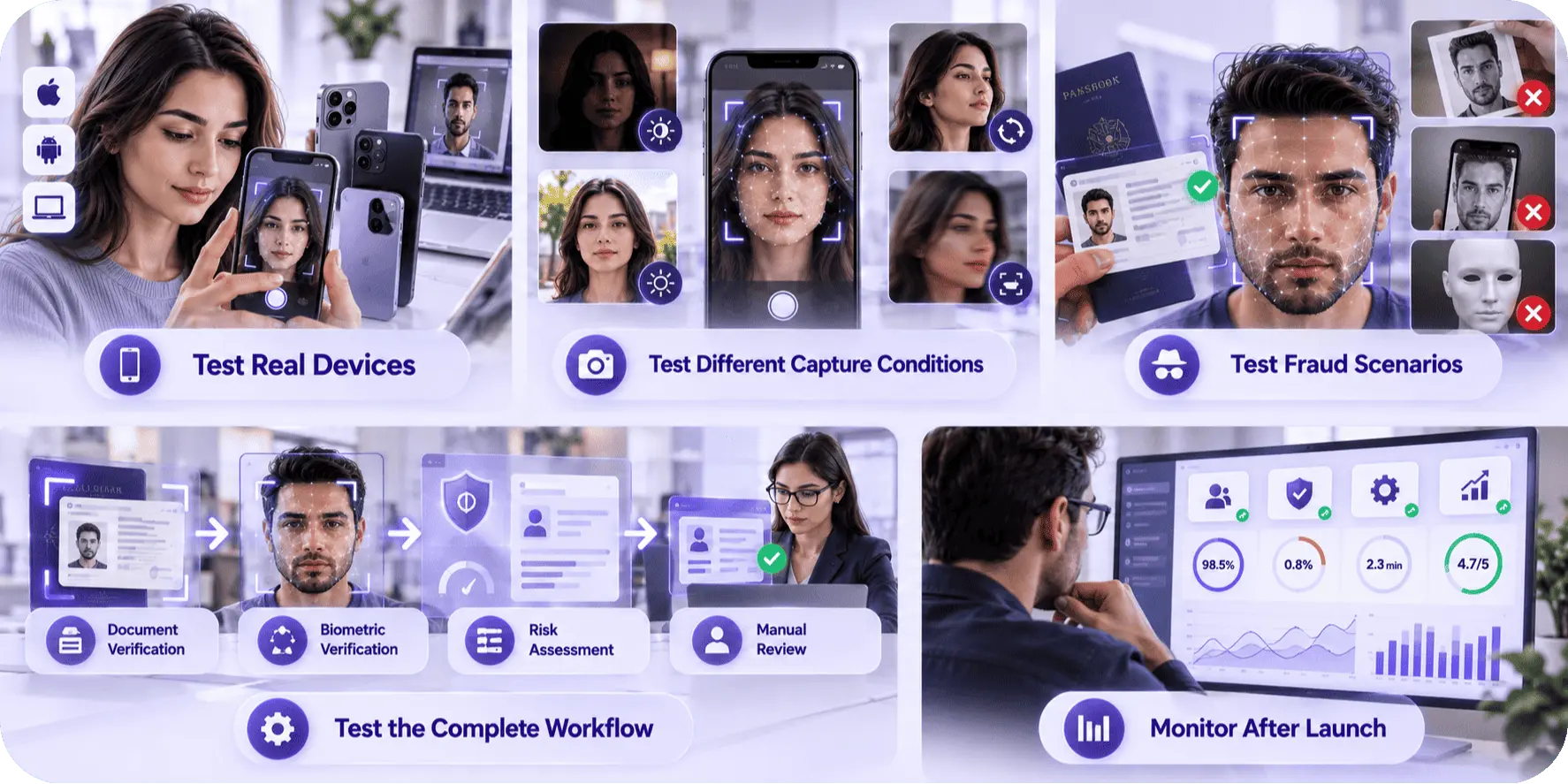
Before implementing biometric verification, an insurer should test the technology under realistic conditions.
Test Real Devices
Use the smartphones and camera environments customers are actually likely to use.
Test Different Capture Conditions
Include poor lighting, different facial angles, image-quality variations, and realistic customer behavior.
Test Fraud Scenarios
Evaluate stolen documents, impersonation, presentation attacks, and other relevant identity fraud scenarios.
Test the Complete Workflow
Do not evaluate facial matching or liveness in isolation. Test how the document, biometric, risk, and review stages interact.
Monitor After Launch
Establish baseline performance and monitor verification, fraud, operational, and customer metrics over time.
The objective is to determine whether the technology works effectively for the insurer’s actual customer population rather than simply performing well in a demonstration.
Conclusion
Effective insurance identity verification requires more than confirming a customer’s name or checking whether an identity document looks authentic.
The strongest insurance onboarding workflows connect document verification, biometric verification, liveness detection, risk assessment, and appropriate manual review.
Document verification can establish trusted identity evidence. Facial verification can help connect the applicant to that identity. Liveness can strengthen the biometric capture process, while broader fraud signals can help insurers identify applications that require additional scrutiny.
The workflow should also remain proportionate to risk.
Routine customers should be able to complete verification without unnecessary friction, while higher-risk applications can receive stronger identity and biometric controls.
This layered approach allows insurance companies to strengthen fraud prevention while preserving a practical digital customer experience.
Organizations evaluating biometric technologies for insurance onboarding and policyholder verification can explore the broader capabilities available from Recognito as part of their identity verification strategy.
Frequently Asked Questions
Why is identity verification important for insurance onboarding?
Identity verification helps insurers establish that applicants are who they claim to be, reduce impersonation risk, protect against certain forms of identity fraud, and support appropriate customer and policy controls.
Is document verification enough to verify an insurance customer?
Not always. A genuine identity document can still belong to someone other than the person presenting it. Biometric verification can add another layer by helping connect the applicant to the identity represented by the document.
Why should insurers use liveness detection with face recognition?
Facial matching determines whether two facial representations correspond, while liveness detection helps assess whether the biometric presentation appears to come from a genuine live person. Using both can provide stronger protection against presentation attacks.
Can insurance identity verification be used after onboarding?
Yes. The same identity assurance architecture can support higher-risk activities such as account recovery, sensitive policy changes, or other transactions where stronger policyholder verification is appropriate.
What should insurers consider when selecting identity verification technology?
Insurers should evaluate document coverage, biometric performance, liveness protection, integration, privacy, scalability, customer experience, fraud prevention, technical support, and total cost of ownership.