
Financial institutions increasingly rely on biometrics to verify customers remotely, authenticate account access, and strengthen digital onboarding. Facial verification can make these processes faster and more convenient, but it also creates another security target: the biometric capture process itself.
A fraudster does not always need to defeat the underlying facial recognition algorithm. In some cases, the attacker can instead try to manipulate what the biometric system sees.
This is the basic idea behind a presentation attack.
A presentation attack occurs when an attacker presents an artifact or manipulated biometric representation to a capture system in an attempt to interfere with the biometric decision. In financial services, these attacks can involve photographs, replayed videos, masks, manipulated digital media, or increasingly sophisticated synthetic content.
The challenge is becoming more important as remote customer verification becomes standard across banking, fintech, payments, lending, and other financial services.
A strong biometric security strategy therefore needs to consider not only facial recognition accuracy, but also how the system responds when an attacker attempts to deceive the biometric capture process.
What Is a Presentation Attack?
A presentation attack is an attempt to deceive a biometric capture system by presenting something other than the genuine biometric characteristic of the person being claimed.
In a facial verification workflow, the system expects to capture the customer’s real face. An attacker may instead attempt to provide an artificial representation that is intended to be accepted as genuine.
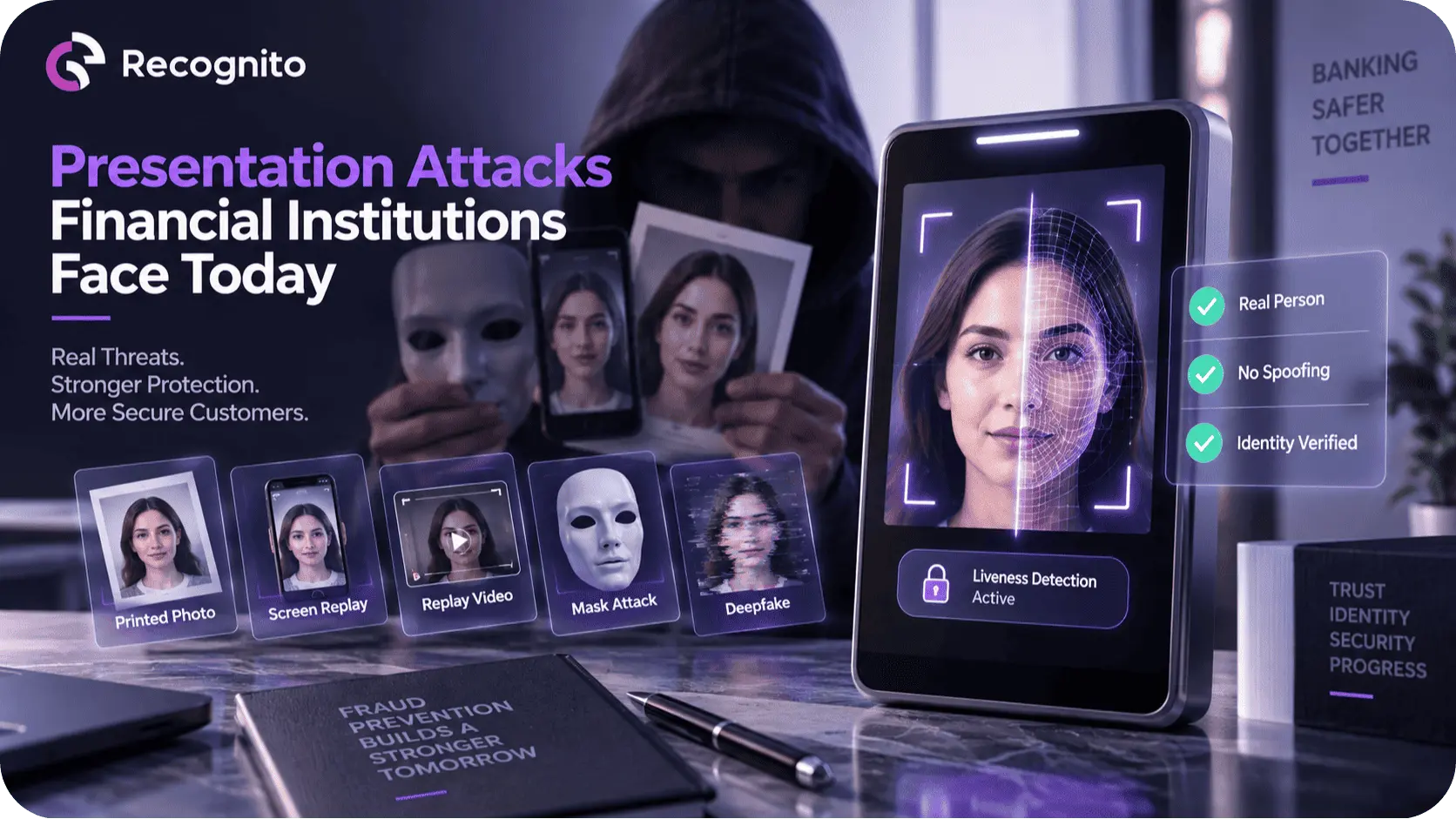
Common examples include:
- Printed photographs
- Images displayed on another screen
- Replayed video
- Masks or physical facial replicas
- Digitally manipulated facial media
- Synthetic or deepfake content
The important distinction is that a presentation attack takes place at the point where the biometric is being captured.
This makes presentation attack detection, commonly abbreviated as PAD, a distinct security problem from facial matching itself.
A facial recognition algorithm may correctly compare two images while the overall workflow is still compromised if one of those images was presented fraudulently.
Why Financial Institutions Are Attractive Targets
Financial services are particularly attractive to fraudsters because successful account creation or authentication can provide access to money, credit, payment functionality, financial information, or other valuable resources.
Digital onboarding has increased the importance of remote biometric security because customers may never interact physically with an employee.
An attacker can therefore attempt to exploit weaknesses in the remote capture process from anywhere.
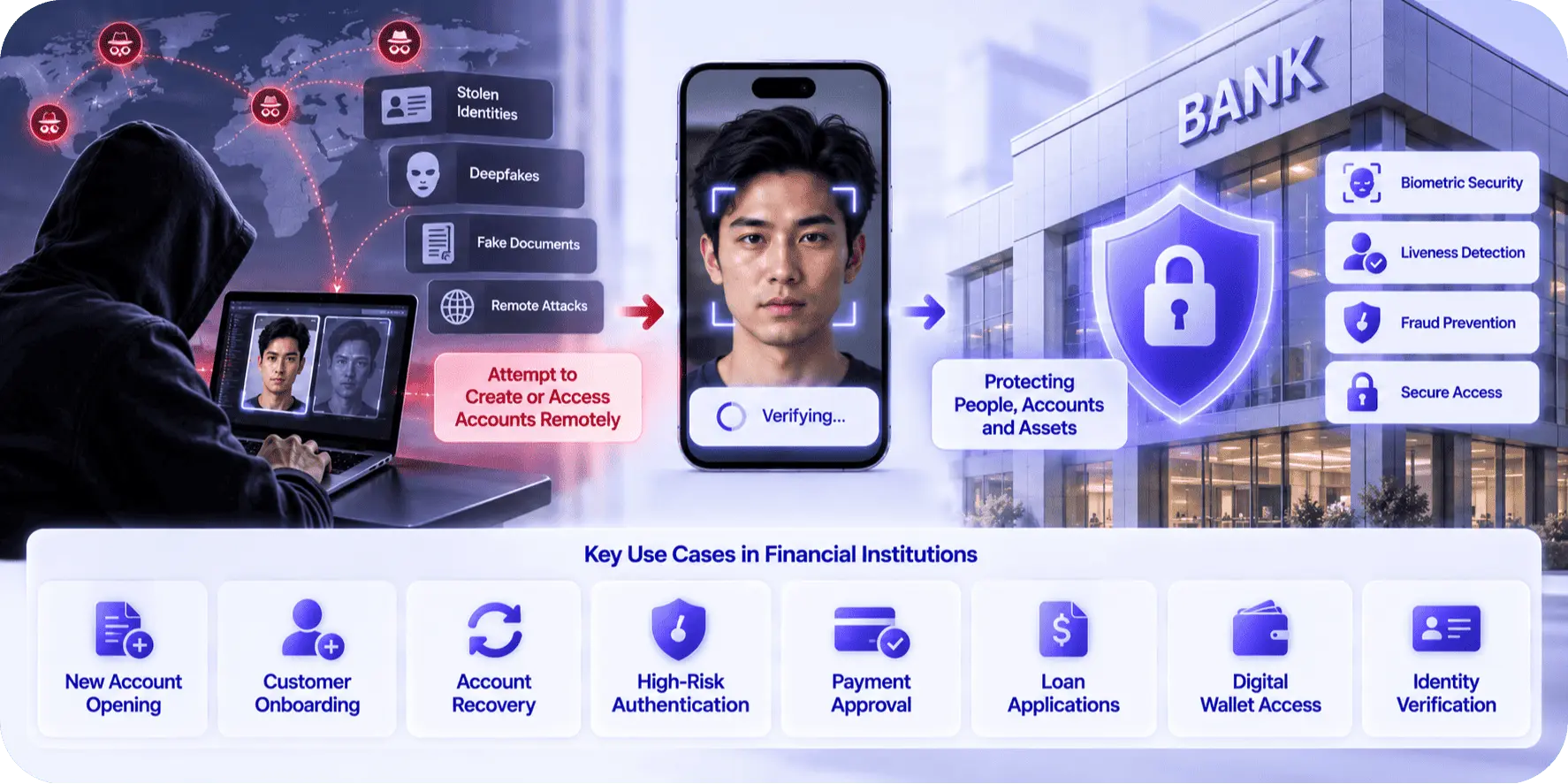
The risk is particularly relevant when biometric verification is used for:
- New account opening
- Customer onboarding
- Account recovery
- High-risk authentication
- Payment approval
- Loan applications
- Digital wallet access
- Identity verification
This does not mean biometrics are inherently unsafe.
It means that financial institutions need to protect the capture process as well as the matching process.
How Presentation Attacks Differ From Other Identity Fraud
Identity fraud involves much more than biometric attacks.
A criminal may steal personal information, obtain a genuine identity document, create a synthetic identity, or take over an existing account.
A presentation attack is more specific. It targets the biometric presentation process.
Consider a fraudster with a legitimate passport belonging to another person.
Document verification may determine that the passport appears authentic. The attacker then needs to overcome the facial verification process.
At that point, a biometric spoofing attempt may be used to make the system believe that the attacker is the person shown on the document.
This illustrates why modern identity verification systems often need several layers rather than one control.
Common Presentation Attacks Financial Institutions Need to Consider
Not every institution will face the same attack profile, but several presentation attack categories are particularly relevant to remote facial verification.
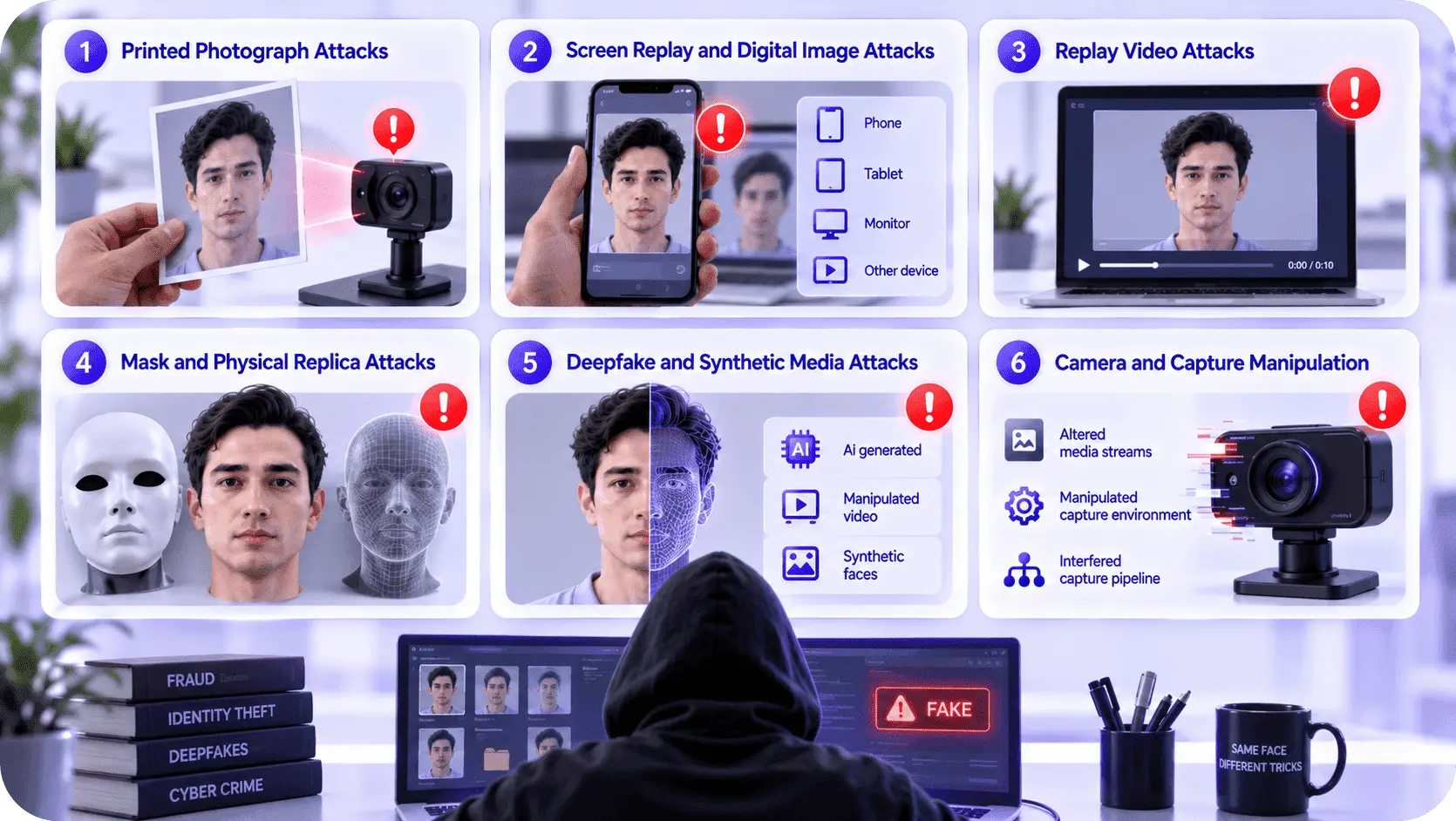
1. Printed Photograph Attacks
A printed photograph is one of the simplest methods an attacker can try.
The attacker presents an image of the target individual in front of the camera, hoping the system will interpret the photograph as a genuine face.
Modern systems may use image analysis and liveness mechanisms to identify characteristics inconsistent with a live subject.
The risk from simple photo attacks is generally easier to understand than more sophisticated attacks, but institutions should still include them in testing.
2. Screen Replay and Digital Image Attacks
Instead of printing a photograph, an attacker can display a digital image or video on another screen.
The screen may be a smartphone, tablet, monitor, or another device.
This creates additional challenges because the presented media can have properties that resemble a genuine facial capture at a basic image level.
Financial institutions should therefore test whether their biometric security controls can distinguish genuine capture from replayed digital media.
3. Replay Video Attacks
A replay attack uses previously captured footage of the target person.
The attacker may try to present a recorded video in which the person appears to look, move, or respond naturally.
Replay attacks can become more sophisticated when the attacker has high-quality footage.
This is one reason a liveness mechanism should be evaluated for the actual threat environment rather than simply enabled as a product feature.
4. Mask and Physical Replica Attacks
Physical representations can also be used to imitate another person.
The sophistication of these attacks can vary considerably, from simple masks to more detailed facial replicas.
The specific effectiveness of such attacks depends on the biometric system, capture environment, attack presentation, and security controls.
Financial institutions evaluating biometric spoofing should therefore consider the types of physical attacks relevant to their risk model and ensure their testing program reflects those threats.
5. Deepfake and Synthetic Media Attacks
Generative AI has changed the presentation attack landscape.
Synthetic faces and manipulated video can create facial content that looks significantly more realistic than traditional image manipulation.
This raises the possibility of attacks where the biometric input itself has been generated or altered digitally.
The threat is particularly relevant to remote onboarding because the attacker controls the capture environment.
Institutions should therefore consider deepfake protection alongside conventional liveness and presentation attack detection.
Recognito’s deepfake attack prevention strategies provide additional context on how synthetic media is changing identity fraud.
The key point is that modern biometric security needs to evolve as the quality and availability of synthetic media improve.
6. Camera and Capture Manipulation
Not every presentation attack involves a physical object placed in front of the camera.
Attackers may also attempt to manipulate the capture pipeline itself.
Depending on the architecture, risks can involve altered media streams, manipulated capture environments, or attempts to interfere with how biometric data reaches the recognition system.
This is why financial institutions should examine the entire capture architecture rather than focusing only on what happens inside the recognition model.
Why Face Recognition Alone Cannot Solve Presentation Attacks
A common misconception is that a more accurate face recognition algorithm automatically provides better protection against every presentation attack.
That is not necessarily the case.
Face recognition primarily answers whether two facial representations are sufficiently similar.
Presentation attack detection addresses whether the biometric presentation itself appears legitimate.
These are different problems.
A highly accurate system may still accept a well-crafted presentation if the biometric capture process is not adequately protected.
This is why biometric authentication should be designed as a layered security process.
The Role of Liveness Detection
Liveness detection adds an additional security layer by assessing whether the biometric presentation appears to come from a genuine live person.
In a financial onboarding workflow, the customer may provide a facial sample that is first evaluated for liveness and then compared against a trusted identity reference.
A biometric liveness SDK can provide this capability as part of a wider facial verification architecture.
The workflow can therefore ask two separate questions:
Is this the right face?
and:
Is this a genuine biometric presentation?
That separation is fundamental to effective presentation attack protection.
Active vs Passive Liveness
Financial institutions can encounter different implementation approaches.
Active liveness may require the user to perform a specific action or follow an instruction. Passive liveness attempts to determine whether the capture is genuine without requiring the same level of deliberate user interaction.
Each approach can affect security, user experience, implementation complexity, and verification speed.
The appropriate choice depends on the institution’s risk profile and customer journey.
Teams comparing the approaches can review active and passive liveness detection when designing the biometric verification experience.
The objective should be to find an appropriate balance between protection and usability rather than assuming one approach is universally superior.
How Presentation Attack Detection Fits Into a Financial Workflow
PAD should not operate independently from the rest of the identity process.
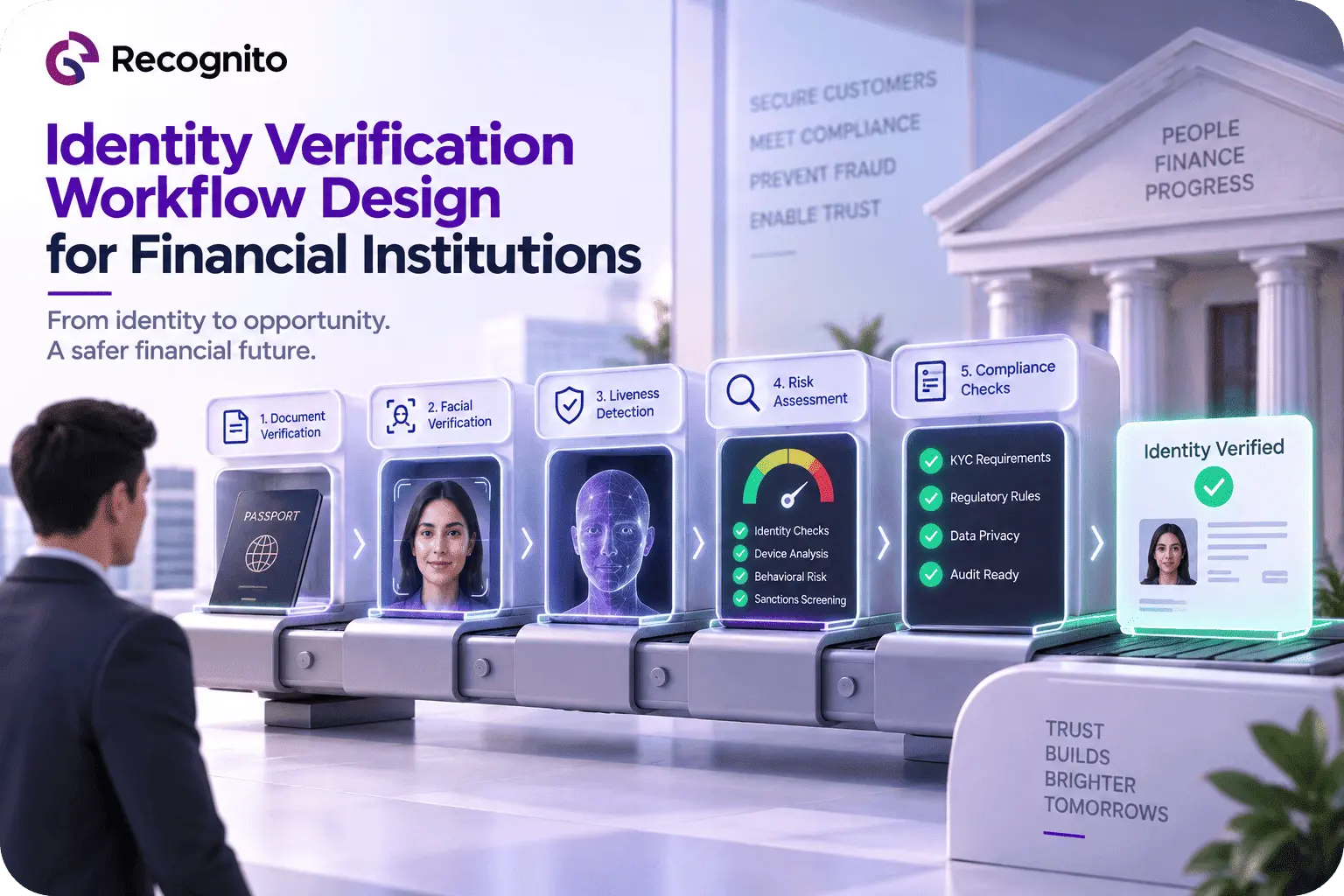
A typical financial onboarding workflow might look like:
- Collect identity information.
- Capture and verify the identity document.
- Capture the customer’s face.
- Perform liveness verification.
- Compare the face with the trusted identity reference.
- Combine the results with device and risk signals.
- Approve, challenge, review, or reject the application.
Each stage addresses a different problem.
Document verification can establish identity evidence.
Facial verification can help establish the relationship between the person and that evidence.
Liveness can provide additional protection against biometric presentation attacks.
Risk-based decisioning can then combine all available signals.
Presentation Attack Detection Standards
Financial institutions should also understand the standards used to evaluate presentation attack detection.
The ISO/IEC 30107-3:2023 standard establishes principles and methods for assessing PAD mechanisms, reporting evaluation results, and classifying known presentation attack types.
This is useful because vendor claims such as “advanced anti-spoofing” do not tell a security team what was actually tested.
A meaningful evaluation should establish:
- Which attacks were tested
- What methodology was used
- Which technology version was evaluated
- What metrics were reported
- Whether the test was independent
- What environment was used
The standard should be treated as part of the evaluation framework rather than as a blanket guarantee that an entire identity platform is secure.
How Financial Institutions Should Test for Presentation Attacks
A production security program should not rely solely on vendor demonstrations.
Financial institutions should create a representative test environment that reflects their actual deployment.
Test Basic Attacks
Include photographs, screen images, and replayed media.
Test More Sophisticated Presentations
Where relevant to the threat model, include masks, manipulated media, and synthetic facial content.
Test Different Devices
A biometric system may behave differently across cameras and mobile platforms.
Test Different Capture Conditions
Lighting, camera position, network conditions, and user behavior can affect the biometric workflow.
Test Legitimate Users Too
A secure system still needs to maintain reasonable legitimate-user acceptance.
This final point is important because strengthening spoof protection can sometimes increase friction or false rejection.
Measuring Biometric Security Performance
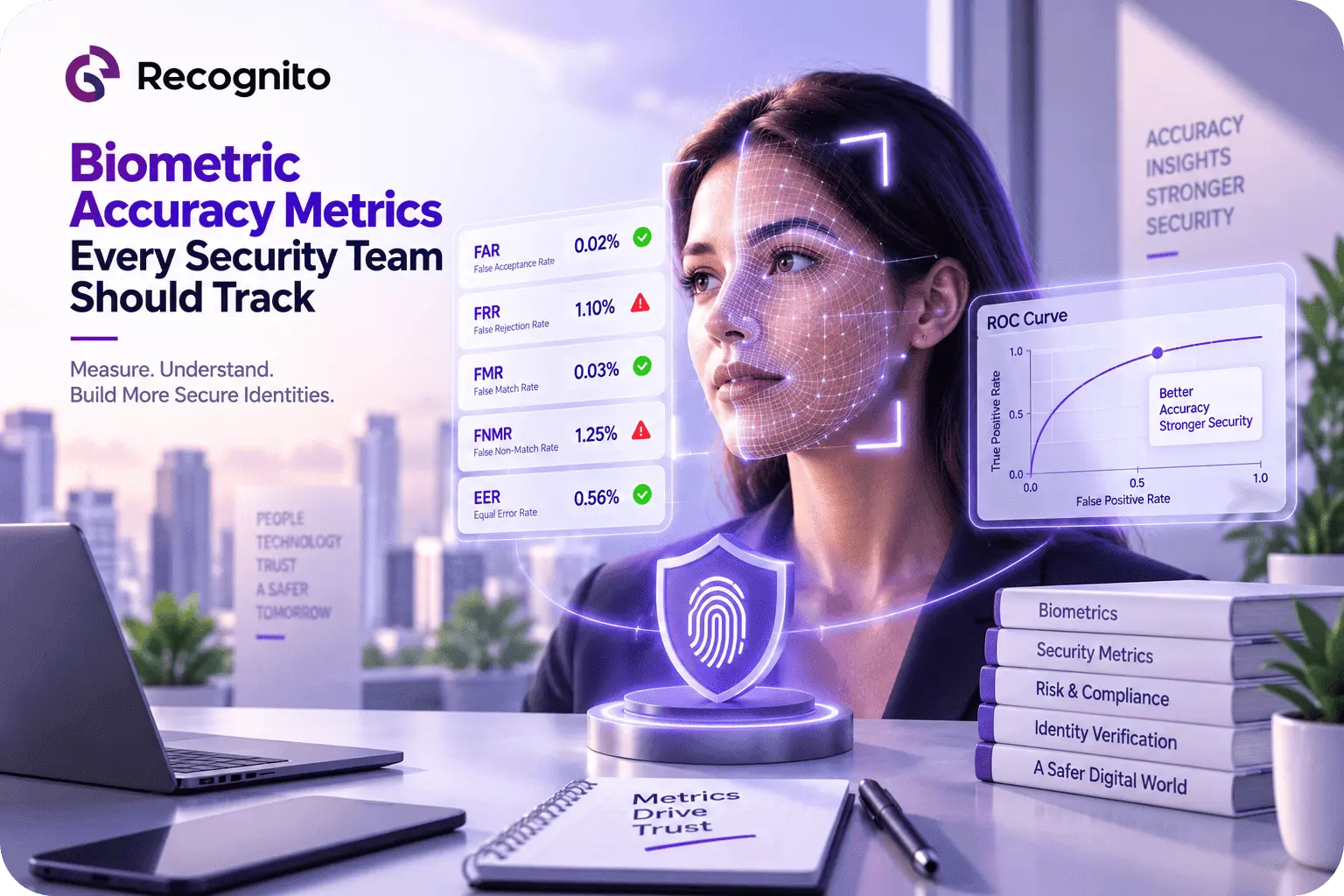
Security teams should track more than whether the liveness check returns “pass” or “fail.”
Useful measurements include:
- Presentation attack detection results
- Attack acceptance rates
- Legitimate-user rejection
- Verification completion
- Retry rates
- Liveness failure rates
- Average verification time
- Manual review volume
These metrics help the institution understand whether the control is working effectively in production.
The objective is not simply to reject more attempts.
It is to identify genuine attack patterns while preserving an acceptable customer experience.

Presentation Attacks and Customer Experience
Security teams can sometimes focus so heavily on attacks that they overlook the customer journey.
A verification process that requires too many actions can frustrate legitimate users.
For financial institutions, this creates a difficult balance.
The security team wants stronger controls.
The product team wants a smooth onboarding experience.
The compliance team needs defensible controls.
The business wants customers to complete onboarding.
The solution is generally risk-based design.
Lower-risk applications may use a simpler workflow, while higher-risk applications can trigger stronger biometric verification or additional liveness checks.
This allows the institution to concentrate friction where it provides the most security value.
Connecting Presentation Attack Protection With Identity Fraud Prevention
PAD is only one part of a larger identity fraud strategy.
A fraudster may successfully overcome one control but fail another.
For example:
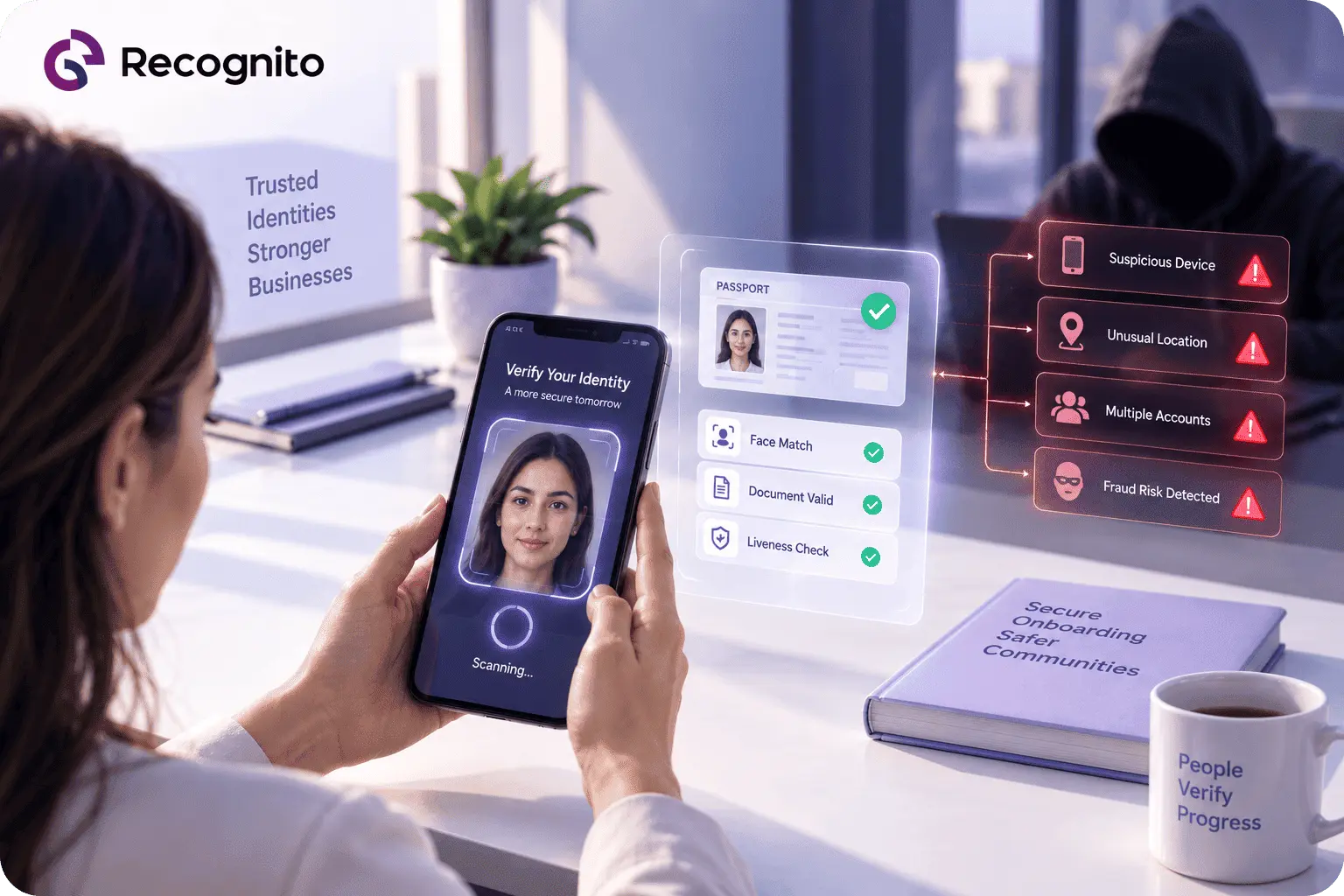
Genuine document + failed facial match may indicate impersonation.
Genuine document + strong facial match + failed liveness may indicate a presentation attack.
Strong biometrics + suspicious device + unusual account behavior may indicate coordinated fraud.
The value therefore comes from combining signals rather than allowing one technology to make the entire fraud decision.
Recognito’s resource on presentation attack detection and biometric security provides additional context on how PAD fits within a broader biometric security architecture.
How SDK-Based Biometrics Fit Into Financial Security
Financial institutions increasingly need biometric capabilities that can be integrated into their own applications and identity workflows.
An enterprise face recognition SDK can provide the facial matching layer, while liveness technology can provide additional protection against presentation attacks.
Where onboarding begins with an identity document, an ID document recognition SDK can support the document verification stage.
This SDK-based architecture gives development teams more control over where each biometric capability is used and how the results feed into the institution’s broader risk engine.
For teams evaluating the implementation experience, the Face Biometric Playground can also provide practical exposure to facial biometric functionality.
Developers can additionally review the Recognito GitHub repository as part of the technical assessment.
One Presentation Attack Does Not Represent the Whole Threat
A common mistake is to test one photograph attack, see that the system blocks it, and conclude that the liveness implementation is secure.
Real-world biometric security is more complicated.
Attackers can adapt.
If one attack method becomes ineffective, they may try another representation, another device, another capture condition, or a different attack path altogether.
The security program should therefore be designed around classes of attacks and evolving threats, not a single demonstration.
Regular testing and monitoring are essential.
Building a Presentation Attack Response Strategy
Detecting an attack is only part of the problem.
The organization also needs to determine what happens afterward.
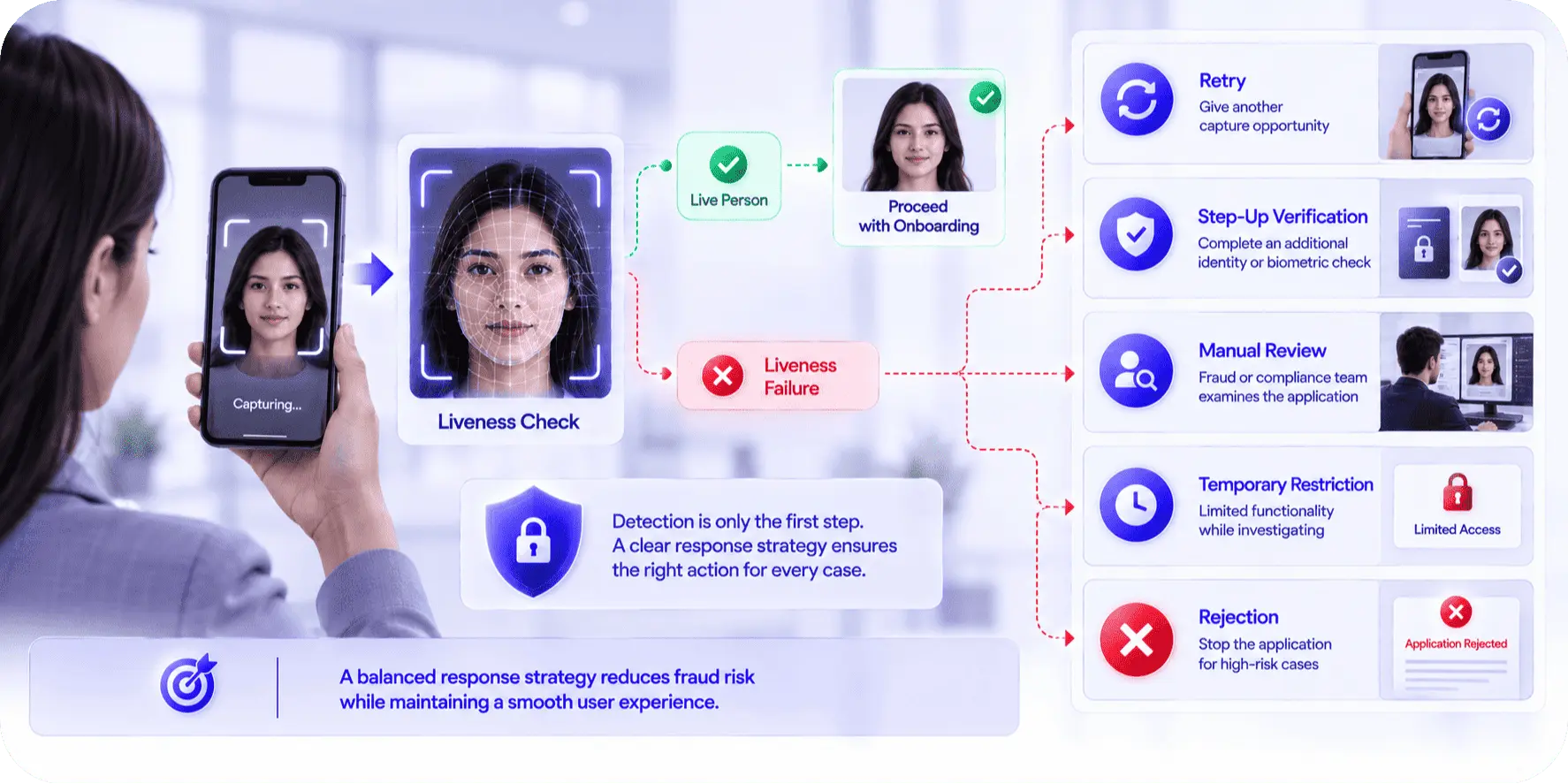
A liveness failure could lead to:
Retry
The customer receives another capture opportunity when the issue appears technical.
Step-Up Verification
The customer completes an additional identity or biometric check.
Manual Review
A fraud or compliance team examines the application.
Temporary Restriction
The account or application receives limited functionality while the event is investigated.
Rejection
The application is stopped when the available evidence supports a high-risk decision.
This prevents every liveness failure from being treated as proof of malicious activity while still providing stronger controls when the risk warrants them.
The Role of Biometrics in Future Financial Security
Biometric security is likely to become increasingly connected with other identity technologies.
Financial institutions may combine:
- Facial verification
- Liveness detection
- Digital identity credentials
- Document verification
- Device intelligence
- Behavioral analysis
- AI-driven fraud detection
The goal is not to make one biometric control responsible for stopping every attack.
It is to create a layered identity architecture in which attackers must defeat multiple independent controls.
This approach can also support better customer experiences because stronger verification can be applied selectively where risk increases.
Conclusion
Presentation attacks are an important security concern for financial institutions using remote biometrics.
Photographs, screen replays, videos, physical replicas, deepfakes, and capture manipulation can all create different challenges for biometric systems.
The most important lesson is that facial recognition accuracy and presentation attack protection are not the same thing.
Face recognition can help determine whether a facial sample corresponds with a trusted identity. Liveness detection and PAD controls help determine whether the biometric presentation itself appears genuine.
Financial institutions should therefore evaluate both capabilities together and connect them with document verification, risk signals, fraud monitoring, and appropriate response workflows.
Strong biometric security also requires continuous testing. Attack techniques change, devices change, and customer environments change.
Organizations implementing presentation attack protection can explore the broader biometric capabilities available from Recognito as part of their financial identity and fraud prevention architecture.
Frequently Asked Questions
What is a presentation attack?
A presentation attack occurs when someone presents an artificial or manipulated biometric representation to a biometric capture system in an attempt to influence its decision.
What are common presentation attacks against facial recognition?
Common examples include printed photographs, screen images, replayed videos, masks, manipulated media, deepfakes, and other artificial facial representations.
Can face recognition alone prevent presentation attacks?
No. Face recognition primarily evaluates facial similarity. Liveness and presentation attack detection provide additional protection against attempts to present artificial biometric samples.
Why is liveness detection important for financial institutions?
Remote financial onboarding and authentication can expose institutions to biometric spoofing. Liveness helps assess whether a facial presentation appears to originate from a genuine live person.
How should financial institutions test presentation attack protection?
They should use representative attack types, devices, capture conditions, and user workflows, evaluate independent testing evidence where available, monitor legitimate-user performance, and regularly reassess the system as attack techniques evolve.