
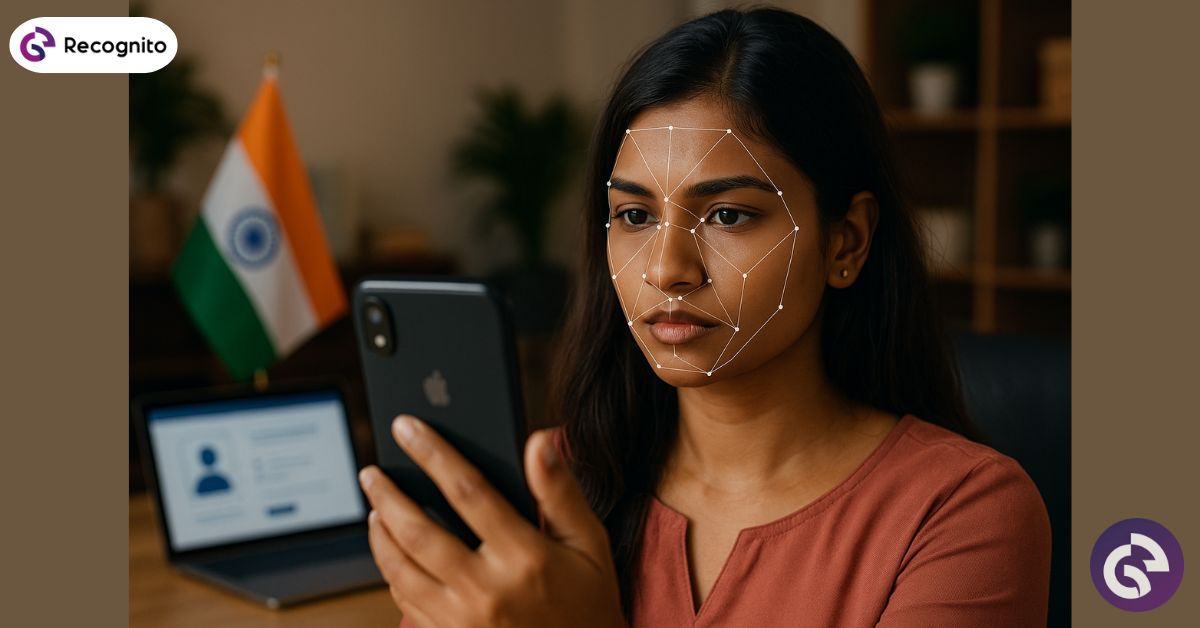
India’s digital ecosystem is expanding faster than ever. With millions of people signing up for mobile apps, fintech platforms, gig services, and online marketplaces, businesses must verify identities quickly and accurately. What once relied on slow manual checks has now become a sophisticated process powered by artificial intelligence. Modern digital identity verification enables Indian companies to confirm user authenticity instantly while improving compliance and reducing the risk of identity fraud.
Fraudsters today are more advanced than ever. Edited Aadhaar cards, manipulated PAN cards, deepfake selfies, replay attacks, and synthetic identities frequently appear during user onboarding. For a mobile-first nation like India, where users join from diverse devices and environments, platforms need verification systems that can think, adapt, and detect suspicious activity in real time. AI-driven verification provides exactly that through a mix of biometric intelligence, behavioural analysis, and device pattern recognition.
The Shift Toward Smarter Verification in India’s Digital Landscape
Not long ago, onboarding relied heavily on manual document uploads and basic OTP-based checks. These methods were inconsistent and often unable to detect tampering. Today, AI identity verification has transformed this process into something far more reliable and scalable.
Advanced systems use facial recognition technology to examine facial landmarks, micro details, angles, and lighting variations, comparing them against ID photos with precision. Their performance is measured through global benchmarks such as the NIST Face Recognition Vendor Test and the NIST FRVT 1:1 Assessment, which many Indian businesses evaluate when assessing biometric reliability and face recognition accuracy.
In a country where users join from various environments such as urban offices, rural homes, low-light rooms, and budget smartphones, AI-driven verification ensures that identity checks remain consistent and dependable regardless of conditions.
Why Indian Businesses Are Choosing AI-Powered Identity Security
Industries across India including fintech, gig platforms, mobility, gaming, healthcare, and others need scalable identity verification that is accurate and frictionless. AI-powered systems detect subtle inconsistencies, identify repeated login attempts, analyze unusual device behaviour, and recognize tampered images more effectively than manual reviews.
They also help companies align with global privacy expectations outlined in frameworks like the GDPR.
Here is why more Indian organizations are adopting intelligent identity verification:
- Faster onboarding that reduces user drop-offs and keeps signups smooth
- Higher accuracy in detecting tampered IDs or abnormal face patterns
- Stronger identity fraud prevention supported by behavioural insights
- Compliance-friendly frameworks suitable for regulated sectors
- Better trust and transparency for users joining digital platforms
Many companies begin exploring these features with the Face Recognition SDK for matching, the Face Liveness Detection SDK for spoof prevention, and the Face Biometric Playground to test different verification flows.

How Liveness Detection Strengthens India’s Fight Against Identity Fraud
Fraud techniques are evolving quickly in India. Deepfake videos, printed photos, digital masks, and reused images frequently appear during remote onboarding. This is why face liveness detection has become essential for Indian platforms seeking strong security.
A robust liveness detection system evaluates depth, movement, reflections, and real-time user presence to confirm that a live individual is in front of the camera. It prevents many of the common spoofing attempts exploited in fintech onboarding, gig platform verifications, loan approvals, and ride-hailing identity checks. This additional layer ensures that identity verification remains resistant to impersonation even as fraud tools become more sophisticated.
Creating Trust Through Better Biometric Verification
A dependable biometric verification system does more than match a face. It evaluates behavioural cues, device patterns, and contextual signals. This is particularly important in India, where onboarding must work seamlessly across varying camera qualities, lighting situations, and device types.
Companies also depend on biometric authentication tools to handle large verification volumes efficiently. These tools support real-time user verification, allowing platforms to approve genuine users instantly while flagging high-risk attempts for deeper review.
Developers and researchers often rely on transparent, community-driven innovation, supported by open contributions available in the Recognito GitHub repository.
Balancing Privacy and Security for Indian Users
Indian users are increasingly aware of how their data is collected and stored. Organizations implementing identity verification must balance accuracy with responsible data handling. Encrypting biometric templates, minimizing stored data, following clear retention policies, and communicating transparently all help build user trust.
Following guidelines inspired by GDPR enables businesses to maintain strong privacy standards and meet the expectations of India’s digital audience.
Real-World Impact Across India’s Fast-Growing Sectors
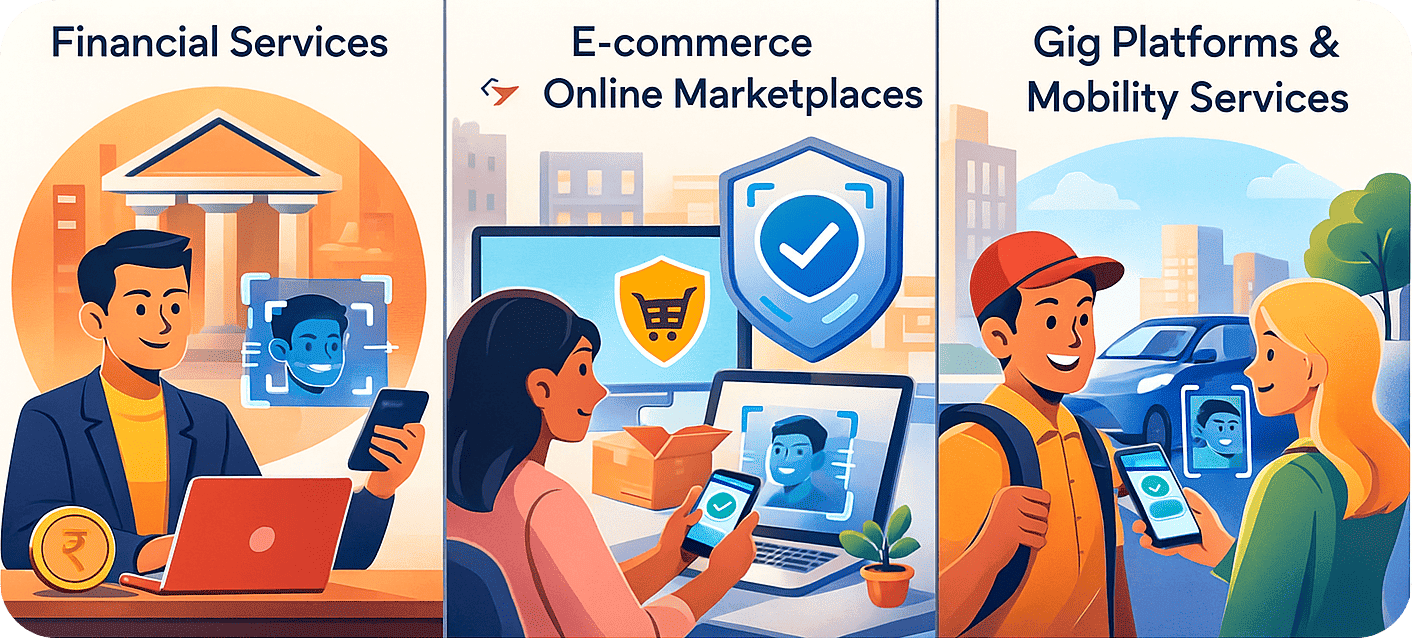
Robust verification now plays a vital role across India’s digital landscape. Financial services rely on automated KYC verification to reduce fraud and speed up onboarding. E-commerce and online marketplaces use digital onboarding security to block fake buyers and prevent misuse. Gig platforms and mobility services depend on identity clarity to safeguard both customers and workers.
Across these environments, intelligent verification helps platforms maintain fairness, reduce fraudulent activity, and provide safer user experiences.
The Future of Identity Verification in India
As fraud continues evolving, identity verification technology must advance alongside it. India’s systems will increasingly incorporate deeper behavioural analysis, enhanced spoof detection, smarter risk scoring, and adaptive AI-powered identity checks.
Emerging approaches, such as document-free identity verification, will also increase in adoption, enabling users to verify their identities without uploading traditional documents.
These advancements will create an environment where verification remains strong while becoming nearly frictionless for genuine users.
Building a Safer Digital Ecosystem Through Intelligent Verification
Trust forms the core of every digital platform. When businesses can reliably verify who their users are, they create safer interactions, reduce fraud, and maintain smoother onboarding experiences. With India’s digital sector expanding at a remarkable speed, AI-driven verification ensures that identity checks remain secure and future-ready.
Solutions available at Recognito continue helping organizations implement precise, privacy-focused verification systems built for long-term reliability and trust.
Frequently Asked Questions
1. What is digital identity verification?
It is a process that uses AI and biometrics to confirm whether a user is genuine, helping Indian platforms onboard real users securely.
2. Why is liveness detection important?
It ensures the person on camera is real by detecting natural facial movement, blocking spoof attempts using photos, videos, or deepfakes.
3. How does AI help reduce identity fraud?
AI detects tampered images, unusual device activity, and suspicious behaviour that manual checks often miss, making fraud harder to execute.
4. Does biometric verification protect user privacy?
Yes. When implemented properly, it uses encrypted data, minimal storage, and privacy-focused policies to keep user information secure.
5. Which sectors benefit most in India?
Fintech, gig platforms, mobility, e-commerce, and gaming rely heavily on digital identity checks to prevent fraud and onboard users safely.
