
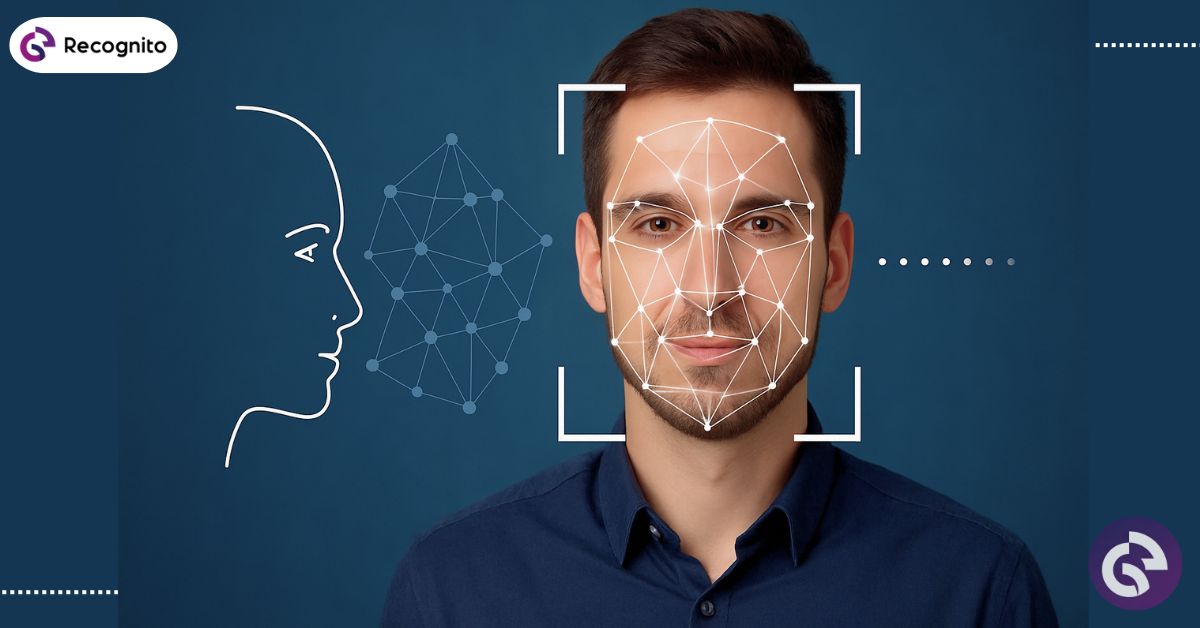
Facial recognition is no longer just a sci-fi plot twist. It is now a part of daily life, from unlocking smartphones to airport security checks. A face recognition system uses advanced algorithms to scan, analyze, and verify identities in seconds. Businesses, schools, and governments are rapidly adopting it, but it’s worth digging deeper into how it works, its benefits, and what challenges still exist.
Facial Recognition System
At its core, a facial recognition system relies on biometric technology. It captures a person’s facial features, converts them into a digital template, and compares that data with stored profiles to confirm identity. Unlike fingerprints or ID cards, you don’t need to touch anything. Just look at the camera, and the system does the rest.
This technology uses complex neural networks trained on thousands of images. The system maps out key points like the distance between eyes, nose shape, and jawline. The result is a unique faceprint that is nearly impossible to duplicate. Accuracy levels are improving quickly thanks to evaluations like the NIST Face Recognition Vendor Test, which tracks the performance of leading algorithms worldwide.
How Face Recognition Technology Works
Understanding the process makes it clear why it is so widely trusted. Here’s a simple breakdown:
- Image Capture – A camera captures a person’s face in real time.
- Face Detection – The system locates the face in the image and isolates it from the background.
- Feature Extraction – Algorithms analyze facial features such as cheekbones, chin curves, and lip contours.
- Template Creation – The extracted data is turned into a digital faceprint.
- Comparison and Match – The faceprint is compared with existing records to confirm identity.
Accuracy rates are consistently improving. According to NIST FRVT 1:1 testing, leading systems now achieve over 99% verification success under ideal conditions.
Face Anti-Spoofing and Its Role in Security
Every great lock needs a strong defense. This is where face anti spoofing comes in. Without it, someone could trick the system using a photo, video, or even a 3D mask. Spoofing attempts are surprisingly common in fraud-heavy industries like finance.
Modern systems fight this using liveness detection. The camera checks for natural movements such as blinking, skin texture changes, and depth. Some solutions even shine light on the face and measure reflections to confirm the presence of a real person. These layers of defense ensure that recognition remains both fast and secure.
Face Recognition Attendance System
Schools, offices, and even factories are adopting a face recognition attendance system. No more long queues at biometric scanners or manual sign-in sheets. Employees just walk in, glance at a camera, and their presence is automatically logged.
The benefits are clear:
- No contact required which keeps it hygienic.
- Faster processing compared to manual punching.
- Reduced buddy punching where one employee marks attendance for another.
- Accurate reporting that syncs directly with payroll systems.
Organizations save time and prevent fraud while employees enjoy a hassle-free experience.
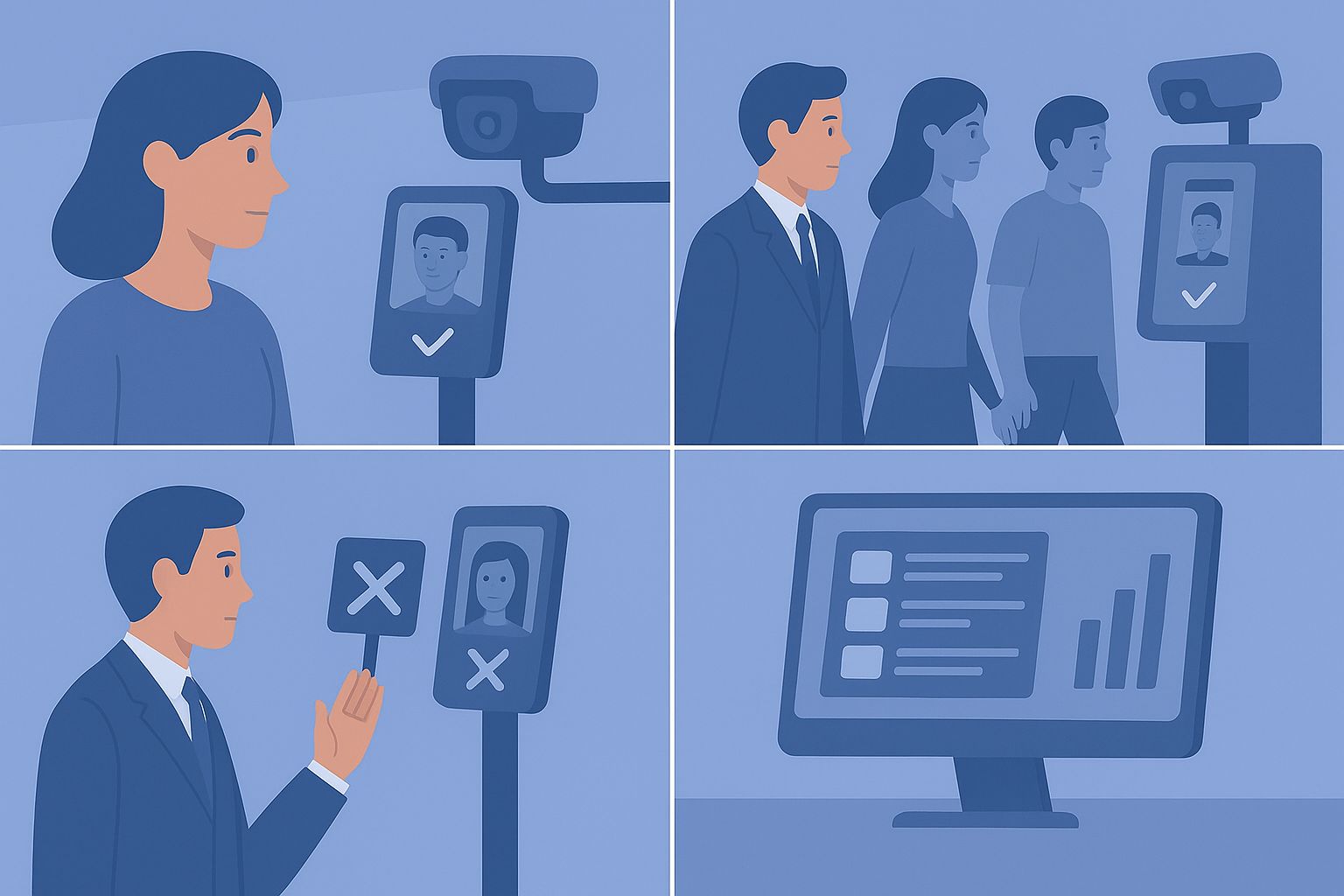
Face Scanning Attendance System in Education
Schools and universities are also experimenting with a face scanning attendance system. Teachers can focus on teaching instead of wasting class time marking attendance. Parents get real-time updates if their child is present, while administrators gain detailed records for compliance.
Though promising, it does raise questions about student privacy. Educational institutes must handle such systems responsibly and align with global data protection standards like GDPR.
Benefits of Face Recognition in Real-World Applications
Let’s talk numbers and impact. The global facial recognition market is projected to reach over $16 billion by 2030. Here’s why it’s growing so fast:
- Security – Airports use it to screen passengers quickly.
- Fraud Prevention – Banks use it to stop identity theft.
- Convenience – Smartphones unlock instantly with a glance.
- Efficiency – Attendance and access control become effortless.
Quick Fact Table:
| Application | Benefit | Example Use Case |
| Banking | Stops account fraud | Mobile banking logins |
| Airports | Speeds up security checks | Passport verification |
| Education | Saves teaching time | Student attendance |
| Workplace | Prevents time theft | Employee attendance tracking |
Privacy and Ethical Concerns
As powerful as the technology is, it sparks serious debates. Who owns the face data? How securely is it stored? What if it gets misused? Regulations are starting to catch up. In Europe, GDPR rules require companies to get clear consent before storing or using biometric data.
Transparency and user control are key. People need to know how their face data is being used and have the right to opt out. Striking a balance between security and privacy remains one of the biggest challenges for the industry.
Case Studies: Where It Works Best
- Airports – The U.S. Customs and Border Protection agency reported that facial recognition has caught thousands of identity fraud attempts since its rollout.
- Corporate Offices – Large firms in Asia have reduced payroll fraud by adopting face-based attendance.
- Healthcare – Hospitals use it to secure patient data and restrict access to sensitive areas.
These case studies highlight how versatile and impactful the technology can be when used responsibly.
The Future of Face Recognition
Imagine walking into a store, picking items, and leaving without waiting in line. Payment is automatically processed after the system confirms your face. This futuristic scenario is closer than you think. Retailers are already piloting systems where face recognition replaces credit cards.
At the same time, research is focusing on reducing bias. Early systems struggled with accuracy across different ethnicities. Today, continuous improvements are making recognition fairer and more reliable. Open-source contributions on platforms like GitHub are accelerating innovation by giving developers direct access to tools and data.
Conclusion
A face recognition system is more than just a tech buzzword. It is reshaping industries by offering speed, security, and convenience. From attendance tracking to fraud prevention, its applications are only expanding. But with great power comes great responsibility, and balancing innovation with privacy will decide how widely it gets adopted in the future. For organizations exploring the technology, brands like Recognito are paving the way with practical, secure, and developer-friendly solutions.
