
Deepfake fraud has changed the economics of impersonation.
Creating a convincing fake video, voice recording, or image once required specialist skills and significant effort. Generative AI has lowered those barriers, allowing attackers to produce realistic synthetic media faster and at greater scale. The FBI has warned that criminals are using generative AI to make fraudulent schemes more convincing and easier to scale, while recent FBI reporting describes AI-generated videos and deepfakes being used in impersonation scams. FBI guidance on generative AI-enabled financial fraud documents how synthetic media can strengthen existing fraud techniques.
For businesses, the concern extends far beyond social media scams. Deepfakes can target remote identity verification, account recovery, executive communications, employee recruitment, customer support, financial transactions, and high-value approvals.
That is why deepfake detection tools are moving from an experimental security feature toward a practical layer in fraud prevention.
The objective is not to find a single detector that identifies every fake. It is to determine whether digital media can be trusted and combine that assessment with other identity and fraud signals before a high-risk decision is made.
Why Deepfake Fraud Is Becoming a Business Problem
Deepfake attacks exploit one of the oldest weaknesses in security: people and systems tend to trust familiar identities.
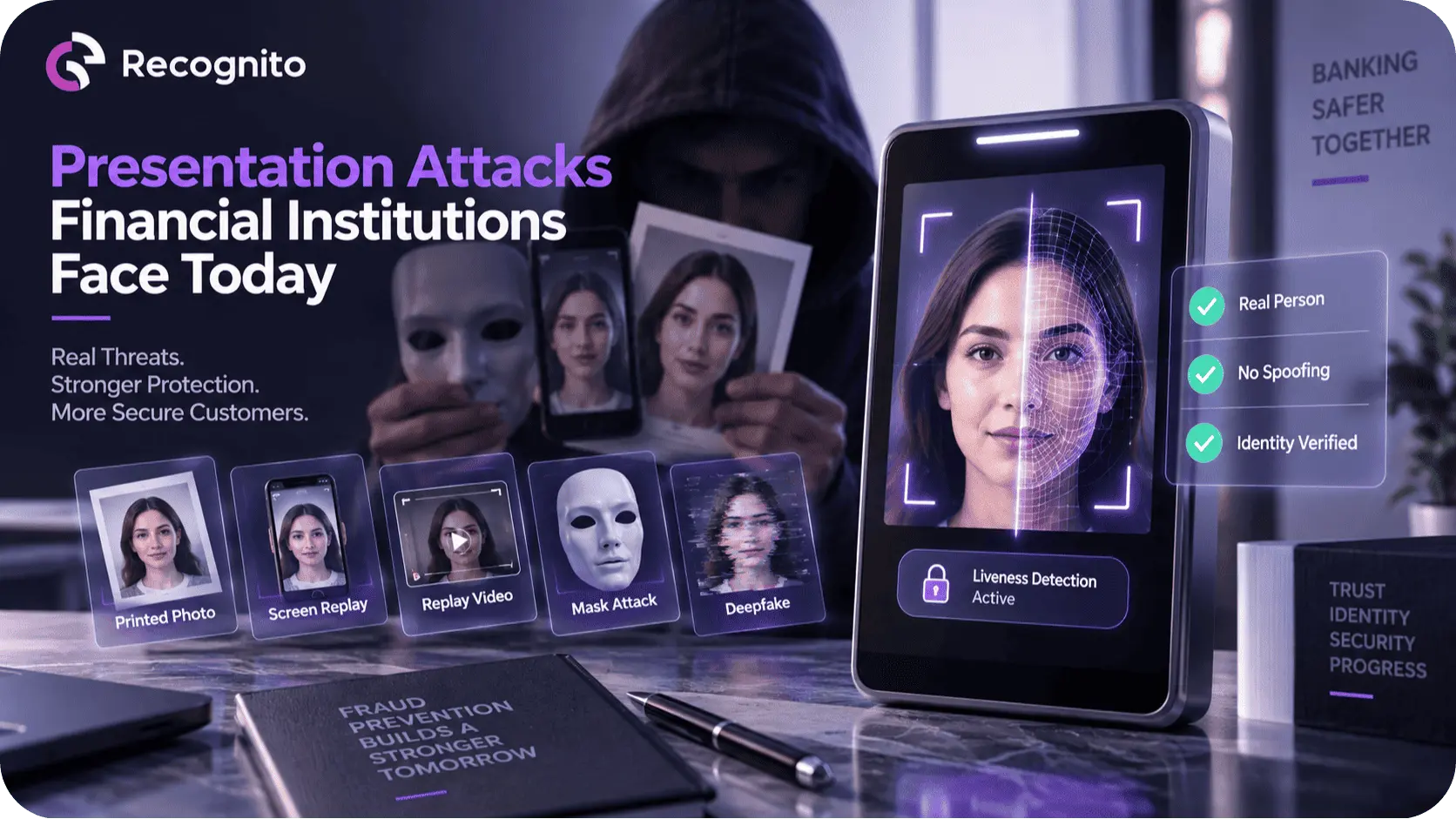
An attacker may impersonate an executive during a video call, create a synthetic customer during remote onboarding, use a manipulated voice to influence an employee, or submit altered biometric media to a verification system.
The financial consequences can be significant because deepfakes are most valuable when attached to an existing business process.
A fake video by itself may not create a loss. A fake video used to convince an employee to authorize a payment can.
Similarly, a manipulated selfie is not necessarily dangerous until it is accepted as evidence of identity.
This distinction matters because deepfake detection should not exist as a standalone media-classification project. It needs to be connected to workflows where identity, authorization, and financial risk are involved.
Recent FIDO research found that more than half of surveyed consumers were concerned about deepfakes when verifying identities online, demonstrating that the threat also affects confidence in remote biometric systems. FIDO’s research on remote identity verification examines consumer attitudes toward biometrics, remote verification, bias, and deepfake threats.
What Deepfake Detection Tools Actually Analyze
Deepfake detection is not one technology.
Different systems analyze different properties of images, video, audio, or the way digital media enters a verification environment.
A detection system may examine facial inconsistencies, unnatural motion, image artifacts, lighting relationships, lip synchronization, frame-level anomalies, compression patterns, or characteristics associated with synthetic generation.
More advanced solutions may use machine learning models trained to identify patterns that distinguish authentic media from manipulated content.
The challenge is that attackers adapt.
A detector that works well against one generation method may perform differently against another. Compression, resizing, low-resolution cameras, network transmission, and normal editing can also make genuine content look unusual.
That creates an important security principle: deepfake detection should produce evidence for a risk decision, not an unquestionable declaration of truth.
Where Businesses Are Applying Deepfake Detection
Remote identity verification
Remote onboarding is one of the most obvious targets.
A customer may submit an identity document, selfie, and video while applying for a financial account. If an attacker can generate convincing facial media or manipulate the capture process, a traditional verification flow may have difficulty distinguishing a legitimate applicant from an impersonator.
Deepfake detection can add another signal by looking for manipulated facial media before the verification result is trusted.
That signal becomes more valuable when combined with document verification and liveness rather than used in isolation.
Account recovery
Account recovery is another high-risk scenario because attackers may already possess personal information belonging to the legitimate customer.
A deepfake could potentially be used to impersonate a customer during a video-based recovery process. Adding media-integrity checks can make this attack path harder.
For organizations building broader defenses, deepfake attack prevention strategies provides related context on combining detection with stronger identity and security controls.
Executive and employee impersonation
Businesses are also exposed internally.
An attacker does not always need to penetrate a network directly. Social engineering can be used to convince an employee that an apparently familiar executive or partner has requested an urgent action.
The FBI’s recent warnings describe scammers using AI-generated videos in impersonation schemes, including videos designed to appear as though they come from trusted authorities. The FBI’s 2026 warning on AI-generated impersonation videos shows how synthetic media is being incorporated into broader social-engineering campaigns.
The lesson for enterprises is important: identity assurance cannot stop at login.
Organizations also need controls around high-risk communications and transactions.
Financial services
Banks, fintechs, payment companies, and lending platforms have particularly strong incentives to invest because digital identity and financial decision-making are closely connected.
A synthetic customer who passes onboarding can become a fraudulent account. A manipulated identity used during account recovery can lead to account takeover. A deepfake-enabled interaction with an employee can potentially facilitate unauthorized payments.
This is why deepfake defense is increasingly becoming part of a broader fraud-prevention strategy rather than a narrow content-moderation problem.
The financial-services threat landscape is explored further in deepfake fraud trends affecting financial institutions.
Why Traditional Verification Alone Is Not Enough
Many legacy identity systems were designed around information that attackers can obtain.
Names, dates of birth, addresses, identification numbers, passwords, and even copies of identity documents can be stolen or purchased.
Biometrics introduced a stronger form of evidence by asking whether the person presenting the identity resembles a trusted biometric reference.
But deepfakes challenge that assumption.
If the system receives manipulated biometric media, facial matching may operate correctly while still producing the wrong security outcome. The algorithm may accurately match two images that both represent the same synthetic identity.
That is why facial recognition accuracy and media authenticity are separate questions.
A robust remote identity workflow may need to establish:
Is this the correct person?
Is the person actually present?
Is the captured media genuine?
Is the identity evidence legitimate?
Does the overall transaction make sense in context?
Deepfake detection primarily helps answer the third question. It should complement, not replace, the others.
Deepfake Detection and Liveness Detection Are Not the Same
The two technologies are related but address different threats.
Liveness detection attempts to determine whether biometric input comes from a live subject rather than a presentation attack such as a photograph or replay.
Deepfake detection focuses more specifically on identifying synthetic or manipulated media.
A customer could be physically present while using manipulated content or an injected video stream. Conversely, a media sample could look authentic while still representing a replay attack.
That distinction is why businesses should avoid buying a solution simply because it advertises “AI-powered liveness” or “deepfake protection.”
The organization needs to understand which threat each control addresses and where it sits in the security architecture.
For teams implementing facial biometric workflows, a face liveness SDK can provide one security layer, while dedicated deepfake analysis and broader fraud controls address additional attack paths.
The Main Challenges With Deepfake Detection
Detection accuracy is not permanent
Generative models change quickly. New synthesis methods can produce media that differs substantially from the examples used to train a detector.
A model should therefore be treated as something that requires ongoing evaluation.
False positives create friction
Authentic media can contain compression artifacts, unusual lighting, camera noise, or other properties that resemble manipulation.
If every suspicious result blocks the customer, legitimate users may experience unnecessary rejection.
False negatives can be expensive
The opposite problem is more serious. A deepfake that passes the detection layer may reach a high-value identity or financial decision.
That means organizations should never treat a detector’s score as the only security control.
Attackers may target the pipeline
Security teams often focus on the media itself and overlook how it reaches the application.
An attacker may attempt to inject manipulated content, compromise capture processes, exploit device environments, or manipulate application logic.
This is why deepfake detection must be considered as part of an end-to-end security architecture.
What a Strong Deepfake Defense Looks Like
A resilient architecture typically uses several layers.
| Security layer | Main purpose | Example risk addressed |
| Identity document verification | Validate identity evidence | Forged or altered documents |
| Facial matching | Compare biometric identity | Impersonation |
| Face liveness | Confirm live biometric presence | Photo and replay attacks |
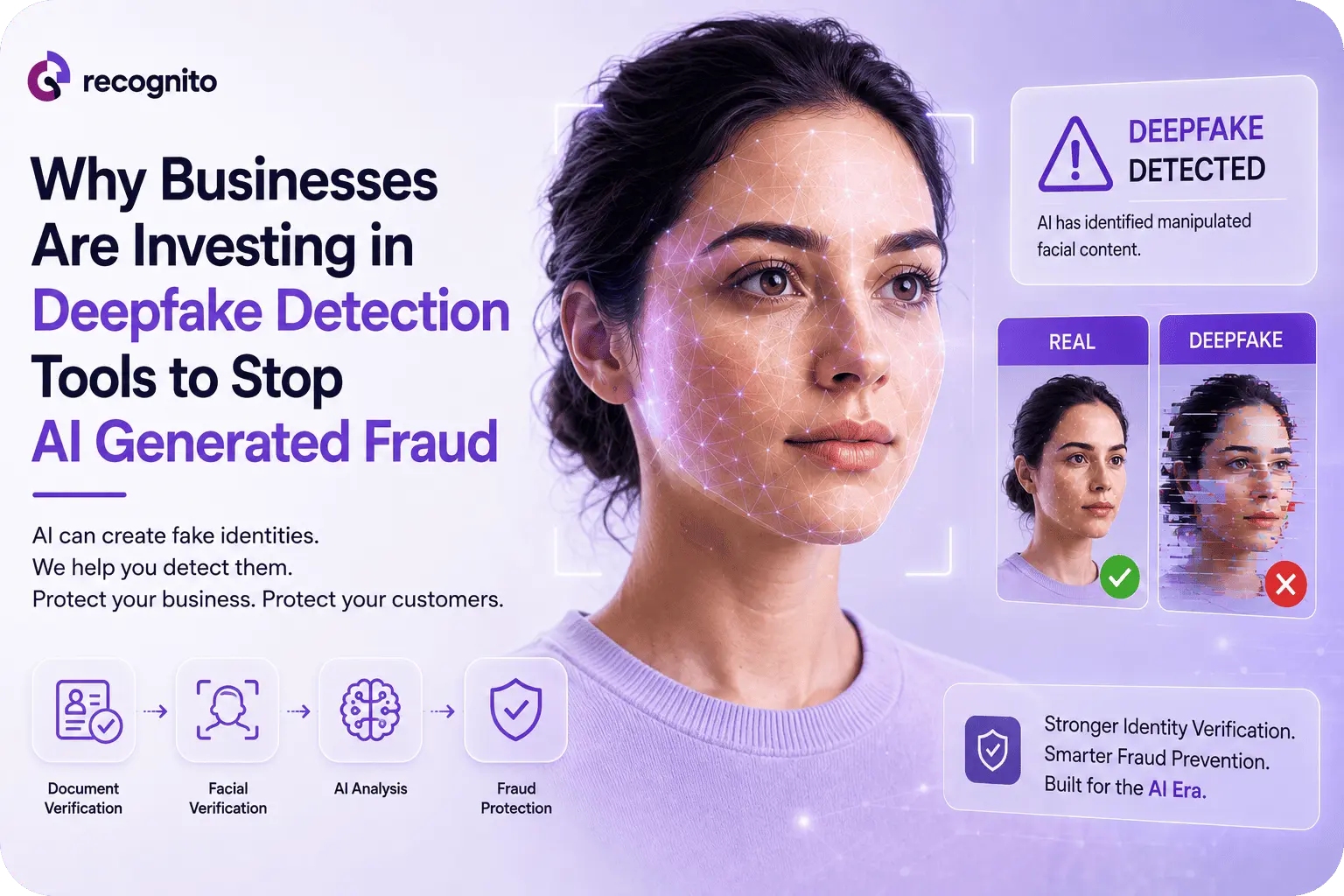
| Deepfake detection | Analyze synthetic or manipulated media | AI-generated face or video |
| Device and session signals | Assess capture environment | Suspicious devices or sessions |
| Transaction risk analysis | Evaluate behavior and context | Fraudulent high-value activity |
| Human escalation | Investigate ambiguous cases | Complex or high-risk attempts |
This layered approach also helps businesses avoid a single point of failure.
If a fraudster defeats one control, the remaining layers can still create enough friction or uncertainty to prevent the attack from succeeding.
How Businesses Should Evaluate Deepfake Detection Tools
A vendor demonstration is not enough.
Security teams should test detection technology against realistic scenarios that reflect their actual risk.
Start with the media types involved in the workflow. A bank using video-based customer verification has different requirements from a company screening remote employees through interviews.
Then evaluate attack conditions:
- different levels of compression
- poor lighting
- low-resolution cameras
- manipulated images and video
- synthetic voices where relevant
- replayed content
- altered or generated facial media
- suspicious capture environments
- injection attempts
The testing process should measure both detection and customer impact.
A useful evaluation question is not simply “How many deepfakes did the system detect?” It is also “How many legitimate customers did it incorrectly challenge?”
Measure business outcomes
Deepfake detection should be connected to operational metrics such as:
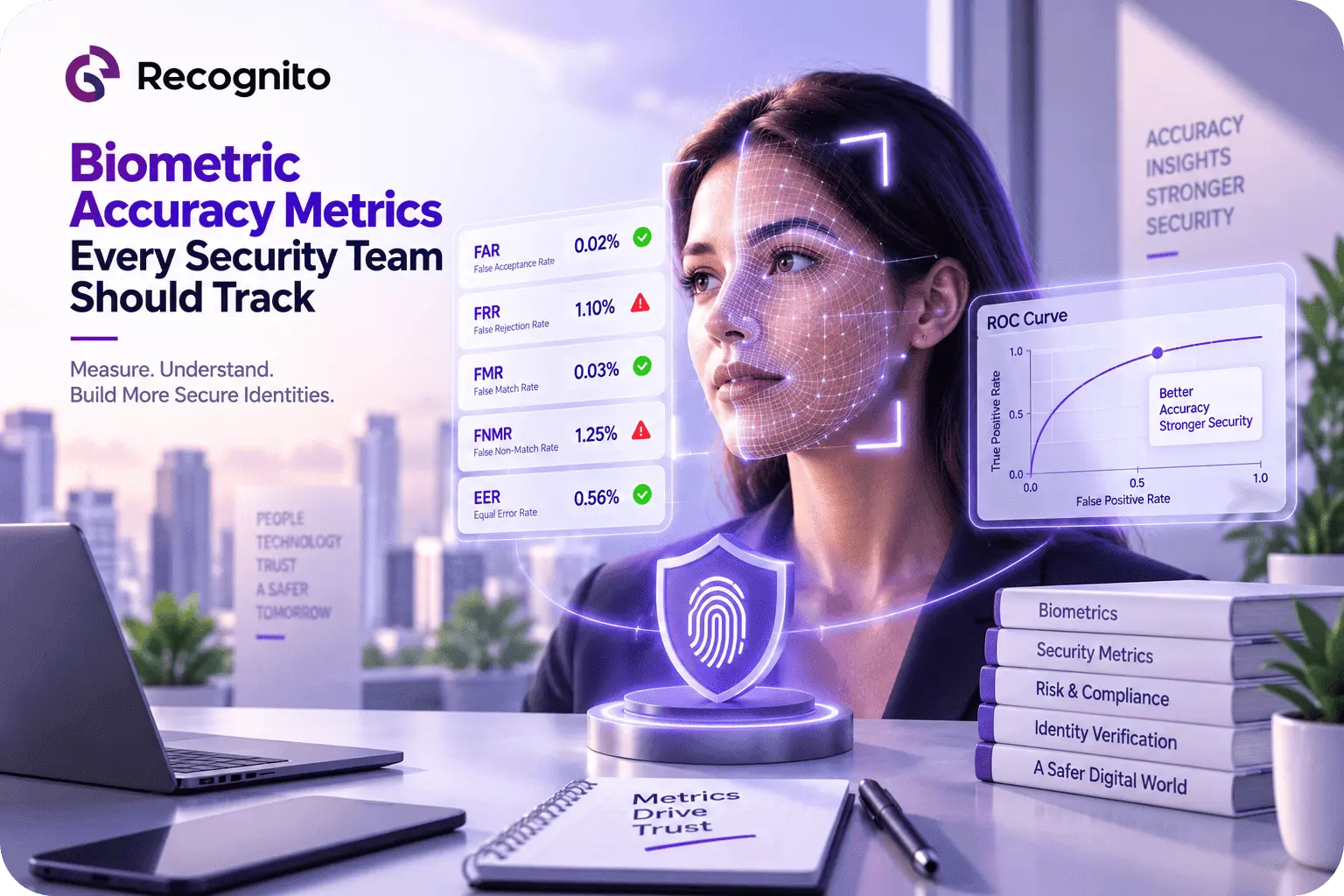
Detection rate: How often known attacks are identified?
False-positive rate: How often legitimate activity is flagged?
Review rate: How many customers require additional investigation?
Decision latency: Does detection slow down onboarding or transactions?
Fraud loss: Are successfully detected attacks translating into measurable loss reduction?
Coverage: Which media types and attack categories are actually supported?
These measurements give leadership a clearer picture of whether a detection investment is improving risk management.
Why Businesses Are Investing Now
The business case is becoming stronger because attackers can use generative AI to scale impersonation.
The FBI has described generative AI as a tool that can increase the speed, sophistication, and believability of fraudulent schemes. That changes the cost equation for attackers.
When fraudulent media becomes cheap to create, organizations cannot rely exclusively on manual scrutiny.
Manual review remains valuable, but asking employees to identify every sophisticated fake by sight is difficult to scale. Detection technology can provide automated screening and route uncertain cases toward deeper investigation.
This is particularly important in high-volume environments where hundreds or thousands of customer or employee interactions may occur every day.
The investment is therefore not simply about buying a detector. It is about reducing the gap between the speed of fraud production and the organization’s ability to identify it.
Deepfake Detection Should Support Risk-Based Decisions
A strong implementation does not necessarily block every interaction that receives a suspicious score.
Instead, detection results can feed into a broader risk engine.
A low-risk interaction with strong identity evidence and no suspicious signals might continue normally. A session with manipulated-media indicators, weak liveness results, unusual device characteristics, and inconsistent identity information could be routed to additional verification or manual investigation.
This approach protects customer experience while reserving stronger controls for cases that actually require them.
It also gives fraud teams more context than a simple “deepfake” or “not deepfake” classification.
Privacy and Governance Still Matter
Deepfake detection systems may process faces, voices, videos, identity documents, and other sensitive information.
Businesses therefore need clear rules for how media is collected, transmitted, analyzed, stored, and deleted.
Security teams should also understand whether the provider uses submitted data for model training, how long samples are retained, and where processing takes place.
Strong governance is especially important when biometric information is involved because the consequences of unnecessary retention or uncontrolled access can extend well beyond a single fraud incident.
Deepfake detection should strengthen identity security without creating an unnecessary new data exposure.
The Future of AI-Generated Fraud Defense
Detection technology will remain important, but businesses should expect the security architecture to evolve beyond detection alone.
Prevention mechanisms, stronger device integrity, trusted capture environments, phishing-resistant authentication, biometric liveness, transaction monitoring, and identity-risk signals can all reduce the attack surface.
In other words, the long-term answer to deepfake fraud is unlikely to be one perfect classifier.
It will be a system that makes synthetic impersonation increasingly difficult to turn into a successful business action.
For technical teams evaluating biometric components and implementation options, the Recognito GitHub repository can complement broader product, security, and integration assessment.
Conclusion
Businesses are investing in deepfake detection because AI-generated fraud is turning impersonation into a scalable operational threat.
The risk is not limited to fake videos on social networks. Deepfakes can target customer onboarding, account recovery, employee interactions, executive communications, and financial transactions wherever digital identity influences a decision.
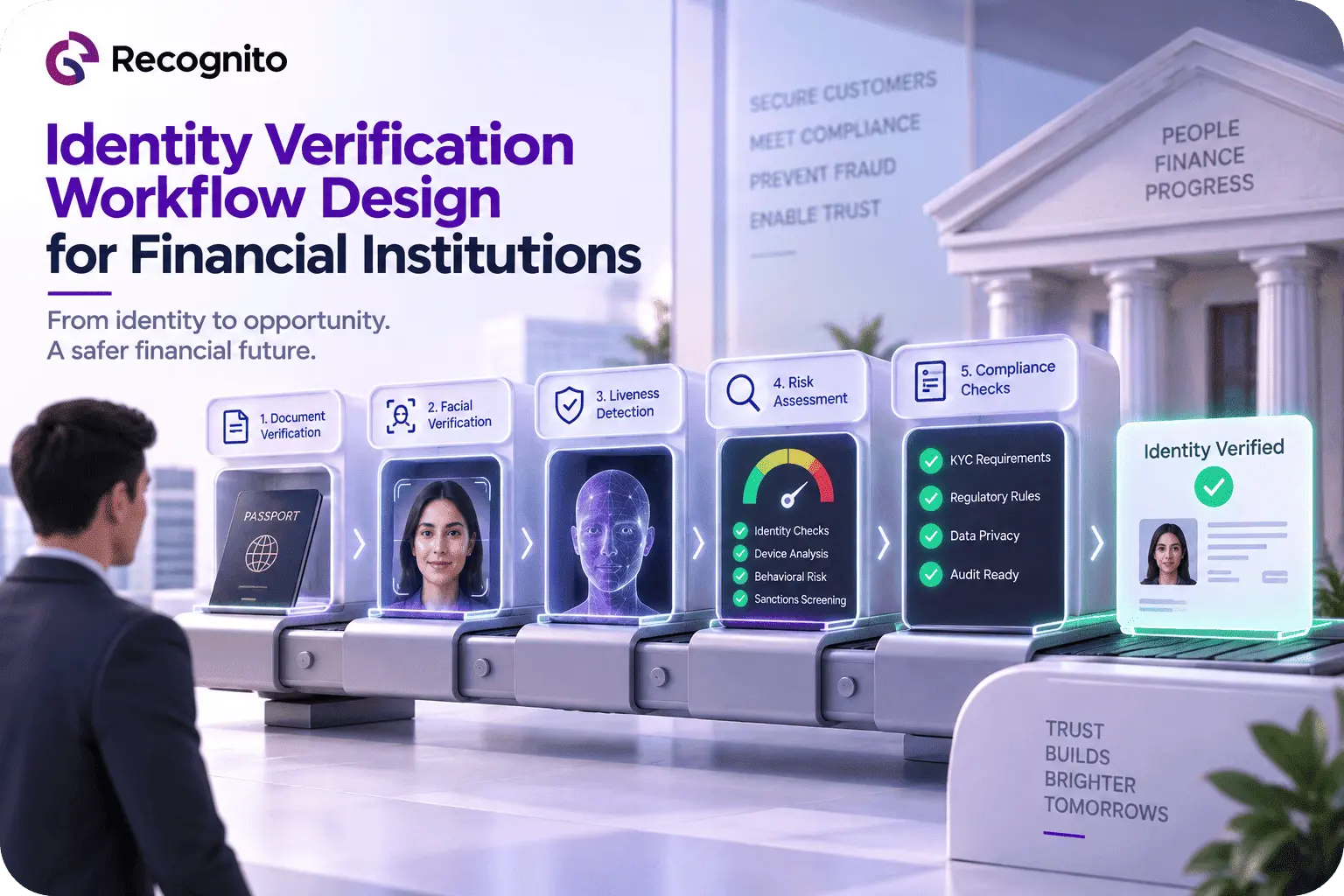
The strongest strategy is layered. Deepfake detection should work alongside document verification, facial matching, liveness detection, device intelligence, transaction monitoring, and human investigation.
Organizations that evaluate these tools should focus on real attack scenarios, false positives, false negatives, integration, privacy, and measurable fraud outcomes rather than relying on a single detection percentage.
For businesses building stronger biometric and identity-security workflows, Recognito can be part of a broader approach to protecting digital verification processes.
Frequently Asked Questions
Why are companies investing in deepfake detection?
Companies are investing because generative AI has made convincing impersonation faster and easier to produce. Deepfakes can undermine remote identity verification, social engineering defenses, and other high-value business processes.
Can deepfake detection prevent all AI-generated fraud?
No. Detection is one security layer. Attackers can target identity documents, liveness, devices, application logic, credentials, or employees instead of relying exclusively on synthetic media.
Is deepfake detection the same as liveness detection?
No. Liveness focuses on whether biometric input comes from a live subject. Deepfake detection focuses more specifically on synthetic or manipulated media. They address overlapping but different threats.
Where should businesses use deepfake detection?
High-value remote identity verification, account recovery, financial services, executive communications, employee workflows, and other processes where media-based impersonation could lead to financial or security consequences are strong candidates.
How should a business evaluate a deepfake detection vendor?
Test the technology against realistic attacks and genuine customer media, measure false positives and false negatives, evaluate different devices and media conditions, assess integration and latency, and determine whether detection results can feed into broader risk-based decisions.