
Choosing the right identity verification software is a strategic decision for an enterprise, not simply a technology procurement exercise.
Banks, fintech companies, payment providers, insurers, marketplaces, telecommunications companies, and other digital businesses increasingly depend on identity verification to onboard customers, prevent fraud, meet regulatory obligations, and maintain trust.
The challenge is that identity verification vendors often offer similar-looking capabilities while differing significantly in biometric performance, document coverage, liveness protection, deployment options, integration effort, privacy controls, scalability, pricing, and technical support.
A platform that works well for a small application may not be suitable for an enterprise processing millions of verification events. Likewise, an inexpensive solution may become expensive once development effort, infrastructure, maintenance, and manual review are included.
This makes vendor evaluation especially important.
The goal should not be to find the vendor with the longest feature list. It should be to select identity verification software that fits the organization’s actual risk profile, customer journey, architecture, compliance requirements, and long-term growth.
What Is Enterprise Identity Verification Software?
Identity verification software helps organizations establish whether a person is who they claim to be.
Depending on the solution, the technology may combine document verification, facial verification, liveness detection, biometric matching, data validation, risk signals, and other checks into a single workflow.
A typical digital verification journey might require a customer to submit an identity document, provide a facial image, complete a liveness check, and receive an automated verification decision.
The exact process depends on the business and risk level.
For enterprises, the important consideration is that identity verification is rarely just one feature. It is usually a collection of technologies working together to establish sufficient confidence in an identity.
This is why selecting an identity verification platform requires evaluating the complete workflow rather than judging one component in isolation.
Why Enterprise Vendor Selection Is More Difficult
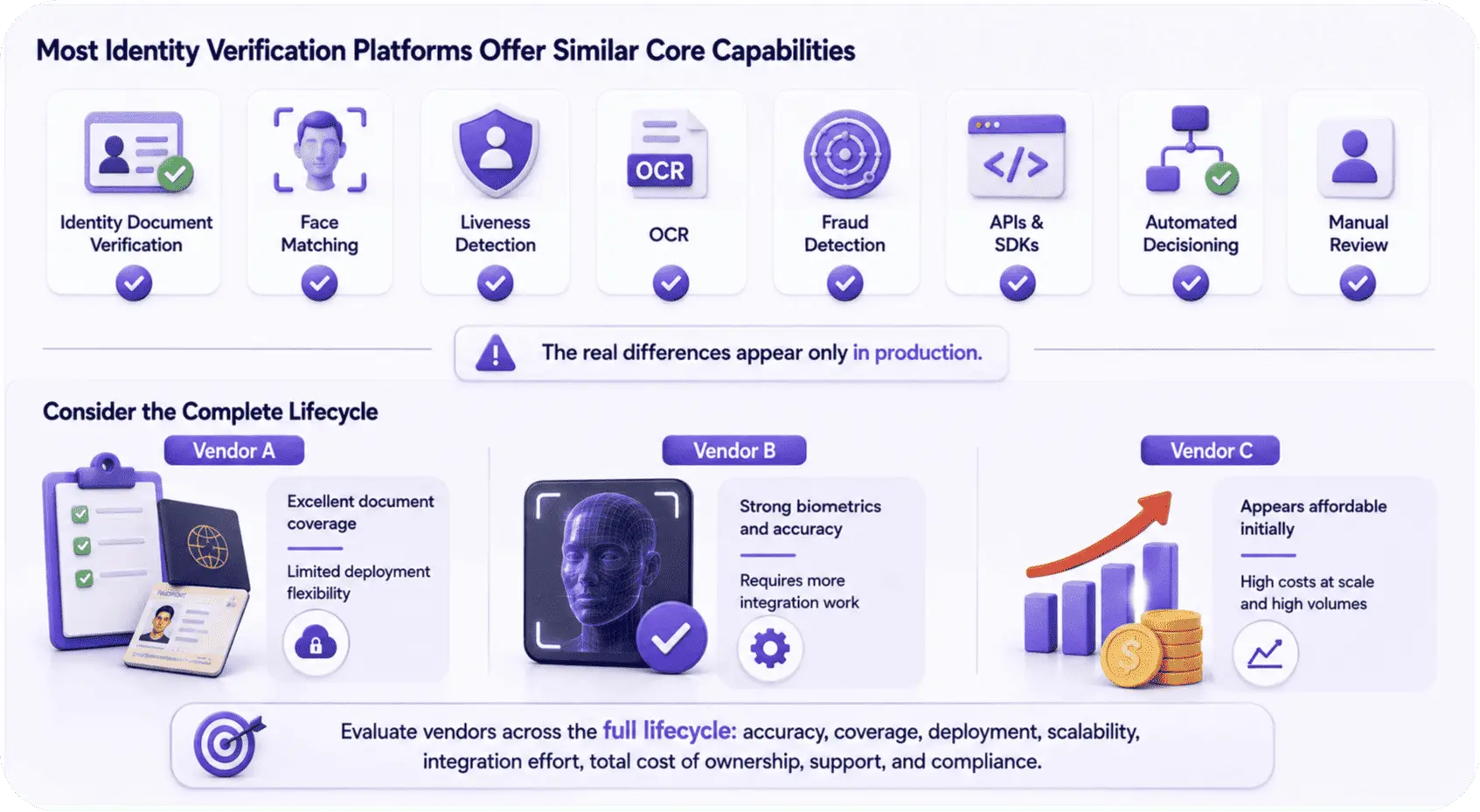
Identity verification vendors can appear very similar during an initial product comparison.
Most major platforms may offer some combination of:
- Identity document verification
- Face matching
- Liveness detection
- OCR
- Fraud detection
- APIs and SDKs
- Automated decisioning
- Manual review
The differences often become visible only when the technology is tested in a real production environment.
An enterprise may discover that one provider has excellent document coverage but limited deployment flexibility. Another may offer strong biometrics but require considerably more integration work. A third may appear affordable until high transaction volumes create substantially higher costs.
Vendor selection should therefore consider the complete lifecycle.
The Most Important Identity Verification Vendor Selection Criteria
A reliable procurement process should evaluate technical performance, security, integration, compliance, scalability, user experience, support, and commercial value.
1. Verification Accuracy and Independent Performance
The first question is whether the vendor’s technology can provide reliable verification results.
Accuracy claims should be examined carefully because “accuracy” can mean different things depending on what is being measured.
An enterprise should distinguish between document verification performance, face matching performance, liveness results, and the final identity decision.
For facial biometrics, independent testing can provide useful evidence. The NIST Face Technology Evaluations provide a reference for assessing facial recognition algorithms under defined testing conditions.
When evaluating a vendor, consider:
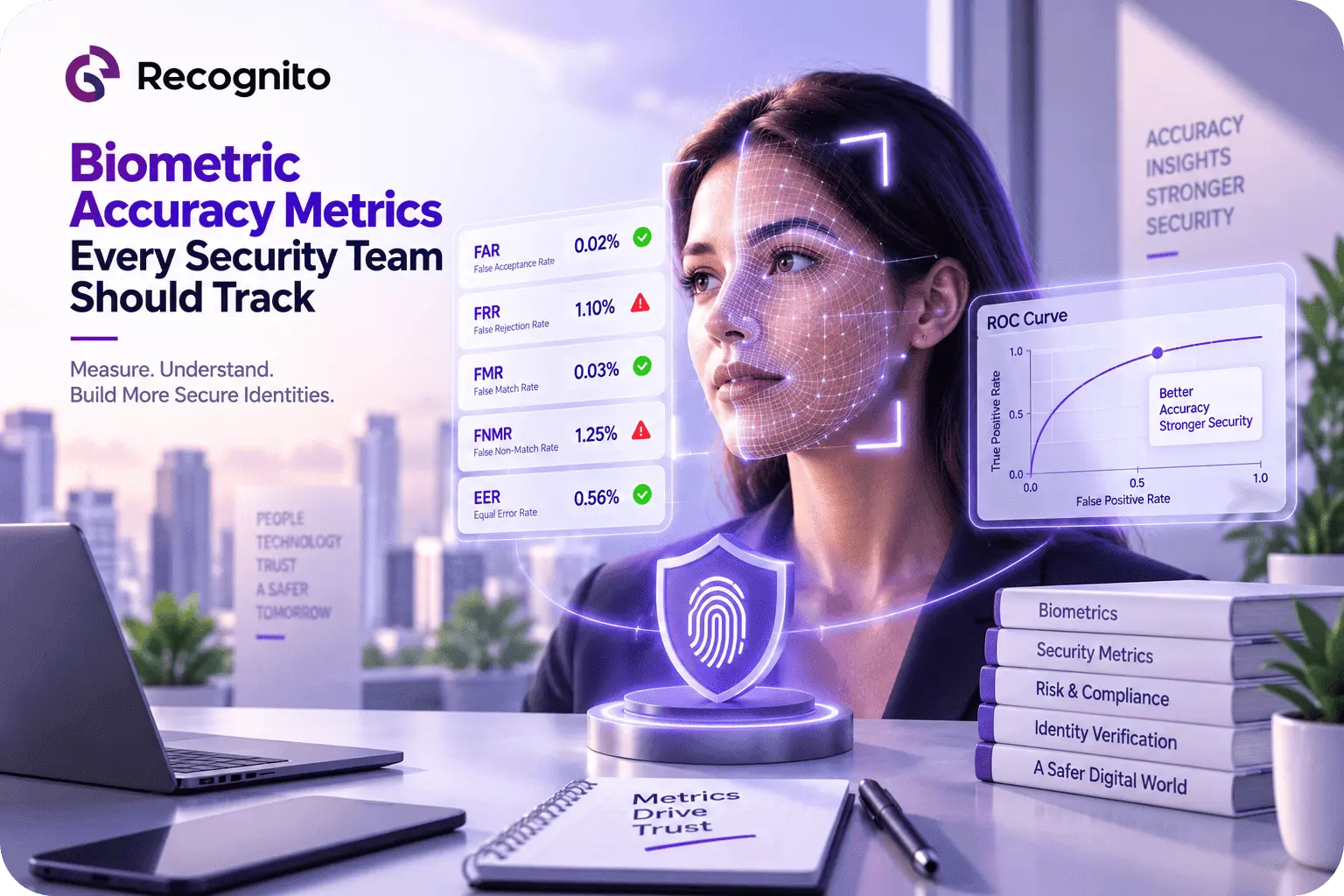
- False acceptance and rejection rates
- Recognition performance
- Document verification accuracy
- Liveness performance
- Processing speed
- Test conditions
- Real-world performance
Vendor claims should also be tested against representative users, devices, documents, and workflows rather than accepted entirely on marketing material.
For enterprises evaluating biometric identity systems, NIST face recognition benchmarks provide additional background on how independent biometric evaluation can be interpreted.
2. Document Coverage and Verification Capabilities
For many organizations, document verification is one of the foundations of identity verification.
The platform should support the identity documents relevant to the markets in which the business operates.
This can include passports, national identity cards, driver’s licenses, residence permits, and other government-issued credentials.
However, document coverage should not be evaluated simply by counting the number of supported documents.
Enterprise teams should examine how the platform handles:
- Different document versions
- Expired documents
- Damaged documents
- Poor image quality
- Tampering indicators
- Machine-readable information
- Regional document variations
The ability to process a document successfully in a demonstration does not necessarily mean the solution will maintain reliable performance across the full range of documents used by your customers.
An organization with document-heavy onboarding can also assess an ID document recognition SDK as part of its wider verification architecture.
3. Biometric Verification and Person-to-Identity Matching
Document verification helps establish whether the submitted credential appears legitimate.
It does not necessarily establish that the person holding the document is its rightful owner.
That is where biometric verification becomes important.
A facial verification workflow can compare the customer’s live facial sample with the photograph associated with the trusted identity document.
For an enterprise, this creates an additional layer of identity assurance.
When evaluating biometric capabilities, consider:
- 1:1 verification performance
- Matching thresholds
- Image quality requirements
- Processing speed
- Demographic performance
- Mobile and server environments
- Real-world performance
A provider offering a suitable facial recognition SDK can give engineering teams a reusable biometric component that can be incorporated into the wider identity workflow.
The important point is that biometric verification should be evaluated as part of the complete identity process rather than as an isolated feature.
4. Liveness and Presentation Attack Protection
A biometric match can be correct while the security outcome is still wrong.
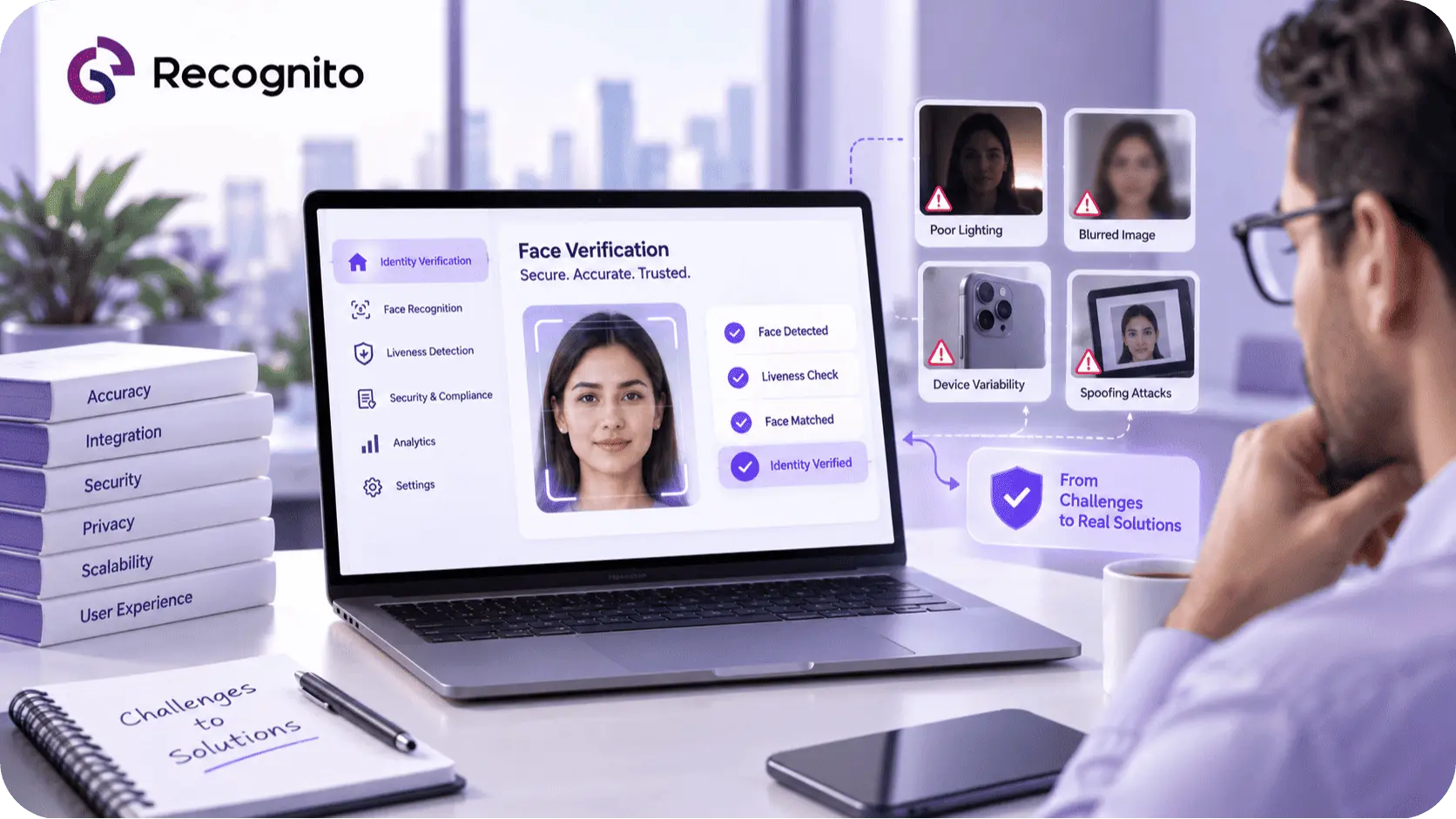
An attacker could attempt to present a photograph, replayed video, screen image, mask, or synthetic media instead of their genuine face.
Liveness detection adds another layer by helping determine whether the biometric presentation appears to originate from a live subject.
When evaluating an identity verification vendor, ask:
- What liveness method is used?
- What presentation attacks have been tested?
- How is performance measured?
- Was testing independent?
- Which technology version was evaluated?
- Does the capability work across the required devices?
A liveness detection SDK can be particularly relevant when the business needs remote biometric verification with stronger presentation attack protection.
The ISO/IEC 30107-3:2023 standard is also useful when evaluating presentation attack detection testing and reporting.
5. Risk-Based Verification and Fraud Detection
Enterprise verification should not always produce a simple pass-or-fail result.
A modern identity verification platform should ideally allow organizations to combine multiple signals and apply different verification levels according to risk.
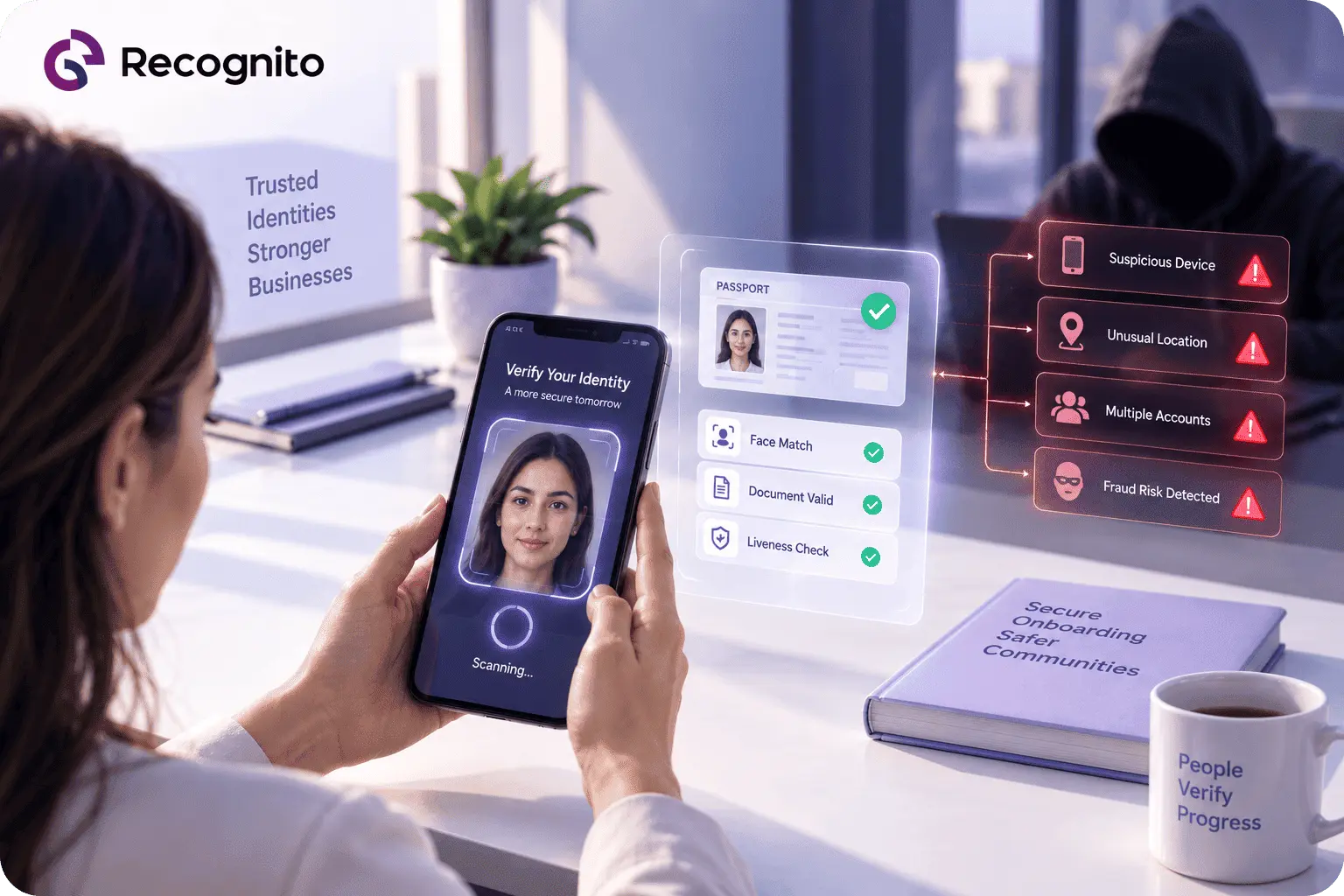
For example, a straightforward customer application may require standard document and biometric checks, while unusual device activity, inconsistent identity information, or a high-value transaction could trigger additional verification.
Potential signals can include:
- Identity verification outcome
- Biometric confidence
- Liveness result
- Device information
- Geographic consistency
- Behavioral patterns
- Previous fraud indicators
This approach helps organizations avoid unnecessary friction for legitimate users while applying stronger controls to higher-risk situations.
6. Integration and Developer Experience
Integration effort can make a major difference to the actual cost of verification software.
An enterprise should evaluate how quickly its own developers can integrate, test, troubleshoot, and maintain the platform.
Important considerations include:
- APIs and SDKs
- Documentation quality
- Sample implementations
- Supported programming environments
- Error handling
- Testing capabilities
- Webhook or event support
- Versioning and upgrade procedures
The provider’s developer ecosystem should also be evaluated.
For example, the Recognito GitHub repository can give technical teams additional insight into available development resources.
The goal is not simply to find technology that technically integrates. It is to determine how much engineering effort will be required to build and maintain the verification workflow over time.
7. Deployment Flexibility and Data Architecture
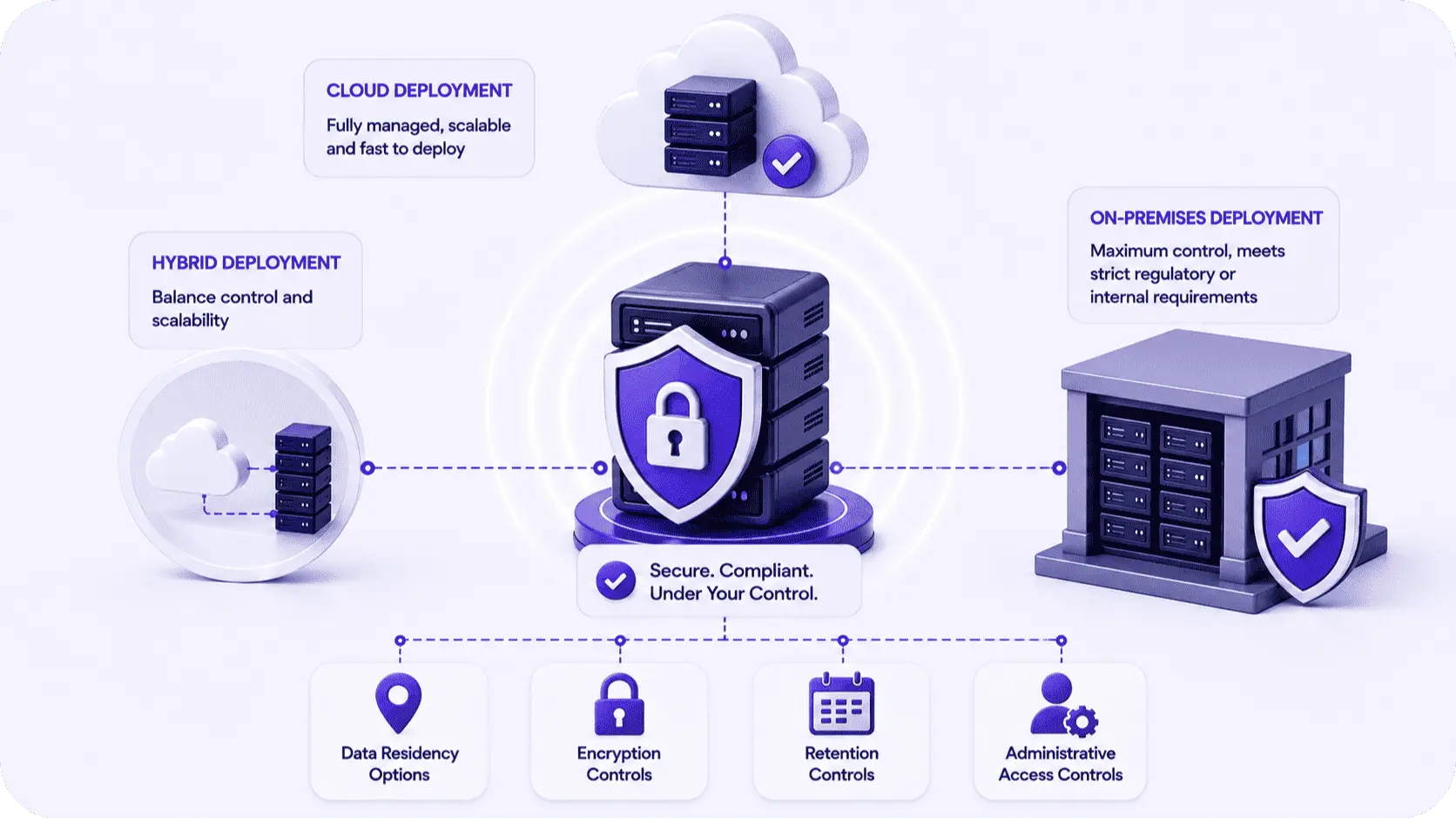
Enterprise identity verification can involve sensitive customer data, making deployment architecture a major selection criterion.
Some organizations may prefer cloud-hosted verification because it simplifies infrastructure and scaling. Others may have regulatory, latency, security, or internal infrastructure requirements that make local or controlled deployment more appropriate.
During evaluation, determine:
- Where identity data is processed
- Where images are stored
- Whether processing can occur locally
- Available deployment models
- Data residency options
- Encryption controls
- Retention controls
- Administrative access controls
The right model depends on the organization’s risk, legal, technical, and operational requirements.
8. Privacy and Regulatory Compliance
An identity verification vendor can support compliance, but it does not automatically transfer the organization’s regulatory responsibilities to the provider.
Enterprise teams should evaluate how the platform handles personal data, biometric information, retention, access, deletion, subprocessors, and international transfers.
For businesses processing European personal data, the GDPR framework is an important reference.
Organizations should also examine whether the vendor can support required KYC, customer due diligence, and identity verification workflows.
The FATF digital identity guidance provides additional context for organizations considering digital identity within customer identification and verification processes.
The objective should be to establish how the vendor’s architecture supports the organization’s compliance obligations rather than assuming that purchasing compliant technology automatically makes the entire process compliant.
9. Scalability and Reliability
Enterprise identity verification vendors need to perform consistently as transaction volume grows.
A platform that handles a few thousand verification events during testing may behave differently at millions of transactions.
Buyers should therefore evaluate:
- Expected transaction capacity
- Concurrent verification handling
- Latency
- Availability
- Infrastructure requirements
- Geographic scalability
- Disaster recovery
- Service reliability
Load testing should use realistic workloads.
For example, an international fintech may require consistent performance across multiple markets and significant variations in daily traffic.
Scalability should therefore be evaluated as part of the architecture rather than assumed from a vendor’s statement that the platform is “enterprise ready.”
10. Customer Experience and Verification Completion
Security is important, but an identity verification workflow that customers cannot complete successfully can still damage the business.
Verification friction can occur when customers have difficulty capturing documents, struggle with facial capture, encounter repeated liveness failures, or do not understand what the application is asking them to do.
Enterprise teams should measure:
- Verification completion rate
- Average completion time
- Customer abandonment
- Retry rate
- Manual review rate
- False rejection rate
- Support requests
This creates a more balanced evaluation.
The best identity verification platform is not necessarily the one with the strictest controls. It is the one that provides an appropriate level of assurance while allowing legitimate customers to complete the process efficiently.
11. Vendor Support and Long-Term Maintenance
Identity verification becomes deeply integrated into customer onboarding, making vendor support important after the initial deployment.
Before signing a long-term agreement, establish how the vendor handles:
- Production incidents
- Security vulnerabilities
- Software updates
- Platform changes
- Breaking changes
- Technical escalation
- Migration assistance
A vendor should also provide a clear maintenance path as biometric and document technologies evolve.
Enterprises should avoid evaluating support purely on whether an email address or ticketing system exists. The real question is whether the provider can support the business when a production problem affects customer onboarding.
12. Total Cost of Ownership
Pricing should be evaluated across the complete lifecycle rather than based on a single transaction price.
Costs can include:
- Licensing or transaction fees
- Development
- Integration
- Infrastructure
- Testing
- Manual reviews
- Technical support
- Scaling
- Maintenance
- Migration
A cheaper vendor may become more expensive if the platform requires significant engineering effort or produces a high rate of manual intervention.
Enterprise procurement should therefore calculate the expected total cost of ownership for the actual workload.
How to Compare Identity Verification Vendors
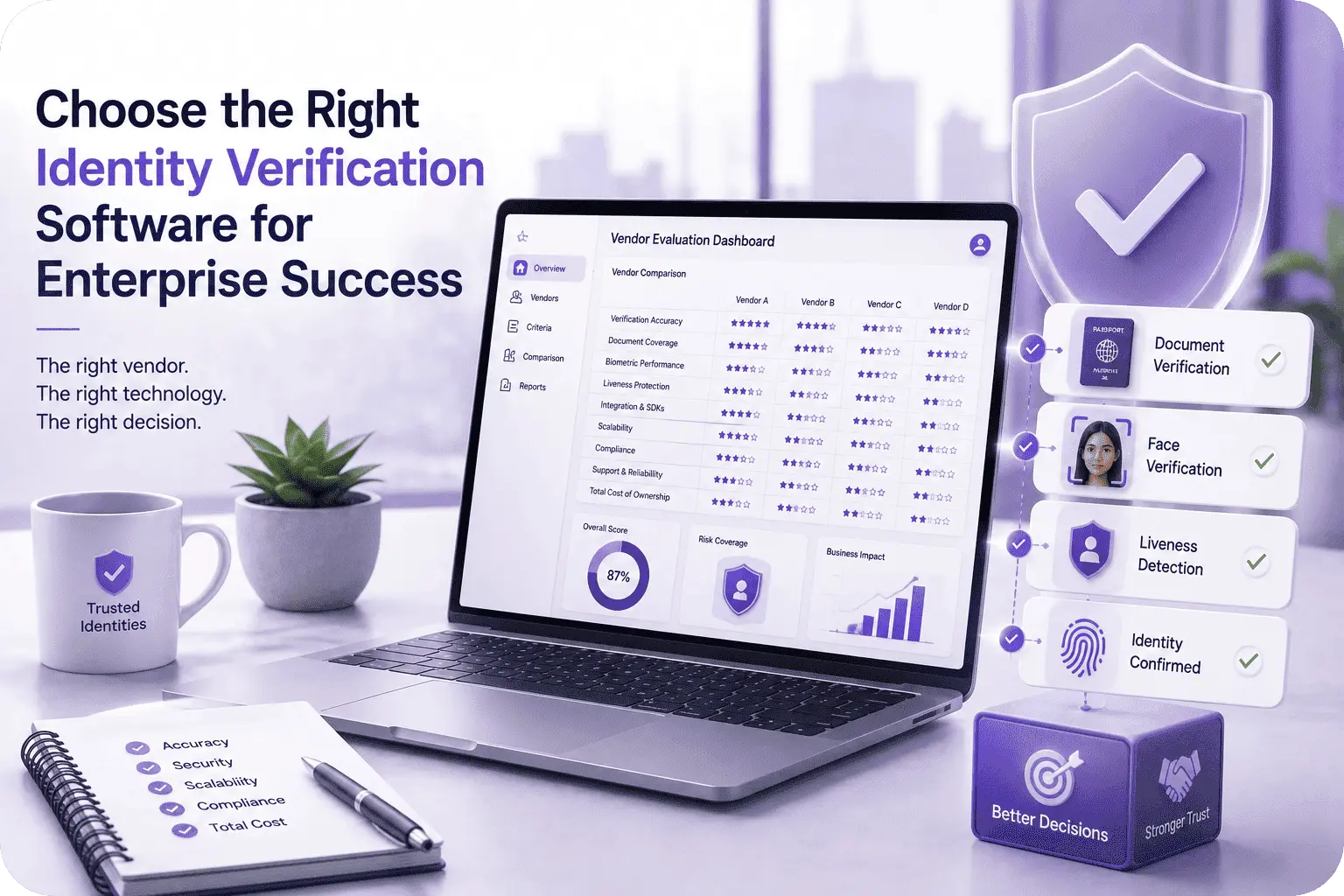
Once requirements are established, every shortlisted provider should be evaluated against a consistent framework.
| Evaluation Area | What Enterprise Teams Should Assess |
| Verification | Accuracy, workflows, and available identity checks |
| Documents | Coverage, authenticity analysis, and regional support |
| Biometrics | Face matching, performance, and real-world conditions |
| Liveness | Presentation attack protection and testing evidence |
| Integration | SDKs, APIs, documentation, and implementation effort |
| Compliance | Privacy, security, data processing, and regulatory support |
| Scalability | Capacity, latency, availability, and infrastructure |
| Experience | Completion rates, friction, retries, and abandonment |
| Support | Technical assistance, maintenance, and escalation |
| Cost | Licensing, implementation, operations, and total ownership |
The weighting should reflect the organization’s actual use case.
A regulated financial institution may give greater importance to compliance, biometric performance, security, and fraud prevention. A software company integrating verification into a consumer application may place more emphasis on developer experience and onboarding completion.
There is no universal scoring model.
The important part is to define the criteria before comparing the vendors.
How to Conduct an Enterprise Identity Verification Vendor Evaluation
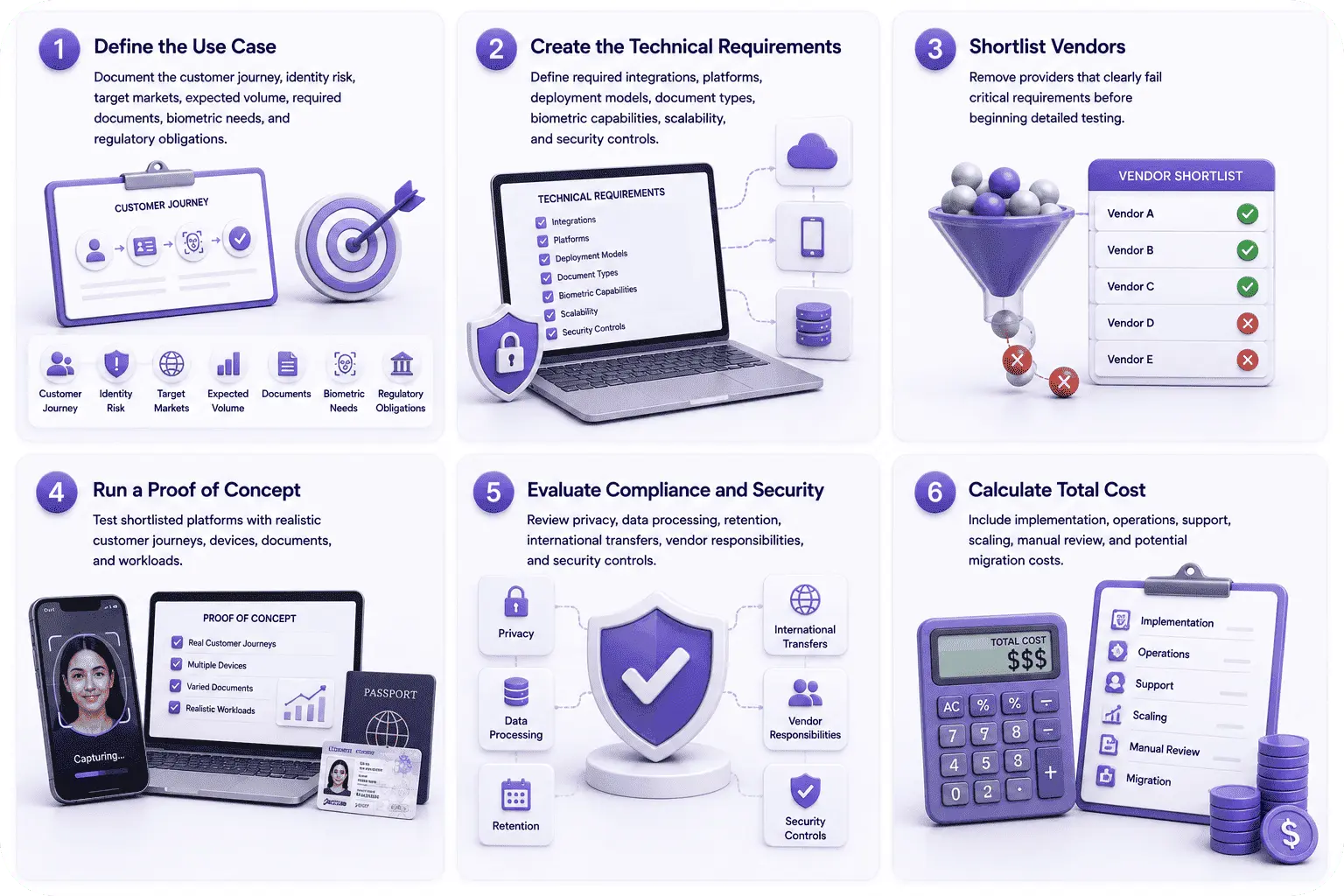
A structured procurement process reduces the risk of choosing a platform based mainly on demonstrations and marketing claims.
1. Define the Use Case
Document the customer journey, identity risk, target markets, expected volume, required documents, biometric needs, and regulatory obligations.
2. Create the Technical Requirements
Define required integrations, platforms, deployment models, document types, biometric capabilities, scalability, and security controls.
3. Shortlist Vendors
Remove providers that clearly fail critical requirements before beginning detailed testing.
4. Run a Proof of Concept
Test shortlisted platforms with realistic customer journeys, devices, documents, and workloads.
5. Evaluate Compliance and Security
Review privacy, data processing, retention, international transfers, vendor responsibilities, and security controls.
6. Calculate Total Cost
Include implementation, operations, support, scaling, manual review, and potential migration costs.
This process produces a much more defensible procurement decision than choosing a provider based on feature count or price alone.
Should Enterprises Choose a Single Identity Verification Platform?
A single platform can simplify integration because multiple verification capabilities may be available through one technology stack.
This can reduce the number of vendor relationships and simplify the flow of identity data between components.
However, enterprises should not choose a consolidated platform simply because it provides more features.
The important question is whether the individual capabilities meet the organization’s requirements.
In some cases, combining specialized technologies may provide greater flexibility. In others, an integrated platform may reduce development and operational complexity.
The decision should be based on architecture, risk, performance, cost, and long-term strategy.
Where SDK-Based Identity Verification Fits
SDKs can be particularly valuable when an enterprise wants more control over how verification is incorporated into its own application.
Rather than sending the customer through a completely separate verification experience, the organization can integrate biometric and identity capabilities directly into its application workflow.
Depending on the use case, businesses can combine document verification, biometric matching, and liveness capabilities into one onboarding sequence.
For example, an ID document verification SDK can handle the document stage, while other SDK-based biometric capabilities can support facial verification and liveness.
This approach can provide greater control over the user experience and application architecture.
Development teams can also use the Face Biometric Playground to explore facial biometric functionality during the evaluation stage.
Questions Enterprise Teams Should Ask Vendors
Before signing an agreement, procurement, engineering, security, compliance, and product teams should have documented answers to the most important technical and commercial questions.
At minimum, they should establish:
- Which identity documents and markets are supported?
- What biometric workflows are available?
- How is liveness tested?
- What independent performance evidence exists?
- Which SDKs and APIs are available?
- Where is customer data processed?
- What deployment models are supported?
- How does the platform scale?
- How are security issues handled?
- What support is included?
- What is the complete cost of ownership?
Answers should be validated through testing wherever possible.
Conclusion
Selecting identity verification software for enterprise use requires much more than comparing feature lists or transaction prices.
The strongest vendor evaluation examines verification accuracy, document coverage, biometric performance, liveness protection, integration, developer experience, deployment flexibility, privacy, regulatory support, scalability, customer experience, vendor maintenance, and total cost of ownership.
Organizations should also evaluate how the individual technologies fit together.
A document verification capability may establish trusted identity evidence. Biometric verification can help connect that identity to the person presenting it. Liveness can strengthen the biometric capture process, while risk signals can help determine when additional verification is necessary.
The result should be a verification architecture that is secure enough for the organization’s risk profile without creating unnecessary friction for legitimate customers.
Enterprise teams evaluating biometric and identity technologies can explore the broader capabilities available from Recognito as part of their vendor assessment.
Frequently Asked Questions
What should enterprises look for in identity verification software?
Enterprise teams should evaluate verification accuracy, document coverage, biometric capabilities, liveness, security, privacy, integration, scalability, customer experience, technical support, and total cost of ownership.
How should enterprises compare identity verification vendors?
The best approach is to define requirements first, create a consistent scoring framework, run representative proof-of-concept testing, evaluate security and compliance, and calculate total lifecycle cost before selecting a provider.
Is biometric verification necessary for enterprise identity verification?
Not every use case requires the same level of biometric assurance. For higher-risk remote onboarding and authentication, biometrics can provide an additional connection between a claimed identity and the person presenting it.
What is the difference between an identity verification platform and an SDK?
A platform can provide an end-to-end verification environment, while an SDK allows an organization to integrate verification capabilities directly into its own application and user experience. The right approach depends on the company’s architecture and level of control required.
How important is total cost of ownership when selecting a verification vendor?
It is critical. Licensing is only one part of the cost. Development, integration, infrastructure, manual review, maintenance, support, scaling, and future migration can materially change the true cost of a vendor.