
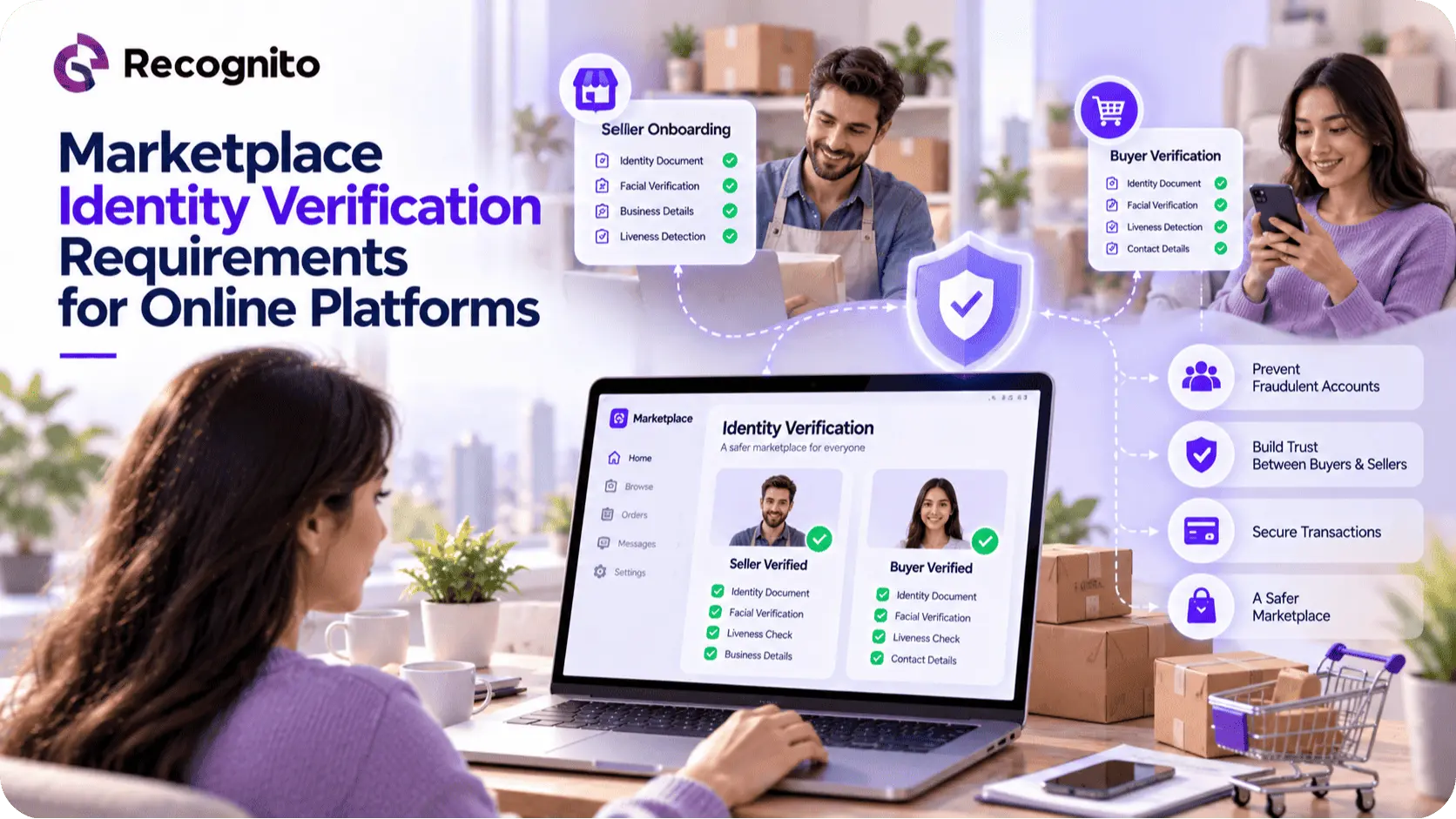
Online marketplaces have created a convenient way for buyers and sellers to connect without traditional physical intermediaries.
A seller can register, list products, receive payments, and build a customer base without ever meeting the marketplace operator in person. Buyers can also create accounts and transact remotely.
That convenience creates an important trust problem.
A marketplace needs to know who its sellers are, protect buyers from fraudulent accounts, prevent impersonation, and identify suspicious activity without turning registration into an unnecessarily complicated process.
This makes marketplace identity verification an important part of marketplace security.
The requirements vary depending on the marketplace model, the products or services being offered, the countries involved, the payment structure, and the regulatory obligations that apply. A marketplace for everyday consumer goods may have different verification requirements from a platform handling financial services, high-value goods, professional services, or regulated products.
A strong approach therefore combines seller verification, buyer verification, onboarding verification, fraud prevention, document checks, biometric verification, and risk-based controls according to the actual level of risk.
Why Identity Verification Matters for Online Marketplaces
Marketplaces have a unique identity problem because there are often multiple parties involved in every transaction.
The platform needs confidence in the seller.
The buyer needs confidence in the seller.
The marketplace may also need to establish who the buyer is in certain situations.
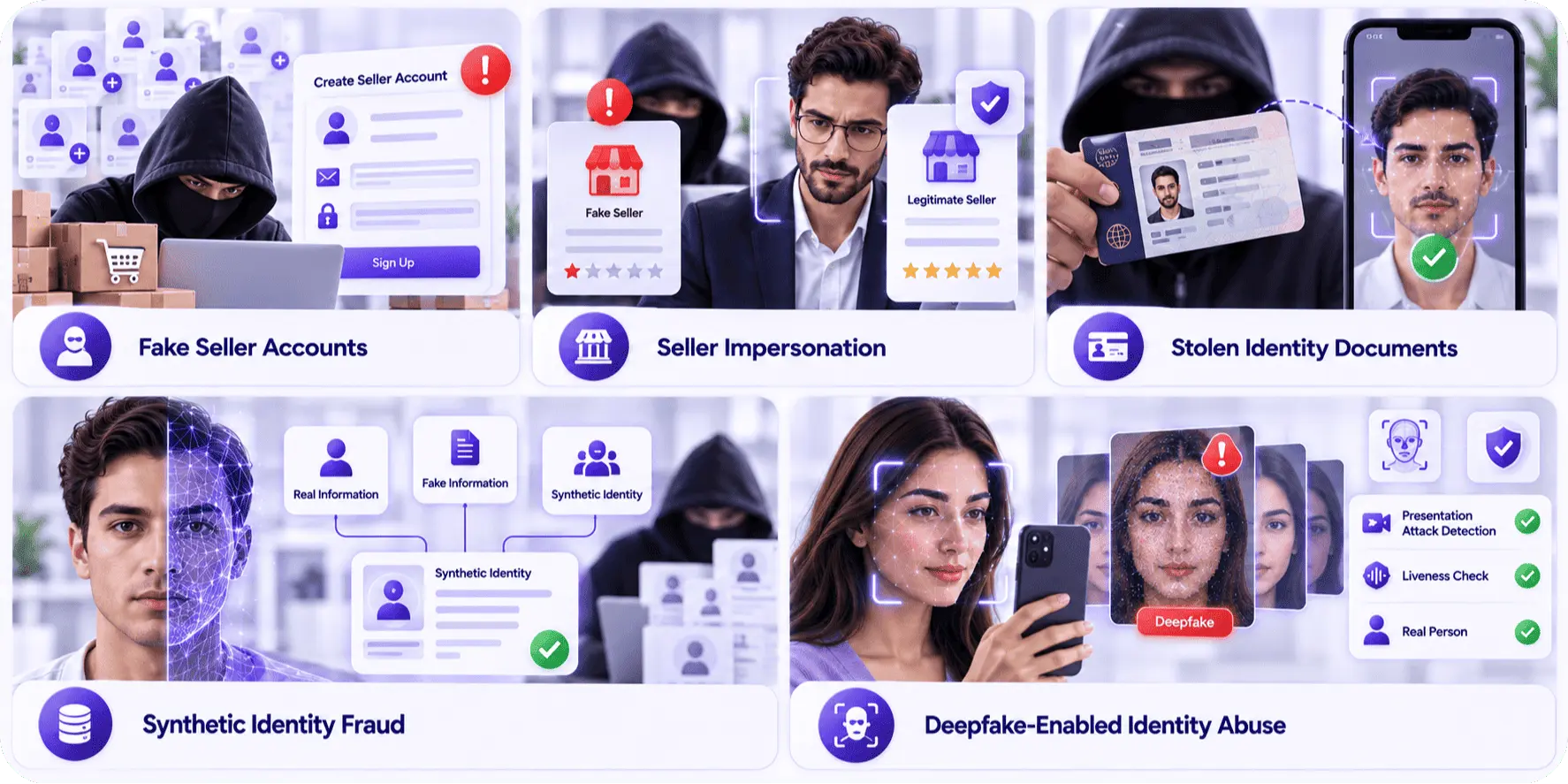
Fraudsters can exploit weaknesses by creating fake seller accounts, impersonating legitimate businesses, using stolen identities, opening multiple accounts, manipulating payment information, or using synthetic identities.
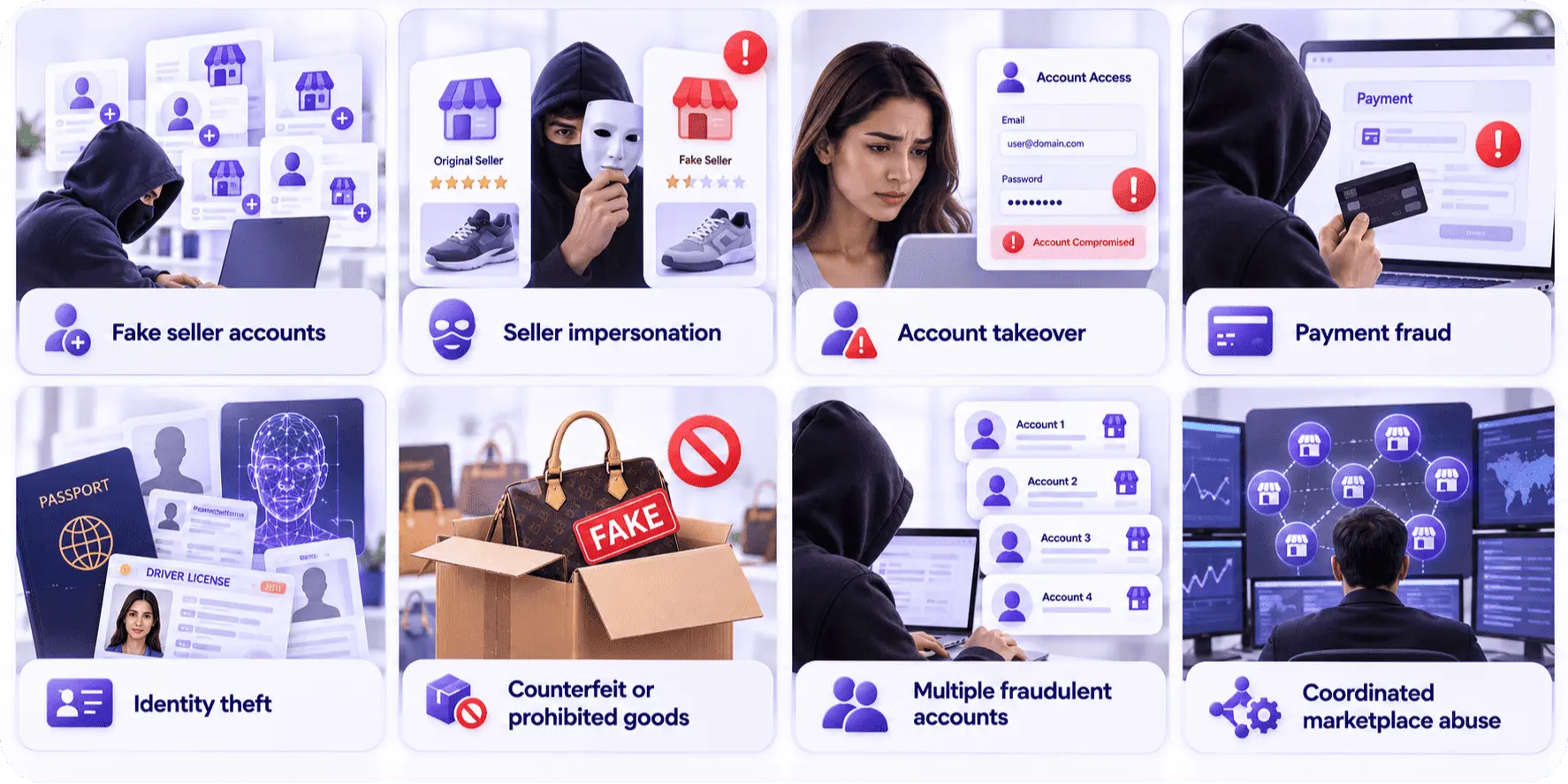
A marketplace with weak identity controls can therefore face problems such as:
- Fake seller accounts
- Seller impersonation
- Account takeover
- Payment fraud
- Identity theft
- Counterfeit or prohibited goods
- Multiple fraudulent accounts
- Coordinated marketplace abuse
Identity verification does not solve every one of these problems, but it creates a stronger foundation for trust.
What Is Marketplace Identity Verification?
Marketplace identity verification is the process of establishing that users participating in a marketplace are who they claim to be and that the identity information associated with their account is sufficiently trustworthy for the level of activity they want to perform.
The requirements can be different for buyers and sellers.
A seller who wants to receive payments and operate commercially may require much stronger identity assurance than a buyer making a low-value purchase.
This is why marketplace verification should be risk-based rather than identical for every user.
The verification process may involve:
- Personal information
- Business information
- Government-issued identity documents
- Facial verification
- Liveness detection
- Payment information
- Address information
- Device and behavioral signals
The marketplace can then determine whether the user should be approved, asked for additional information, restricted, or reviewed.
Seller Verification Is Usually the Higher-Priority Control
Sellers represent one of the most important trust relationships within a marketplace.
A fraudulent seller can potentially create multiple problems at once.
They may use a stolen identity, accept payments and disappear, impersonate a legitimate business, sell prohibited products, or create several accounts to bypass platform restrictions.
For this reason, many marketplaces should apply stronger identity checks to sellers than to ordinary buyers.
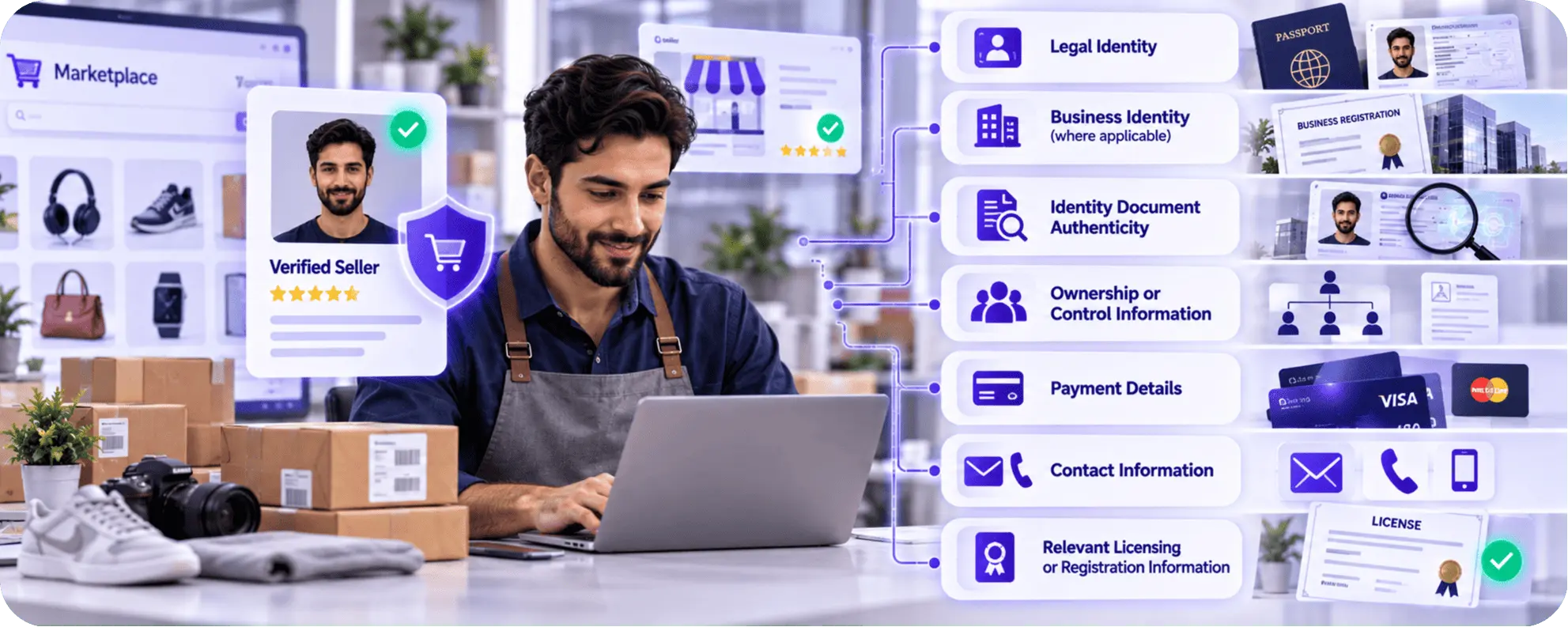
Seller verification may involve establishing:
- Legal identity
- Business identity where applicable
- Identity document authenticity
- Ownership or control information
- Payment details
- Contact information
- Relevant licensing or registration information
The requirements should depend on the marketplace’s business model and the risks associated with the goods or services being sold.
Marketplace Seller Verification and the EU Digital Services Act
For marketplaces operating in the European Union, regulatory requirements can also influence seller verification.
The European Commission explains that the Digital Services Act includes obligations for online marketplaces concerning the traceability of business users. Marketplaces must make reasonable efforts to verify sellers’ identity information before allowing them to start selling and enable users to identify the person responsible for the sale. (Digital Strategy)
This makes seller identity management more than just a fraud-prevention feature for certain platforms.
A marketplace should therefore understand the regulatory requirements applicable to its specific business model and jurisdictions rather than treating verification as purely an optional security layer.
The compliance process should still be designed carefully because collecting more identity information than necessary can create additional privacy and security responsibilities.
Buyer Verification Requires a Different Approach
Buyer verification is often overlooked because sellers usually represent the greater commercial risk.
However, buyers can also participate in fraud.
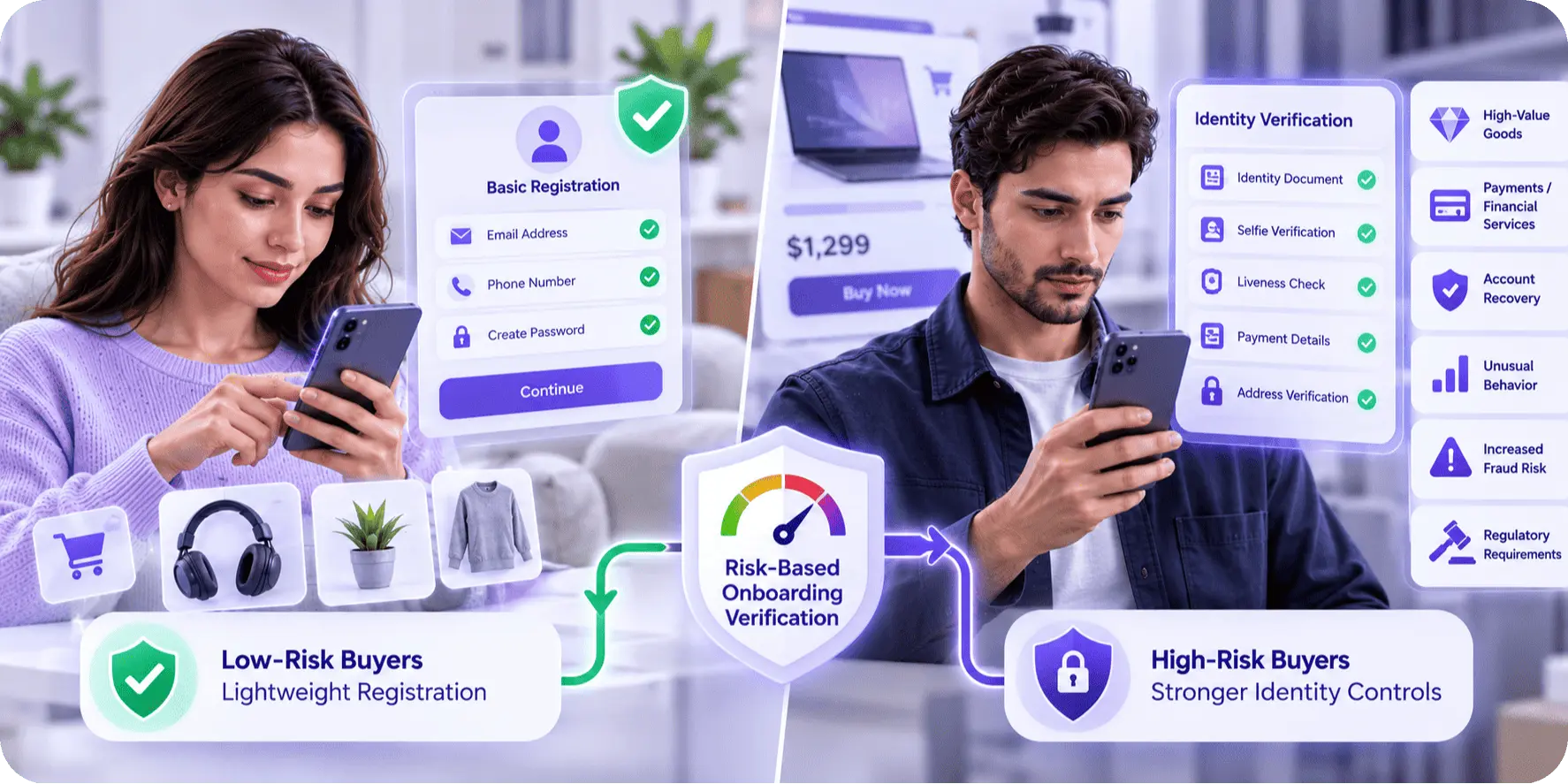
A marketplace may need stronger buyer identity assurance when:
- Transactions involve high-value goods
- Payment or financial services are involved
- Account recovery occurs
- A user exhibits unusual behavior
- Fraud risk increases
- The marketplace is subject to specific regulatory requirements
This does not mean every buyer needs to complete a full KYC-style process.
A better approach is to use risk-based onboarding verification.
Low-risk buyers can experience a lightweight registration process, while high-risk actions can trigger stronger identity controls.
ID Document Verification for Marketplaces
Government-issued identity documents can provide an important source of identity evidence.
Depending on the marketplace and jurisdiction, sellers may be asked to provide a passport, national identity card, driver’s license, or another recognized credential.
The document verification stage can check the information contained in the document and identify potential authenticity or consistency problems.
An ID document recognition SDK can support this part of a marketplace onboarding workflow.
The document stage can help identify:
- Invalid documents
- Expired documents
- Altered information
- Unsupported document types
- Poor-quality captures
- Inconsistencies between application information and document data
However, a genuine document does not automatically prove that the person submitting it is the legitimate owner.
That is where biometric verification can provide another layer.
Biometric Verification for Seller Identity
Facial verification can help establish the relationship between the individual completing onboarding and the identity document they provide.
The marketplace can capture the user’s face and compare it against the photograph associated with the trusted identity.
This can make it harder for a fraudster to create a seller account using another person’s legitimate document.
For organizations integrating this capability directly into their marketplace application, a facial verification SDK can provide the biometric matching component.
The technology should still be evaluated under realistic conditions because camera quality, lighting, facial pose, image quality, and other factors can affect biometric performance.
The important point is that document verification and facial verification solve different parts of the identity problem.
Why Liveness Detection Matters
Facial matching alone does not establish that the person is physically present.
A fraudster may attempt to use:
- A photograph
- A screen displaying someone else’s face
- Replayed video
- A mask
- Manipulated facial media
- Synthetic or deepfake content
This creates a presentation-attack problem.
A liveness detection SDK can add another layer by assessing whether the biometric presentation appears to come from a genuine live subject.
This creates a useful chain:
Document verification → identity evidence
Facial verification → person-to-identity matching
Liveness detection → biometric presentation protection
The marketplace can then combine these results with other risk signals before deciding whether to approve the account.
Buyer and Seller Identity Verification Should Not Be Identical
One of the most important marketplace design principles is that verification should reflect risk and user role.
A platform might use a model such as:
Low-Risk Buyer
Basic account registration with additional controls introduced only when suspicious behavior appears.
Higher-Risk Buyer
Additional identity verification for high-value purchases, unusual account activity, or account recovery.
Standard Seller
Identity information and document verification before selling privileges are activated.
Higher-Risk Seller
Document verification, facial verification, liveness, business information, enhanced review, or additional monitoring.
This approach avoids imposing maximum verification friction on the entire marketplace while still creating stronger controls around the users and activities that present greater risk.
Marketplace Fraud Risks Identity Verification Can Help Address
Identity verification is only one part of marketplace fraud prevention, but it can help address several important attack patterns.
Fake Seller Accounts
A fraudster may create an account using a fabricated or stolen identity.
Seller verification makes the cost of creating fraudulent accounts higher and provides stronger identity evidence for marketplace monitoring.
Seller Impersonation
A criminal may attempt to create an account using information associated with a legitimate business or seller.
Identity and business verification can help distinguish the legitimate party from an impersonator.
Stolen Identity Documents
A fraudster may possess a legitimate document belonging to another individual.
Facial verification can provide another signal by comparing the applicant with the document image.
Synthetic Identity Fraud
A combination of legitimate and fabricated information can create identities that appear credible.
Multiple identity, biometric, device, and behavioral signals can make these accounts more difficult to operate successfully at scale.
Recognito’s resource on detecting synthetic identity fraud provides additional context on this type of identity fraud.
Deepfake-Enabled Identity Abuse
Synthetic media can create another attack vector for remote biometric verification.
Marketplaces that use facial verification should therefore consider presentation attack protection as part of their broader biometric security strategy.
The existing guide on deepfake attack prevention provides additional context on the problem.
Identity Verification Should Connect With Marketplace Risk Signals
Identity verification becomes substantially more useful when its results are combined with other information.
For example, a marketplace might evaluate:
- Identity verification result
- Document authenticity
- Facial similarity
- Liveness result
- Device characteristics
- Geographic information
- Account history
- Payment behavior
- Listing behavior
- Number of related accounts
One suspicious signal does not necessarily mean a user is fraudulent.
A new device can be legitimate. A location mismatch can occur because someone is traveling. A biometric retry can result from poor lighting.
The real value comes from identifying multiple signals that point toward the same risk pattern.
How Marketplace Verification Can Support Trust and Safety
Identity verification should not exist only inside the registration form.
The information established during onboarding can support the marketplace’s wider trust and safety system.
For example, the marketplace may maintain a higher level of monitoring for accounts with elevated risk, suspicious behavior, or connections to previously restricted accounts.
Seller verification can also provide a stronger foundation for displaying trusted seller information to buyers.
This is particularly important because identity verification has value beyond fraud prevention. It can support marketplace transparency and help establish accountability.
Identity Verification and Privacy
Identity verification involves sensitive personal information, so marketplaces need to balance security with data minimization.
The organization should understand:
- What information is collected
- Why it is required
- Where it is processed
- Whether biometric information is stored
- How long information is retained
- Who can access it
- How information is deleted
- Which third parties process it
For organizations subject to the GDPR, biometric data used for uniquely identifying individuals falls under the regulation’s special-category provisions, subject to the applicable legal conditions and exceptions. (EUR-Lex)
The privacy architecture should therefore be considered before the verification workflow is implemented.
A marketplace should not collect every possible identity attribute simply because the technology makes it available.
Designing a Marketplace Onboarding Workflow
A practical marketplace verification workflow can follow a staged structure.
1. Create the Account
Collect the minimum identity and account information required to begin.
2. Determine the Risk Level
Consider the user’s role, product category, transaction value, geography, and other relevant factors.
3. Verify the Identity
Use document and identity checks appropriate to the user’s risk level.
4. Add Biometrics Where Necessary
Use facial verification when stronger person-to-identity assurance is required.
5. Add Liveness Protection
Where remote biometric verification creates presentation-attack risk, add liveness as a separate layer.
6. Activate Appropriate Privileges
A seller may remain restricted from listing products or receiving payments until verification requirements are satisfied.
7. Continue Monitoring
Identity verification should feed into ongoing marketplace fraud and trust-and-safety monitoring.
This approach creates a more flexible experience than requiring every user to complete the most demanding verification process immediately.
What Happens When Verification Fails?
A marketplace should have a clear process for failed verification.
A failed document check may result from a poor-quality image rather than fraud.
A failed biometric match may result from lighting or camera problems.
A failed liveness check may also have a technical explanation.
The system should therefore distinguish between:
Technical failure
Identity inconsistency
Potential fraud
Confirmed policy violation
Possible responses include:
- Retry
- Additional instructions
- Alternative verification
- Manual review
- Restricted marketplace access
- Rejection
This prevents legitimate users from being unnecessarily blocked while still creating appropriate controls for suspicious accounts.
Marketplace Verification Metrics
Identity verification should be measured continuously.
Useful marketplace verification KPIs include:
- Seller verification completion
- Buyer verification completion where applicable
- First-attempt success
- False rejection rate
- Manual review rate
- Verification time
- Identity document failure rate
- Biometric failure rate
- Liveness failure rate
- Fraud detected after onboarding
The marketplace should also examine downstream outcomes.
For example, a low verification failure rate does not necessarily mean the process is effective if fraudulent sellers are still reaching customers.
The real question is whether verification is improving trust and reducing meaningful fraud without creating unnecessary friction.
Comparing Identity Verification Layers for Marketplaces
Different controls address different risks.
| Verification Layer | Primary Purpose | Marketplace Application |
| Account information | Establish claimed user details | Buyer and seller registration |
| Document verification | Establish identity evidence | Seller onboarding and higher-risk users |
| Facial verification | Connect person to identity | Seller verification and high-risk buyer actions |
| Liveness detection | Protect biometric capture | Remote anti-spoofing |
| Device and behavior signals | Identify unusual activity | Fraud and trust monitoring |
| Risk decisioning | Combine signals | Approve, restrict, review, or reject |
| Ongoing monitoring | Detect changing risk | Seller and account trust management |
The purpose is not to make every marketplace interaction equally demanding.
It is to build the appropriate level of assurance around the highest-risk users and activities.
SDK-Based Identity Verification for Marketplaces
Marketplaces with their own web and mobile applications may benefit from integrating verification capabilities directly into their existing user experience.
An SDK-based approach allows the marketplace to control when verification occurs, how instructions are presented, how the results feed into its fraud engine, and what happens after a failed check.
For example, document verification can be integrated alongside facial matching and liveness rather than sending the user through multiple disconnected services.
Technical teams can also explore the Face Biometric Playground when evaluating the practical biometric experience.
For developers researching implementation resources, the Recognito GitHub repository can also form part of the technical assessment.
The right architecture will depend on marketplace size, user roles, risk exposure, geography, compliance requirements, and internal engineering capabilities.
How Marketplaces Should Implement Risk-Based Verification
The biggest mistake is treating verification as a one-time checkbox.
Identity assurance should evolve with marketplace activity.
A new seller may require stronger onboarding verification before listing products.
An established seller with a long history of normal activity may require less friction for routine actions.
A sudden change in payment information, device, location, or listing behavior may justify additional verification.
This creates a dynamic identity verification model.
The marketplace is not asking every customer to repeatedly prove their identity.
It is strengthening identity assurance when the risk changes.
Building a More Secure Marketplace Identity Architecture
A mature marketplace identity architecture can connect several layers:
Identity evidence
↓
Seller or buyer verification
↓
Biometric verification where required
↓
Liveness and presentation attack protection
↓
Device and behavioral signals
↓
Risk decisioning
↓
Ongoing trust and safety monitoring
This layered approach makes it more difficult for attackers to rely on one weakness.
It also allows the marketplace to maintain a better customer experience because stronger controls can be applied selectively.
Conclusion
Marketplace identity verification is becoming an increasingly important part of building trust between buyers, sellers, and platform operators.
The most effective approach is not to require identical verification from every user.
Seller verification will often require stronger identity assurance because sellers can create significant commercial and trust risks for the platform. Buyer verification can be risk-based and strengthened when transaction value, behavior, account activity, or other factors justify additional checks.
Document verification provides identity evidence. Biometric verification can connect a person to that evidence. Liveness detection can protect the biometric capture process, while device, behavioral, and marketplace activity signals can provide additional context.
The result is a layered verification architecture that can improve fraud prevention without turning onboarding into an unnecessarily difficult process.
Marketplaces evaluating SDK-based biometric and identity verification technologies can explore the broader capabilities available from Recognito as part of their trust, safety, and onboarding strategy.
Frequently Asked Questions
What is marketplace identity verification?
Marketplace identity verification is the process of establishing that buyers, sellers, or other marketplace users are who they claim to be. The level of verification can vary according to the user’s role and risk.
Do online marketplaces need to verify sellers?
Requirements depend on the marketplace’s business model and applicable laws. In the EU, the Digital Services Act includes obligations relating to the traceability and verification of business users on online marketplaces. (Digital Strategy)
Should buyers and sellers go through the same verification process?
Not necessarily. Sellers often create greater platform risk and may require stronger verification, while buyer verification can be applied according to transaction value, behavior, account activity, and other risk factors.
How can biometrics improve marketplace seller verification?
Facial verification can help determine whether the person completing seller onboarding corresponds with a trusted identity reference. Liveness detection can provide additional protection against attempts to use photographs, replayed media, or other artificial biometric presentations.
How can marketplaces reduce verification friction?
Use a risk-based approach. Apply stronger verification to higher-risk users and activities, provide clear capture instructions, offer recovery options for legitimate failures, and avoid requiring maximum verification from every marketplace participant.