
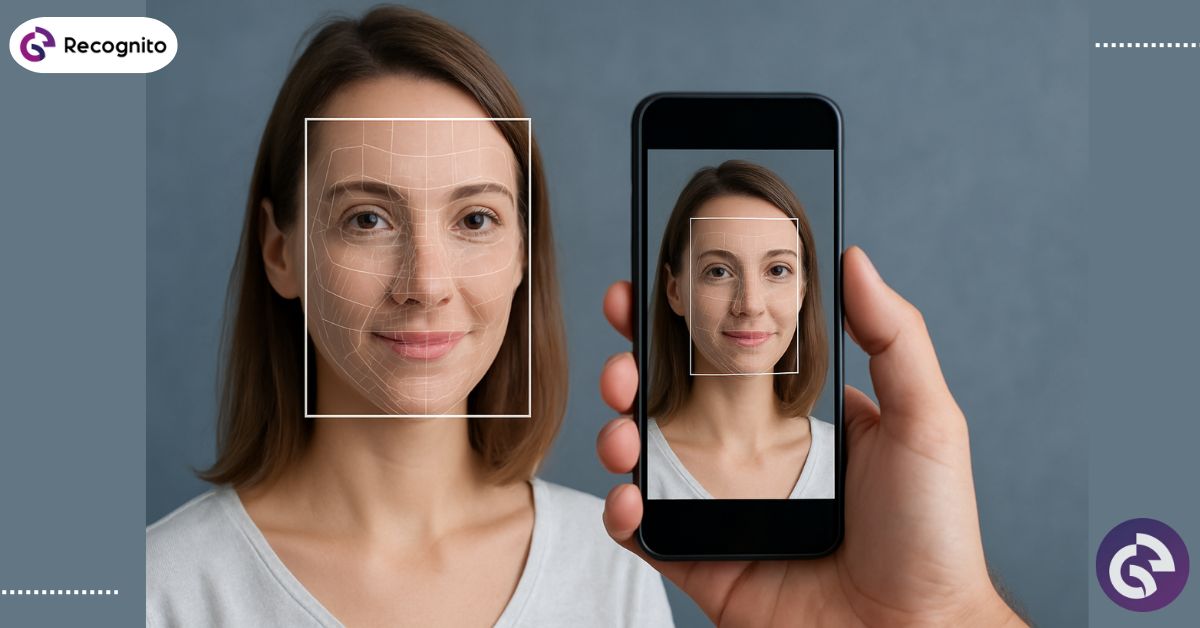
Imagine walking into an airport and breezing through security just because a camera recognized your face. That’s not science fiction anymore. This is the power of face recognition software, a technology that maps your unique facial features and matches them against stored data.
From unlocking smartphones to catching criminals, this software is shaping our everyday lives. But along with convenience come questions about accuracy, privacy, and trust. Let’s break it down in simple words so you know what’s happening behind the lens.
What is Face Recognition Software
Face recognition software is a type of biometric technology that identifies or verifies a person by analyzing facial features. Think of it as a digital fingerprint, but for your face.
The process usually starts with face matching software, which compares a captured image to existing images in a database. This allows systems to confirm if two faces belong to the same individual.
For everyday people, the most relatable example is your smartphone. Every time you unlock it by looking at the screen, the phone uses a form of this software to confirm your identity.
How Face Recognition Software Works Behind the Scenes
At first glance, it feels magical. But under the hood, face recognition is powered by math, algorithms, and a whole lot of data crunching.
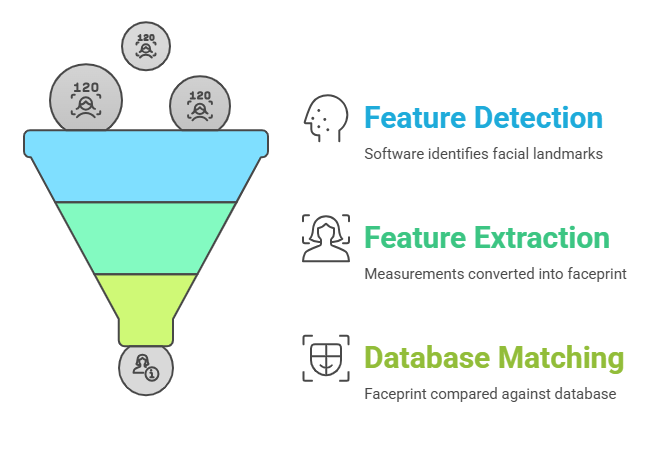
1. Data Capture and Photo Face Detection Software
It starts when a camera captures your face. The photo face detection software identifies the position of your eyes, nose, mouth, and chin. These landmarks form the foundation of your facial “map.”
2. Feature Extraction with Algorithms
Next, the software measures distances between facial features, like the space between your eyes or the curve of your jawline. These measurements are converted into numerical data known as a faceprint.
3. Matching Process with Databases
Finally, the system compares this faceprint against a database of known faces. If there’s a match within the confidence threshold, the system identifies the individual.
Best Face Recognition Software Applications in Real Life
This technology is not limited to spy movies. It’s deeply integrated into industries we interact with daily.
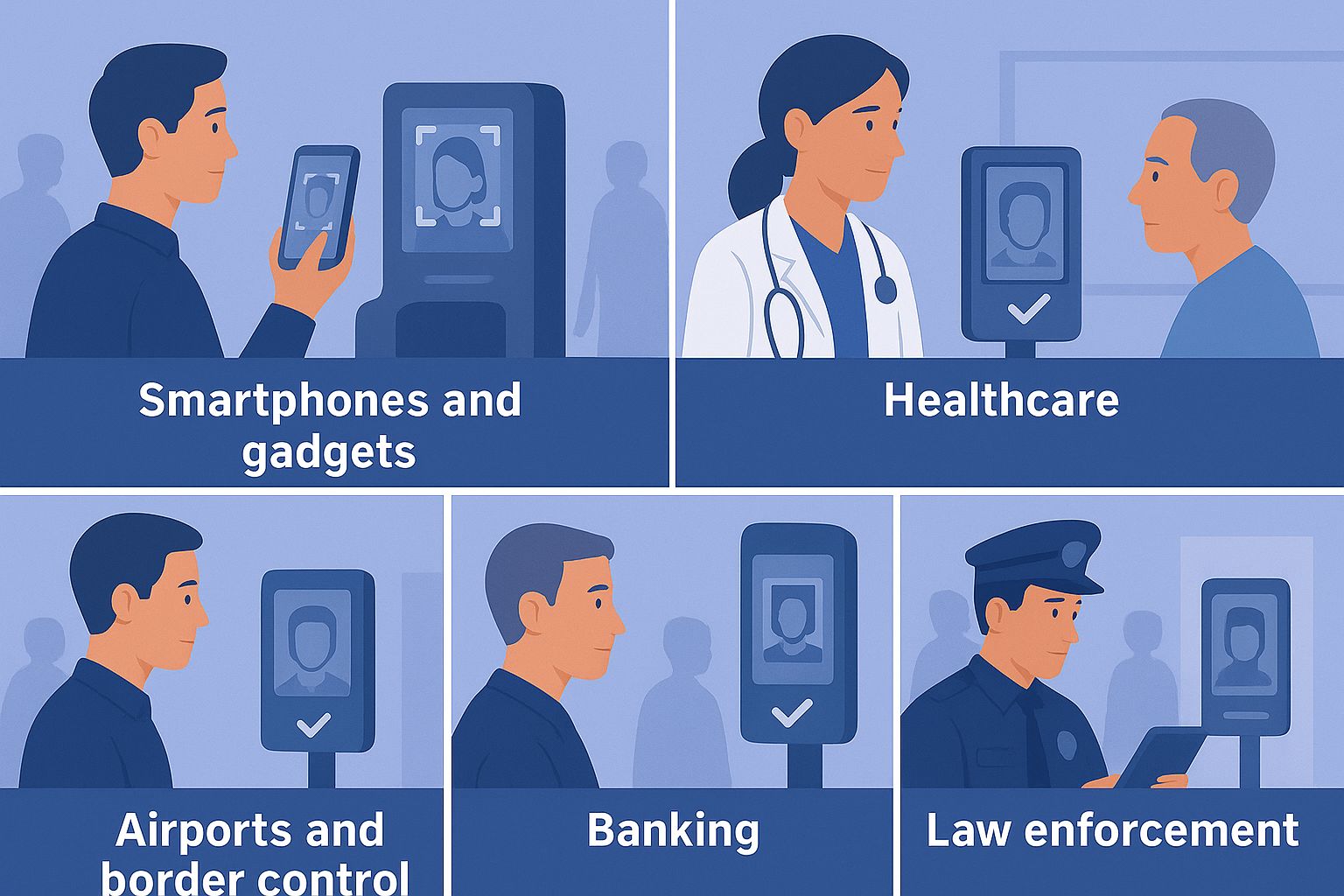
Here are the most common applications:
- Smartphones and gadgets – Unlocking phones, securing payments, and managing app access.
- Airports and border control – Faster identity checks, reducing wait times for travelers.
- Healthcare – Identifying patients and protecting medical records.
- Banking – Preventing fraud with stronger security measures.
- Retail – Recognizing VIP customers or preventing theft.
- Law enforcement – Finding missing persons or identifying suspects in crowds.
A growing use is facial recognition software for photos, where apps automatically tag friends or group images. Social media platforms rely heavily on this feature, which has made photo management much easier for users worldwide.
Comparing the Top Facial Recognition Software Options
With so many tools available, how do you know which one stands out? Independent evaluations, like the NIST Face Recognition Vendor Test, provide objective data on performance. You can also check the FRVT 1:1 performance reports for in-depth benchmarking.
Here’s a simplified comparison table of criteria that matter most:
| Criteria | Why It Matters | What to Look For |
| Accuracy | Correctly identifying or verifying faces | High true positive rate |
| Speed | How quickly results are delivered | Real-time or near real-time |
| Scalability | Handling millions of faces | Cloud or distributed systems |
| Compliance | Following laws like GDPR | Transparent privacy policies |
| Cost | Fits your business budget | Flexible pricing models |
This breakdown helps businesses pick the top facial recognition software for their specific needs.
Privacy and Legal Concerns with Face Recognition
Now comes the elephant in the room. As powerful as this technology is, it raises eyebrows when it comes to personal freedom.
- Data storage – Where are your facial scans stored, and for how long?
- Consent – Are you being recognized without agreeing to it?
- Misuse – Could governments or companies abuse this technology for surveillance?
In Europe, these questions tie directly into GDPR compliance. The rules emphasize transparency, data minimization, and user rights. If an organization mishandles face data, the penalties can be steep.
A 2021 study found that 56 percent of people worry about misuse of facial recognition by authorities. This shows that while the tech is impressive, trust remains fragile.
Open Source Face Recognition Options for Developers
Not all solutions are locked behind expensive paywalls. Developers and small businesses often turn to face recognition opensource tools. These options allow for flexibility, customization, and cost savings.
Advantages of open-source tools include:
- Free or low-cost access to powerful libraries.
- Large communities that support development.
- Ability to customize for unique projects.
- Faster innovation through collaboration.
One notable resource is the Recognito Vision GitHub, where developers can explore codebases, contribute, and experiment with new applications.
Future Trends in Face Recognition Technology
The pace of innovation isn’t slowing down. Researchers are refining algorithms to improve speed and reduce bias.
Future trends to watch:
- Ethical AI – Systems that reduce bias across race and gender.
- Edge computing – Processing data on devices instead of servers for faster results.
- Integration with IoT – Smart cities that use recognition for traffic, safety, and efficiency.
- Privacy-first models – More tools will adopt privacy-by-design frameworks.
Experts predict that within the next decade, face recognition will be as common as passwords are today, though hopefully far more secure.
Conclusion
Face recognition software is no longer futuristic tech, it’s a reality shaping security, convenience, and even social interactions. From photo face detection software to face matching software, its reach is growing rapidly. Yet, the real challenge is balancing innovation with privacy. Companies that master this balance will win trust in the long run.
And speaking of innovation, Recognito is one brand pushing these boundaries with responsible and practical applications.
Frequently Asked Questions
What is the difference between face detection and face recognition?
Face detection finds and locates a face in an image, while recognition goes a step further by identifying or verifying who that person is.
Is face recognition software always accurate?
No, accuracy depends on the algorithms, quality of data, and lighting conditions. According to NIST tests, top systems can reach over 99 percent accuracy in controlled settings.
Can face recognition software work with old photos?
Yes, many systems can analyze older images. However, accuracy may decrease if the photo quality is low or the person has aged significantly.
Is open source face recognition safe to use?
Yes, but it depends on how it’s implemented. Open-source tools are flexible, but developers must ensure strong security practices when handling sensitive data.
How does face recognition affect privacy rights?
It raises major concerns about surveillance and consent. Laws like GDPR in Europe require companies to handle facial data transparently and responsibly.
