
Deepfake technology has advanced rapidly in recent years, making it easier for cybercriminals to create highly realistic fake videos, images, and audio recordings. What started as a novelty has evolved into a serious cybersecurity threat. Today, deepfakes are being used to bypass identity verification systems, impersonate executives, commit financial fraud, and spread misinformation.
For organizations that rely on digital identity verification, remote onboarding, and online authentication, deepfake attacks present a growing risk. Protecting against these threats requires a combination of advanced technology, employee awareness, and strong security practices. In this article, we’ll explore how deepfake attacks work and what organizations can do to defend against them.
What Are Deepfake Attacks?
Deepfakes are synthetic media created using artificial intelligence and deep learning technologies. These systems can generate realistic facial movements, voice recordings, and video content that appear genuine to human observers.
Cybercriminals use deepfakes for various purposes, including:
- Identity fraud
- Account takeover attacks
- Executive impersonation
- Financial scams
- Social engineering campaigns
According to the Cybersecurity and Infrastructure Security Agency (CISA), synthetic media is becoming an increasingly important security concern for both public and private organizations.
Why Deepfake Threats Are Growing
Several factors have contributed to the rise of deepfake attacks.
Easier Access to AI Tools
AI-powered content generation tools are becoming more widely available, lowering the barrier for creating convincing deepfake content.
Increased Digital Interactions
Remote onboarding, video verification, and virtual communication have expanded the number of opportunities for attackers to exploit deepfake technology.
Abundance of Public Data
Social media platforms provide attackers with large amounts of publicly available images and videos that can be used to train deepfake models.
As these technologies become more sophisticated, organizations must adopt stronger verification and fraud prevention measures.
Common Types of Deepfake Attacks
Identity Verification Fraud
Fraudsters may use deepfake videos during remote onboarding processes to impersonate legitimate users.
The goal is often to create fraudulent accounts, bypass KYC checks, or gain access to financial services.
Executive Impersonation
Attackers use synthetic audio or video to impersonate executives and convince employees to transfer funds or disclose sensitive information.
Account Takeover Attempts
Deepfake technology can be used to bypass authentication processes that rely solely on facial verification without proper anti-spoofing controls.
Social Engineering Attacks
Deepfake content can make phishing campaigns more convincing by creating realistic audio or video messages from trusted individuals.
How Deepfakes Bypass Traditional Security Measures
Many traditional security systems were not designed to detect AI-generated media.
Human Verification Limitations
Even trained reviewers may struggle to distinguish sophisticated deepfakes from genuine content.
Weak Authentication Processes
Systems that rely solely on passwords, SMS codes, or basic facial matching can be vulnerable to synthetic media attacks.
Lack of Liveness Detection
Without advanced liveness detection, identity verification systems may mistakenly accept deepfake videos as legitimate users.
These vulnerabilities highlight the need for more advanced verification technologies.
Implement Advanced Liveness Detection
One of the most effective ways to combat deepfake attacks is through liveness detection.
What Is Liveness Detection?
Liveness detection verifies that a real person is physically present during authentication or identity verification.
Rather than simply matching facial features, the system analyzes signals such as:
- Facial movement patterns
- Skin texture
- Lighting reflections
- Depth information
- Behavioral characteristics
Why It Matters
Modern Face Liveness Detection SDK technologies help organizations identify deepfake content, replay attacks, and spoofing attempts before fraud occurs.
By adding liveness detection to facial recognition workflows, businesses can significantly strengthen security.
Strengthen Identity Verification Processes
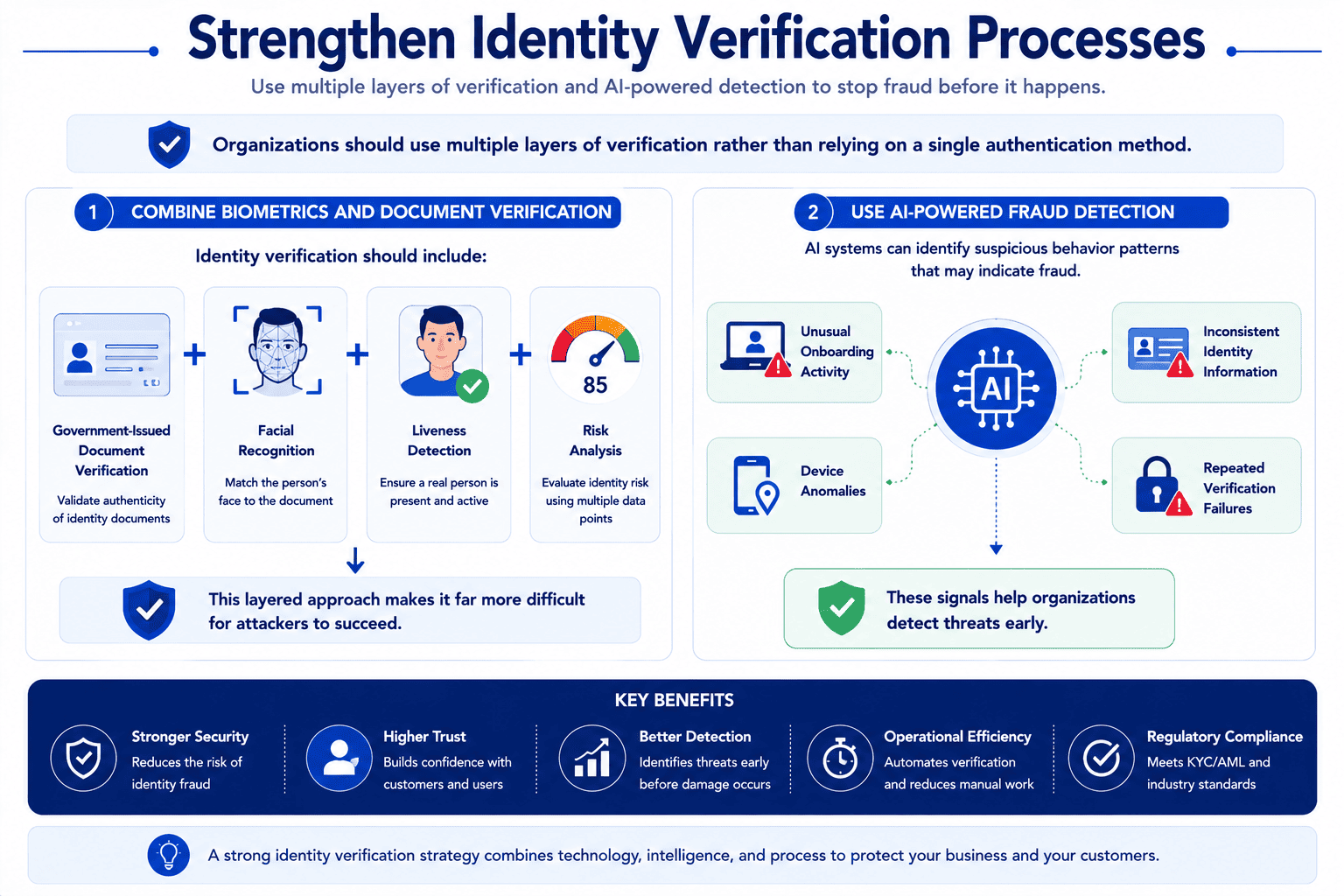
Organizations should use multiple layers of verification rather than relying on a single authentication method.
Combine Biometrics and Document Verification
Identity verification should include:
- Government-issued document verification
- Facial recognition
- Liveness detection
- Risk analysis
This layered approach makes it far more difficult for attackers to succeed.
Use AI-Powered Fraud Detection
AI systems can identify suspicious behavior patterns that may indicate fraud.
For example:
- Unusual onboarding activity
- Device anomalies
- Inconsistent identity information
- Repeated verification failures
These signals help organizations detect threats early.
Educate Employees About Deepfake Risks
Technology alone is not enough to prevent deepfake attacks.
Employees should understand:
- How deepfakes work
- Common attack scenarios
- Signs of suspicious communications
- Verification procedures for sensitive requests
Regular cybersecurity training helps reduce the risk of successful social engineering attacks.
Secure Executive Communications
Executive impersonation is becoming one of the most damaging forms of deepfake fraud.
Organizations should establish procedures for verifying high-risk requests involving:
- Financial transfers
- Payroll changes
- Vendor payments
- Confidential information
Independent verification channels can help prevent fraudulent instructions from being executed.
Monitor Emerging Threats
Deepfake technology is evolving rapidly. Organizations should continuously assess their security controls and stay informed about emerging attack techniques.
Resources such as the NIST Face Recognition Vendor Test (FRVT) provide valuable insights into biometric performance and anti-spoofing technologies used to strengthen identity verification systems.
Security teams should regularly review new fraud trends and update verification procedures accordingly.
Industries Most at Risk
While every organization faces some level of risk, certain sectors are particularly attractive targets.
Financial Services
Banks and fintech companies face identity fraud, account takeovers, and onboarding attacks.
Cryptocurrency Platforms
Crypto exchanges frequently encounter synthetic identity and account fraud attempts.
Government Services
Digital government platforms must protect against identity theft and fraudulent benefit claims.
Healthcare
Healthcare organizations need to secure patient identities and sensitive medical records.
Online Marketplaces
Marketplaces use identity verification to prevent fake accounts and fraudulent transactions.
How Recognito Helps Organizations Combat Deepfake Fraud
As deepfake attacks become more sophisticated, businesses need identity verification systems capable of distinguishing real users from synthetic media.
Solutions from Recognito combine facial recognition, liveness detection, and AI-driven fraud prevention technologies to help organizations strengthen their defenses against modern identity threats. By integrating advanced biometric verification into onboarding and authentication workflows, businesses can reduce fraud risks while maintaining a smooth user experience.
Conclusion
Deepfake attacks are becoming more realistic, accessible, and dangerous. Organizations that rely on digital identity verification must adapt their security strategies to address this evolving threat. By implementing advanced liveness detection, strengthening identity verification workflows, educating employees, and leveraging AI-driven fraud prevention, businesses can significantly reduce their exposure to deepfake attacks.
As synthetic media technology continues to advance, proactive defense measures will be essential for maintaining trust, security, and compliance in digital environments.
Frequently Asked Questions
What is a deepfake attack?
A deepfake attack uses AI-generated images, videos, or audio recordings to impersonate individuals and deceive security systems or people.
Why are deepfakes a cybersecurity threat?
Deepfakes can be used for identity fraud, account takeovers, financial scams, and social engineering attacks, making them a significant security risk.
How can organizations detect deepfakes?
Organizations can use liveness detection, AI-powered fraud detection, biometric verification, and layered identity verification processes to identify deepfake attempts.
What is the best defense against deepfake fraud?
A combination of liveness detection, facial recognition, document verification, employee training, and risk-based authentication provides the strongest protection.
Can facial recognition stop deepfake attacks?
Facial recognition alone may not be sufficient. Combining facial recognition with liveness detection significantly improves protection against deepfake fraud.
Which industries face the greatest deepfake risks?
Financial services, cryptocurrency platforms, government agencies, healthcare providers, and online marketplaces are among the most targeted sectors.
