
Biometric verification is becoming a core part of digital identity verification for banks, fintech companies, insurers, payment providers, marketplaces, and other businesses operating online.
Facial recognition can help establish that a person presenting an identity is the person associated with it. Liveness detection can help protect the biometric capture process from presentation attacks. Together, these technologies can strengthen identity verification and fraud prevention.
But biometric technology also creates significant compliance responsibilities.
Unlike an ordinary password or email address, biometric information can be highly sensitive and difficult to replace if compromised. Organizations therefore need to consider not only whether a biometric system works accurately, but also why the data is being processed, what legal requirements apply, how the information is protected, how long it is retained, and what rights individuals have.
The challenge becomes greater for organizations serving customers across multiple countries. There is no single worldwide biometric law. Requirements depend on the jurisdiction, purpose of processing, type of biometric technology, sector, and role of the organization.
This guide explains the major principles behind biometric compliance, the role of privacy laws, and the practical controls businesses should consider when implementing identity verification globally.
Why Biometric Compliance Is Different From Ordinary Data Compliance
Biometric information is not necessarily regulated in exactly the same way in every jurisdiction.
The regulatory treatment can depend on how the information is processed and what the organization intends to do with it.
For example, facial images may be ordinary personal information when simply stored as photographs in some contexts, but become biometric data subject to additional requirements when specifically processed for identifying an individual.
The EU GDPR defines biometric data as personal data resulting from specific technical processing relating to physical, physiological, or behavioural characteristics that allow or confirm unique identification. Article 9 places biometric data used for uniquely identifying a natural person within the special categories of personal data, subject to specified exceptions.
This distinction is important because compliance teams should evaluate the actual processing activity, rather than assuming every image or biometric signal is regulated identically.
The Core Principles of Biometric Compliance
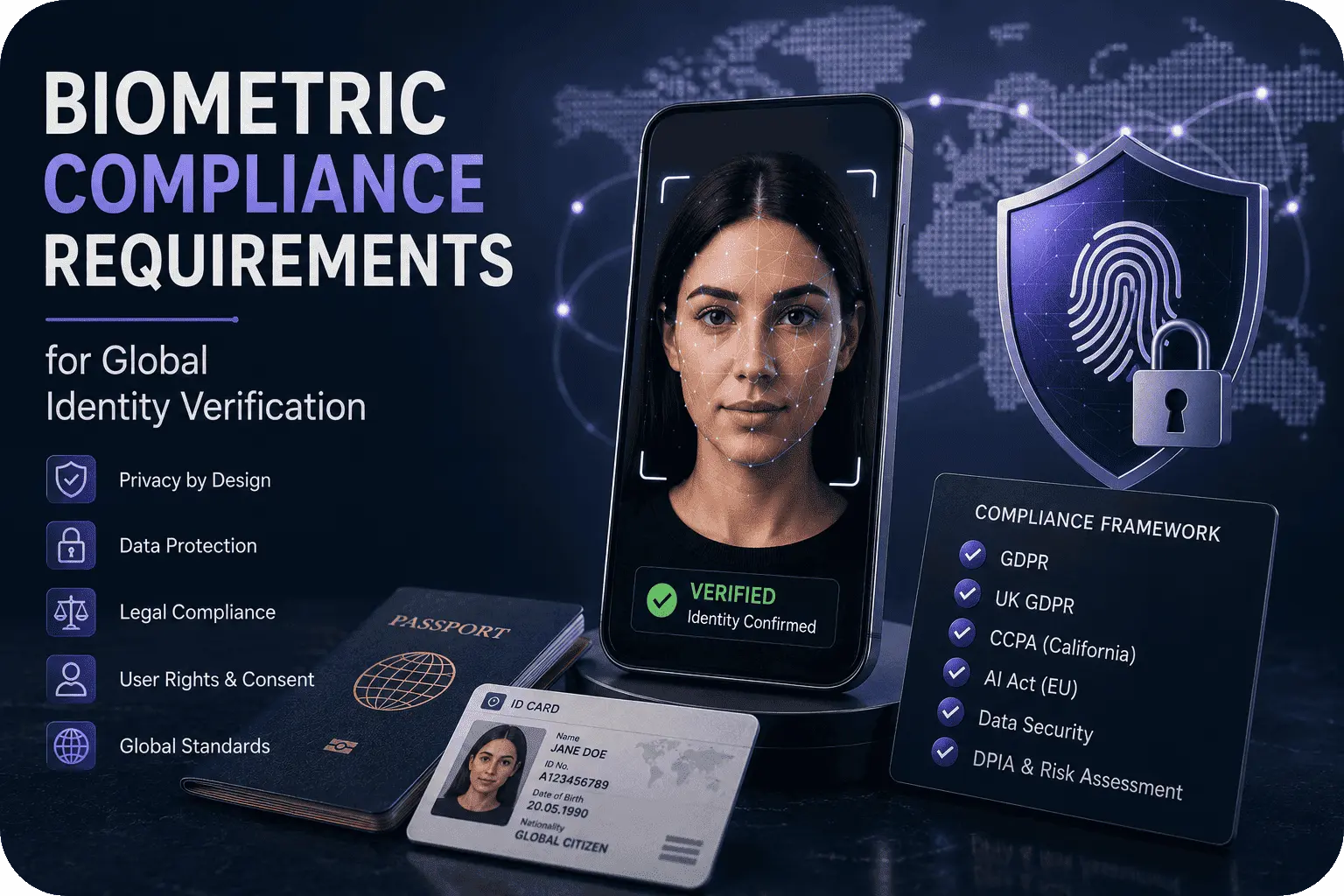
Although specific laws differ, effective biometric compliance programs generally need to address several recurring principles.
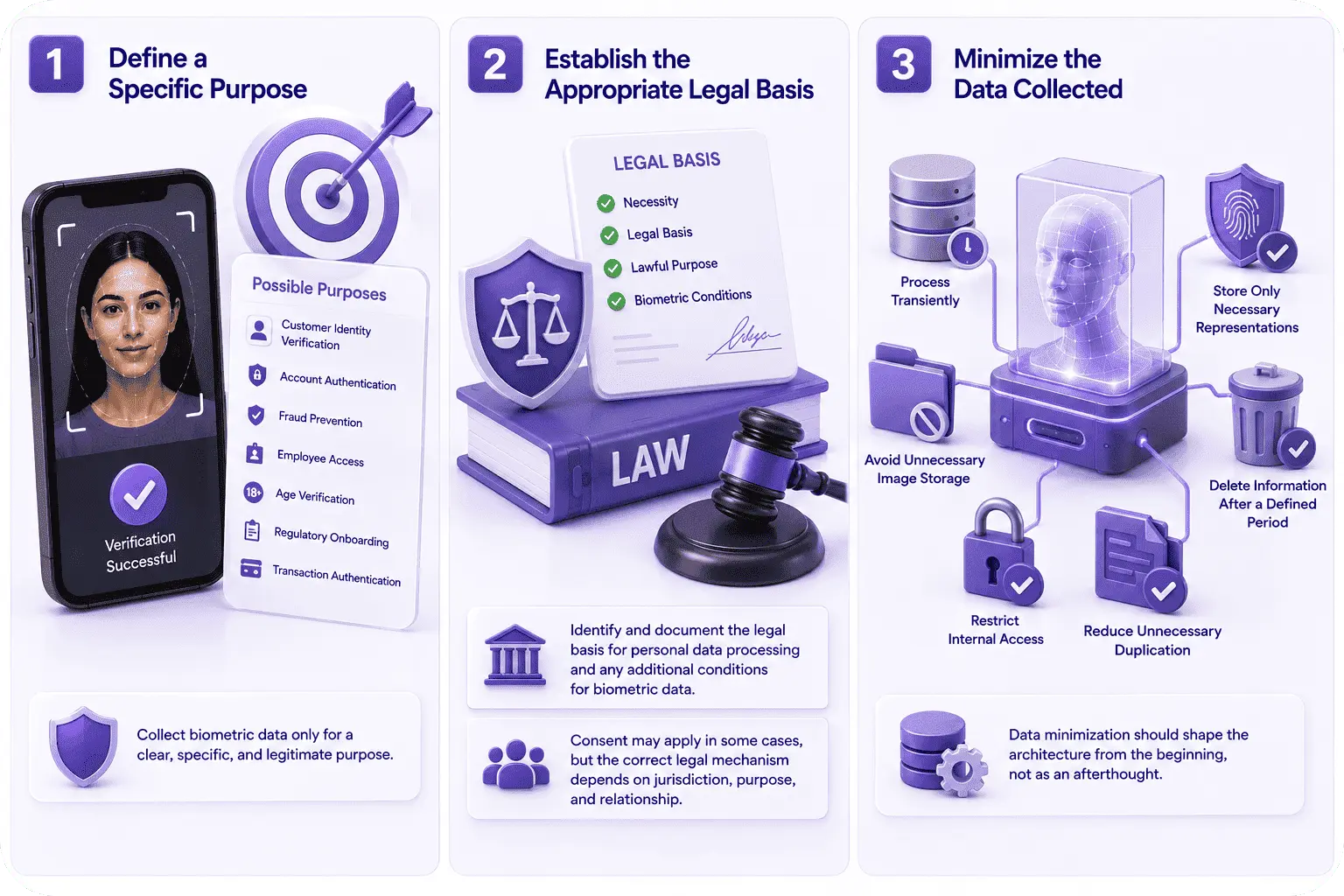
1. Define a Specific Purpose
Organizations should know exactly why biometric verification is being used.
Possible purposes include:
- Customer identity verification
- Account authentication
- Fraud prevention
- Employee access
- Age verification
- Regulatory onboarding
- Transaction authentication
The purpose matters because an organization should not collect biometric information simply because the technology makes it possible.
Purpose limitation also helps determine what information needs to be collected and how long it should be retained.
2. Establish the Appropriate Legal Basis
A business needs to identify an appropriate legal basis or authorization for processing personal information and, where required, a separate condition for processing biometric data.
This becomes particularly important under frameworks such as the GDPR.
Organizations should document why the processing is necessary, what legal basis applies, and whether additional requirements apply to biometric processing.
Consent can sometimes be appropriate, but it should not automatically be treated as the answer for every biometric deployment. The appropriate legal mechanism depends on the jurisdiction, relationship with the individual, purpose, and applicable law.
3. Minimize the Data Collected
A compliant biometric architecture should avoid collecting information that the organization does not need.
For example, if the business only needs to verify whether a customer matches an existing identity, it may not need to retain raw facial images indefinitely.
Data minimization should influence the architecture from the beginning.
This means asking whether the system can:
- Process information transiently
- Avoid unnecessary image storage
- Store only necessary biometric representations
- Delete information after a defined period
- Restrict internal access
- Reduce unnecessary duplication
These considerations should be part of the initial technology assessment rather than an afterthought.
GDPR and Biometric Compliance
The GDPR is one of the most important privacy frameworks for organizations processing personal data associated with individuals in the European Economic Area, depending on the circumstances of the processing.
Article 9 of the regulation gives special protection to biometric data when it is processed for the purpose of uniquely identifying a natural person.
That means an organization using facial recognition for identity verification needs to carefully assess both its general GDPR obligations and the additional requirements that apply to special category data.
A useful starting point for businesses is the GDPR information resource, while the official regulation should be treated as the authoritative legal text.
Under GDPR-oriented compliance planning, organizations should consider:
- Lawfulness of processing
- Purpose limitation
- Data minimization
- Transparency
- Security
- Storage limitation
- Individual rights
- Controller and processor responsibilities
- International data transfers
- Data protection impact assessments where required
The exact compliance position depends on the specific processing activity and organization.
Data Protection Impact Assessments
A Data Protection Impact Assessment, or DPIA, can be an important part of biometric compliance.
A DPIA helps an organization identify how a proposed processing activity may affect people’s rights and freedoms, assess the risks, and establish measures to reduce those risks.
The European Data Protection Board’s DPIA guidance explains that DPIAs are required where processing is likely to result in a high risk to individuals.
The UK ICO takes an especially relevant position for biometric recognition. Its guidance states that organizations using biometric recognition systems must complete a DPIA before using the system.
A strong DPIA should therefore examine issues such as:
- What biometric data is collected
- Why it is necessary
- How the data is processed
- Who receives it
- Where it is stored
- How long it is retained
- What happens if the system makes an error
- What risks of discrimination or exclusion exist
- What security controls are implemented
This gives compliance teams a structured way to evaluate biometric risk before deployment.
UK GDPR and Biometric Recognition
Organizations serving customers in the United Kingdom should also consider the UK GDPR and relevant guidance from the Information Commissioner’s Office.
The ICO biometric recognition guidance explains that biometric recognition involves using biometric data to uniquely identify an individual and therefore involves special category biometric data.
The ICO also emphasizes that organizations need both a lawful basis and a separate condition for processing special category biometric information.
For businesses operating biometric identity verification in the UK, compliance therefore involves more than simply publishing a privacy policy.
The organization should be able to demonstrate why the processing is lawful, necessary, proportionate, secure, and appropriately governed.
Biometric Regulations in the United States
The United States does not have one single federal privacy framework governing all biometric processing in the same way as the GDPR.
Instead, businesses may face federal requirements, state privacy laws, sector-specific rules, contractual obligations, and biometric-specific legislation depending on where and how the technology is used.
California is one important example.
The California Privacy Protection Agency explains that biometric information used to identify a consumer falls within sensitive personal information under the CCPA framework.
This means organizations serving California consumers should assess whether their biometric processing creates obligations relating to disclosure, use, sharing, consumer rights, and other applicable requirements.
Other states may have additional biometric or privacy laws with different definitions, obligations, consent requirements, retention provisions, or private rights of action.
For a global organization, this makes jurisdiction mapping essential.
Biometric Compliance and the EU AI Act
Privacy regulation is only one part of the regulatory picture.
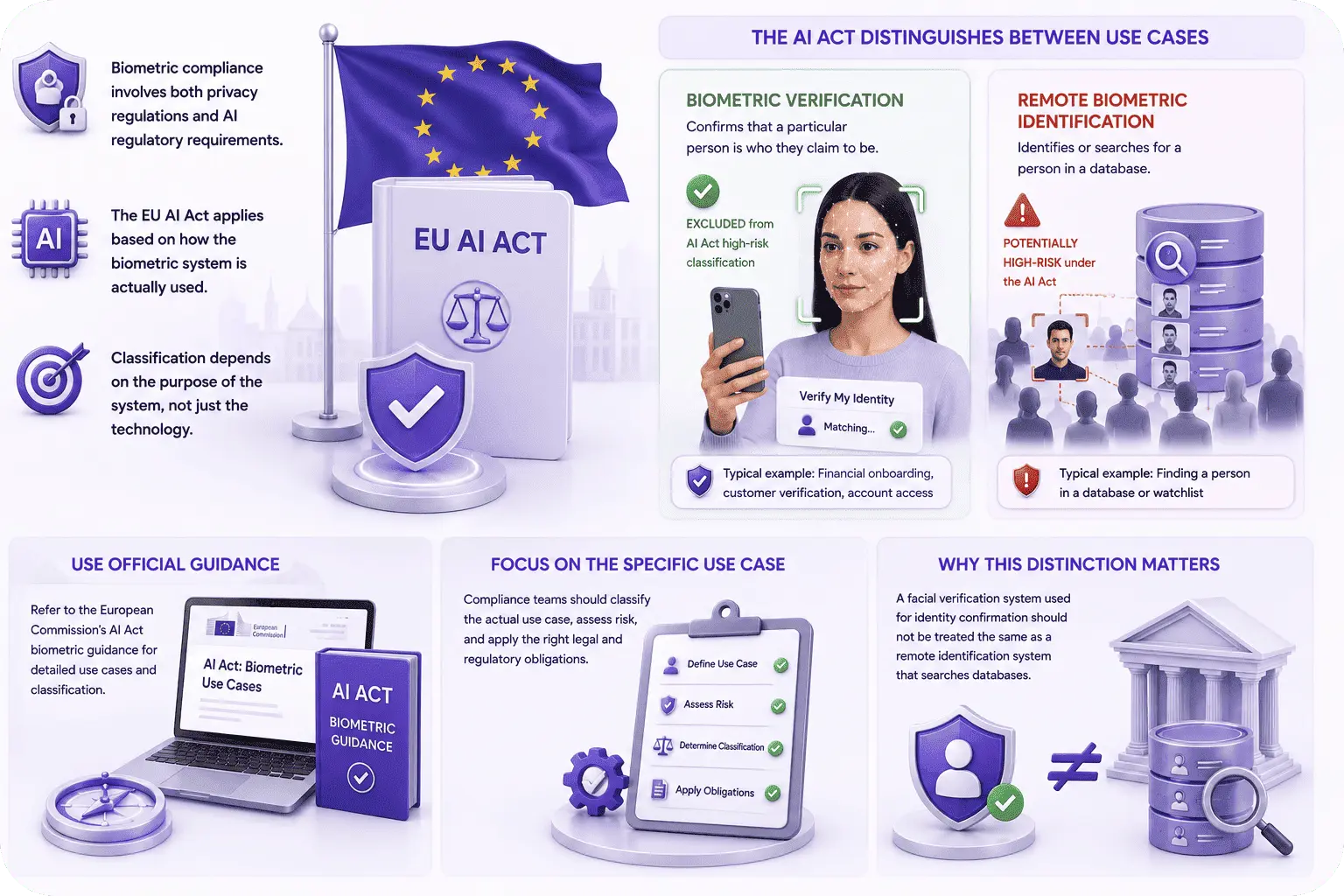
Organizations deploying AI-powered biometric systems in the European Union also need to understand how the EU AI Act may apply to the particular use case.
The classification depends heavily on what the biometric system is actually being used for.
For example, the AI Act distinguishes remote biometric identification from biometric verification. The regulation’s definitions specifically exclude AI systems intended for biometric verification where the sole purpose is confirming that a particular person is who they claim to be.
The European Commission’s AI Act biometric guidance provides useful information about biometric use cases and classification.
This distinction is particularly relevant to financial identity verification.
A facial verification system used to confirm a customer’s claimed identity should not automatically be treated as equivalent to a remote biometric identification system used to identify people against a database.
Compliance teams therefore need to classify the specific use case, not simply the technology name.
Privacy by Design for Biometric Verification
Compliance should influence the system architecture from the beginning.
A privacy-by-design approach considers protection requirements before biometric processing goes live.
For example, an organization might evaluate whether it can avoid storing raw facial images after verification, restrict access to biometric templates, isolate biometric processing from unrelated customer systems, and automatically delete temporary data.
The architecture should also define clear responsibilities between the identity verification provider and the organization deploying the technology.
This is especially important when an external SDK or verification platform is involved.
Biometric Data Security
Compliance and security are closely connected.
A biometric dataset can become a high-value target because biometric characteristics are difficult for individuals to change after exposure.
Security controls should therefore address the complete data lifecycle.
Important considerations include:
- Encryption during transmission
- Encryption at rest
- Access controls
- Authentication for administrative users
- Audit logging
- Secure key management
- Environment isolation
- Vulnerability management
- Incident response
- Secure deletion
Organizations should also evaluate how biometric templates are created and handled.
A technology provider that offers strong facial recognition performance but leaves unclear questions around data storage or access can create significant compliance risk.
Vendor and Processor Compliance
When an organization uses a third-party biometric SDK or identity verification provider, compliance responsibilities do not automatically disappear.
The business should understand whether the provider acts as a processor, controller, or another legally relevant role under the applicable framework.
Contracts should clearly define:
- Processing instructions
- Security responsibilities
- Subprocessors
- Data locations
- Retention
- Deletion
- Breach notification
- Audit rights
- International transfers
- Assistance with individual rights
The vendor’s technical documentation and security materials should also be reviewed during procurement.
For organizations implementing facial biometrics, a face recognition SDK can become part of a wider identity infrastructure, so its deployment model and data-handling characteristics should be evaluated alongside the algorithm itself.
Cross-Border Data Transfers
Global identity verification creates another challenge: data may cross borders during processing.
An organization may have customers in one country, infrastructure in another, and a biometric technology provider operating from another jurisdiction.
Compliance teams should therefore understand where:
- Facial images are processed
- Biometric templates are generated
- Data is stored
- Backups are maintained
- Subprocessors operate
The applicable transfer mechanism depends on the jurisdictions involved and the nature of the data.
This should be documented during vendor assessment rather than discovered after production deployment.
Biometrics, Accuracy, and Fairness
Compliance is not only about privacy.
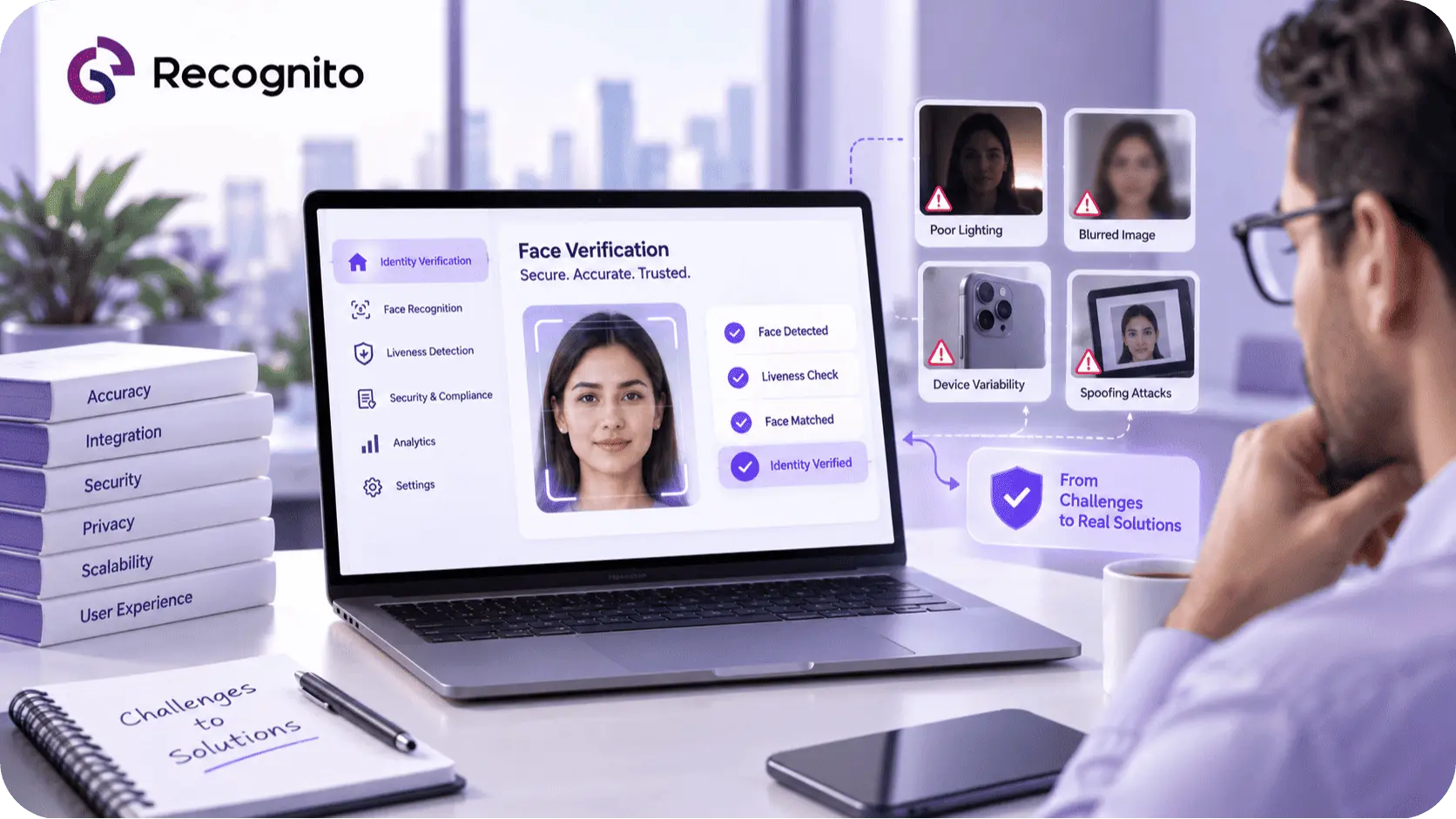
Biometric systems can also create risks if legitimate users are incorrectly rejected or certain populations experience materially different error rates.
A high-quality compliance assessment should therefore consider:
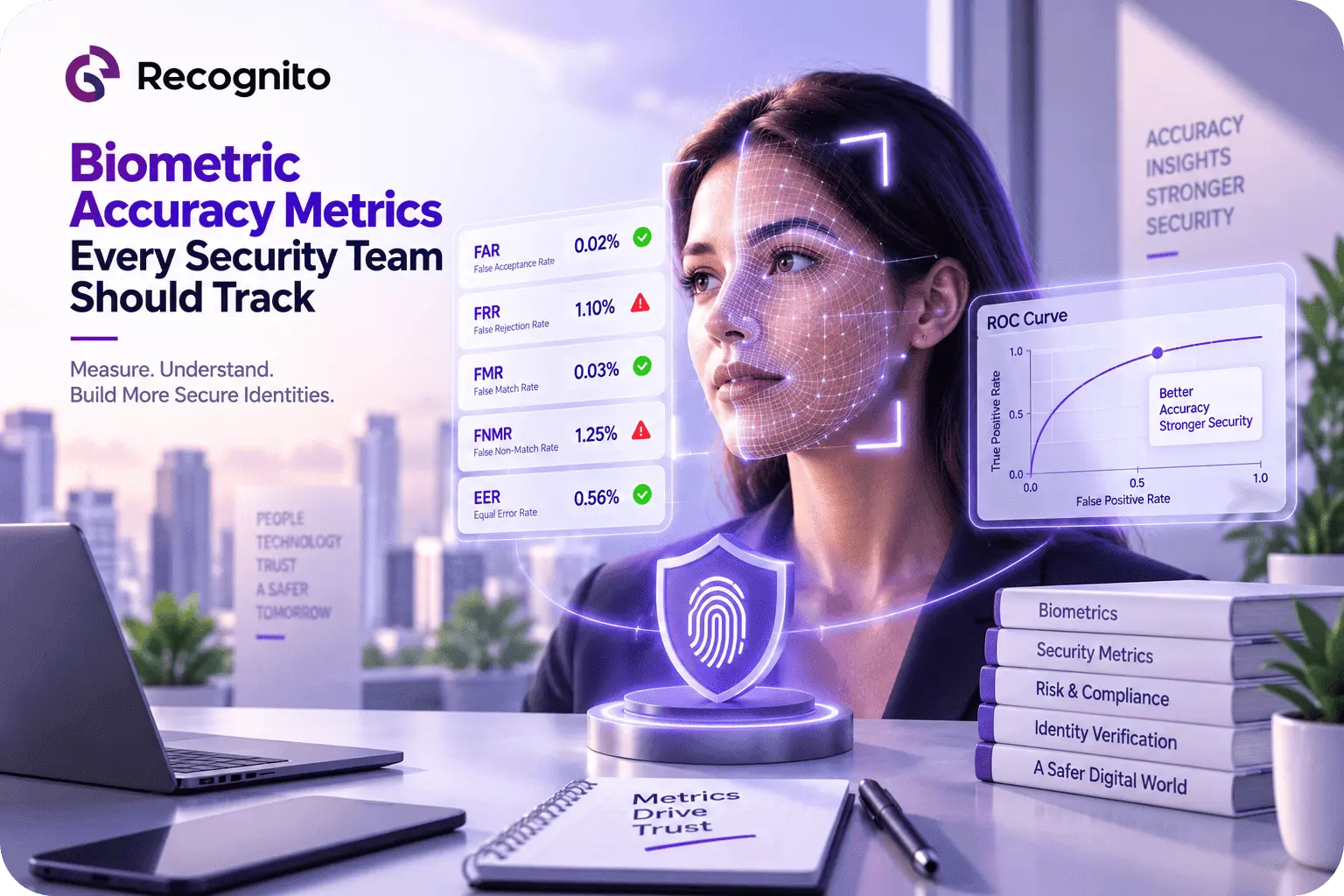
- False acceptance rates
- False rejection rates
- Demographic performance
- Image quality requirements
- Accessibility
- Human review processes
- Appeal or remediation procedures
This is particularly important where a biometric decision can affect access to financial services or other significant opportunities.
Independent testing can provide valuable evidence during procurement. For example, organizations can examine NIST’s face technology evaluations when assessing facial recognition performance under standardized conditions.
However, benchmark results should be combined with testing using the organization’s actual users and operating environment.
Liveness and Biometric Compliance
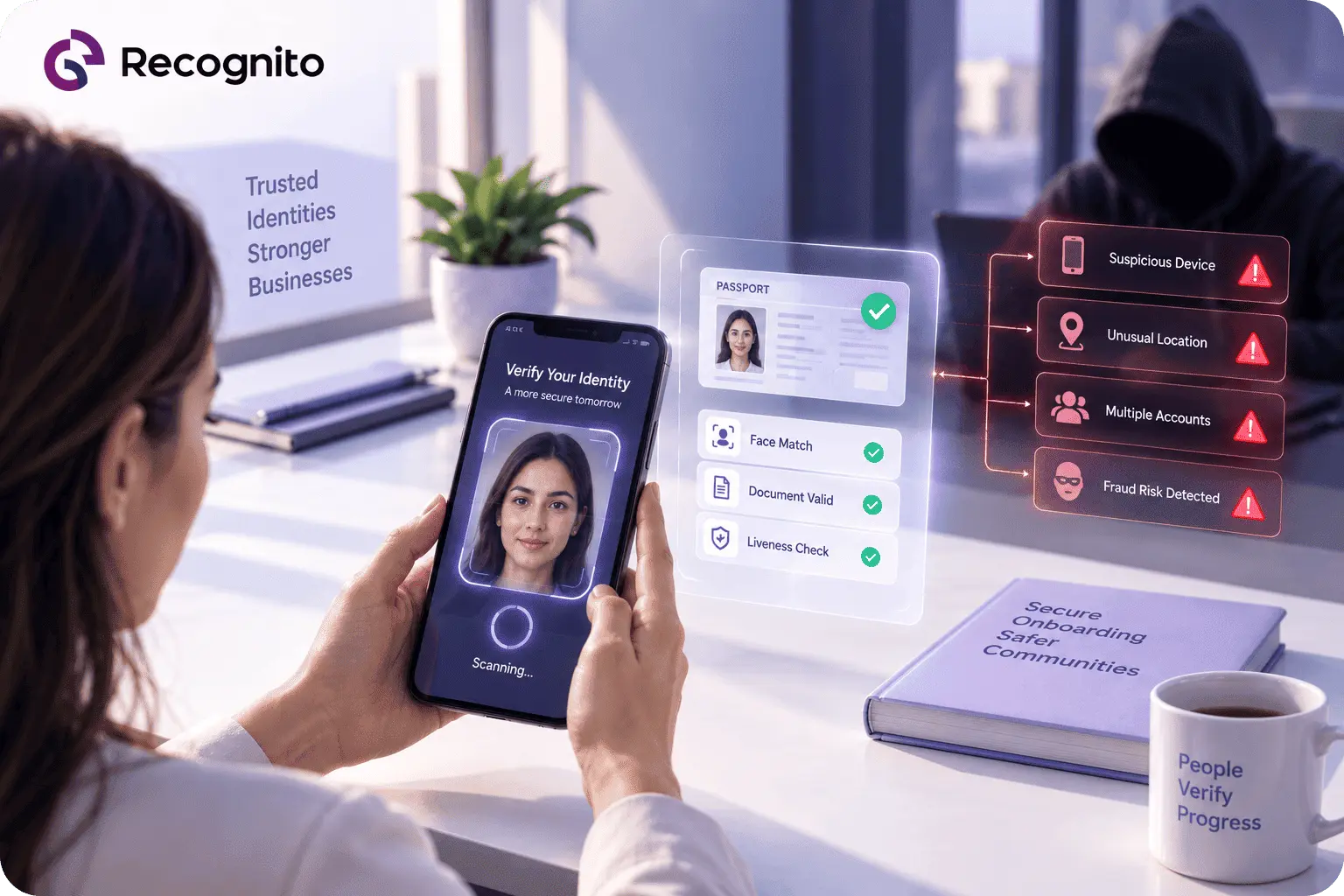
Liveness detection can strengthen identity verification by helping organizations determine whether a real person is physically present during biometric capture.
But adding liveness does not remove the underlying privacy and compliance responsibilities.
The organization still needs to understand:
- What data liveness processing uses
- Whether capture data is retained
- How liveness results are stored
- How false rejections are handled
- What security controls protect the data
- Whether the system is appropriate for the intended use case
For organizations implementing remote identity verification, a face liveness detection SDK can become an important security layer, but it should be incorporated into the organization’s overall privacy and security assessment.
Building a Global Biometric Compliance Framework
A global organization should avoid treating compliance as a collection of unrelated country-specific checklists.
A better approach is to establish a baseline biometric governance framework and then add jurisdiction-specific requirements.
| Compliance Area | Questions the Organization Should Answer |
| Purpose | Why is biometric processing necessary? |
| Legal basis | What authorization or legal basis applies? |
| Special category rules | Does the jurisdiction provide additional protection for biometrics? |
| Consent | Is consent required or appropriate? |
| DPIA | Does the processing create a high-risk activity requiring an assessment? |
| Data minimization | What biometric information actually needs to be processed or stored? |
| Retention | How long is data retained and why? |
| Security | How are biometric information and templates protected? |
| Vendor management | What are the provider’s processing and security responsibilities? |
| Transfers | Where does biometric data travel or reside? |
| Individual rights | How can people exercise applicable rights? |
| Monitoring | How will compliance be reviewed as technology and laws change? |
This framework provides a common baseline while allowing legal teams to add country-specific requirements.
How Organizations Should Prepare for Biometric Compliance
A practical compliance program should begin before the biometric system reaches production.
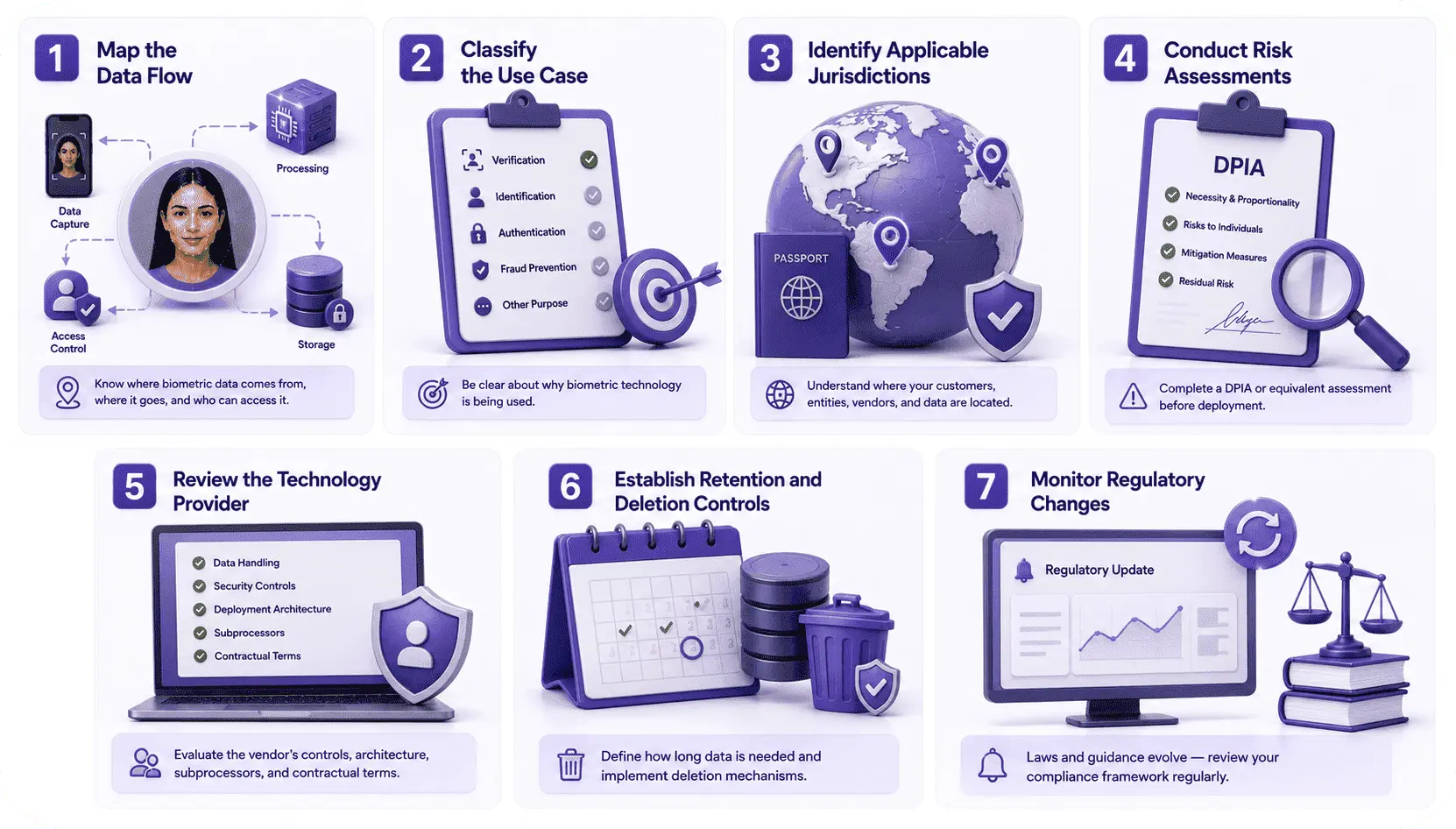
1. Map the Data Flow
Document where biometric information comes from, where it is processed, where it is stored, and who can access it.
2. Classify the Use Case
Determine whether the system is being used for verification, identification, authentication, fraud prevention, or another purpose.
3. Identify Applicable Jurisdictions
Map the locations of customers, entities, processing infrastructure, vendors, and data storage.
4. Conduct Risk Assessments
Where required or appropriate, complete a DPIA or equivalent assessment before deployment.
5. Review the Technology Provider
Evaluate the vendor’s data handling, security controls, deployment architecture, subprocessors, and contractual terms.
6. Establish Retention and Deletion Controls
Define how long biometric information is necessary and implement mechanisms to enforce those limits.
7. Monitor Regulatory Changes
Biometric regulations continue evolving. A compliance framework needs regular review rather than being treated as a one-time project.
Why Compliance Should Influence Technology Selection
Selecting a biometric system solely on recognition accuracy can create problems later.
Two technologies may provide comparable facial matching performance while having very different data architectures, deployment options, retention models, and vendor arrangements.
Compliance teams should therefore be included in procurement alongside engineering, security, product, and legal teams.
Questions about local processing, data storage, biometric template handling, auditability, and vendor responsibilities can materially affect whether a technology is practical for a particular market.
This is especially important for identity verification because the technology may become deeply integrated into customer onboarding and financial workflows.
Conclusion
Biometric compliance is not one global checklist.
Organizations implementing identity verification across multiple markets need to understand the privacy laws, biometric regulations, AI requirements, sector rules, and data-transfer obligations that apply to each specific use case.
GDPR and UK GDPR provide important frameworks for biometric information, while U.S. privacy requirements can vary by state and sector. The EU AI Act adds another layer where AI-powered biometric systems fall within its scope.
The strongest approach is to combine legal assessment with privacy-by-design architecture, appropriate data minimization, strong security, vendor governance, independent biometric testing, and continuous regulatory monitoring.
Organizations should also evaluate the technology itself as part of compliance. Facial recognition, liveness detection, and document verification are not isolated products; they can become interconnected parts of a wider identity infrastructure.
Businesses evaluating biometric identity technologies can explore the capabilities available from Recognito as part of that wider compliance and identity verification assessment.
Frequently Asked Questions
Is biometric data always considered sensitive or special category data?
Not universally. The legal classification depends on the jurisdiction and how the biometric information is processed. Under GDPR, biometric data processed for uniquely identifying a natural person falls within special categories of personal data.
Does GDPR allow biometric verification?
GDPR does not simply prohibit all biometric verification. Article 9 establishes a general prohibition on processing special category data subject to specific exceptions. Organizations must determine an appropriate legal basis and applicable special-category condition for their particular processing.
Is a DPIA required for biometric verification?
A DPIA may be required when processing is likely to result in a high risk to individuals’ rights and freedoms. Organizations should assess their specific processing, scale, purpose, technology, and jurisdiction rather than assuming every implementation has the same requirement.
What should businesses check when selecting a biometric verification vendor?
They should assess the vendor’s processing role, data locations, retention, security controls, subprocessors, deployment model, international transfers, contractual responsibilities, technical performance, and ability to support the organization’s compliance obligations.
How can companies manage biometric compliance across multiple countries?
A practical approach is to establish a global baseline covering purpose, legal basis, security, privacy, retention, vendor management, and data transfers, then add jurisdiction-specific requirements for each market in which biometric processing occurs.