
Opening a bank account remotely should be simple for a legitimate customer. Yet behind a short digital application sits a complicated identity problem: the bank must determine whether the applicant is using a genuine identity document, whether the document belongs to them, and whether the evidence is reliable enough to support a regulated customer relationship.
Manual document review can make that process slow and expensive. Simply accepting an uploaded image creates a different problem because a digital copy can be manipulated, recycled, or presented by an impostor.
This is where identity document validation technology, or IDVT, becomes useful. It allows banks to inspect identity documents digitally, automate checks, connect documents with their holders, and integrate the results into wider KYC and fraud-prevention workflows.
The technology does not replace customer due diligence. It gives banks a more efficient way to collect and evaluate identity evidence before a customer reaches the next stage of onboarding.
Why Traditional Bank Onboarding Creates Friction
A conventional identity-checking process often depends on several separate steps. Customers enter personal details, upload a passport or ID card, wait for an automated or manual review, and may then be asked to provide additional information.
At low volumes, this can be manageable. At scale, the weaknesses become obvious.
Manual inspection increases labor requirements and can introduce inconsistent decisions. Poor-quality document images generate unnecessary review requests. Delays can cause customers to abandon applications. Meanwhile, fraudsters have more opportunities to exploit weaknesses in fragmented workflows.
The UK’s identity document validation technology guidance explains that IDVT can help establish the authenticity of documents such as passports, biometric residence permits, driving licences, and identity cards while making remote checking more practical.
For banks, that creates a useful starting point: move document analysis closer to the point of capture and make verification part of a connected digital onboarding journey.
What IDVT Adds to Digital Customer Onboarding
IDVT is more than OCR that reads a passport.
A modern validation workflow may combine document image capture, template comparison, security-feature analysis, machine-readable-zone checks, data consistency checks, biometric matching, and connections to relevant external data sources.
The Home Office’s guidance describes IDVT as a combination of capture hardware and software that can compare identity documents against templates and analyze security features. Some systems also incorporate biometric checks and other data sources.
That architecture allows the bank to ask several questions from the same onboarding event:
- Is this the right type of document?
- Does the document appear authentic?
- Has it been altered?
- Is the information internally consistent?
- Does the document show signs of being expired or otherwise invalid?
- Does the customer presenting it appear to match the document?
- Does the overall evidence justify proceeding automatically?
The individual checks matter, but the larger advantage is the ability to connect them into one decision process.
How Banks Use IDVT Across the Onboarding Journey
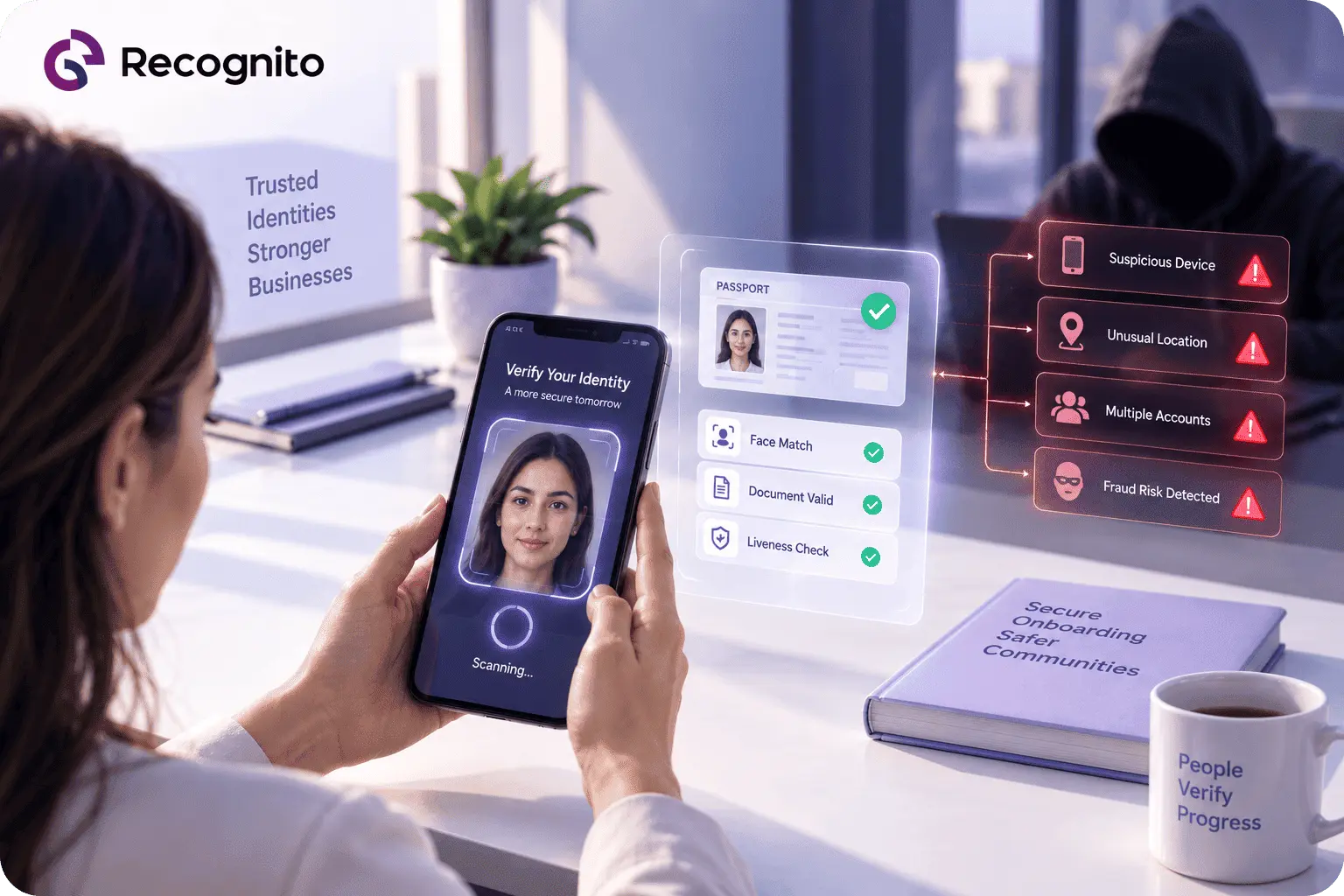
A typical workflow begins with customer capture.
The applicant uses a smartphone camera to photograph the identity document. The application can guide the customer to position the document correctly and provide immediate feedback when the image is unreadable.
Once the image reaches the verification system, document-recognition models can identify the document type and extract relevant fields.
The system then evaluates the document against available authenticity signals. Depending on the technology, those checks may include visual security features, expected layouts, machine-readable data, consistency between fields, and other characteristics.
The next stage links the evidence to the applicant. Facial comparison can assess whether the customer’s selfie matches the portrait contained in the identity document.
Where supported, live document capture and biometric liveness add another security layer by making it harder to rely on static images or presentation attacks.
The outcome can then be passed into the bank’s broader risk engine.
This is why IDVT is most useful when treated as a verification layer inside onboarding, rather than as an isolated document scanner.
For a deeper look at how identity documents fit alongside facial evidence, see face recognition vs ID document verification.
The Difference Between Document Validation and Identity Verification
One of the most important distinctions for banking teams is that validating a document is not identical to verifying a person.
A genuine passport can belong to a customer whose identity claim is fraudulent. A stolen identity document may be authentic even though the person presenting it is not the legitimate owner.
That creates several separate verification tasks.
Document authenticity examines whether the credential appears genuine.
Document validity considers whether the credential is still acceptable, including whether relevant status or revocation information can be checked.
Holder verification connects the person presenting the document to the identity represented by it.
The UK government guidance describes these as distinct elements of a document check and notes that some IDVT systems incorporate facial matching to help link the document to its holder.
Banks should therefore resist the temptation to define “document passed” as equivalent to “customer verified.”
A stronger onboarding architecture keeps these decisions distinct and combines them at the risk-assessment stage.
Why Document Liveness Matters
Remote onboarding changes the attack surface because the bank may never see the original physical document.
A fraudster could attempt to submit a photograph, scan, screenshot, or manipulated digital representation rather than present the actual document to the camera.
Document liveness or document-presence detection helps address that problem by assessing whether the physical credential is actually being presented during capture.
This is particularly relevant when the onboarding experience is entirely remote. The bank is trying to reproduce part of the assurance that would otherwise come from a branch employee physically examining the document.
The distinction becomes even more important when fraudsters use increasingly sophisticated digital manipulation.
A dedicated guide on how document liveness detection stops identity fraud explores how live document capture can complement conventional authenticity checks.
How IDVT Helps Reduce Manual Review
One of the most immediate business benefits is operational.
Without automated document validation, employees may spend significant time reviewing straightforward applications. As customer volume increases, the bank has to scale the review operation or accept longer processing times.
IDVT changes the allocation of that work.
Applications with strong, consistent evidence can move through automated checks. Cases involving poor image quality, conflicting information, unusual document characteristics, or failed verification signals can be routed to a person.
This creates a human-in-the-loop model rather than choosing between total automation and total manual review.
The result can be a more efficient use of compliance and fraud expertise. Skilled analysts spend their time on exceptions instead of manually inspecting every standard application.
That model also improves scalability because onboarding volume does not automatically translate into the same increase in manual workload.
Where Facial Biometrics Enter the Process
Document validation becomes more valuable when it can be connected with biometric verification.
Suppose a customer submits a genuine passport belonging to another person. Document authenticity checks may recognize that the credential itself appears valid. The problem emerges when the system asks whether the applicant actually matches the person represented by the document.
Facial verification provides that additional evidence.
The customer captures a selfie, and the system compares the facial characteristics with the portrait associated with the document. Liveness can then assess whether the biometric capture appears to come from a live subject rather than a presentation attack.
This creates a chain of evidence:
document → identity information → document authenticity → person-to-document match → live-person assurance
No individual check is perfect. The strength comes from combining complementary controls.
What Banks Should Look for in an IDVT Solution
Buying an IDVT platform is not simply a matter of asking how many document types it supports.
The bank needs to assess how the technology behaves inside the actual onboarding environment.
| Evaluation area | Key question | Why it matters to banks |
| Document coverage | Which passports, IDs, and licences are supported? | Prevents unnecessary exclusions |
| Capture quality | Can customers capture usable evidence on common devices? | Reduces retries and abandonment |
| Authenticity checks | Which document characteristics are examined? | Strengthens fraud detection |
| Presence detection | Can the system identify static or manipulated representations? | Protects the capture stage |
| Biometric matching | Can the holder be reliably connected to the document? | Reduces impersonation risk |
| Data integration | Can verification results enter existing KYC systems? | Avoids fragmented workflows |
| Manual review | Can uncertain cases be escalated? | Handles edge cases safely |
| Auditability | Are decisions and verification outcomes traceable? | Supports governance and investigations |
Testing should cover more than successful examples. A serious evaluation needs counterfeit documents, altered documents, poor-quality captures, edge-case users, unsupported credentials, failed captures, and other conditions that resemble actual customer traffic.
For technical teams integrating this functionality, an identity document recognition SDK can provide a software layer for capturing and processing identity documents within the bank’s own application flow.
IDVT and Fraud Prevention
Identity document fraud is rarely a single-step attack.
An attacker may begin with a stolen genuine document and combine it with another person’s image. Another attempt may use a manipulated document file. Others may try synthetic identities, forged credentials, or digital injection techniques.
That means the IDVT layer should feed a larger fraud-control architecture.
A strong bank onboarding system can combine:
- document authenticity results
- document presence signals
- biometric matching
- biometric liveness
- customer-provided information
- device and session signals
- sanctions and risk checks
- velocity and behavioral indicators
- manual investigation
This approach prevents the organization from relying on any single “pass” decision.
It also creates a better basis for risk-based escalation. A document that looks legitimate but produces conflicting biometric evidence should not be treated the same as an application where every signal agrees.
The broader issue of document manipulation is covered in document fraud detection techniques, including the need to treat document inspection as part of a wider fraud strategy.
Improving the Customer Experience Without Weakening Controls
Security and convenience do not have to be opposing goals.
The key is to move complexity into the verification engine rather than exposing it to the customer.
A well-designed onboarding experience can guide users through document capture, automatically detect poor framing, request a retry only when necessary, and provide a clear explanation of what the customer needs to do next.
The customer should not have to understand the underlying checks.
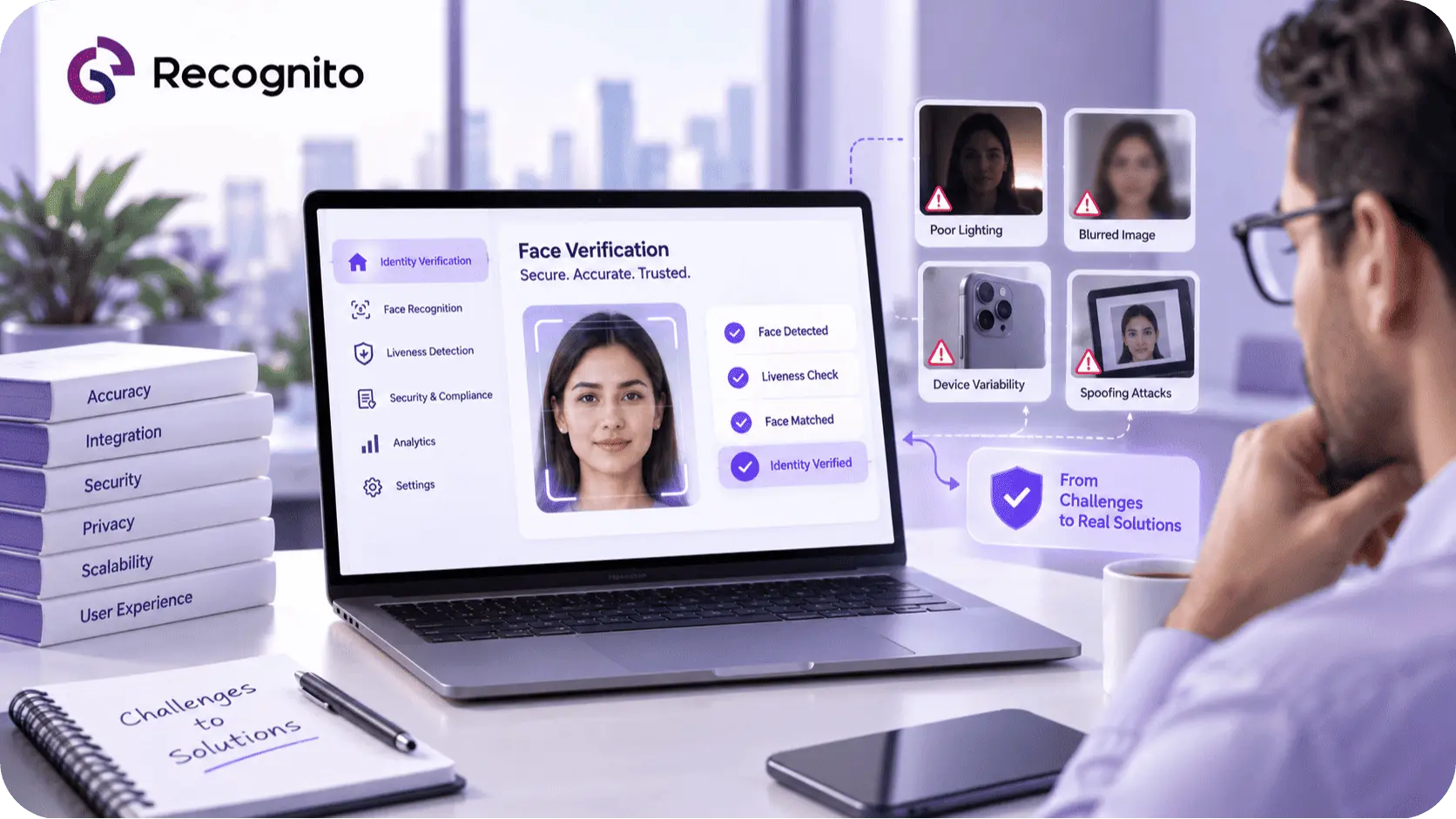
This is particularly important because failed identity verification does not always indicate fraud. Glare, low light, motion blur, damaged documents, older devices, and camera limitations can all create legitimate failures.
Banks therefore need meaningful failure states instead of a simple universal “rejected” result.
A customer who fails because of poor image quality should have a different path from one whose document shows strong fraud indicators.
For broader guidance on reducing friction while strengthening remote verification, see remote customer onboarding best practices.
Why Compliance Teams Should Be Involved Early
IDVT sits directly inside a regulated process, so technology teams should not design the workflow in isolation.
The European Banking Authority’s final guidelines on remote customer onboarding solutions emphasize reliable customer identification, document authenticity controls, biometric matching where appropriate, image quality, and trained processes for handling remote onboarding.
For banks, the practical lesson is that the technology should reflect the bank’s risk framework rather than dictate it.
Compliance teams should help define:
- what evidence is required
- which customers need additional checks
- which failures require human review
- what audit information must be retained
- how sensitive identity data is protected
- how verification decisions are monitored
A technology that produces impressive technical results but cannot fit into the bank’s governance model is not a complete onboarding solution.
Privacy and Data Handling Matter as Much as Accuracy
IDVT processes highly sensitive identity information. Banks therefore need to consider data handling at every stage.
That includes capture, transmission, processing, storage, access permissions, retention, deletion, and third-party processing.
Data minimization matters as well. Collecting additional biometric or document information simply because the system is capable of doing so can create unnecessary privacy exposure.
The architecture should capture enough evidence to support the required verification decision while limiting unnecessary retention.
Clear separation between verification evidence and long-term customer records can also reduce operational risk.
Privacy should therefore be designed into the workflow rather than treated as a final compliance review after implementation.
Measuring Whether IDVT Is Actually Improving Onboarding
A bank should not judge an IDVT deployment solely by the percentage of applications that pass automatically.
The more useful metrics include:
Completion rate: Are more legitimate customers successfully finishing onboarding?
Verification time: How long does it take to reach a decision?
Manual-review rate: How much work remains for employees?
Retry rate: How frequently do customers have to recapture documents?
False rejection rate: How often are legitimate applications unnecessarily blocked?
Fraud-loss indicators: Do suspicious applications that pass onboarding later generate confirmed fraud?
Failure reasons: Are problems concentrated around particular documents, devices, or capture conditions?
These metrics reveal whether the system is improving the entire onboarding operation rather than merely increasing automation.
A higher automation rate with more fraud losses is not an improvement. Likewise, stronger fraud detection that causes legitimate customers to abandon the application may create another business problem.
The objective is a controlled balance between assurance, conversion, compliance, and operational cost.
Where IDVT Fits in the Future of Banking Onboarding
The strongest banking architectures are moving toward connected identity workflows rather than isolated checks.
A document should not be verified in one system, a selfie in another, and the final risk decision in a third system with little context shared between them.
Instead, identity evidence can flow through a coordinated process in which each signal strengthens or challenges the others.
That makes adaptive verification possible. A straightforward low-risk application can follow a short path, while an application with inconsistent evidence can receive stronger controls.
It also creates better investigation data. When a case reaches manual review, the analyst can see which part of the identity chain failed instead of starting from scratch.
For developers working on biometric and identity workflows, the Recognito GitHub repository can provide additional technical resources alongside formal testing and vendor evaluation.
Conclusion
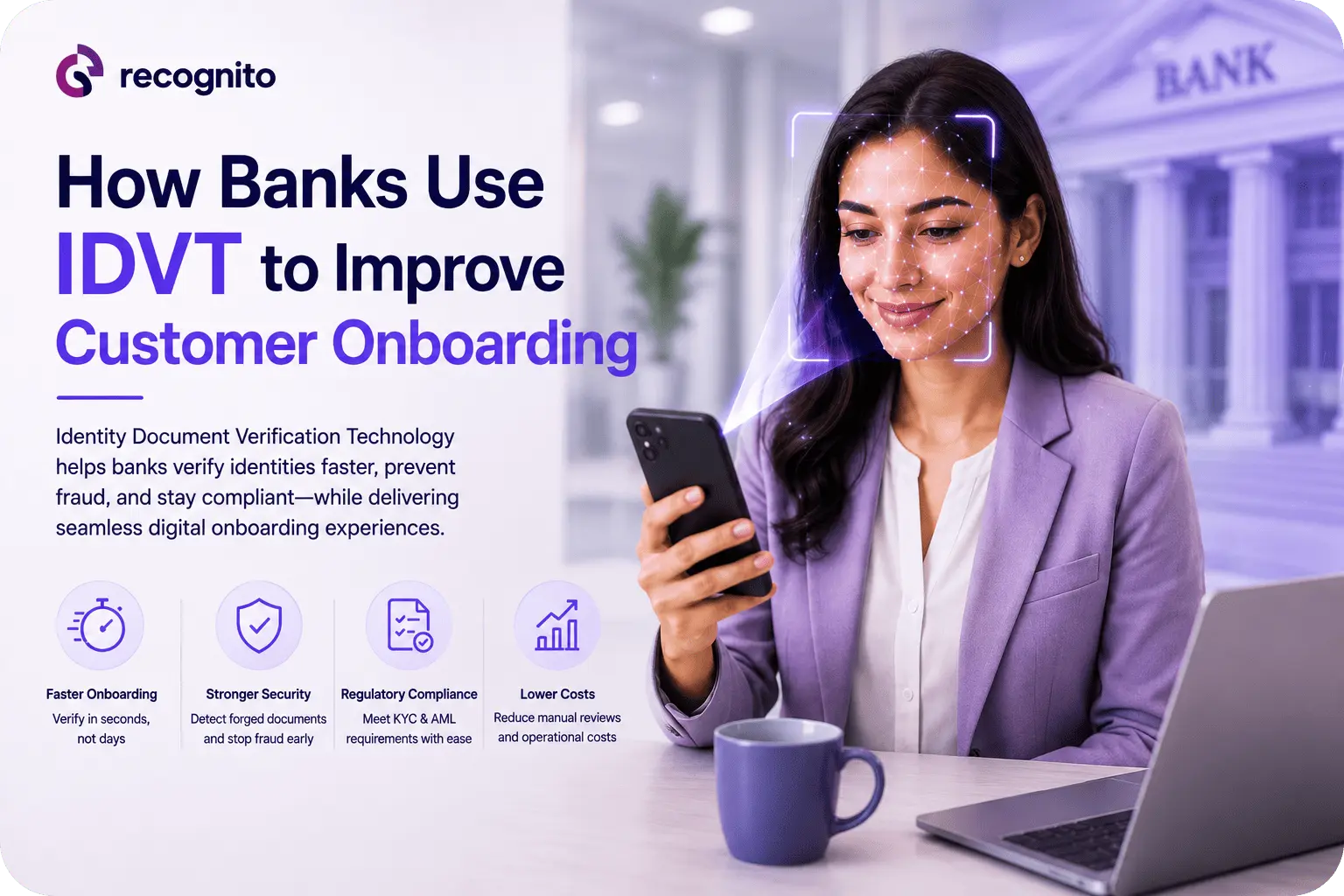
Banks use IDVT to make identity document verification faster, more consistent, and easier to integrate into remote customer onboarding.
Its real value comes from what surrounds document validation. Authenticity checks establish whether the credential appears genuine. Presence detection helps address static or manipulated representations. Facial verification connects the document with the person. Liveness and other fraud controls add further protection, while human review provides a path for uncertain cases.
The result is not simply a faster document check. It is a stronger identity-evidence pipeline that can support better KYC decisions without forcing every customer through a fully manual process.
For banks building secure digital onboarding experiences, Recognito can support biometric and document-verification workflows designed around that layered approach.
Frequently Asked Questions
What does IDVT mean in banking?
IDVT stands for identity document validation technology. In banking, it refers to technology used to capture and assess identity documents and, depending on the implementation, connect those documents with other identity and biometric checks.
Can IDVT replace manual KYC review?
Not completely. It can automate many routine checks and reduce the number of cases requiring manual attention, while human review remains valuable for ambiguous, high-risk, or failed applications.
Is IDVT the same as facial recognition?
No. IDVT primarily focuses on identity-document validation. Facial recognition can be added to help establish that the person presenting the document corresponds to the identity represented by it.
Why should banks use document liveness?
Document liveness helps distinguish a physical document being presented during capture from a static or potentially manipulated digital representation. It strengthens the evidence collected during remote onboarding.
What should banks measure after deploying IDVT?
Banks should monitor onboarding completion, verification time, manual-review volume, retry rates, false rejections, fraud outcomes, and the reasons behind verification failures. These measures show whether the technology is improving both security and customer experience.