
When a customer opens an account online, a business has to answer a deceptively difficult question: is this really the person behind the application?
A name, address, phone number, or email is not enough. Those details can be stolen or fabricated. Even a genuine identity document does not automatically prove that the person presenting it is its legitimate holder.
That is why businesses increasingly use ID verification services instead of building every identity check internally. Modern platforms can combine document recognition, data extraction, authenticity analysis, facial verification, liveness detection, and risk signals within a single workflow.
The advantage is more than speed. A specialized service provides identity capabilities that require ongoing maintenance, testing, document coverage, and fraud research.
Why Customer Verification Has Become a Core Business Requirement
Digital onboarding removes the physical interaction that once made identity checks easier. A branch employee could inspect a document, compare it with the customer, and resolve obvious inconsistencies. Online, the business may receive only digital evidence captured through a customer’s device.
That evidence can be attacked through stolen documents, altered images, synthetic identities, replayed media, or impersonation. Legitimate users also expect onboarding to take minutes, not days.
The business therefore has to balance four goals:
- establish trustworthy identity evidence
- reduce fraudulent applications
- keep onboarding fast
- control manual-review cost
NIST’s SP 800-63-4 Digital Identity Guidelines cover identity proofing, authentication, security, privacy, and related digital identity requirements. Although aimed at government systems, the framework is useful when designing commercial identity workflows.
An ID verification service helps turn those requirements into a repeatable operational process.
What an ID Verification Service Actually Does
An ID verification service is more than an OCR tool.
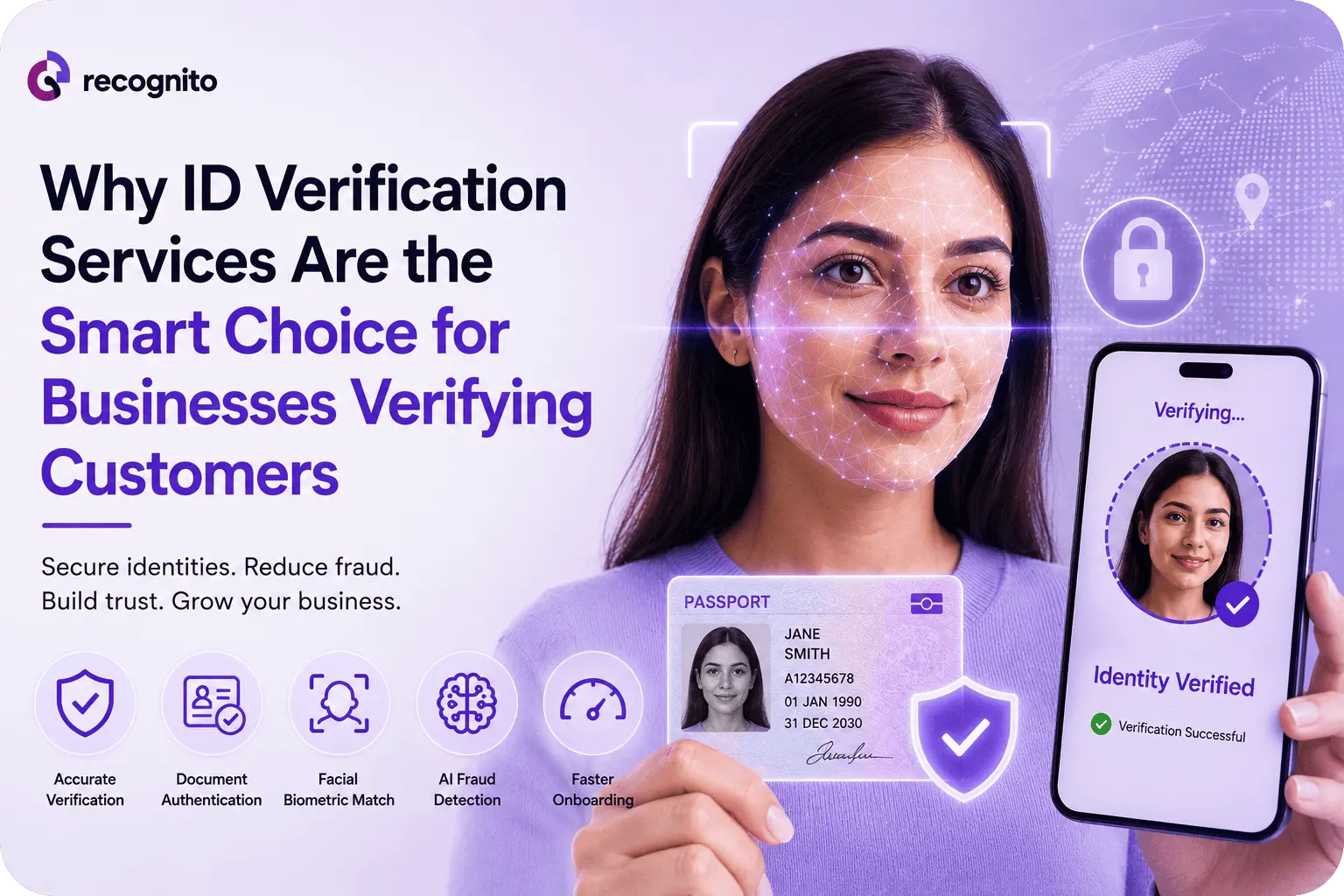
The customer may begin by capturing a passport, national ID card, driving licence, or other supported credential. The system identifies the document, extracts fields, evaluates image quality, and checks available authenticity indicators.
The workflow can connect document evidence to biometrics. A selfie can be compared with the document portrait, while liveness assesses whether the biometric input appears to come from a live person.
The business receives structured results that can feed an onboarding or risk engine.
The result is a layered identity decision:
- Is the credential plausible?
- Is its information consistent?
- Does the document appear authentic?
- Does the applicant correspond to the identity evidence?
- Does the evidence meet the required assurance level?
This is fundamentally different from simply checking whether a document image looks real.
Why Buying Verification Infrastructure Can Be Smarter Than Building It
Building identity verification internally means owning far more than an API.
A production stack may require international document libraries, OCR and computer vision, image-quality controls, authenticity checks, facial matching, liveness, SDKs, APIs, monitoring, testing, and security updates.
The technical problem is dynamic. Documents, cameras, attack techniques, and document versions change, while models need ongoing evaluation.
A specialist ID verification provider can absorb much of that maintenance burden.
The business still owns its customer journey, risk policy, data governance, and regulatory responsibilities. Outsourcing lets it consume specialist infrastructure instead of rebuilding every underlying capability.
For teams embedding document verification into a product, an identity document recognition SDK can make the document-processing layer part of the existing application experience.
The strategic question becomes simple: which identity capabilities differentiate the business, and which are better consumed as specialist infrastructure?
The Business Advantages That Matter Most
Faster onboarding
Manual verification introduces queues, handoffs, and waiting periods. Automated checks can process routine applications quickly, improving the chance that legitimate users complete registration.
The strongest workflow is not one with zero human involvement. Routine cases should move automatically while analysts focus on exceptions.
Lower review costs
Application volume can grow faster than a compliance team. Manual review does not scale without additional staff.
Automated verification reduces repetitive inspection work and lets reviewers spend more time on cases involving inconsistent or suspicious evidence.
More consistent decisions
Human judgment remains important, but manual processes can vary between reviewers.
An automated workflow can apply the same document checks, matching thresholds, quality rules, and escalation logic to every application. This creates a consistent baseline.
Stronger fraud defenses
Identity fraud rarely depends on one weakness.
A genuine document can be stolen. A face can be manipulated. A customer can present convincing fraudulent evidence. Layering document checks, biometric verification, liveness, and risk signals creates more barriers for an attacker.
Businesses exploring this broader control model can also examine how biometric verification reduces fraud when identity decisions rely on more than static customer information.
Easier expansion
International growth introduces new document formats, languages, and verification requirements.
Using specialized infrastructure can reduce the engineering effort required to expand document coverage and support new markets.
How ID Verification Fits Into a Real Customer Journey
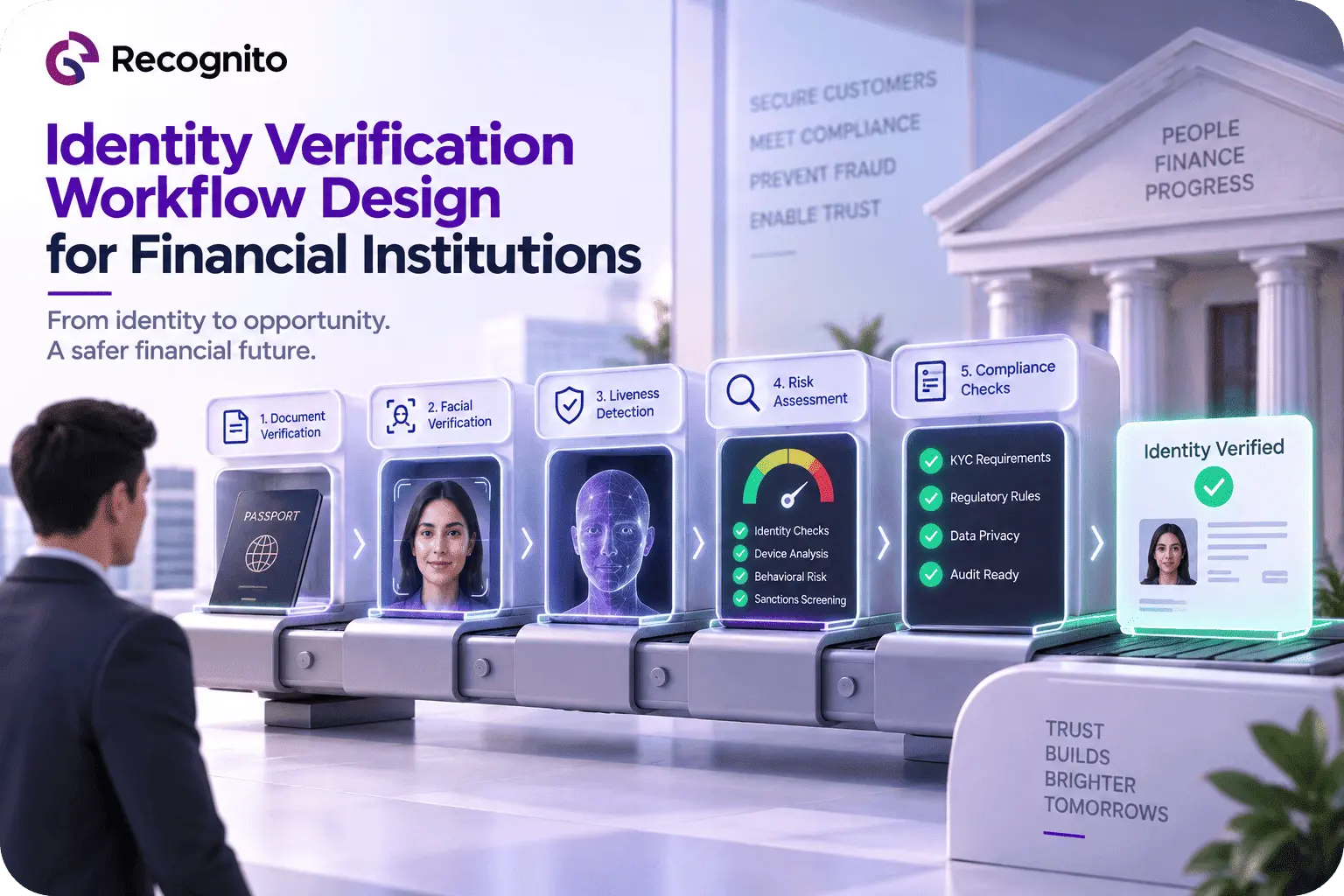
The strongest implementations treat verification as a sequence of evidence checks rather than one pass/fail call.
Capture: The customer photographs the identity document and, when required, captures a selfie or video.
Quality assessment: The system determines whether the images are usable before deeper analysis.
Document recognition: The credential type is identified and relevant fields are extracted.
Document validation: Available visual, structural, and security characteristics are assessed.
Biometric comparison: The customer’s face may be compared with the portrait associated with the document.
Liveness: The system checks whether the biometric input appears to come from a live subject.
Risk decision: Verification outputs are combined with internal rules and other signals.
Escalation: Uncertain or high-risk applications receive additional checks or human review.
This separation makes failures easier to interpret. A blurred image should not automatically be treated as fraud, while a suspicious document should not be approved simply because the customer’s face matches its portrait.
What Businesses Should Evaluate Before Choosing a Provider
Feature lists can look similar across vendors. The important differences often appear during real-world use.
Document coverage
Check whether the provider supports the documents and markets your customers actually use. Ask how less common and newly issued versions are handled.
Verification depth
Determine whether the service only extracts data or also supports authenticity analysis, biometric comparison, liveness, and fraud controls.
Accuracy and failure behavior
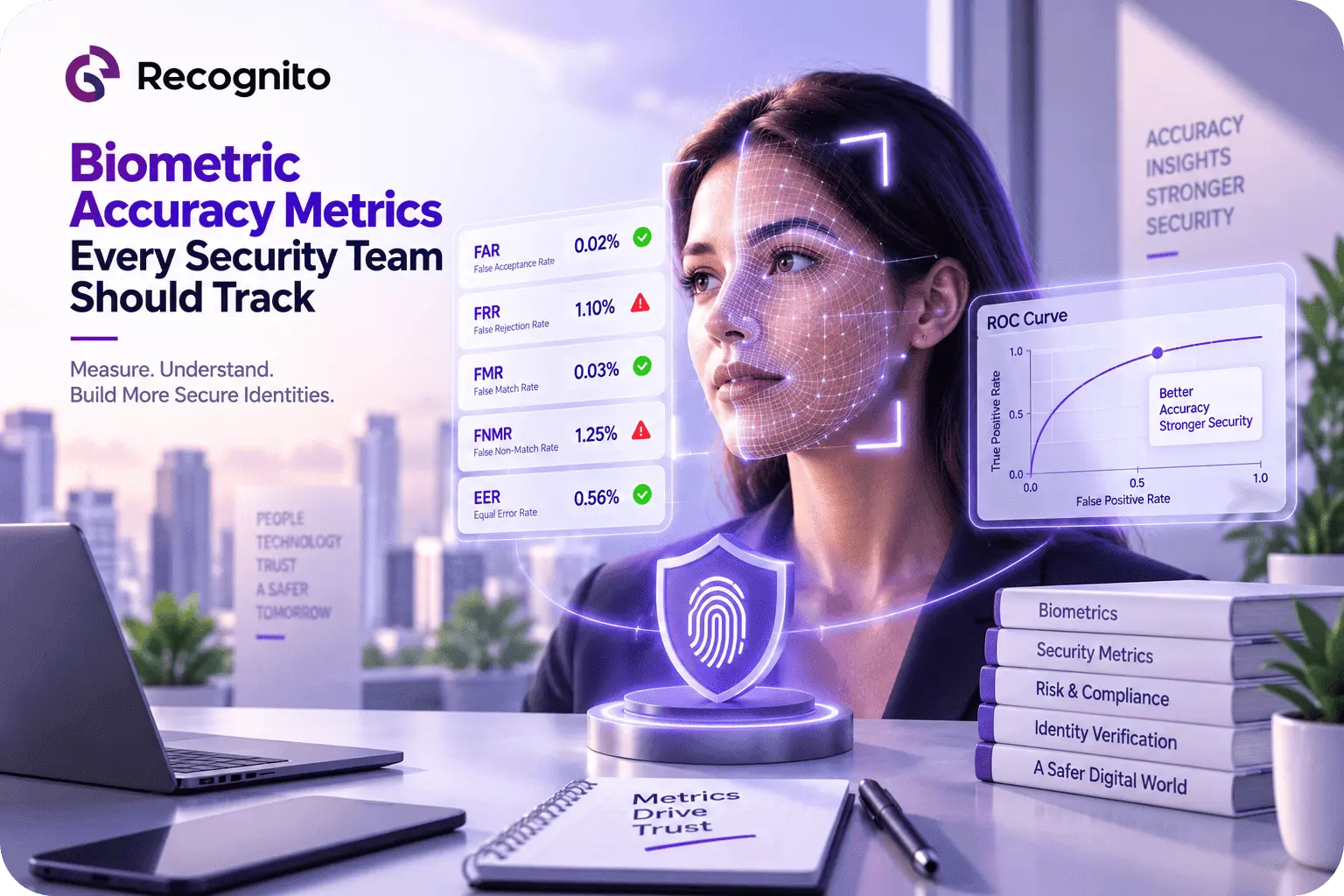
Ask for meaningful performance data rather than a single headline accuracy percentage. Examine false accepts, false rejects, poor-image failures, retry rates, and the conditions used for testing.
Security architecture
Review encryption, API protection, access controls, audit logging, storage, retention, and biometric-data handling.
Integration
Consider SDK availability, API design, mobile support, latency, web compatibility, error handling, and how results enter the existing onboarding and risk engine.
Human review
Not every application should be forced into an automatic pass or fail. Ambiguous cases need a clear escalation path.
Transparency
The business should understand why verification failed and which stage produced the result.
For organizations specifically concerned with fraudulent credentials, document fraud detection techniques can complement the broader provider-evaluation process.
Risk-Based Verification Is Better Than One Workflow for Everyone
A strong verification system should adapt to risk.
An application with consistent identity information, a valid document, strong biometric evidence, and no suspicious indicators may proceed automatically.
Another application may present conflicting data, unusual signals, poor-quality evidence, or other risk indicators and therefore require additional checks.
This is more efficient than forcing every customer through the highest-friction journey.
NIST’s identity proofing guidance emphasizes identity evidence validation, attribute validation, fraud controls, multiple proofing options, and exception handling. Businesses can apply the same principle operationally: automate straightforward cases, increase scrutiny as risk rises, and provide safe paths for legitimate exceptions.
Security Limitations of ID Verification Services
An external verification platform is not a complete fraud-prevention strategy.
A sophisticated attack may target the application, device, identity database, account recovery, or operational procedures instead of the verification engine.
There is also a danger of over-trusting a “verified” result. Identity verification should be an input to a wider risk decision, not the entire security architecture.
FIDO’s Face Verification Certification illustrates this broader approach by evaluating remote face-verification solutions around security, privacy, matching performance, and related risk areas.
Businesses should therefore maintain controls around account security, transaction monitoring, device intelligence, authentication, and post-onboarding fraud detection.
Privacy Is Part of the Buying Decision
ID verification services process sensitive personal information, and biometric workflows can involve particularly sensitive data.
Before selecting a provider, determine what is collected, what is stored, whether raw documents or biometric templates are retained, where processing occurs, who can access the information, and how deletion is handled.
Data minimization should be deliberate. A provider should not retain more information simply because the technology allows it.
At the same time, the business must understand contractual responsibilities, subprocessors, access controls, incident processes, and regional data requirements.
Outsourcing technology does not outsource accountability. The business remains responsible for how customer information is collected and used within its verification process.
When an ID Verification Service Makes the Most Sense
Specialized verification infrastructure is particularly valuable when identity verification is necessary but is not the company’s core product.
A fintech may want to focus engineering resources on payments, lending, wealth management, or customer experience rather than maintaining an international document-recognition engine.
The same logic applies to marketplaces, insurance platforms, telecommunications providers, online lenders, mobility services, and other digital businesses that need to know their customers.
In these cases, buying specialized identity infrastructure can shorten development time and reduce the ongoing engineering burden.
The provider can maintain document coverage and verification models while the business focuses on its product and risk strategy.
How to Measure Whether the Investment Is Working
Measure the business case through operational outcomes, not just technical benchmarks.
Track:
- onboarding completion rate
- time to verification
- manual-review rate
- retry rate
- legitimate-user rejection rate
- confirmed fraud detected
- post-onboarding fraud losses
- cost per verified customer
- verification-related support volume
These measures expose trade-offs.
A system that catches more fraud but rejects too many legitimate customers may reduce revenue. A frictionless system that allows excessive fraud may create losses that outweigh its operational savings.
The right provider is the one that fits the organization’s acceptable risk, customer expectations, technical environment, and operating model.
Build, Buy, or Combine?
There is no rule requiring a business to outsource every part of identity verification.
Some companies build their own orchestration and decision logic while using third-party document and biometric services. Others combine specialist providers for different stages.
A hybrid architecture adds flexibility but also integration and vendor-management complexity. The best approach depends on where the business wants to maintain control.
For development teams, the Recognito GitHub repository provides technical resources alongside product evaluation.
Conclusion
ID verification services are a smart choice for many businesses because they provide specialized identity capabilities without requiring the organization to build and maintain every component internally.
The strongest solutions combine document intelligence, authenticity checks, biometrics, liveness, security controls, and scalable integration while allowing the business to retain control over risk decisions, customer experience, and data governance.
Evaluate document coverage, security, privacy, integration, failure behavior, manual-review workflows, and real-world performance before selecting a provider.
For businesses building customer verification into digital products, Recognito supports biometric and identity verification.
Frequently Asked Questions
Why use an ID verification service instead of manual verification?
Automated systems can process routine applications quickly and consistently while allowing human reviewers to focus on ambiguous or high-risk cases.
Can ID verification services eliminate identity fraud?
No. They reduce specific verification weaknesses, but broader controls remain necessary for account security, transaction fraud, device risks, and post-onboarding abuse.
Does an ID verification service replace KYC?
No. It provides technical capabilities that support parts of KYC. The business remains responsible for customer due diligence, risk decisions, and regulatory obligations.
Should a business build its own ID verification technology?
That depends on its strategic priorities. Companies whose core expertise is not identity technology may find specialized infrastructure more practical than maintaining document, biometric, and fraud systems internally.
What is the most important factor when choosing a provider?
Look beyond feature counts and headline accuracy. The provider should perform reliably for your real documents, customers, devices, risk environment, privacy requirements, and onboarding workflow.