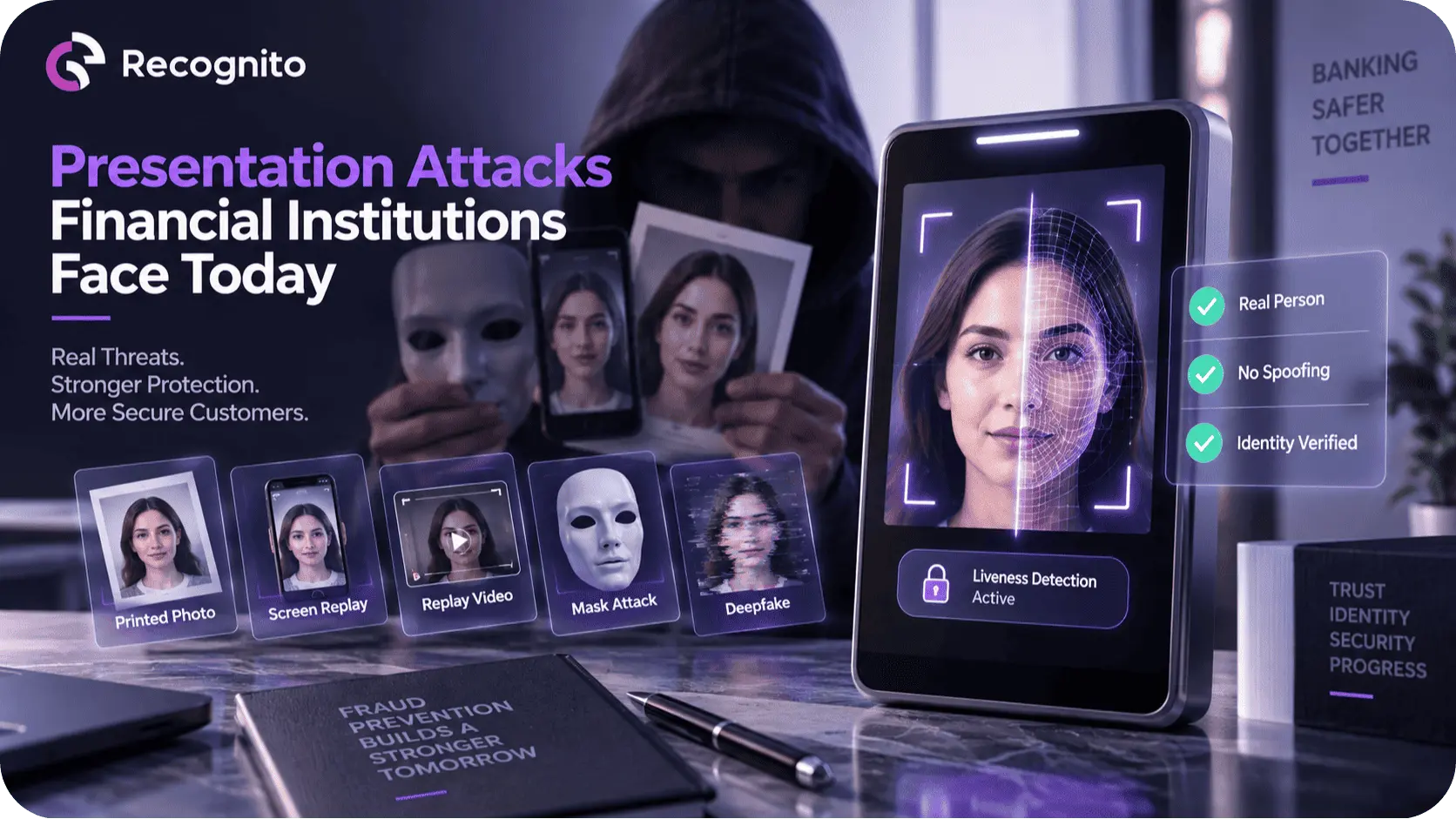

A fake identity does not always begin with a fake identity document.
In many remote verification attacks, criminals start with a legitimate document and change how it is presented. A photograph of a real passport can become a submission. A scan can be converted into a digital file. A genuine identity card can be displayed on another screen. A manipulated document image can be passed into an onboarding workflow without the physical document ever appearing in front of the camera.
That creates an important gap in digital identity verification.
Traditional document checks focus on what the identity document contains and whether it appears authentic. ID document liveness detection adds another question: is the physical document actually present during the verification process?
That distinction matters for fintechs, banks, crypto platforms, marketplaces, telecom providers, and other organizations that verify identities remotely. Document liveness does not replace document authentication or fraud detection. Instead, it strengthens the evidence entering those systems.
Why Fake Identities Are Harder to Stop Remotely
In a physical branch, an employee can inspect an identity document, turn it over, examine its physical characteristics, and compare the customer with the photograph.
Remote onboarding removes that physical interaction.
The organization may receive only a camera feed or uploaded image. If the process accepts any image that looks like an identity document, attackers gain an opportunity to submit content that never originated from a physical document being held by the applicant.
This matters because identity fraud is increasingly built from combinations of legitimate and manipulated information. A criminal may use a stolen identity, combine authentic data with fabricated details, or create a convincing digital representation of identity evidence.
The document fraud detection techniques used in a broader verification architecture can identify suspicious document characteristics, but document liveness addresses a different point in the attack chain: whether the evidence being inspected is coming from a document that is actually present.
That makes it particularly relevant to remote identity proofing.
What ID Document Liveness Detection Does
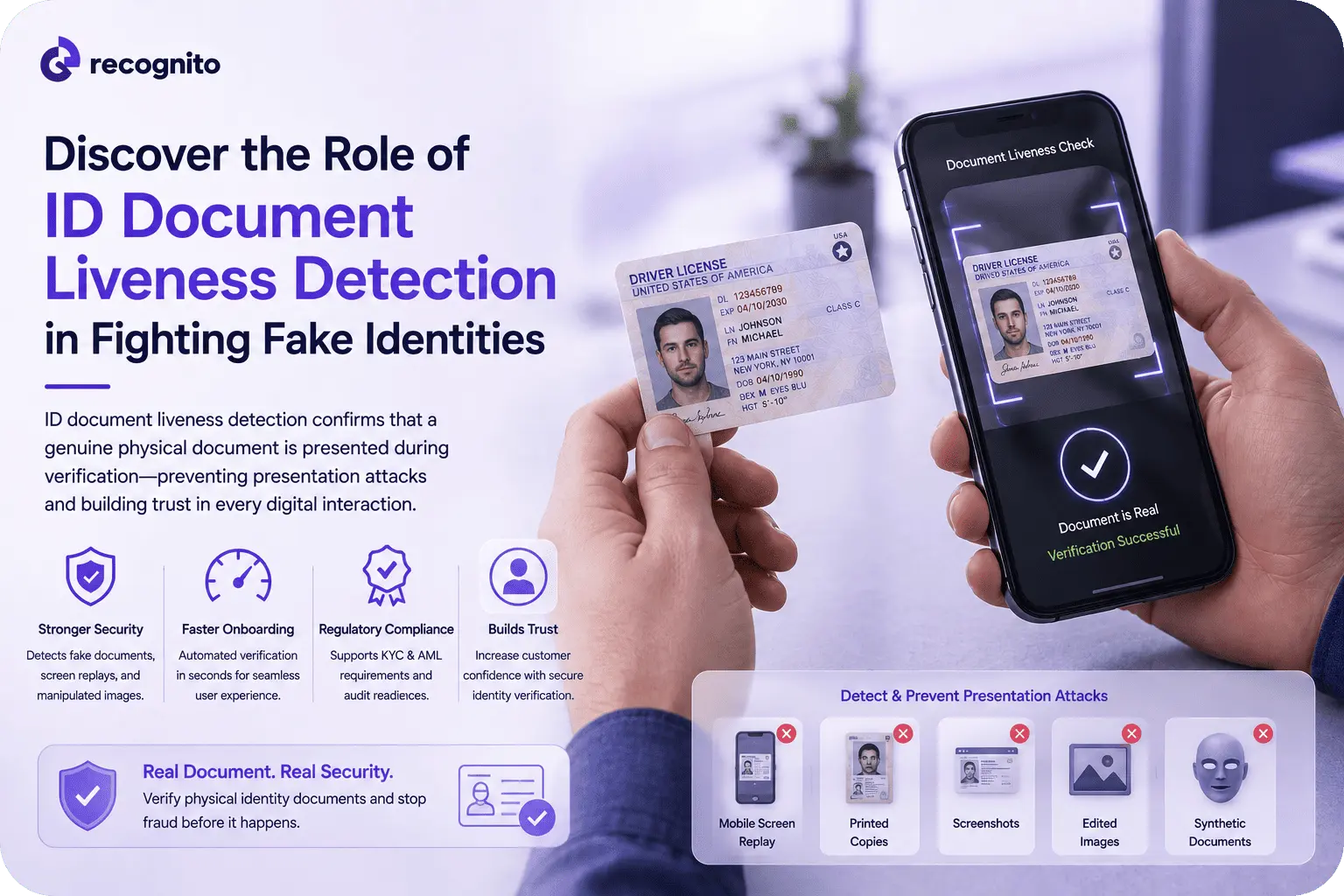
ID document liveness detection is designed to determine whether a physical identity document is present during capture rather than simply appearing as a static digital representation.
A typical workflow asks a customer to present a passport, ID card, driver’s licence, or another supported document to a smartphone camera. The system then analyzes the live capture and associated signals to determine whether the document appears physically present.
There are different implementation approaches. Some systems use passive analysis, where the software examines characteristics of the live capture without requiring a specific user action. Others use active interactions or guided movement to gather additional evidence.
The goal is not to prove that every document is genuine. It is to increase confidence that the document itself is present at the time the evidence is collected.
That distinction is increasingly reflected in digital identity standards and guidance. NIST’s current identity-proofing guidance includes live document capture and document presence checks as part of validating physical identity evidence in remote processes. The NIST identity proofing requirements provide the relevant framework.
Document Liveness and Document Authenticity Are Different
These two controls are often confused because they appear to solve the same problem.
They do not.
Document liveness asks whether the physical document is present.
Document authenticity asks whether the document appears genuine, valid, and unaltered.
Consider a genuine passport photographed years ago and saved as an image. The underlying passport is authentic, but the submitted evidence may not represent a physical document currently presented by the customer.
The opposite situation is also possible. A counterfeit document can be physically present during a camera capture.
This is why stronger identity verification combines both controls.
FIDO’s Document Authenticity Certification explicitly addresses threats including counterfeit documents, physical and digital tampering, invalid documents, presentation attacks, and face morphing. Its approach illustrates an important security principle: document presence and document authenticity are complementary controls.
How Document Liveness Helps Fight Fake Identities
The biggest value of document liveness is that it reduces the range of evidence an attacker can submit without physically possessing the claimed document.
It Makes Static Image Fraud More Difficult
A simple upload workflow can accept a scan, photograph, or screenshot.
A live capture workflow instead evaluates the document during an interaction with the camera. That makes static reuse less effective and moves the security check closer to the actual evidence-collection event.
It Helps Protect the Evidence Pipeline
Every downstream verification check depends on the quality of the input.
OCR can extract information from a document image. Document analysis can inspect security features. A face matcher can compare the portrait with a selfie.
But if the input itself is an arbitrary digital representation, all of those downstream technologies are operating on potentially compromised evidence.
Liveness helps establish a stronger boundary around document capture before those other checks begin.
It Strengthens Remote Identity Proofing
The central challenge in remote KYC is recreating enough confidence that would otherwise come from physical inspection.
Document liveness does not recreate every physical inspection capability, but it adds evidence that a document was presented during the verification session.
That is particularly useful for high-volume digital onboarding where every application cannot be manually inspected.
A Typical Anti-Fraud Identity Workflow
Document liveness works best as part of a layered identity process rather than as a standalone fraud detector.
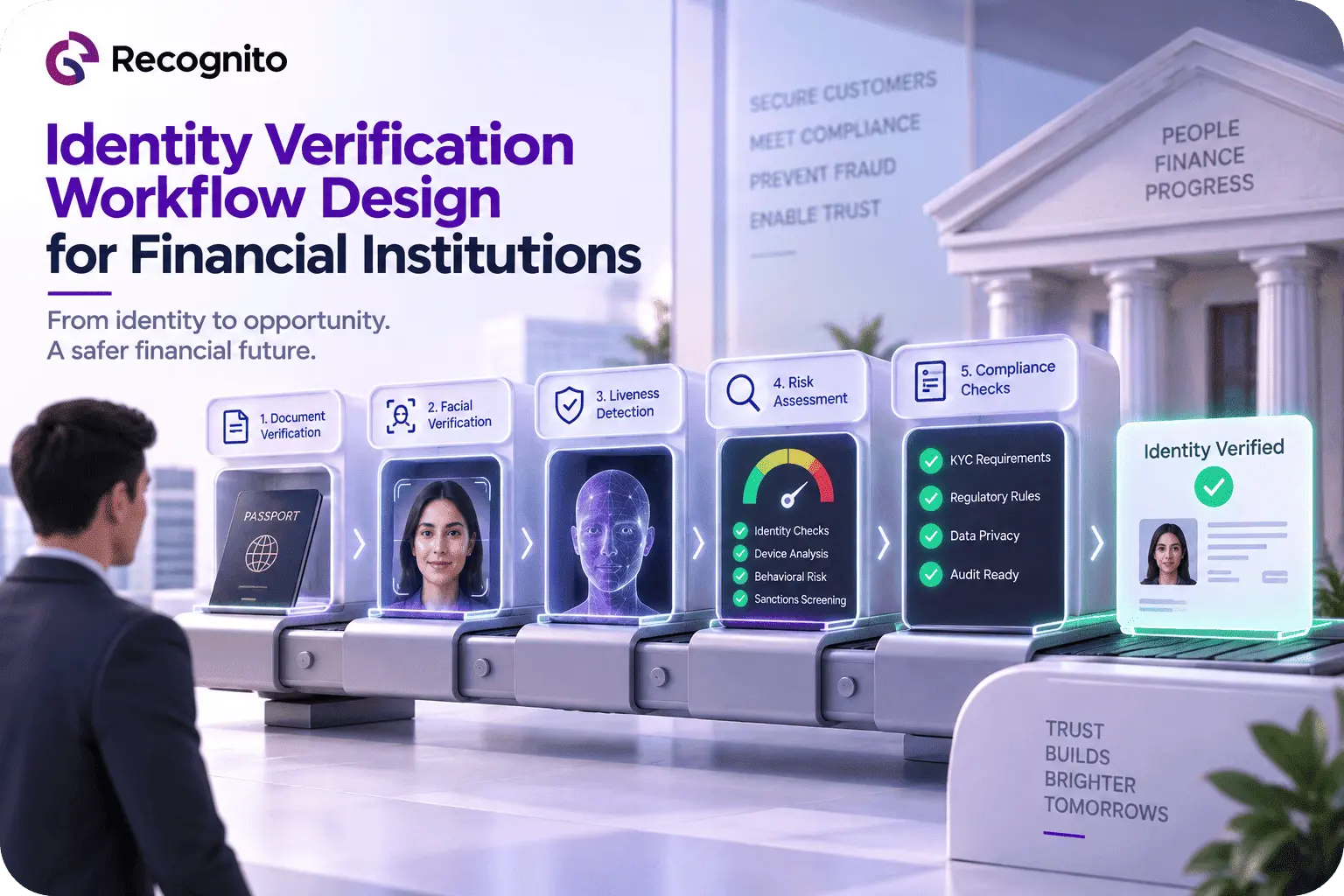
A typical flow might look like this:
1. Guided document capture
The customer is instructed to present the document inside a camera frame.
2. Image-quality assessment
The system checks whether the document is visible and readable enough for processing.
3. Document presence assessment
Liveness analysis determines whether the input appears to represent a physically present document rather than a static representation.
4. Document analysis
The system evaluates document type, fields, formatting, and available authenticity signals.
5. Data extraction
OCR or document intelligence converts information into structured data.
6. Face comparison
The applicant’s face may be compared with the portrait associated with the identity document.
7. Facial liveness
A separate biometric liveness control can determine whether the applicant appears to be a live person.
8. Risk decision
The identity evidence is combined with other signals before approval, rejection, or escalation.
This separation matters. Document liveness validates the evidence source; facial liveness validates the biometric subject.
A document verification solution can therefore benefit from treating those controls as distinct parts of the same identity architecture.
The Threat Model Is Bigger Than Fake Documents
The phrase “fake identity” covers more than counterfeit documents.
An attacker may use a legitimate stolen ID, manipulate an image, replay a previously captured video, inject modified media into a verification process, or combine real identity information with fabricated data.
FIDO’s IDV certification framework reflects this broader security model by separately addressing document authentication and face verification, while emphasizing security, usability, and testing.
That separation is useful when designing a threat model.
A document may be genuine but stolen. A document image may be authentic but digitally manipulated. A face may match the document portrait but still be presented through an attack.
No single biometric or document control answers all of these questions.
The strongest approach is therefore layered detection, with each component responsible for a defined security problem.
Digital Injection Changes the Risk
Remote verification also has to consider what happens before media reaches the verification engine.
An attacker may attempt to manipulate the capture environment or inject fraudulent content so the verification service receives media that appears legitimate.
This is one reason simply adding “live camera capture” to a user interface does not automatically provide strong document liveness.
The underlying detection system, capture architecture, device environment, and integrity controls all influence the security outcome.
NIST’s current identity-proofing requirements recognize the need for controls that increase confidence that captured media originates from genuine sensors and that submitted evidence has not been improperly modified.
For organizations designing anti-fraud systems, this means the camera is part of the security boundary. The process surrounding capture matters as much as the final document-analysis model.
Document Liveness Must Not Destroy the Customer Experience
A strong security control is ineffective if legitimate customers cannot complete it.
Document capture can fail because of glare, reflections, poor lighting, camera limitations, movement, damaged documents, or incorrect positioning. A liveness system that treats every failed capture as suspicious can unnecessarily increase rejection rates.
Good implementation therefore combines security with practical capture guidance.
Customers should receive clear instructions about how to position the document. The application should provide immediate feedback when the document is not visible enough. Retry logic should be controlled rather than endless.
Most importantly, a failed capture should not automatically equal fraud.
The system should distinguish between insufficient evidence, technical failure, and genuine security concerns.
That distinction protects both the organization and legitimate users.
Testing Against Real Documents Matters
A vendor demonstration using a small set of clean passports does not reveal how a production system will behave.
Real deployments encounter:
- scratched or worn identity cards
- reflective laminates
- different camera models
- low-light environments
- older document formats
- different document orientations
- inconsistent user behavior
- regional document variations
- unstable network conditions
NIST’s identity-proofing framework emphasizes testing evidence-validation technologies under conditions substantially similar to the operational environment and user population.
That principle is critical.
A fintech serving customers across several countries should test the actual document population it expects to encounter. A marketplace operating globally should not assume that performance on a narrow selection of documents will generalize.
What to Ask an ID Document Liveness Vendor
Procurement teams should look beyond the feature name.
Which attacks are tested?
Ask whether the system has been evaluated against photographs, scans, screens, replayed content, manipulated media, and other relevant presentation or injection scenarios.
Which documents are supported?
Document diversity matters. National identity cards, passports, driving licences, residence permits, and regional credentials can behave differently during capture.
How are errors classified?
A useful system should provide enough information to distinguish poor capture quality from a potential security failure.
Has independent testing been performed?
Independent testing adds useful evidence when comparing providers. FIDO’s DocAuth program uses accredited laboratories and defined test procedures for document-authentication technologies.
How does the system integrate?
Engineering teams should evaluate latency, mobile support, APIs, SDK behavior, error handling, retries, and how liveness results are exposed to the application’s risk engine.
For teams implementing biometric components, a face liveness SDK can address the complementary facial-security layer when document and facial verification are combined.
Where Document Liveness Fits in KYC
Document liveness is best understood as one component of a broader KYC and identity-proofing system.
FATF’s Guidance on Digital Identity explains how reliable digital identity systems can support customer due diligence while emphasizing risk-based assessment.
That does not mean every organization needs identical technology.
A low-risk workflow may require fewer controls than a high-value financial account-opening process. The appropriate architecture depends on the type of identity evidence, fraud exposure, customer journey, applicable regulations, and consequences of a false acceptance.
Document liveness becomes most valuable when it solves a clearly defined weakness in that architecture.
Privacy and Data Governance Still Apply
Document liveness operates on sensitive identity evidence.
Organizations should establish what data is captured, what is processed locally or remotely, what is retained, who can access it, and when it is deleted.
The goal should not be to collect as much biometric and document information as technically possible.
Data minimization and controlled retention can reduce exposure while still supporting the identity-verification purpose.
Privacy also affects customer trust. People are more likely to accept biometric and document checks when the organization clearly explains why information is collected and protects it appropriately.
Measuring Whether Document Liveness Is Working
A deployment should be measured using business and security outcomes rather than a single model metric.
Useful measures include:
Document-capture completion rate: How many customers successfully provide usable evidence?
Retry rate: How often must legitimate users repeat the capture?
Manual-review rate: How many applications require human intervention?
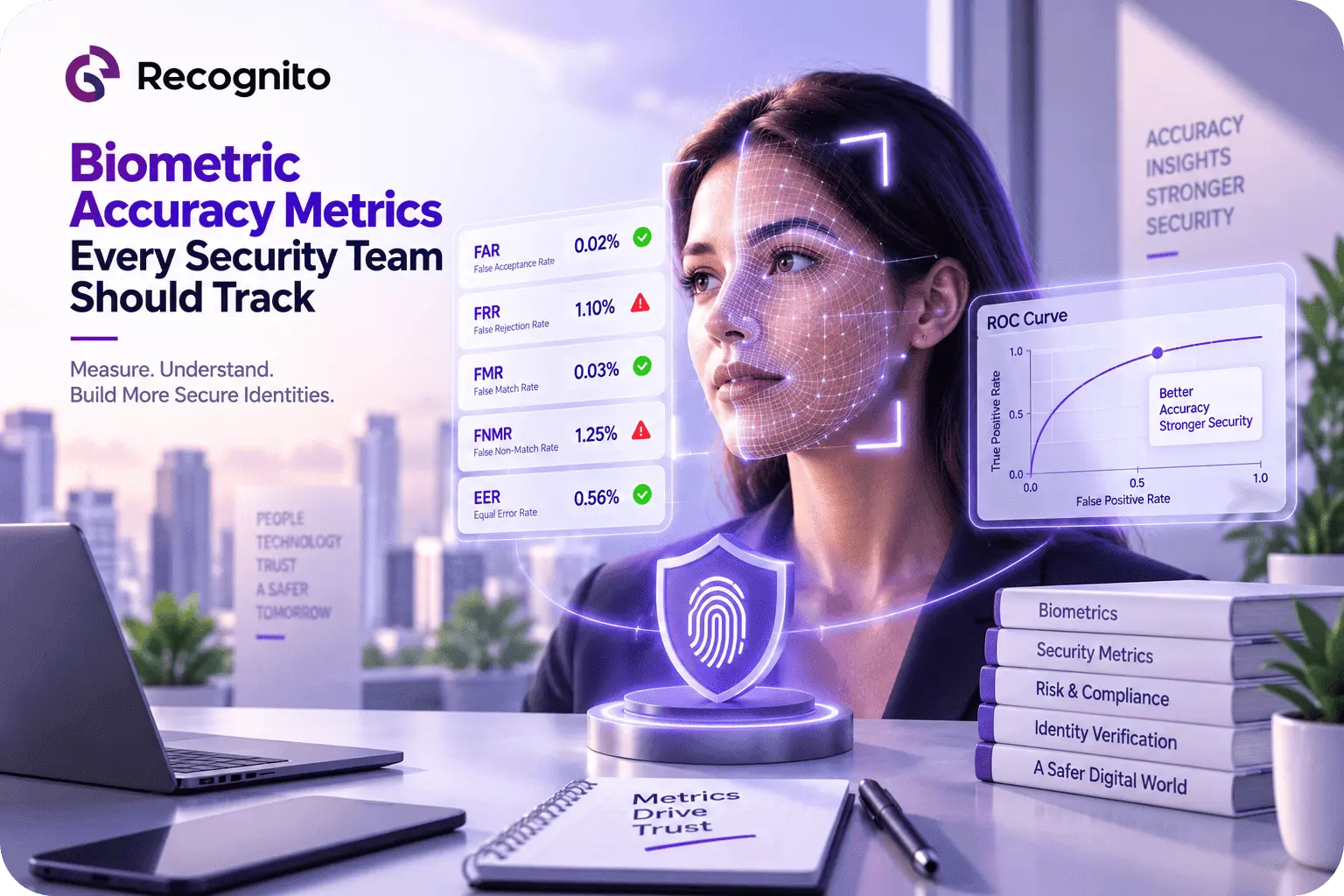
False acceptance rate: How often does suspicious evidence pass the workflow?
False rejection rate: How often are legitimate customers incorrectly blocked?
Fraud-loss outcomes: Are confirmed fraudulent applications decreasing?
These measurements reveal the real trade-off.
A highly restrictive liveness layer might stop more attacks but create excessive friction. A permissive system may improve conversion while allowing more fraudulent evidence through.
The target is not maximum rejection. It is an evidence-validation process calibrated to the organization’s actual risk appetite.
Building a Layered Fake-Identity Defense
For organizations serious about synthetic and stolen identities, document liveness should sit inside a broader architecture.
A resilient workflow can assign separate responsibilities to different controls:
Document presence: Is the physical document being presented?
Document authenticity: Does the document appear genuine?
Identity consistency: Do the document and customer details agree?
Face verification: Does the applicant match the identity evidence?
Facial liveness: Is the applicant physically present?
Fraud analytics: Are other signals associated with suspicious behavior?
Human review: Can uncertain cases be investigated?
This structure makes the system easier to test and operate. When something fails, the organization can determine where confidence was lost instead of treating the entire verification process as one opaque score.
For development teams building this type of workflow, the Recognito GitHub repository can complement technical evaluation and integration work.
When Document Liveness Is Most Valuable
The technology is particularly useful when identity verification occurs remotely and the organization cannot physically inspect the document.
Common use cases include:
- fintech account opening
- remote banking onboarding
- crypto exchange verification
- insurance applications
- telecom account registration
- marketplace seller verification
- remote workforce identity checks
- account recovery
- high-risk transaction verification
It is especially valuable when the consequences of accepting fraudulent identity evidence are significant.
The objective is not to create the most complicated onboarding journey. It is to place stronger evidence checks exactly where attackers have an opportunity to exploit the transition from physical identity to digital identity.
Conclusion
Fake identities are not always built from completely fake documents. A legitimate identity document can be stolen, copied, manipulated, or presented digitally in a way that weakens confidence in the verification process.
ID document liveness detection addresses an important part of that problem by determining whether the physical document is actually present during capture.
It does not replace document authenticity checks, facial verification, liveness detection, fraud analytics, or human review. Its value comes from strengthening the capture stage so downstream identity controls receive more trustworthy evidence.
For organizations building secure identity-verification workflows, Recognito provides technologies that can support document and biometric verification as part of a layered anti-fraud architecture.
Frequently Asked Questions
Can document liveness detect a completely fake document?
Not necessarily. Liveness primarily addresses whether the physical document is present during capture. A counterfeit document may still require separate authenticity checks.
Is document liveness the same as facial liveness?
No. Document liveness evaluates the presence of the identity document. Facial liveness evaluates whether the captured face appears to come from a live person.
Can document liveness stop stolen-identity fraud?
It can make some attack paths harder, but it cannot determine ownership of an identity by itself. Stolen legitimate documents require additional identity, biometric, fraud, and risk controls.
Does document liveness work for all identity documents?
Performance depends on the supported document types, capture conditions, camera environment, and implementation. Organizations should test the document population relevant to their customers.
Is document liveness enough for KYC?
No. It is one layer within KYC and remote identity proofing. Stronger workflows typically combine document presence, document authenticity, identity consistency, biometric verification, fraud controls, and appropriate review.