
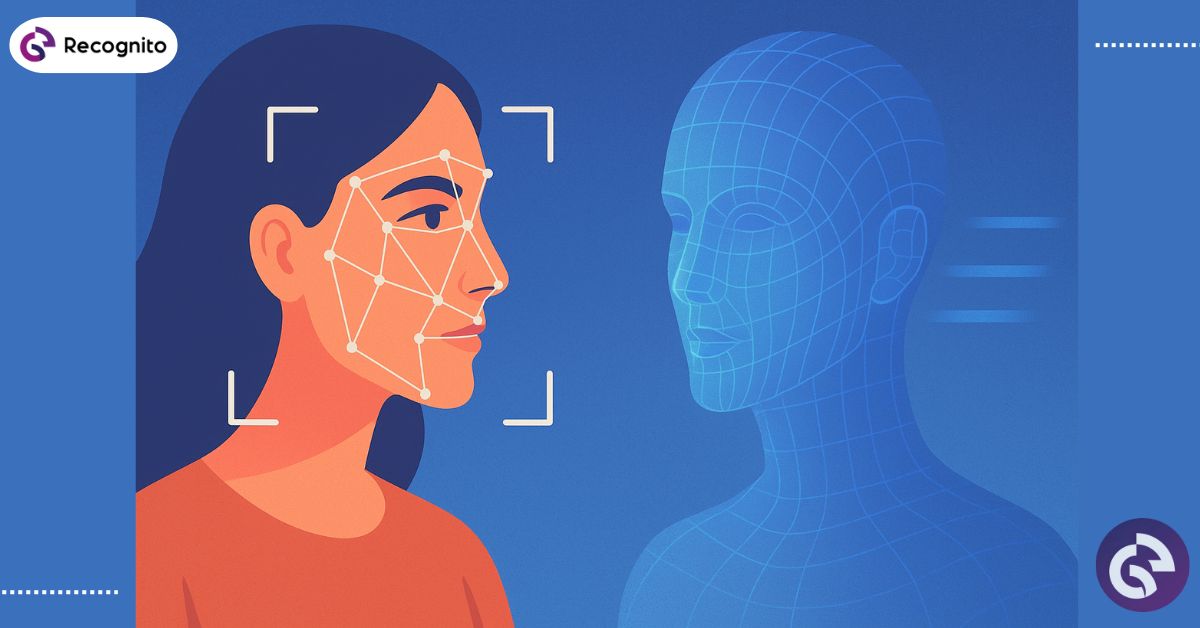
Artificial Intelligence is no longer science fiction. From unlocking your phone to passing through airport security, AI face recognition has become part of daily life. It is powerful, practical, and sometimes a little controversial. But how does it actually work, and where is it headed? Let’s break it down in simple terms.
What is AI Face Recognition
At its core, AI and face recognition is a technology that identifies or verifies a person using their facial features. Think of it as a digital detective. It looks at your face the same way you look at a fingerprint, comparing unique details like the distance between your eyes or the curve of your jaw.
This isn’t just about matching a selfie to your phone. The technology is also applied in banking apps, airports, healthcare, and even retail stores. It is driven by facial AI models trained on massive datasets, allowing systems to quickly learn the differences and similarities between millions of faces.
How AI Face Recognition Works
The process might sound complex, but let’s simplify it. The system works in three big steps:
- Face Detection AI
The camera identifies that a human face is present. It locates key landmarks such as eyes, nose, and mouth. - Face Encoding
The software converts the face into a unique numerical code. This code is like a fingerprint for your face. - Face Match AI
The system compares this code with stored data to verify identity or find a match.
| Step | Action | Real-Life Example |
| Detection | Identifies a face | Phone camera sees your face |
| Encoding | Converts to unique code | Creates a “faceprint” |
| Matching | Compares with database | Unlocks your device |
These steps are powered by artificial intelligence face recognition algorithms that become more accurate over time.
Accuracy and Global Benchmarks
Not all systems are created equal. Some are lightning fast with near-perfect accuracy, while others struggle in low light or with diverse facial features. The NIST Face Recognition Vendor Test (FRVT) has become the gold standard for measuring how well different systems perform.
- Visit NIST FRVT for performance data.
- Explore detailed evaluation results on FRVT 1:1 tests.
These benchmarks give businesses and governments confidence before deploying large-scale projects.
Everyday Uses of Facial AI
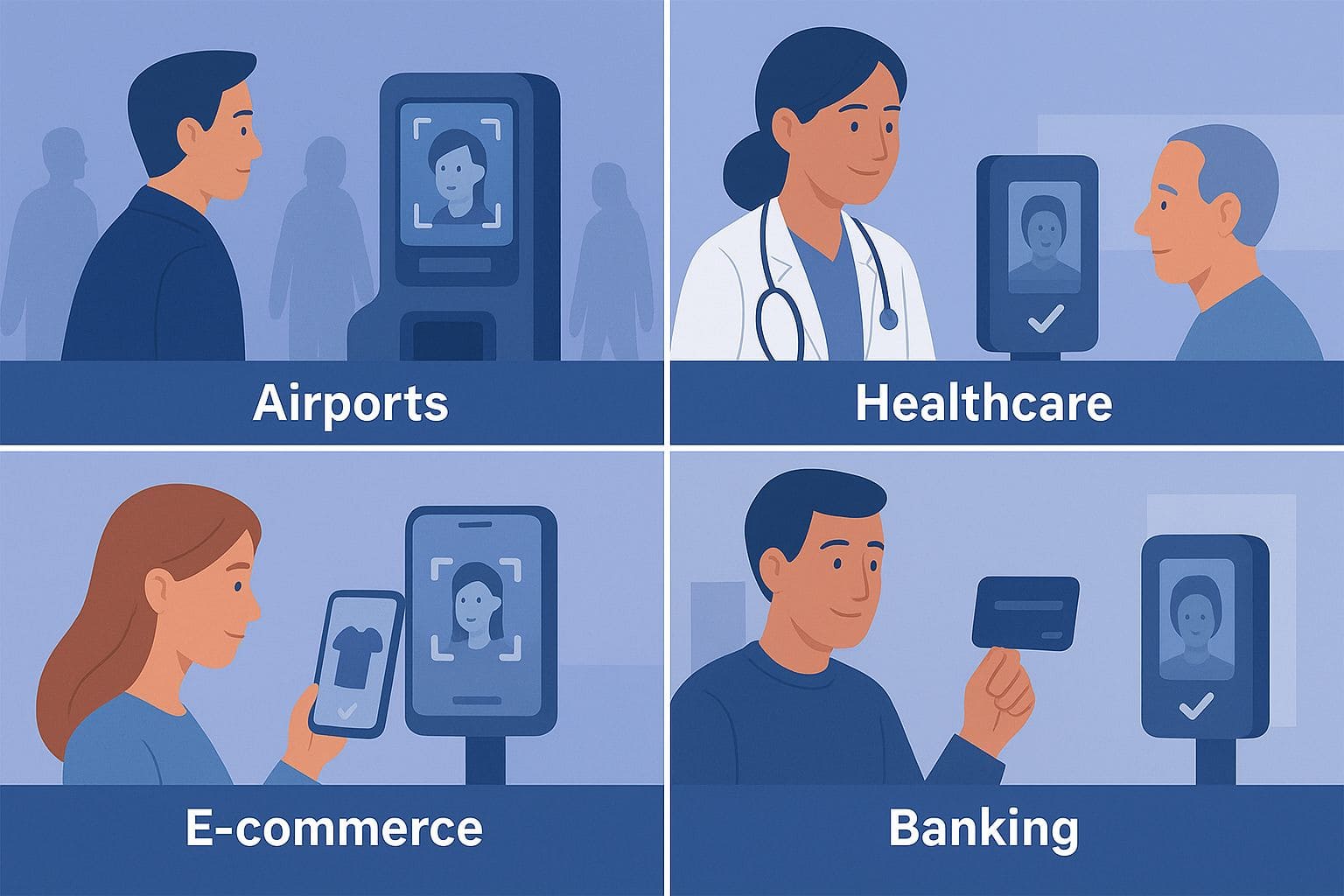
You may not notice it, but facial AI is everywhere. Here are some real-world applications:
- Smartphones: Unlocking devices without passwords.
- Airports: Quicker boarding with automated gates.
- Healthcare: Patient verification for secure records.
- E-commerce: AI face search for trying products virtually.
- Banking: Identity checks for fraud prevention.
Fun fact: Some retailers even use AI facial systems to analyze customer demographics and improve shopping experiences.
Privacy Concerns and Regulations
With great power comes great responsibility. While the technology is convenient, it also raises concerns about surveillance and misuse. Governments are stepping in with data protection laws like the GDPR to ensure individuals have control over their biometric data.
Companies using AI face recognition must follow strict compliance rules such as:
- Informing users how their data will be used.
- Allowing opt-outs where possible.
- Storing encrypted biometric data securely.
Failure to follow these rules can lead to massive fines and public backlash.
Challenges Facing Face Detection AI
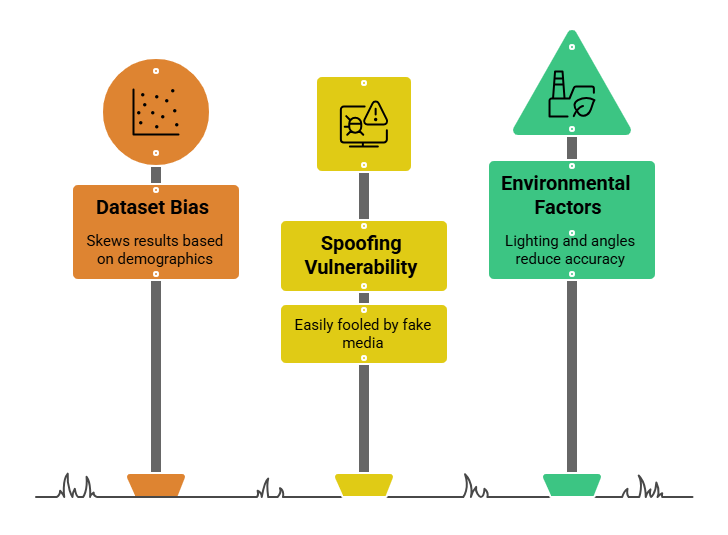
Even with rapid progress, the technology isn’t flawless. Common challenges include:
- Bias in datasets: Some systems perform better on certain skin tones.
- Spoofing attempts: Photos or videos tricking the system.
- Environmental issues: Poor lighting or extreme angles can reduce accuracy.
To tackle spoofing, researchers are exploring liveness detection techniques, making sure the system knows the difference between a real human face and a photo.
The Future of AI and Face Recognition
Looking ahead, experts believe ai and face recognition will only get smarter. Here are a few trends shaping the future:
- Edge computing: Processing done on local devices for speed and privacy.
- Cross-industry adoption: From gaming to education, new uses are emerging.
- Open-source innovation: Platforms like Recognito GitHub encourage collaboration and transparency.
As systems improve, the balance between convenience and privacy will continue to dominate the conversation.
Final Thoughts
AI face recognition is changing the way the world verifies identity. It simplifies daily tasks, strengthens security, and opens doors to new possibilities. Yet, it also comes with challenges like privacy risks and the need for unbiased data. With organizations such as NIST setting global benchmarks and strict regulations like GDPR shaping policy, the future looks promising but carefully monitored.
And as innovation keeps moving forward, one name that continues to contribute in this space is Recognito.
Frequently Asked Questions
1. What is AI face recognition used for
AI face recognition is used for unlocking smartphones, airport security checks, banking identity verification, and even retail experiences like virtual try-ons.
2. How accurate is face detection AI
Accuracy depends on the system. Some advanced tools tested by NIST FRVT report accuracy rates above 99 percent, especially in controlled environments.
3. Can AI face search find someone online
AI face search can match faces within specific databases or platforms, but it cannot scan the entire internet. Accuracy depends on the size and quality of the database.
4. Is AI facial recognition safe to use
Yes, when regulated properly. Systems that follow privacy rules like GDPR and use encryption keep user data protected.
5. What is the difference between face match AI and face detection AI
Face detection AI only spots if a face is present. Face match AI goes further by verifying if the detected face matches an existing one in the database.
