
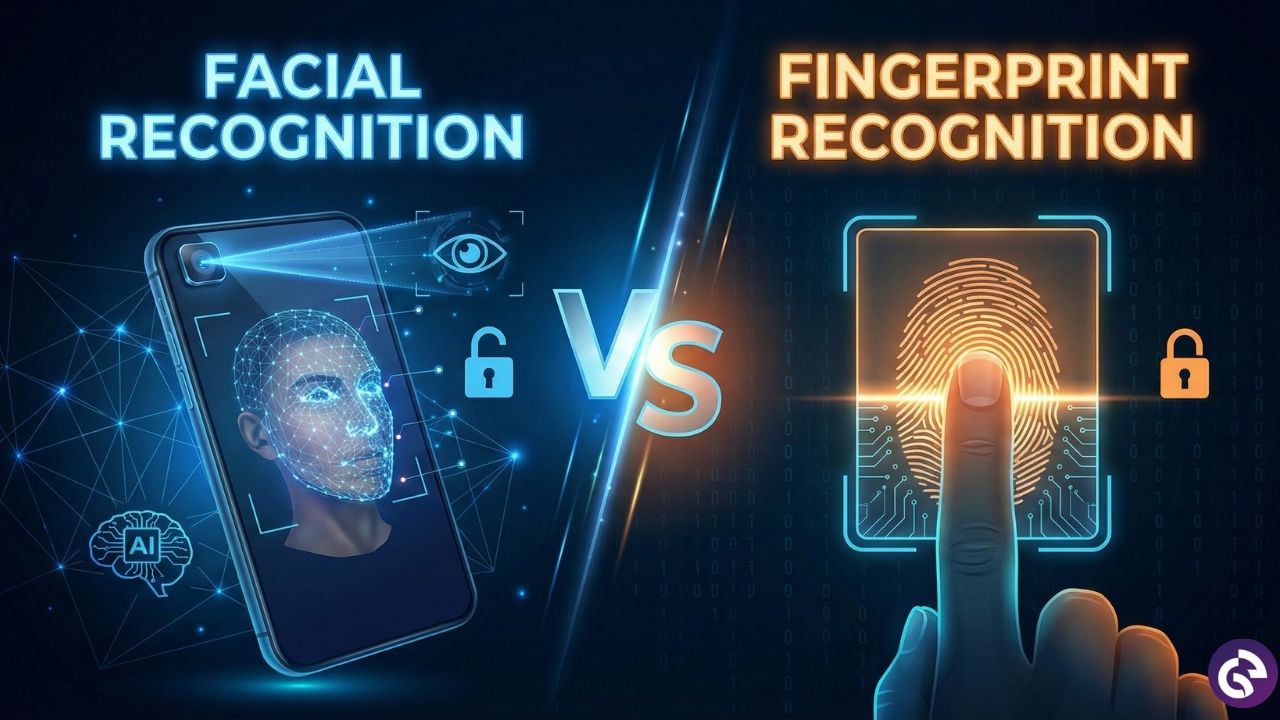
Biometric authentication has become a core part of modern security systems. As passwords and PINs continue to fail against data breaches and identity theft, businesses are turning to biometrics for stronger and more reliable digital authentication.
At the same time, user expectations have changed. People now want fast, seamless, and contactless identity verification, especially in mobile apps, financial services, and online onboarding. This shift has made biometric security a critical component of modern security technology.
Among available authentication methods, facial recognition and fingerprint recognition are the most widely used. Both offer strong identity verification, but each performs differently depending on the environment and use case.
This article compares both technologies to help you decide which is better for your needs.
Understanding Biometric Authentication
Biometric authentication verifies identity using unique biological traits such as facial features or fingerprints. Unlike passwords, biometrics cannot be easily guessed, reused, or shared, making them more secure for digital authentication.
Biometric security improves identity verification by linking access directly to the user rather than something they remember. This reduces fraud risk while improving convenience. Today, biometrics are used across smartphones, financial platforms, enterprise systems, and remote onboarding processes.
What Is Facial Recognition
Facial recognition identifies or verifies individuals by analyzing their facial features. A camera captures a live image, which is then processed by AI recognition algorithms to create a unique biometric template.
Modern facial recognition systems use artificial intelligence and deep learning to analyze facial landmarks, textures, and proportions. Independent industry benchmarks, such as the NIST Face Recognition Vendor Test (FRVT), provide transparent performance evaluations of how well facial recognition algorithms perform under real-world conditions.
Facial recognition is widely used for digital onboarding, access control, and identity verification because it is fast and contactless. Solutions like Facial Recognition by Recognito use AI-driven analysis to deliver accurate, scalable identity verification that works reliably in real-world conditions.
What Is Fingerprint Recognition
Fingerprint recognition verifies identity by analyzing the unique ridge patterns on a person’s finger. These patterns remain stable over time, which is why fingerprints have been used for identification for decades.
Fingerprint recognition systems capture an image through a sensor and compare it against stored templates. This method is commonly used in smartphones, workplace access systems, and secure devices. While accurate, fingerprint authentication usually requires physical contact with a sensor, which can limit usability in shared or public environments.
Facial Recognition vs Fingerprint Recognition: Core Differences
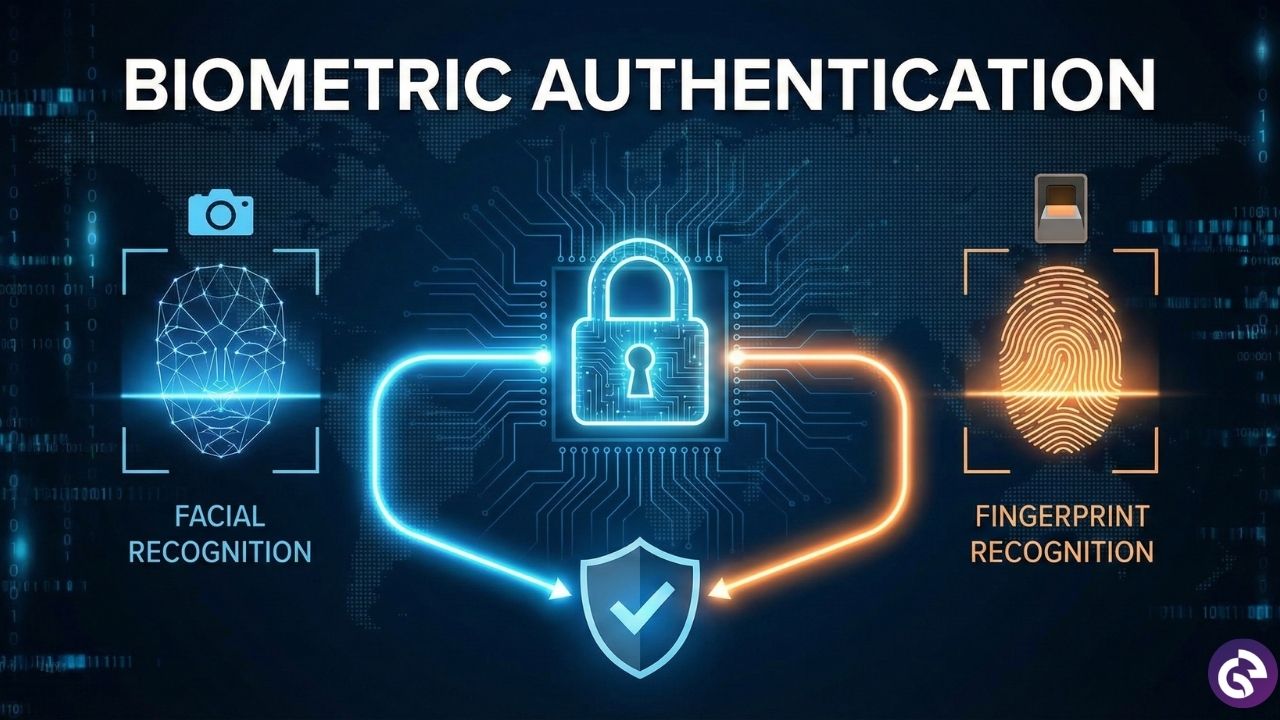
Both technologies provide reliable biometric authentication, but their performance varies in real-world use.
Accuracy and Reliability
Fingerprint recognition performs very well in controlled environments with clean sensors and undamaged fingerprints. However, moisture, dirt, cuts, or worn fingerprints can reduce accuracy.
Facial recognition accuracy depends on image quality and lighting, but modern AI-powered systems handle these challenges effectively. Facial recognition tends to be more consistent across diverse environments without requiring physical contact.
User Convenience and Experience
Facial recognition offers a smooth, contactless experience. Users simply look at a camera, making it fast and intuitive.
Fingerprint recognition requires touch-based interaction. While familiar, it can be inconvenient in public or shared settings and may raise hygiene concerns.
Security and Fraud Resistance
Fingerprint systems can be vulnerable to spoofing if sensors lack advanced protection. Facial recognition systems use liveness detection and AI to block spoofing attempts such as photos or videos, strengthening biometric security.
Speed and Scalability
Facial recognition scales well for high-volume authentication scenarios such as airports or digital onboarding. Fingerprint recognition is better suited for individual or device-based authentication.
Biometric Security Considerations
Every authentication method has strengths and weaknesses. Fingerprint recognition benefits from long-term adoption and stability, but it struggles in environments where physical contact is impractical.
Facial recognition benefits from continuous AI improvements. Modern systems adapt to environmental changes and user variations, making them more flexible. Solutions like Recognito enhance biometric security through AI-driven recognition and fraud-resistant identity verification.
Use Cases: Where Each Technology Works Best
Facial recognition is ideal for remote identity verification, contactless authentication, and high-traffic environments such as online onboarding and travel security.
Fingerprint recognition works best for on-device authentication, controlled physical access, and cost-sensitive deployments where users authenticate on personal or dedicated devices.
Privacy and Compliance Factors

Biometric data is highly sensitive, making privacy and compliance essential. Organizations must obtain user consent and protect biometric information through secure storage and processing.
Regulatory frameworks increasingly govern how biometric data is collected, stored, and processed. For example, the GDPR data protection regulations define strict requirements for biometric and personal data handling. Transparency, consent, and secure data practices are crucial to maintaining public trust.
Both facial recognition and fingerprint recognition must be implemented with strong data protection practices to meet regulatory expectations and maintain user confidence.
Cost and Implementation Considerations
Fingerprint recognition often requires dedicated hardware sensors, increasing deployment and maintenance costs. Facial recognition primarily relies on cameras, which are already built into most devices.
Facial recognition systems are generally easier to integrate into digital platforms and scale across large user bases. Long-term costs depend on deployment size, infrastructure, and operational needs. To understand the exact cost for your use case, reach out to Recognito by filling out our contact form.
Facial Recognition and Fingerprint Recognition in Modern Security Systems
Many modern security systems use a combination of authentication methods. Multi-factor and hybrid biometric authentication approaches reduce reliance on a single signal and improve overall security.
Facial recognition plays a growing role in future digital identity systems due to its scalability and contactless nature. Facial Recognition by Recognito integrates smoothly into modern security architectures, supporting user-friendly and scalable identity verification across industries. You can explore implementation approaches and technical examples via the Recognito Vision GitHub repository.
Which Is Better for Your Needs?
The right choice depends on your environment, risk level, and user expectations. Fingerprint recognition remains effective for controlled, device-based access.
Facial recognition is increasingly preferred for digital-first workflows that require scalability, contactless access, and strong user experience. For many modern applications, facial recognition offers a more future-ready solution.
Conclusion
Facial recognition and fingerprint recognition are both effective biometric authentication methods, but they serve different purposes. Fingerprints work well in controlled settings, while facial recognition excels in flexible, digital environments.
As AI recognition continues to evolve, facial recognition is shaping the future of biometric security and identity verification. Choosing the right authentication method based on real-world needs is key to building secure and trusted digital systems.
Frequently Asked Questions
Is facial recognition more secure than fingerprint recognition?
Facial recognition with liveness detection offers stronger protection in remote environments.
Which biometric authentication method is more accurate?
Accuracy depends on conditions. Fingerprints perform best in controlled settings, while facial recognition adapts better to diverse environments.
Can both methods be used together?
Yes. Many systems use facial and fingerprint recognition as part of multi-factor authentication.
Which is better for identity verification?
Facial recognition is generally better suited for remote and digital identity verification.
What are the risks of biometric authentication?
Privacy concerns and spoofing risks can be reduced with AI security and compliance practices.
