
Choosing between facial recognition and fingerprint recognition is not simply a question of which biometric is “more accurate.” Both can provide strong identity signals, but they behave differently when exposed to cameras, sensors, lighting, damaged fingers, changing environments, user friction, and attack scenarios.
For a bank, fintech, employer, or access-control operator, the better choice depends on the workflow. A fingerprint sensor may suit a controlled device with a dedicated reader. Facial recognition may be more practical when a user needs remote verification.
The distinction is especially important when biometrics are used for authentication or identity verification. NIST notes that biometric comparison is affected by sensor measurements, noise, presentation variation, and threshold selection in its guidance on biometric authenticators.
Facial Recognition vs Fingerprint Recognition: The Core Difference
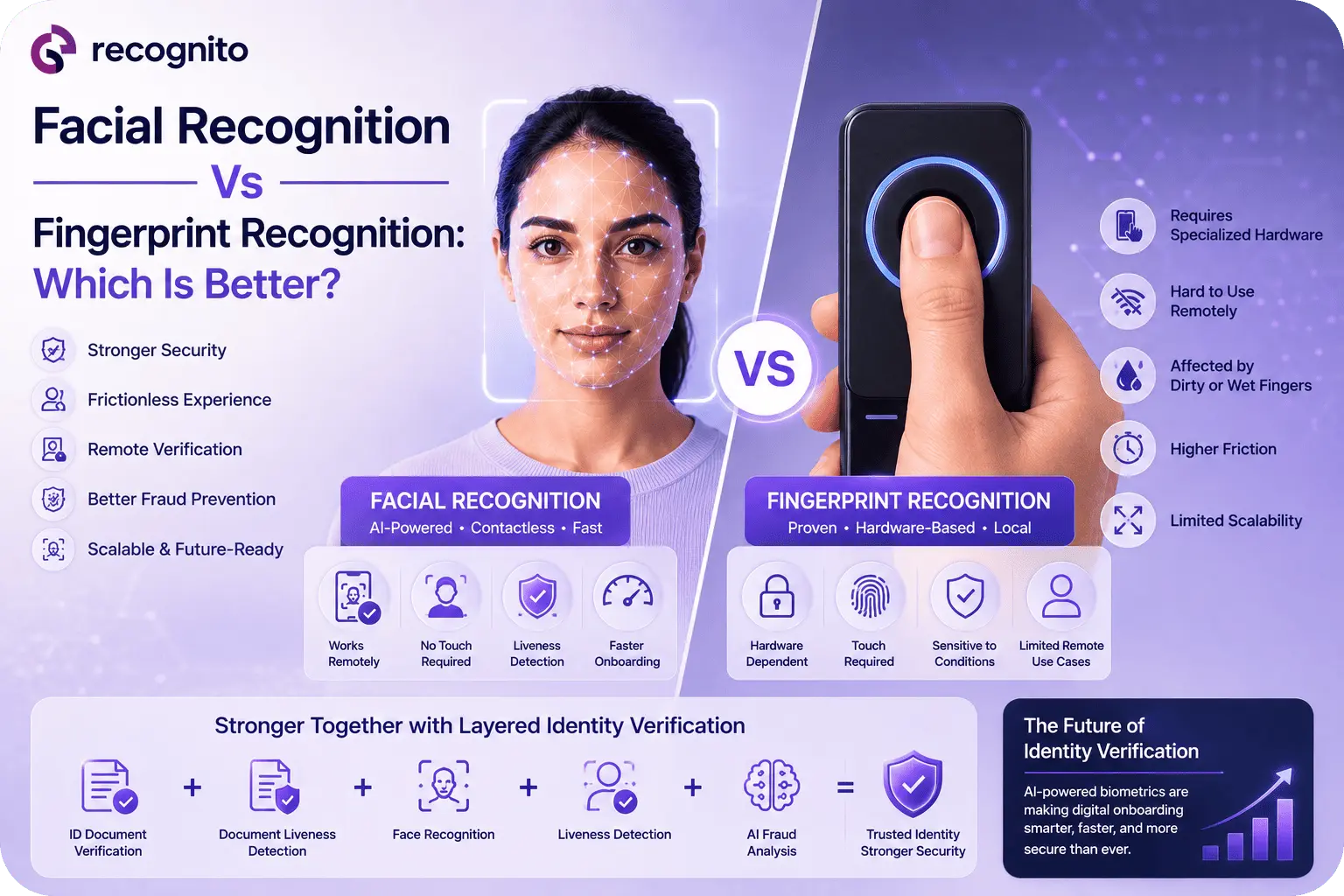
Facial recognition analyzes the visual characteristics of a person’s face. A camera captures an image or video, software detects the face, extracts distinguishing features, and compares them with a reference.
Fingerprint recognition analyzes the friction-ridge patterns of a finger. A sensor captures the ridge structure, and a matcher compares the resulting representation with an enrolled template.
These technologies have different physical and operational requirements. Facial recognition needs a camera and suitable image conditions. Fingerprint recognition needs a compatible sensor and reliable finger capture.
NIST evaluates these technologies separately. Its face technology evaluation program covers face recognition under FRTE, while its Fingerprint Recognition program covers fingerprint matching, identification, and verification.
Which Is More Accurate?
There is no universal accuracy winner.
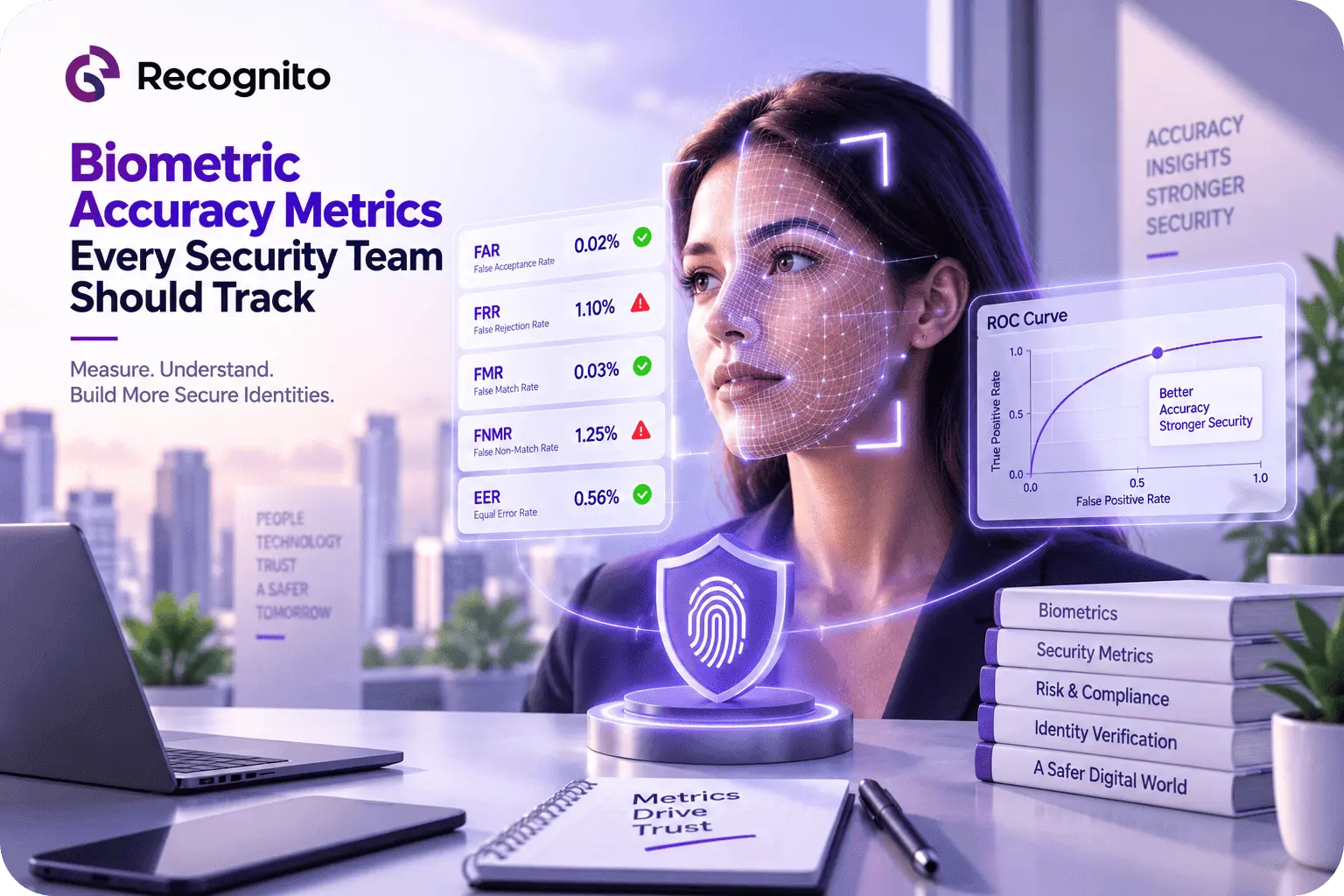
Biometric accuracy depends on the algorithm, sensor or camera, sample quality, threshold, population, and operating conditions. ISO/IEC 19795-1:2021 provides a framework for biometric performance testing and reporting that emphasizes meaningful comparisons and understanding the limits of test results.
Fingerprint recognition benefits from distinctive ridge patterns and mature sensing technology. In favorable conditions, it can deliver strong matching performance with a compact sensor.
Facial recognition has a different advantage: it can be captured at a distance without a dedicated contact sensor. That makes it particularly suitable for remote workflows using smartphones and other camera-equipped devices.
The important question for a buyer is therefore not “Which biometric has the highest accuracy?” but “Which technology maintains acceptable performance in our actual operating environment?”
For a closer look at variables that affect facial matching outcomes, see the discussion of face recognition accuracy factors.
Security: Neither Biometric Is Automatically Safer
The biometric modality is only one part of the security architecture.
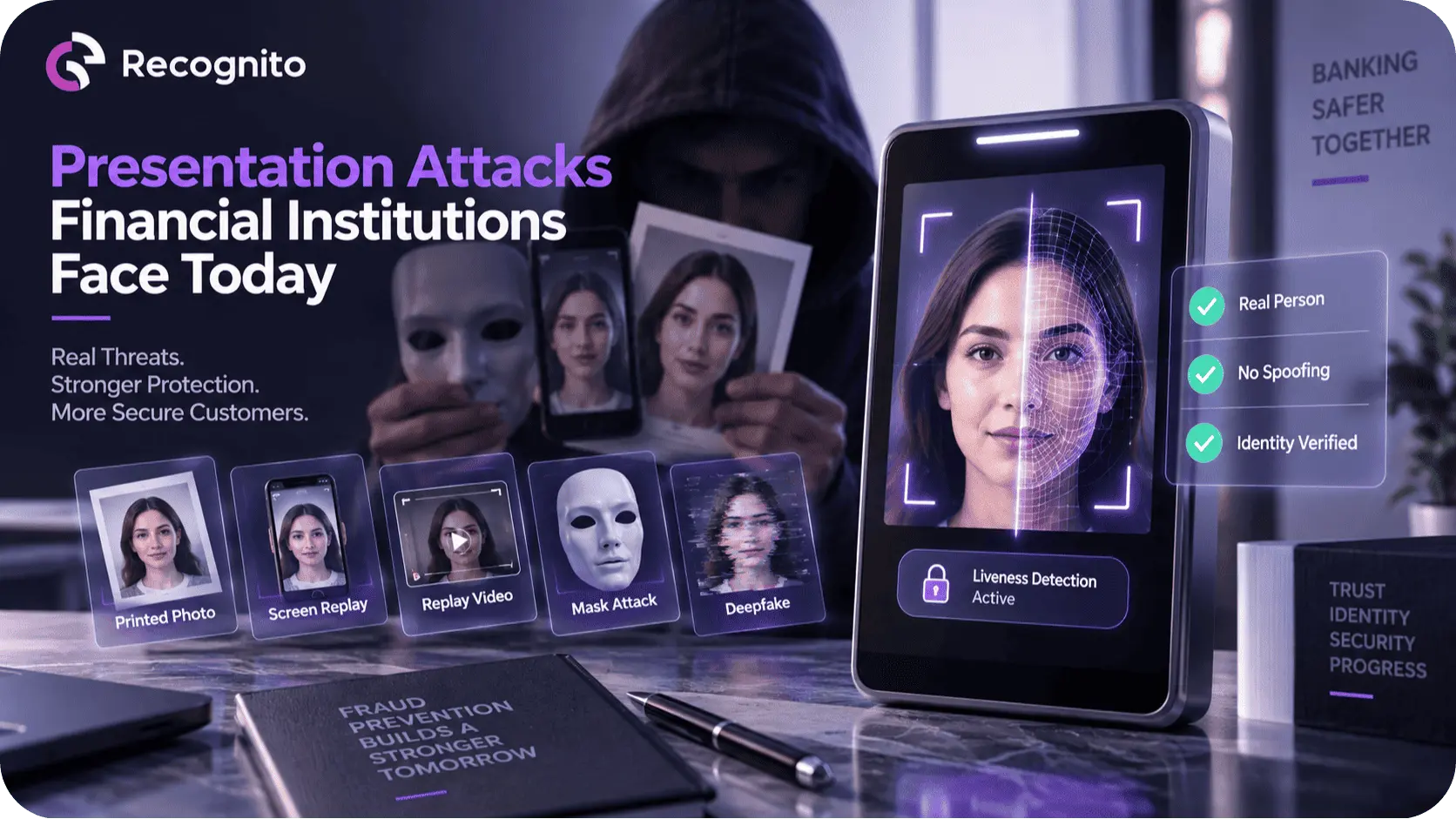
A fingerprint system must defend against attempts to present artificial or copied fingerprint characteristics. A facial system must address photographs, replayed video, masks, manipulated media, and other presentation attacks.
The deployment model also matters. A local device authenticator has a different threat model from a cloud-based identity verification service receiving biometric data over a network.
The security assessment should therefore include capture, sensor protection, template handling, liveness or presentation-attack detection, thresholds, fallback methods, encryption, and monitoring.
For facial verification, FIDO’s Face Verification Certification addresses biometric matching alongside threats such as deepfakes, liveness issues, bias, and injection attacks. The related presentation attack detection guidance shows why recognition and spoofing defenses should be evaluated separately.
Where Fingerprint Recognition Has the Edge
Fingerprint recognition is especially attractive when users interact with a known physical device.
A laptop, smartphone, point-of-sale device, or controlled entrance can have a dedicated reader. The controlled environment makes the interaction predictable.
Fingerprint technology also has a long history across identity and access applications. Its established sensor ecosystem can make it an excellent choice where an organization controls the hardware.
Another potential advantage is local matching. Some architectures allow a device to compare the fingerprint locally rather than sending a raw image to a remote service. The privacy outcome still depends on implementation and device architecture.
The main limitation is hardware dependency. Capture can become harder when fingers are wet, dirty, damaged, or difficult for the reader to process.
Where Facial Recognition Has the Edge
Facial recognition becomes particularly compelling when verification must happen remotely.
A modern smartphone already has a camera, so a user can complete face-based verification without carrying or touching a specialized biometric reader. This makes facial recognition useful for digital onboarding, account recovery, remote authentication, travel workflows, and other distributed environments.
It also supports contactless experiences. A user can look at the camera instead of deliberately placing a finger on a sensor.
That convenience has challenges. Poor lighting, pose, motion blur, camera limitations, and image quality can affect performance, so capture needs guidance and quality checks.
Usability and User Friction
The better biometric is often the one people can complete successfully without assistance.
Fingerprint recognition can be extremely simple on a device with a reliable reader. The user touches the sensor and receives a result.
Facial recognition can be easier in remote environments because there is no contact requirement. However, poor framing or lighting may require another capture.
For applications that must work across many personal devices, avoiding specialized fingerprint hardware can make facial recognition easier to distribute.
This difference is especially relevant to customer onboarding. Using a camera the customer already has is generally more practical than requiring separate fingerprint hardware.
Privacy and Biometric Data
Both modalities raise privacy questions because biometric characteristics are closely tied to individuals.
The key issue is not simply whether an organization uses a face or fingerprint. It is how the biometric is captured, transformed, stored, transmitted, accessed, retained, and deleted.
A strong architecture should minimize unnecessary collection and protect biometric templates and associated data. Retention, access control, encryption, and deletion policies should be defined before deployment.
Local biometric matching can reduce how much biometric information leaves a user’s device, while centralized systems may provide different operational capabilities. Neither model is automatically private or insecure; implementation determines the outcome.
Face vs Fingerprint for Different Business Scenarios
| Business scenario | Facial recognition | Fingerprint recognition | Likely advantage |
| Remote customer onboarding | Strong fit with smartphone cameras | Usually requires specialized hardware | Face |
| Smartphone authentication | Strong where camera capture is available | Excellent where a device sensor exists | Depends on device |
| Physical access control | Useful for hands-free entry | Strong with dedicated readers | Depends on environment |
| Large-scale remote verification | No dedicated reader required | Hardware distribution is harder | Face |
| Controlled workstation access | Effective | Mature with a reliable sensor | Fingerprint |
| Contactless workflows | Natural fit | Requires compatible sensor technology | Face |
A direct winner is therefore misleading. The right modality follows the environment, available hardware, threat model, and expected user behavior.
Integration and Deployment Complexity
For software teams, biometric selection is also an engineering decision.
Fingerprint solutions depend heavily on supported readers, operating systems, device APIs, and hardware consistency. That may be manageable when an organization controls the equipment, but much harder for a consumer application spanning many devices.
Facial recognition shifts more of the challenge toward software. The camera is already present, but the system must handle image quality, face detection, matching, liveness, and device variation.
Teams evaluating a software-first approach can review a facial recognition SDK against the requirements of their target platforms.
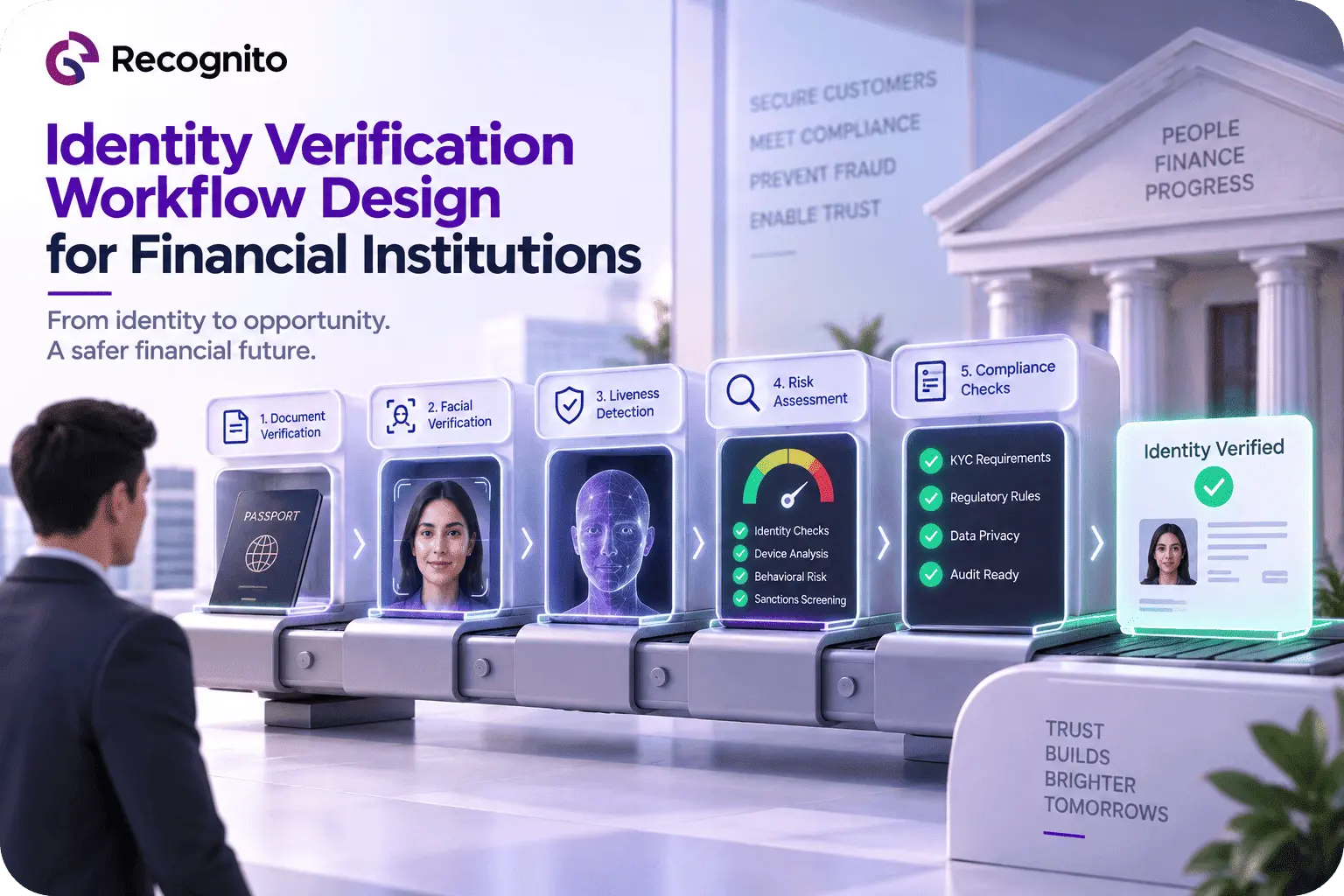
The development team should test successful matches, poor capture conditions, permissions, retries, latency, API failures, and fallback flows. A biometric that performs well in a controlled test can still create operational problems when integration is unreliable.
For implementation resources, the Recognito GitHub repository can complement product documentation and technical evaluation.
Performance Across Demographic Groups
A serious biometric evaluation should not rely on one average error rate.
Performance can vary across demographic groups and environmental conditions. ISO/IEC 19795-10:2024 addresses variation in biometric-system performance across demographic groups, including recognition error rates, failure-to-acquire measures, and processing characteristics.
The factors are not identical across modalities. Facial performance can be affected by image conditions and demographic variation. Fingerprint performance can be influenced by sensor quality, skin condition, aging, occupation, and the quality of the captured ridge pattern.
The practical lesson is simple: test the population and conditions the system will actually serve.
Should Businesses Choose One or Use Both?
For some applications, the strongest architecture is not a choice between face and fingerprint.
A device may use fingerprint authentication for local access while a remote identity-verification workflow uses facial recognition. A higher-risk process may also use multiple signals or step-up authentication.
Using more than one modality can provide fallback options when one capture method fails, but it also introduces cost, integration work, privacy considerations, and additional user friction.
The decision should therefore be driven by the threat model rather than the assumption that more biometrics automatically means more security.
A useful related discussion is biometric authentication vs traditional authentication methods, particularly when determining where biometrics belong within a larger authentication architecture.
How to Decide Between Facial and Fingerprint Recognition
Start with the environment rather than the technology.
Ask:
- Where will verification happen? Remote onboarding favors camera-based biometrics; controlled environments may favor fingerprint hardware.
- What hardware is available? Existing sensors can make fingerprints convenient, while smartphones make facial capture widely accessible.
- What is the threat model? Consider presentation attacks, compromised devices, stolen credentials, injection risks, and remote fraud.
- What level of friction is acceptable? Contactless capture can help, but poor image conditions may create retries.
- What happens when capture fails? Every system needs a secure fallback or escalation path.
- How will biometric data be governed? Define storage, retention, access, encryption, and deletion before deployment.
- How will performance be measured? Track real-world failures and outcomes rather than relying only on vendor claims.
The goal is not to choose the most impressive biometric. It is to select the modality that delivers the right balance of assurance, usability, deployment feasibility, privacy, and operational control.
Conclusion
Facial recognition and fingerprint recognition are both mature biometric modalities, but they solve different operational problems.
Fingerprint recognition often excels in controlled environments with dedicated hardware, predictable capture, and local device authentication. Facial recognition is particularly strong when identity must be verified remotely without requiring a specialized sensor.
Neither should be judged on accuracy alone. Security architecture, presentation-attack defenses, image or sensor quality, privacy controls, user experience, demographic performance, and failure handling all influence the final outcome.
For businesses building identity and biometric workflows, Recognito can support facial biometric implementations where remote, software-driven verification is part of the security architecture.
Frequently Asked Questions
Is facial recognition more secure than fingerprint recognition?
Neither modality is automatically more secure. Security depends on capture, matching, presentation-attack defenses, device architecture, data protection, and the surrounding authentication design.
Which biometric is better for remote identity verification?
Facial recognition is generally more practical because users can usually access a camera without specialized fingerprint hardware. The application should still consider capture quality, liveness, fraud controls, and risk.
Is fingerprint recognition more accurate than facial recognition?
There is no universal winner. Performance varies by algorithm, sensor, sample quality, threshold, population, and operating conditions.
Can a business use both biometrics?
Yes. Different workflows can use different modalities, and higher-risk systems may combine multiple signals. The additional complexity should be justified by the threat model.
What should businesses evaluate before selecting a biometric?
Assess performance, security threats, hardware requirements, usability, privacy, demographic behavior, integration complexity, fallback mechanisms, monitoring, and the conditions in which customers or employees will actually use the system.