
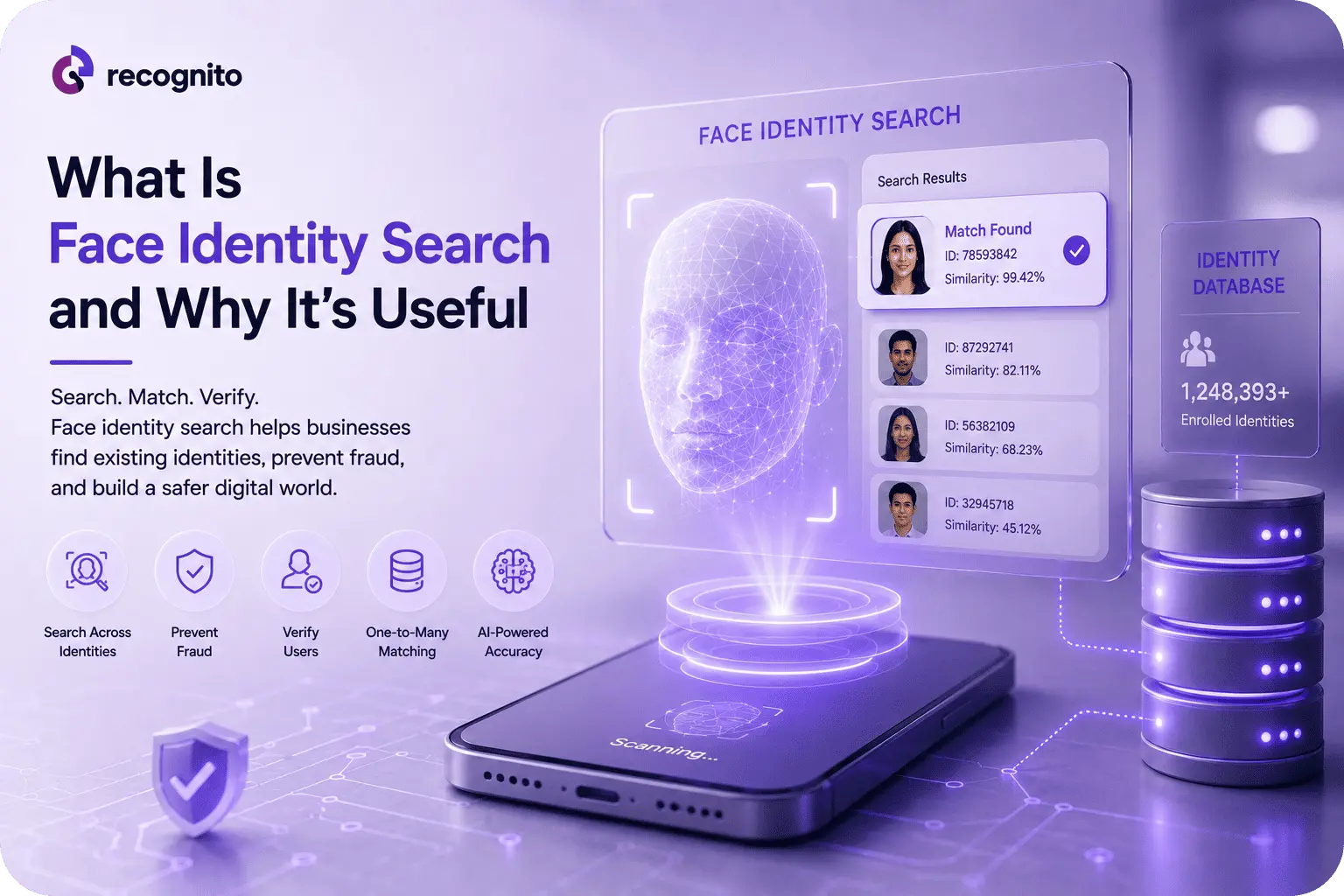
A photograph can tell you what someone looks like. Face identity search can help determine who that person is by comparing the face against a known database of enrolled identities.
That difference matters when organizations need to identify a person from an image rather than verify a claimed identity. Instead of asking whether two facial images belong to the same person, a face identity search system takes one face and searches across many stored identities to find the strongest candidate or determine that no sufficiently reliable match exists.
The technology is increasingly relevant to security operations, fraud investigation, workforce management, access control, digital identity, and large-scale media or video analysis. NIST distinguishes this type of one-to-many recognition from one-to-one verification in its ongoing Face Recognition Technology Evaluation program.
But face identity search is not simply “face recognition with a bigger database.” Gallery size, thresholds, false positives, image quality, demographic performance, privacy, and operational review all become more important as the search population grows.
Face Identity Search Is a 1:N Recognition Problem
The easiest way to understand face identity search is to compare it with ordinary face verification.
A 1:1 comparison asks:
Does this face match this specific person?
A 1:N search asks:
Which person in this database, if any, does this face match?
The second problem is more demanding because the system has to compare the probe face against potentially thousands, millions, or more enrolled identities.
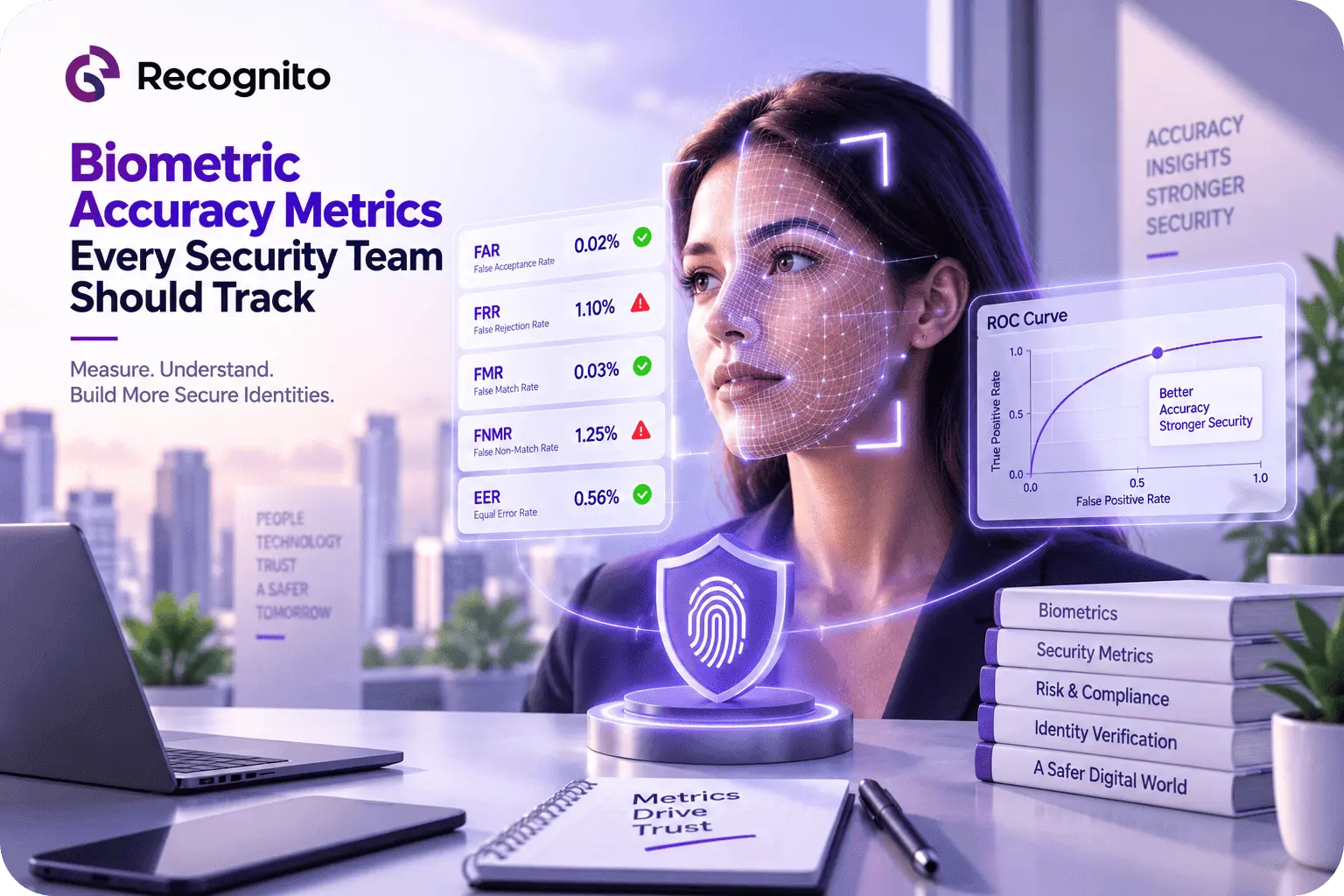
NIST’s current FRTE 1:N identification evaluation measures this scenario using identification-specific performance metrics and different gallery sizes. NIST reports False Negative Identification Rate and False Positive Identification Rate at defined thresholds, illustrating the trade-off between finding the correct person and returning an incorrect candidate.
That makes face identity search particularly useful when the person being searched does not provide a reliable identity claim.
How a Face Identity Search Works
Although implementations vary, the underlying workflow generally follows a sequence.
1. Capture a probe image
The system receives a photograph, video frame, or camera capture containing a face.
Before matching starts, the system may assess image quality and determine whether the face is suitable for recognition.
2. Detect and process the face
Computer vision identifies the face region and normalizes relevant characteristics such as orientation and scale.
This step matters because recognition performance depends heavily on the quality of the facial information reaching the matcher.
3. Generate a facial representation
The system converts the face into a mathematical representation, often called a face embedding or biometric template.
Rather than searching by simple visual similarity, the recognition model compares these representations in a feature space designed to distinguish identities.
4. Search the identity gallery
The probe representation is compared against enrolled identities.
The system can return a ranked list of candidates, often with similarity scores or confidence-related information.
5. Apply a decision threshold
A business rule determines how strong a match must be before the result is considered actionable.
This is one of the most important parts of the architecture. The highest-ranked candidate is not automatically the correct person.
6. Review or act on the result
Depending on the use case, the result may trigger automated access, an investigation, additional verification, a fraud alert, or human review.
The technology therefore produces evidence for a decision. It should not be treated as an unquestionable identity declaration.
Why Search Thresholds Matter So Much
One of the biggest differences between ordinary face verification and identity search is the cost of false candidates.
Imagine a 1:1 authentication process. The system compares a user’s face against one known reference. A false match is already a serious problem, but the comparison space is relatively constrained.
A 1:N search introduces many more opportunities for an incorrect similarity score to become the top result.
This is why NIST’s 1:N evaluation reports FPIR alongside FNIR. The organization has to balance two competing outcomes: failing to identify the correct person and incorrectly producing a candidate.
A lower threshold may help recover more true identities but can also increase false candidates. Raising the threshold can reduce false positives while causing more genuine searches to return no result.
There is no universal threshold that works for every organization. The appropriate operating point depends on the consequences of an error.
Where Face Identity Search Is Useful
Fraud investigation
Financial institutions and online platforms can use facial search to investigate suspicious identity activity when a face appears across multiple records.
For example, an organization may discover several accounts associated with different identity details but similar facial evidence. Searching the organization’s enrolled identity gallery can help investigators determine whether those records may be connected.
The technology is therefore valuable as an investigative signal rather than a standalone fraud verdict.
This fits into the broader use of facial biometrics for fraud prevention, where biometric evidence is combined with other indicators to identify suspicious activity.
Workforce and physical access
Organizations with controlled environments may use face identity search to recognize employees, contractors, or authorized personnel.
Instead of requiring every person to state their identity, a camera system can detect a face and compare it with an approved gallery.
The effectiveness depends heavily on deployment conditions. Lighting, camera position, face angle, and gallery quality can all influence results.
Security and investigations
Security teams may need to determine whether a person appearing in an image or video is already known to the organization.
A searchable biometric gallery can reduce the time required to manually compare footage against thousands of records.
This is particularly valuable when the search is part of a larger workflow involving timestamps, locations, events, and human investigation.
Media and video archives
Large video libraries can contain hours or years of footage. Manually finding every appearance of a particular person is inefficient.
Face identity search can index facial appearances so investigators, media teams, or archivists can search for known individuals across a large collection.
The result is not simply faster searching. It changes video from an essentially chronological archive into a searchable identity dataset.
Identity deduplication
A company may need to determine whether a person already exists in an identity database before creating another profile.
A 1:N face search can compare a new enrollment against existing identities and flag potential duplicates for review.
That can be valuable in account creation, employee registration, loyalty systems, and other environments where duplicate identities create operational or fraud risks.
For a related discussion of the identity-search problem itself, see how face identity search works and why it matters.
Face Search vs Face Verification
These applications may sound similar, but they support different decisions.
| Capability | 1:1 Face Verification | 1:N Face Identity Search |
| Core question | Does this face match the claimed identity? | Who is this face among enrolled identities? |
| Reference population | One known identity | Many enrolled identities |
| Typical output | Match or no match | Ranked candidates or no sufficiently strong match |
| Main risk | False acceptance or rejection | False candidate or missed identification |
| Typical uses | Authentication, onboarding, account recovery | Investigation, deduplication, access recognition, search |
| Threshold impact | Balances acceptance and rejection | Balances identification and false candidate rates |
| Operational review | Often limited | Frequently more important for ambiguous results |
The choice between them should follow the question the system needs to answer.
If a customer claims to be a specific person, 1:1 verification is generally the more natural model. If the organization does not know the person’s identity and needs to search an enrolled population, 1:N is more appropriate.
The Quality of the Gallery Can Make or Break the Search
A face identity search system is only as useful as the reference gallery it searches.
An enrollment image that is blurry, poorly lit, heavily compressed, or captured at an unusual angle may produce a weak biometric representation.
Duplicate or outdated records can also complicate search results.
Organizations should establish clear enrollment standards and periodically review gallery quality. A clean gallery can improve not only recognition performance but also investigation efficiency because candidate results become easier to interpret.
The same principle applies to probe images. A high-quality reference cannot compensate indefinitely for a poor surveillance frame or low-resolution capture.
This is one reason businesses should understand the factors that affect face recognition accuracy before assuming a benchmark result will transfer directly to production.
Demographic Performance Needs to Be Evaluated
Face recognition performance can vary across demographic groups and image conditions.
NIST’s ongoing FRTE program publishes demographic information as part of its evaluation work. Its current 1:1 results show differences in false-match and false-non-match behavior across demographic categories, reinforcing the need to assess more than an overall average.
For a business deploying identity search, this becomes an operational and governance issue.
Testing should reflect the population represented in the gallery and the conditions in which faces will be captured. A system evaluated only on high-quality controlled portraits may behave differently when deployed against mobile images, low-light photographs, or camera footage.
This is not a reason to dismiss facial recognition. It is a reason to treat demographic and environmental testing as part of responsible deployment.
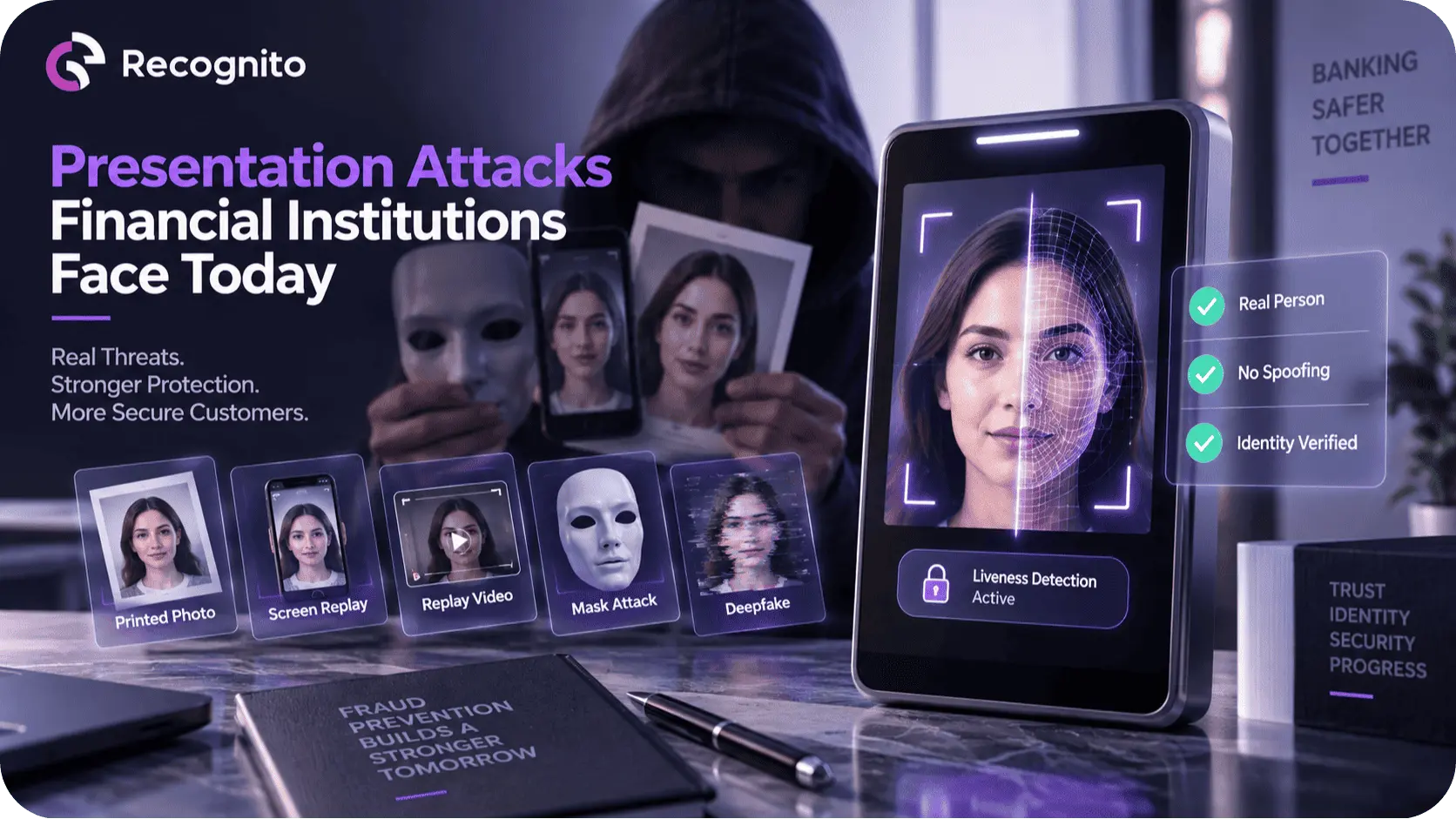
Security Threats Go Beyond Matching Accuracy
A face identity search system can have strong recognition performance and still be vulnerable to attacks elsewhere in the pipeline.
An attacker might attempt to:
- submit a manipulated facial image
- inject altered media into the application
- exploit weak enrollment controls
- obtain unauthorized access to the identity gallery
- misuse legitimate search privileges
- manipulate thresholds or search rules
That means security architecture must extend beyond the recognition model.
Enrollment is particularly important. If an attacker successfully enrolls a fraudulent identity, even an excellent matcher may repeatedly return the wrong person because the gallery itself has been compromised.
Access to search results also needs controls. Not every employee should necessarily be able to search every identity in a database, particularly when biometric information is involved.
Privacy Is Part of the Architecture
Face identity search creates a fundamental privacy difference from simple face verification: a search can potentially reveal which identity is associated with an unknown face.
That capability deserves careful governance.
Organizations should define why identity search is necessary, what identities may be searched, who can perform searches, what records are retained, and how results are audited.
NIST’s Digital Identity Guidelines emphasize risk-based identity management and appropriate controls around identity proofing and authentication. Identity-search deployments may have additional privacy requirements depending on jurisdiction and purpose.
Data minimization also matters. An organization should avoid collecting or retaining biometric information simply because future searches might someday be useful.
The most defensible deployment is one where the search capability has a clearly defined purpose, controlled access, documented retention practices, and measurable business value.
What Businesses Should Evaluate Before Deployment
Choosing a face identity search platform requires more than comparing recognition accuracy.
Search scale
How many identities will be in the gallery today, and how large might it become? Performance and infrastructure requirements can change as the identity population grows.
Matching performance
Look at false-positive and false-negative behavior at the operating points relevant to the application, rather than relying on one headline score.
Capture conditions
Test the actual cameras, devices, image sources, lighting, angles, and image quality expected in production.
Gallery management
Enrollment, updating, deduplication, identity removal, and record lifecycle management should be treated as core system functions.
Security controls
Review authentication, authorization, encryption, audit logging, API security, and protections against manipulated or injected media.
Human review
Determine when a result can trigger automated action and when an analyst must review the candidate.
Integration
Developers should assess latency, API reliability, supported platforms, scaling behavior, and how search results are returned to the application.
A face recognition SDK may be appropriate when an organization wants to embed the recognition capability into an existing application rather than operate a disconnected search experience.
For technical teams evaluating implementation options, the Recognito GitHub repository can provide additional developer-oriented resources.
Why Human Review Still Matters
Face identity search produces ranked candidates, not certainty.
Suppose a search returns three highly similar faces. An automated system may identify the highest-scoring result, but the correct business action depends on context.
An access-control system may use a stricter threshold and simply deny access if sufficient confidence is unavailable.
An investigation team may instead examine several candidates, compare timestamps and other evidence, and determine whether the top result makes sense.
This difference is crucial. The more consequential the decision, the more carefully organizations should separate biometric similarity from identity confirmation.
How to Build a Safer Search Workflow
A strong implementation typically combines multiple controls rather than allowing the face matcher to make every decision.
Step 1: Establish trusted enrollment.
Only verified identities should enter the gallery.
Step 2: Standardize reference images.
Use consistent capture requirements where possible.
Step 3: Assess probe quality.
Do not treat every image as equally suitable for recognition.
Step 4: Search with calibrated thresholds.
Set operating points based on the consequences of false candidates.
Step 5: Return ranked evidence.
Provide candidate scores and relevant metadata to authorized users.
Step 6: Apply decision rules.
Automate low-risk decisions while escalating ambiguous results.
Step 7: Audit searches.
Track who searched, why the search was performed, and what action followed.
Step 8: Continuously evaluate performance.
Monitor false candidates, missed identities, demographic variation, and changes as the gallery grows.
A related technology such as liveness detection may also be appropriate when the search input comes from a live camera rather than a trusted image source. The need depends on the capture environment and threat model.
For teams that want to explore facial biometric capabilities before deployment, the face biometric playground can serve as a practical evaluation environment.
What Face Identity Search Should Not Be Used For
The technology is powerful, but its use should remain proportional to the purpose.
A face search should not automatically become the default answer whenever an organization has access to a camera and a biometric database.
Organizations should question whether identity search is actually necessary, whether a less intrusive method could achieve the same objective, and what happens when the system produces an uncertain result.
The system also should not be presented as infallible. A candidate match is evidence that requires appropriate interpretation, especially in high-impact decisions.
The Business Value Comes From Turning Images Into Searchable Identity Data
The main advantage of face identity search is not simply speed.
It converts an unstructured task—finding out whether a face belongs to someone already known—into a searchable process that can operate across large identity galleries.
That can reduce investigation time, support fraud detection, accelerate duplicate-identity checks, streamline certain access workflows, and make large image or video collections substantially easier to analyze.
But the value depends on the surrounding system. Trusted enrollment, appropriate thresholds, strong security, privacy governance, and human review all determine whether the technology produces useful identity intelligence or simply a large volume of uncertain matches.
Conclusion
Face identity search is a one-to-many biometric capability designed to answer a different question from ordinary face verification: who is this person among the identities already known to the system?
That makes it useful for fraud investigation, identity deduplication, access recognition, security operations, and searchable media archives. At the same time, larger galleries increase the importance of thresholds, false-positive control, image quality, demographic testing, privacy, and governance.
The strongest deployments treat facial search as one part of a broader identity and security architecture. Recognition provides candidates; business rules, contextual evidence, and authorized human judgment determine what those candidates ultimately mean.
For organizations developing identity-search and biometric workflows, Recognito provides technology that can support practical facial recognition deployments across applications where identity search is an appropriate fit.
Frequently Asked Questions
What is face identity search?
Face identity search is a 1:N biometric process that compares a captured face against a gallery of enrolled identities to find one or more potential matches.
How is face identity search different from facial verification?
Verification compares a face against one known identity. Identity search compares it against many identities and returns ranked candidates when a sufficiently strong match is found.
Can face identity search identify anyone?
No. The system can only identify people represented in its enrolled gallery, and image quality, threshold settings, demographic variation, and other factors can affect whether the correct identity is found.
Is face identity search suitable for fraud detection?
It can be useful as an investigative and risk signal. However, organizations should combine biometric search with document evidence, liveness where appropriate, account intelligence, and other fraud controls.
Does face identity search create privacy risks?
Yes. Searching an unknown face against an identity database can reveal sensitive identity information. Organizations should establish a clear purpose, restrict access, protect biometric data, and define appropriate retention and audit controls.