
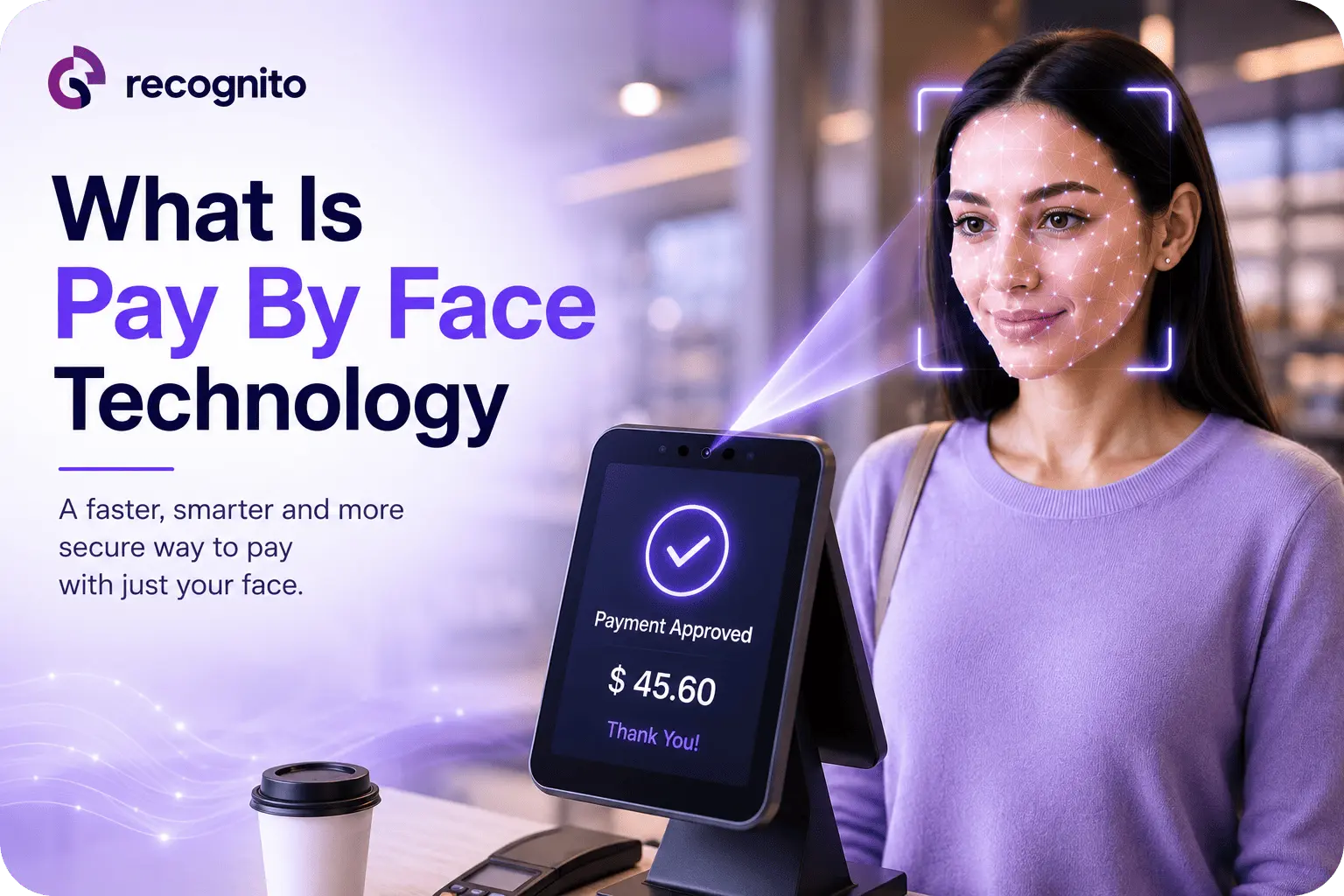
Pay by face technology turns facial recognition into a way to authenticate payments. Instead of handing over a card, entering a PIN, or opening a wallet app, a customer can use their face as part of checkout.
A reliable system has to connect a person’s biometric identity with a payment credential, confirm the person is genuine, protect biometric data, and complete payment authorization securely.
Facial recognition itself does not move money. It provides an authentication signal while payment networks, issuers, acquirers, merchants, and tokenization systems handle the transaction.
Recent industry initiatives show that biometric payments are moving beyond demonstrations. Mastercard’s biometric checkout case study documents an in-store facial payment deployment, while Visa Payment Passkey uses a customer’s device biometrics for online payment authentication.
What Does “Pay by Face” Actually Mean?
The phrase describes two main architectures.
In in-store facial payment, a customer enrolls their face with a participating payment ecosystem and links that identity to a payment credential. At checkout, a camera captures the face, the system matches it to the enrolled identity, and the resulting authentication signal supports payment authorization.
In a device-based model, the face never becomes the merchant’s payment credential. Instead, facial recognition on a smartphone unlocks a passkey or payment credential. The biometric check happens on the device, while payment authentication relies on a cryptographic credential.
That matters for privacy. Mastercard states that biometrics used for its payment-passkey model stay on the user’s device rather than being shared with Mastercard or the merchant.
Pay by face is therefore best understood as a family of payment experiences in which facial authentication helps prove that an authorized customer is initiating a transaction.
How Pay by Face Works
A typical facial payment journey has several stages.
1. Customer enrollment
Before using face-based payment, the customer must establish a trusted link between their identity, biometric reference, and payment credential.
Enrollment may involve face capture, identity verification, and payment-account linking. In other architectures, it happens through a smartphone and creates a device-bound passkey.
This stage is critical. If an attacker enrolls their face against someone else’s payment account, later matching may work exactly as designed.
2. Face capture
At checkout, a camera captures the customer’s face. Software detects the face, checks capture quality, and creates a biometric representation for matching.
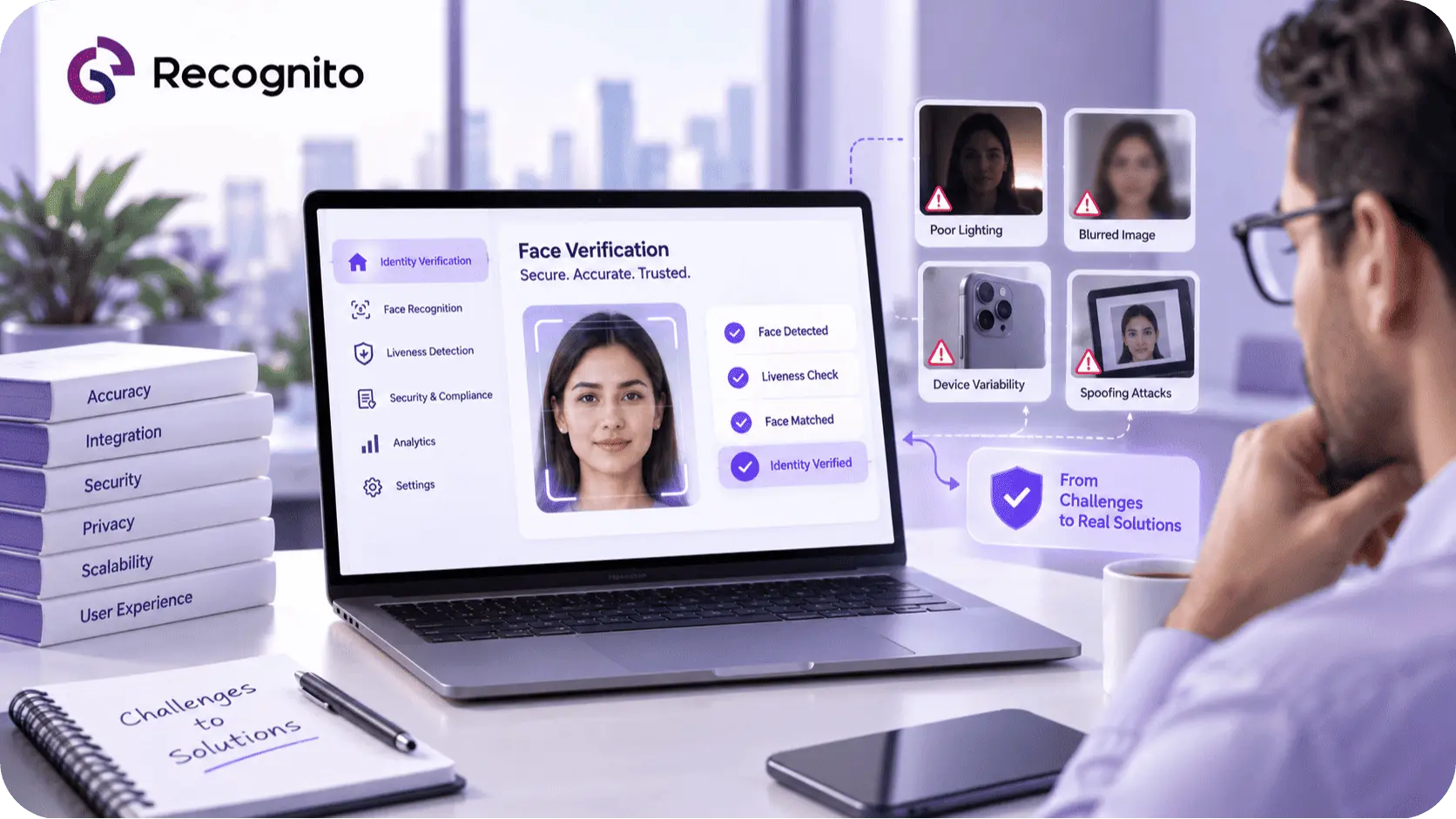
Lighting, pose, motion, occlusion, and camera quality can affect the result. A carefully integrated facial recognition SDK can provide the recognition layer inside applications that need controlled biometric capture.
3. Liveness detection
A face match does not prove that a live person is present.
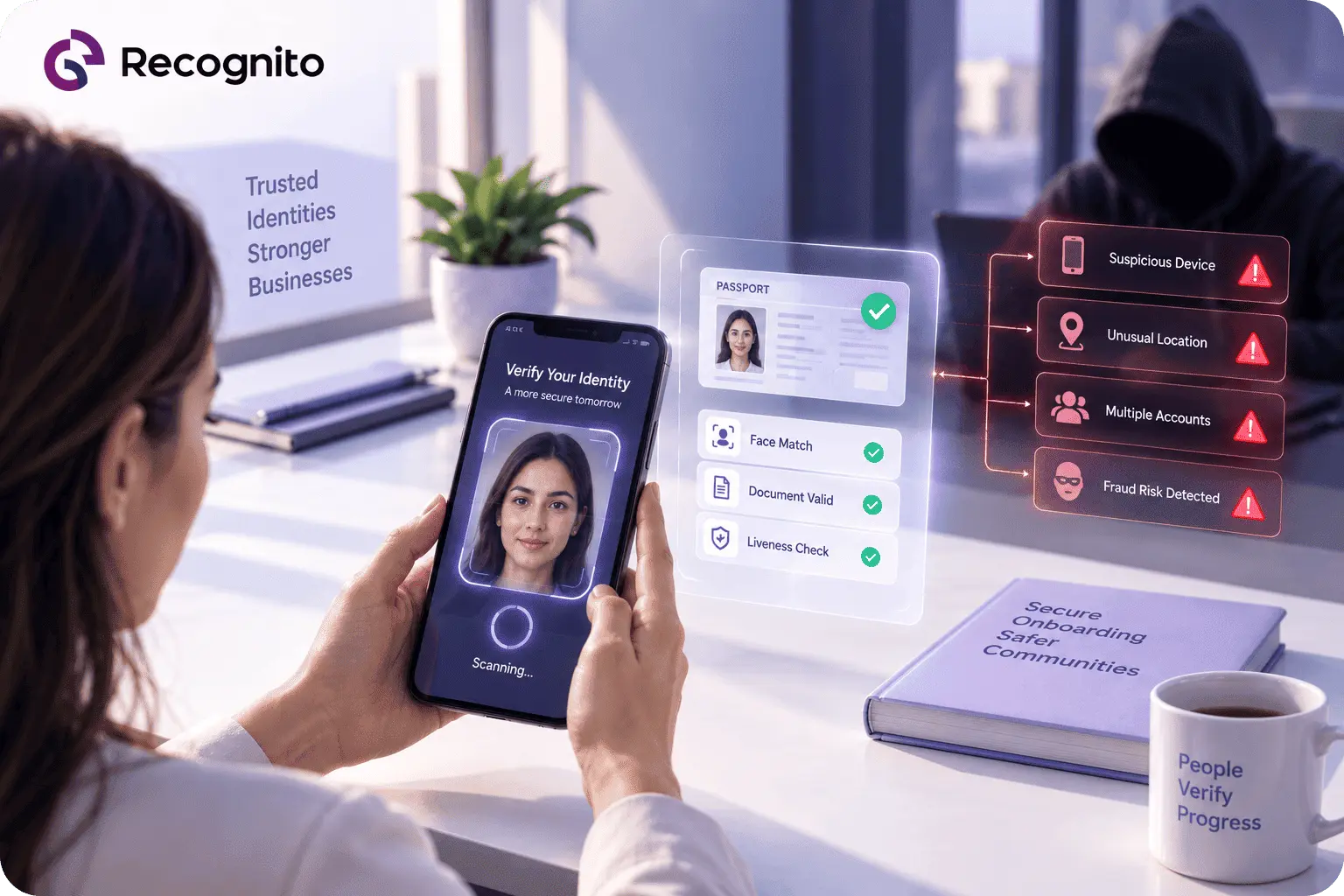
Attackers may try photographs, replayed video, masks, manipulated media, or other presentation techniques. A payment system therefore needs a separate control to assess whether the biometric presentation is genuine.
FIDO’s Biometrics Requirements cover biometric performance and presentation attack detection for relevant programs.
A face liveness SDK can provide this additional security layer alongside facial matching.
4. Biometric matching
The system compares the captured face with the enrolled reference.
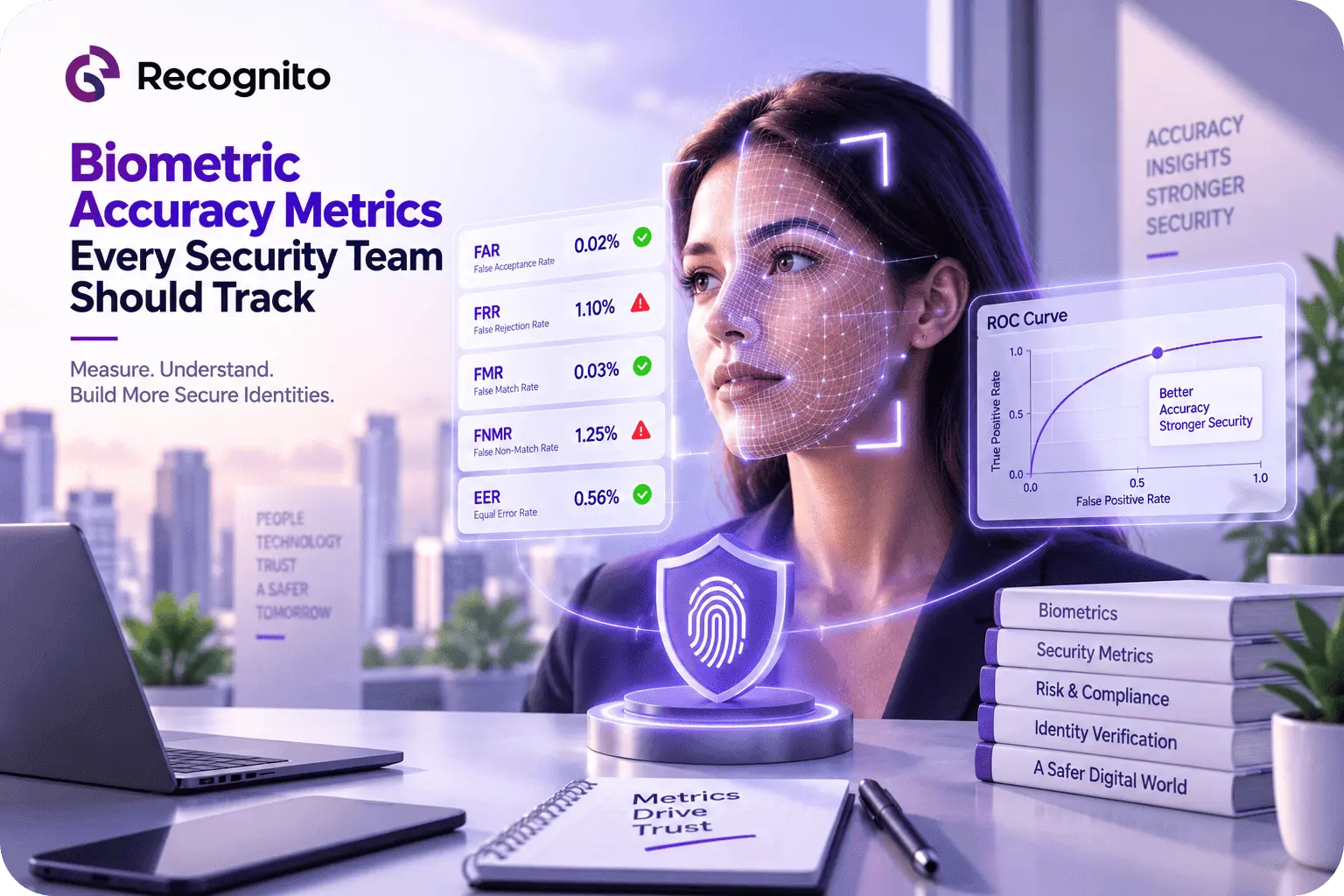
A match satisfies the biometric condition; it does not automatically approve the payment. Thresholds matter because permissive settings may increase false matches, while strict settings may reject legitimate customers.
5. Payment authorization
The authenticated customer is connected to the payment credential or token, and normal authorization completes.
The face is an authentication mechanism, not the payment rail itself.
EMVCo’s 2026 payments overview describes ongoing work around payment tokenization and emerging biometric payment experiences.
Why Businesses Are Interested in Pay by Face
The main attraction is friction reduction. A customer may not need to find a wallet, insert a card, unlock a phone, or enter a PIN, which can matter in high-volume environments.
Mastercard’s St. Marche biometric checkout pilot reported a 95% transaction approval rate, 76% customer recommendation, and a 10% increase in purchases among biometric-checkout customers. Those figures come from one specific pilot and should not be generalized to every deployment.
Facial payment can also strengthen the connection between the person at checkout and the payment credential, provided enrollment and authentication are designed securely.
Pay by Face vs Traditional Contactless Payments
Facial payment does not automatically replace cards or mobile wallets. Contactless payments are already fast and widely deployed.
The real question is whether biometric authentication adds enough convenience or identity assurance to justify its enrollment, hardware, privacy, and security requirements.
| Payment method | Authentication signal | Hardware dependency | Main strength | Main challenge |
| Contactless card | Card credential | Existing terminal | Fast and familiar | Customer needs card |
| Mobile wallet | Device credential, often biometric | Customer smartphone | Mature device security | Requires phone |
| Pay by face at POS | Face + linked payment credential | Camera-enabled terminal | Hands-free checkout | Privacy and spoofing risk |
| Face-enabled passkey | Face + cryptographic credential | Customer smartphone | Biometric can stay on device | Device and flow dependency |
Pay by face is therefore usually an additional authentication option, not a replacement for every existing payment method.
Security Risks Businesses Must Address
A face is not a secret. That makes biometric payment architecture especially important because a compromised biometric characteristic cannot simply be reissued like a password.
Spoofing and presentation attacks
Photos, replayed videos, masks, and generated media can challenge facial systems. Liveness controls need to be tested against threats relevant to the deployment.
False matches
An incorrect match can associate a transaction with the wrong person. Even a low error rate should be evaluated against transaction volume and financial impact.
Compromised enrollment
A secure checkout cannot compensate for a weak enrollment process. The initial link between identity, biometric reference, and payment credential needs strong assurance.
Injection and system attacks
Attackers may attempt to bypass capture or inject manipulated biometric data directly into processing components.
Account takeover
Facial authentication does not replace account recovery, fraud monitoring, or controls that protect the underlying payment account.
Businesses considering these threats should also examine how face recognition helps prevent online account fraud as part of a layered security strategy.
Privacy Is a Core Design Requirement
Biometric payment systems handle information that can be highly sensitive, and organizations should decide early whether faces are stored centrally or processed locally.
A strong privacy architecture should answer:
- Is a raw face image retained?
- Are biometric templates stored?
- Where does matching happen?
- Who can access the biometric data?
- How is enrollment revoked?
- How long is information retained?
Device-based authentication can limit merchant exposure because the biometric remains on the user’s device. Centralized models can offer different operational capabilities but require stronger biometric-data governance.
Under EU law, biometric data used to uniquely identify a person is a special category of personal data subject to additional requirements. Organizations processing it should review the GDPR provisions on biometric data alongside applicable national rules.
In-Store and Online Pay by Face Are Different Problems
In-store facial payment generally requires a camera and an enrollment relationship with the merchant or payment ecosystem.
Online payment authentication can instead use the customer’s smartphone. In that model, the merchant may receive a successful authentication result without receiving the customer’s biometric data.
Visa’s payment-passkey approach illustrates this separation: the credential is bound to the device, while the device’s native biometric mechanism authenticates the user.
For financial services teams, face authentication for secure online transactions adds context on using facial authentication within payment-security workflows.
What Businesses Need Before Deploying Pay by Face
A successful deployment requires more than a capable facial model.
Define the architecture
Decide whether matching happens at the point of sale, on the customer’s device, or in another trusted environment.
Secure enrollment
Enrollment should establish the person’s identity and securely bind the biometric reference to the correct payment credential.
Protect the biometric layer
Minimize storage, restrict access, protect templates, encrypt sensitive data, and define revocation and deletion procedures.
Test liveness and attack resistance
Evaluate photographs, replay, manipulation, and injection scenarios relevant to the deployment. Do not assume a strong face matcher automatically provides strong payment security.
Calibrate thresholds
The right trade-off between false matches and false rejects depends on transaction value, customer expectations, and the available fallback controls.
Design fallback methods
Customers need a secure alternative when recognition fails, the camera is unavailable, or they do not want biometric payment.
Monitor the full chain
Measure authentication failures, fraud events, false declines, enrollment anomalies, customer complaints, and device issues.
Teams evaluating facial behavior before production can use a face biometric playground as a practical complement to technical testing. The broader face authentication use case also illustrates where facial verification fits into financial workflows.
For development resources, the Recognito GitHub repository can complement integration and security testing.
Where Pay by Face Makes the Most Sense
The technology is most compelling where hands-free speed provides clear business value:
- high-volume retail
- stadiums and entertainment venues
- hospitality
- membership-based facilities
- campus or workplace payment environments
- selected transit and mobility use cases
Controlled environments can make enrollment, camera positioning, and customer guidance easier.
The business case is weaker where privacy expectations conflict with centralized enrollment or contactless methods already provide the required experience.
The Future of Facial Payments
The likely future is not a world in which every purchase requires a camera.
A practical direction is a payment ecosystem where biometrics sit alongside cards, devices, passkeys, tokens, and risk controls.
Mastercard has described biometric checkout as part of a broader approach that can use face, palm, or iris recognition. Its separate payment-passkey model uses device biometrics. These architectures offer different trade-offs.
Tokenization is particularly important. Rather than turning the face into a payment credential, a biometric can authorize access to a tokenized credential. That helps keep payment credentials and biometric characteristics conceptually separate.
FIDO’s biometric certification program exists because organizations need structured ways to evaluate biometric performance and reliability rather than relying on unverified claims.
Is Pay by Face Secure Enough?
It can be, but only when the complete system is designed securely.
Weak enrollment, inadequate liveness, excessive biometric storage, poor account recovery, or insecure APIs can undermine an otherwise capable face-recognition model.
A stronger architecture combines identity assurance, biometric matching, presentation-attack detection, credential protection, tokenization, privacy controls, monitoring, and secure fallback mechanisms.
Transaction disputes also need clear handling. A biometric approval should leave enough auditable information for the payment provider to investigate a disputed transaction without retaining unnecessary facial data.
The key lesson is that pay by face should be evaluated as a payment-security architecture, not simply as a facial recognition feature.
Conclusion
Pay by face technology uses facial authentication to help confirm that an authorized customer is initiating a payment. The facial biometric does not replace the underlying payment network, credential, token, or authorization process.
Its value comes from reducing checkout friction and creating a more direct authentication experience. Its central challenge is protecting a biometric characteristic that cannot simply be replaced if compromised.
That makes strong enrollment, liveness, tokenization, privacy, fallback controls, and monitoring essential to the design.
For businesses exploring facial payment and biometric verification, Recognito provides technologies that can support the biometric layer of a secure identity and payment architecture.
Frequently Asked Questions
Does pay by face store my credit card in my face?
No. A facial biometric is used as an authentication factor linked to a payment credential or token. It does not itself contain the customer’s card account.
Does pay by face require liveness detection?
For systems that capture a customer’s face directly, liveness or presentation-attack detection is an important security control. It helps distinguish genuine biometric presentation from common spoofing attempts.
Is paying by face safer than using a card?
Not automatically. Security depends on enrollment, matching, liveness, credential protection, tokenization, fraud monitoring, and the complete payment architecture.
Can a merchant store my face?
It depends on the implementation. Some models involve provider-side biometric processing, while device-based authentication can keep biometric verification on the customer’s device. The architecture and data-retention policy should be explicit.
Where is pay by face most useful?
It is most attractive where hands-free, rapid checkout provides meaningful value, including high-volume retail, controlled venues, hospitality, and selected membership or mobility environments.