
Liveness Detection Standards Every Compliance Team Should Know
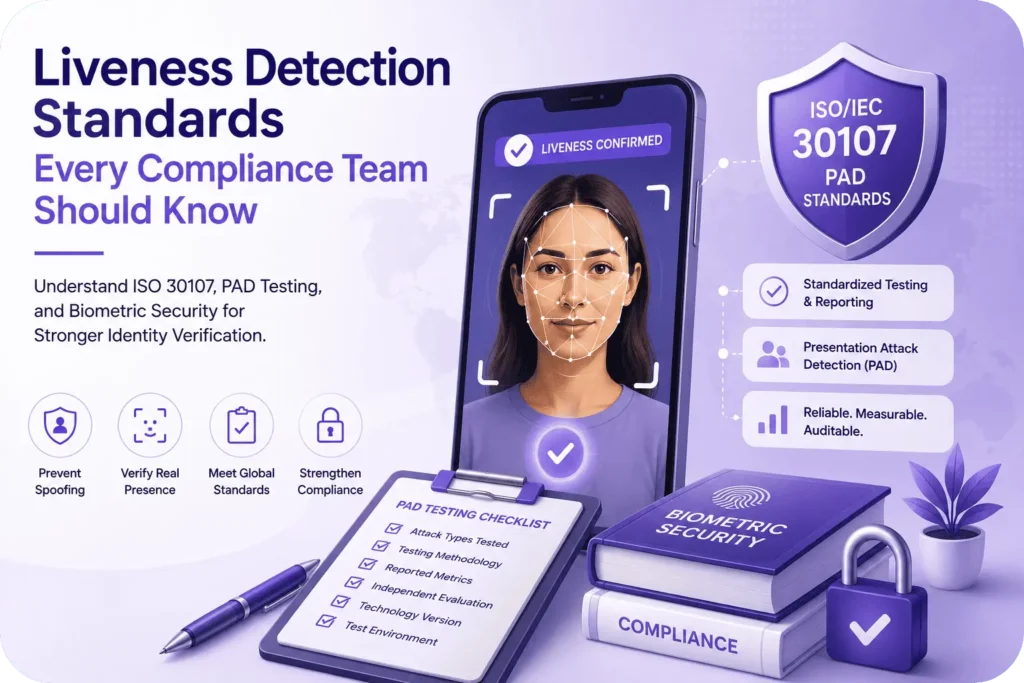
Liveness detection has become an important security layer for organizations using facial biometrics for remote identity verification, authentication, digital onboarding, financial services, and fraud prevention. For compliance teams, however, knowing that a vendor offers “liveness detection” is not enough. A proper review needs to establish what the technology is designed to protect against, how it […]
Active vs Passive Liveness Detection: Which Is Better in 2026?
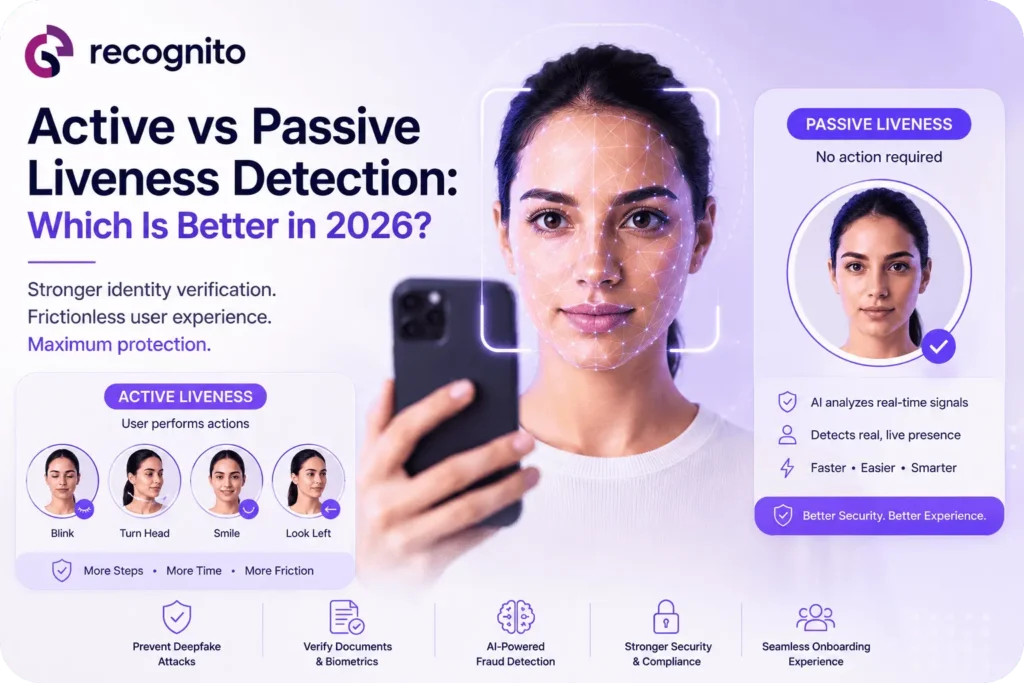
Remote biometric verification has become an important part of digital onboarding, authentication, fraud prevention, and account recovery. But confirming that a face matches a trusted identity is only one part of the process. The system also needs to determine whether the face being presented is genuine. This is where liveness detection comes in. It helps […]
Understanding the Role of Liveness Detection SDK in Digital Verification
Digital verification has made identity checks faster, but it has also moved a critical security problem into environments that attackers can manipulate remotely. A customer can submit a convincing selfie without being the legitimate account holder. A fraudster can present a photograph, replay a recorded video, use a mask, or manipulate the camera feed. As […]
Why Every Identity Verification System Needs Face Liveness Detection SDK
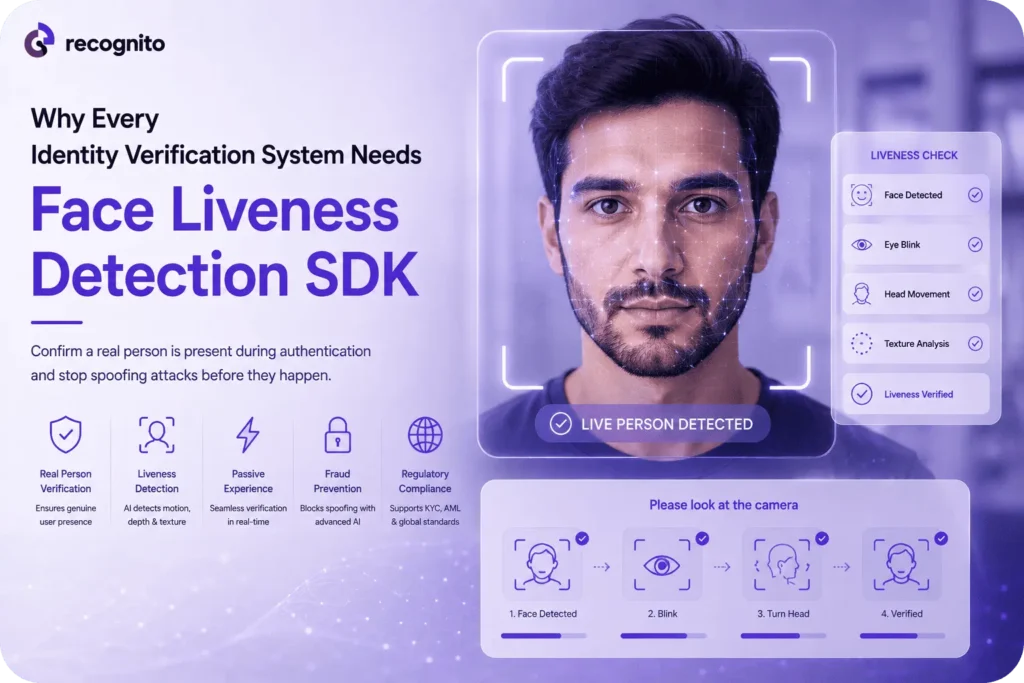
Digital identity verification has changed how businesses onboard and authenticate customers. Banks can open accounts remotely, fintech platforms can complete KYC online, marketplaces can verify sellers, and other digital services can confirm users without requiring a branch visit. That convenience creates a security challenge. In physical verification, an employee can observe the customer and inspect […]
How Liveness Face Detection Prevents Fraud in Biometric Authentication
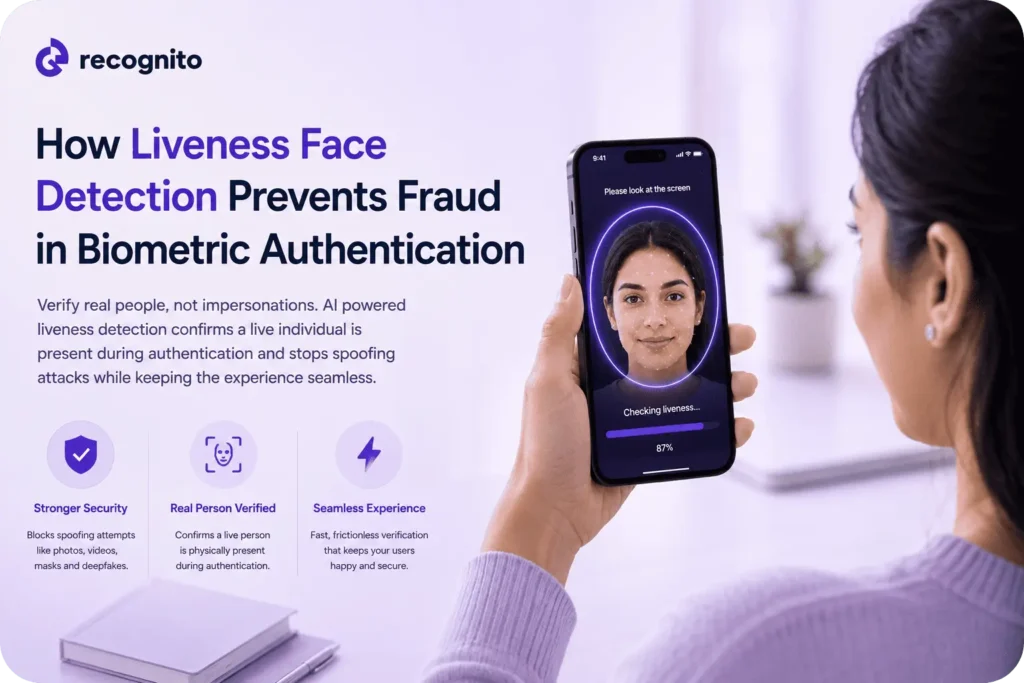
A biometric system can recognize the right face and still authenticate the wrong person. That is the central weakness liveness face detection is designed to address. Facial recognition determines whether a captured face resembles a trusted biometric reference. Liveness detection asks a different question: Is the face being presented by a real person who is […]
Understanding the Role of Face Liveness Verification in Online Security
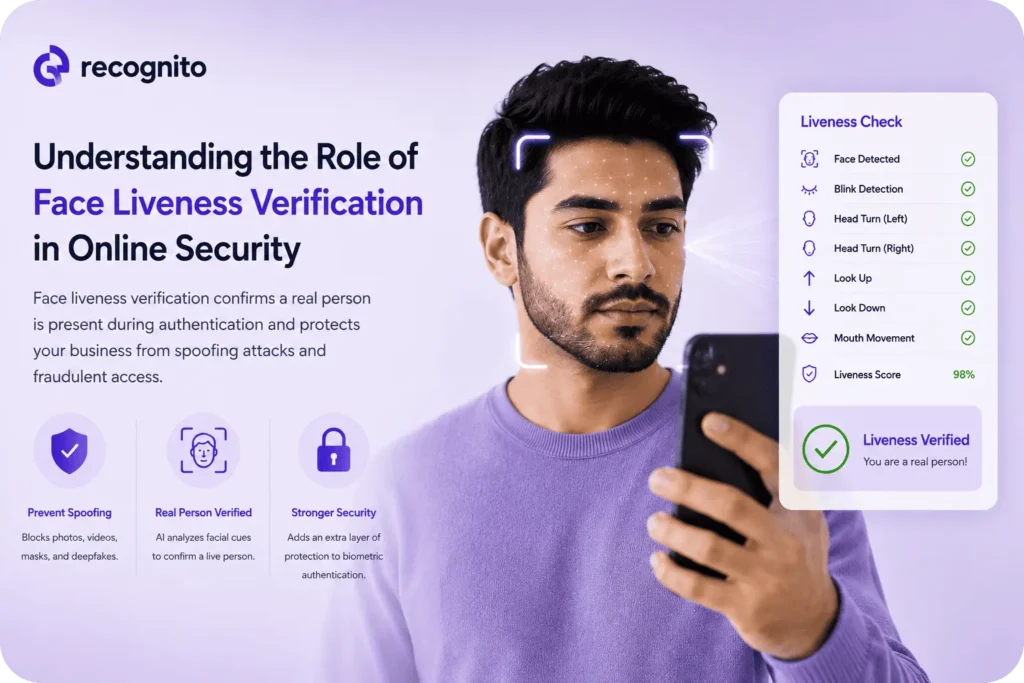
Online identity systems have a basic weakness: proving that a face matches an account does not necessarily prove that the person behind the camera is actually present. A photograph can resemble a legitimate user. A replayed video can show convincing facial movement. A deepfake can imitate someone else’s appearance. Even a highly accurate facial recognition […]
Exploring the Technology Behind the Face Recognition Liveness Detection
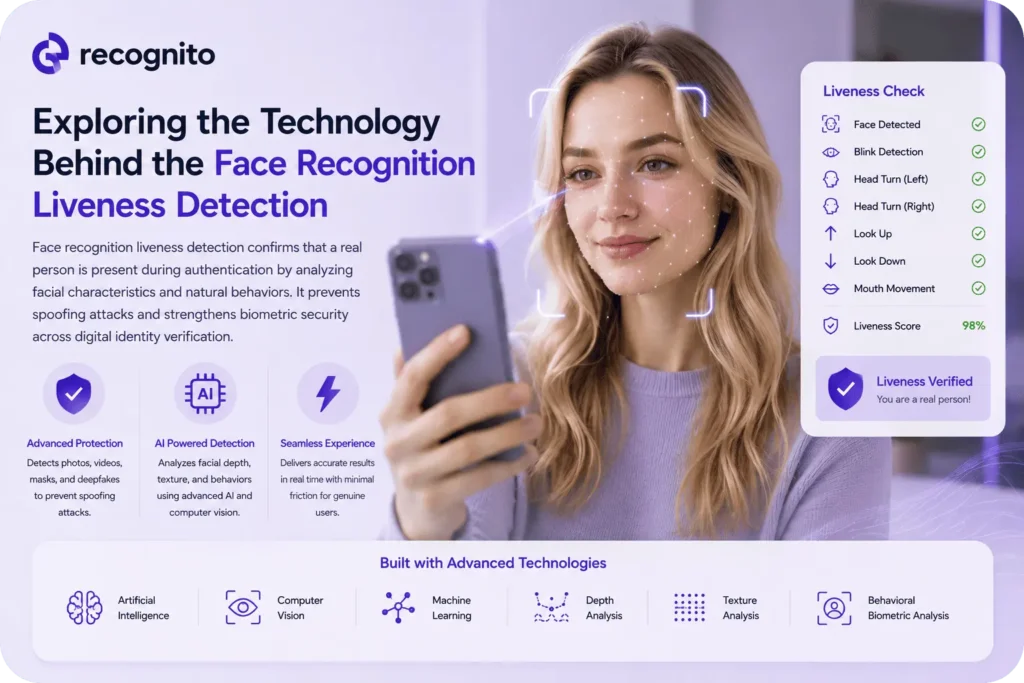
Face recognition has become a practical identity tool for digital onboarding, authentication, access control, and fraud prevention. But a face match alone does not answer one of the most important security questions: Is the person actually present, or is the system looking at a presentation of their face? That distinction is at the center of […]
Understanding Face Liveness Detection and Its Role in Fraud Prevention
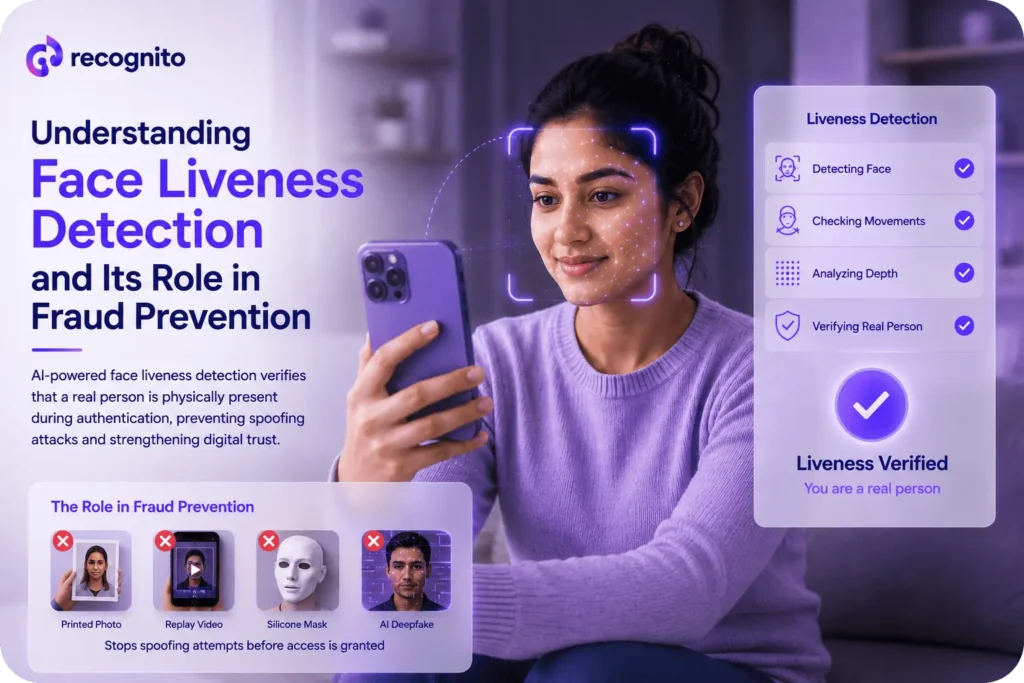
A face match can tell a verification system that two facial images are sufficiently similar. It cannot, by itself, prove that a real person is standing in front of the camera. That distinction has become increasingly important as fraud moves further into remote channels. A criminal does not always need to break a biometric algorithm. […]
Flash Based Face Liveness Detection and Its Role in Digital Security
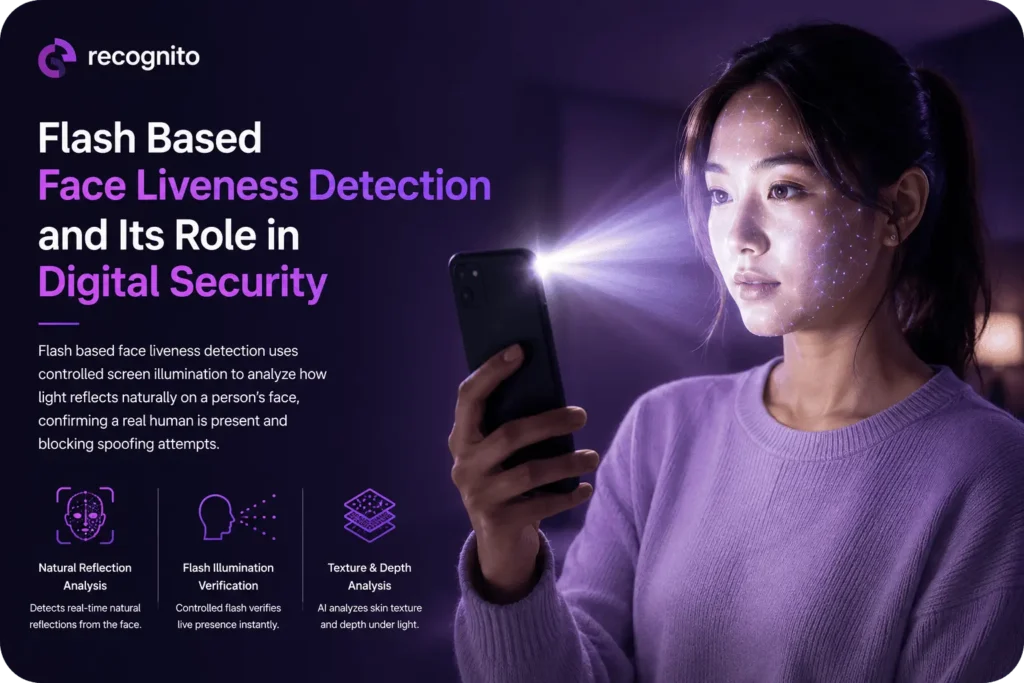
A face can be copied. A photograph can be downloaded, a video can be replayed, and increasingly realistic synthetic media can be generated without the target person ever participating in a verification session. That creates a fundamental weakness for digital identity systems: a facial match does not automatically prove that a real person is physically […]