
Digital verification has made identity checks faster, but it has also moved a critical security problem into environments that attackers can manipulate remotely.
A customer can submit a convincing selfie without being the legitimate account holder. A fraudster can present a photograph, replay a recorded video, use a mask, or manipulate the camera feed. As synthetic media becomes more capable, simply comparing two faces is no longer enough.
This is where a liveness detection SDK becomes important.
A software development kit allows organizations to embed liveness checks directly into mobile, web, or identity-verification workflows. Instead of treating liveness as a separate manual step, developers can make it part of the biometric decision process.
The real value, however, is not the SDK itself. It is the security layer it enables: establishing whether the biometric sample presented during verification likely comes from a live person rather than an artificial representation.
Why Facial Matching Alone Is Not Enough
Facial recognition answers a specific question: how similar is the captured face to a reference image?
That question matters, but it does not prove that the subject is physically present.
Imagine a remote onboarding flow in which a fraudster has obtained a legitimate customer’s portrait. A face-matching engine may correctly recognize the resemblance if that portrait is presented to the camera. From the matcher’s perspective, the face may be similar enough. From a fraud-prevention perspective, the transaction is clearly suspicious.
Liveness detection addresses the missing question:
Is this a genuine biometric presentation from a live subject?
NIST’s identity-proofing guidance recognizes the importance of live biometric capture for remote proofing and describes liveness detection as a control against spoofing and presentation attacks. Its current identity proofing and enrollment guidance provides the broader framework for establishing identity assurance in digital processes.
That distinction is why modern digital verification systems often pair facial comparison with liveness rather than relying on facial matching alone.
What a Liveness Detection SDK Does
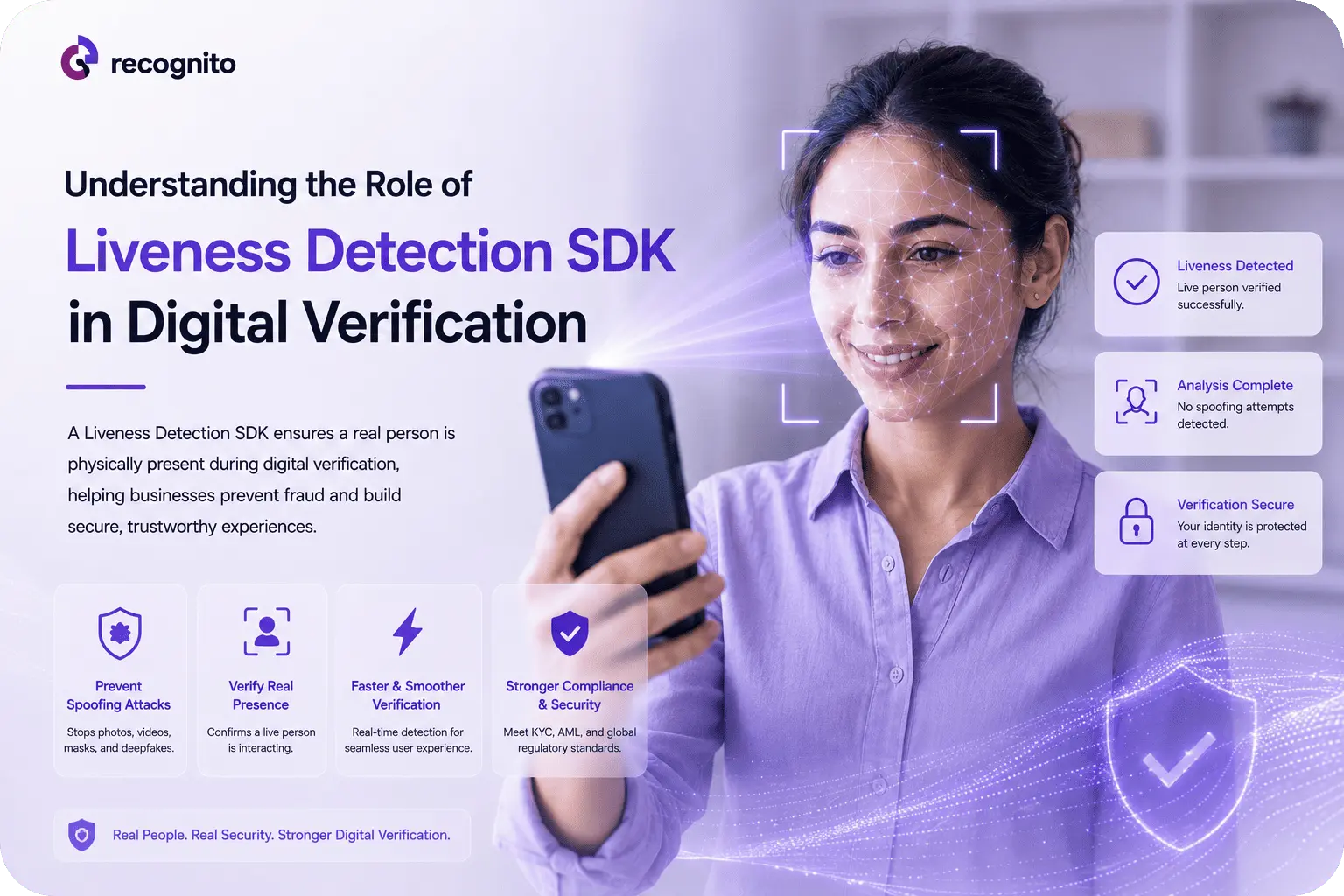
A liveness detection SDK packages the software required to perform liveness analysis into an application.
Instead of building the entire biometric capture and anti-spoofing pipeline internally, a development team can integrate prebuilt components that handle tasks such as camera access, face detection, capture guidance, signal analysis, and liveness assessment.
The SDK typically becomes part of a larger workflow:
- The application opens the camera.
- The user positions their face inside the capture area.
- The SDK detects the subject and evaluates the incoming frames.
- The liveness engine analyzes characteristics associated with genuine versus artificial presentation.
- The application receives a result.
- The result is combined with face matching, identity evidence, or risk rules.
The exact implementation differs between providers. Some approaches require explicit user interaction, while others perform passive analysis during normal capture.
The important architectural point is that liveness is a decision input, not the complete identity decision.
For organizations comparing implementation approaches, active versus passive liveness detection explains how these two capture models differ and what trade-offs they introduce.
How Liveness Fits Into Digital Verification
Digital verification usually combines several forms of evidence.
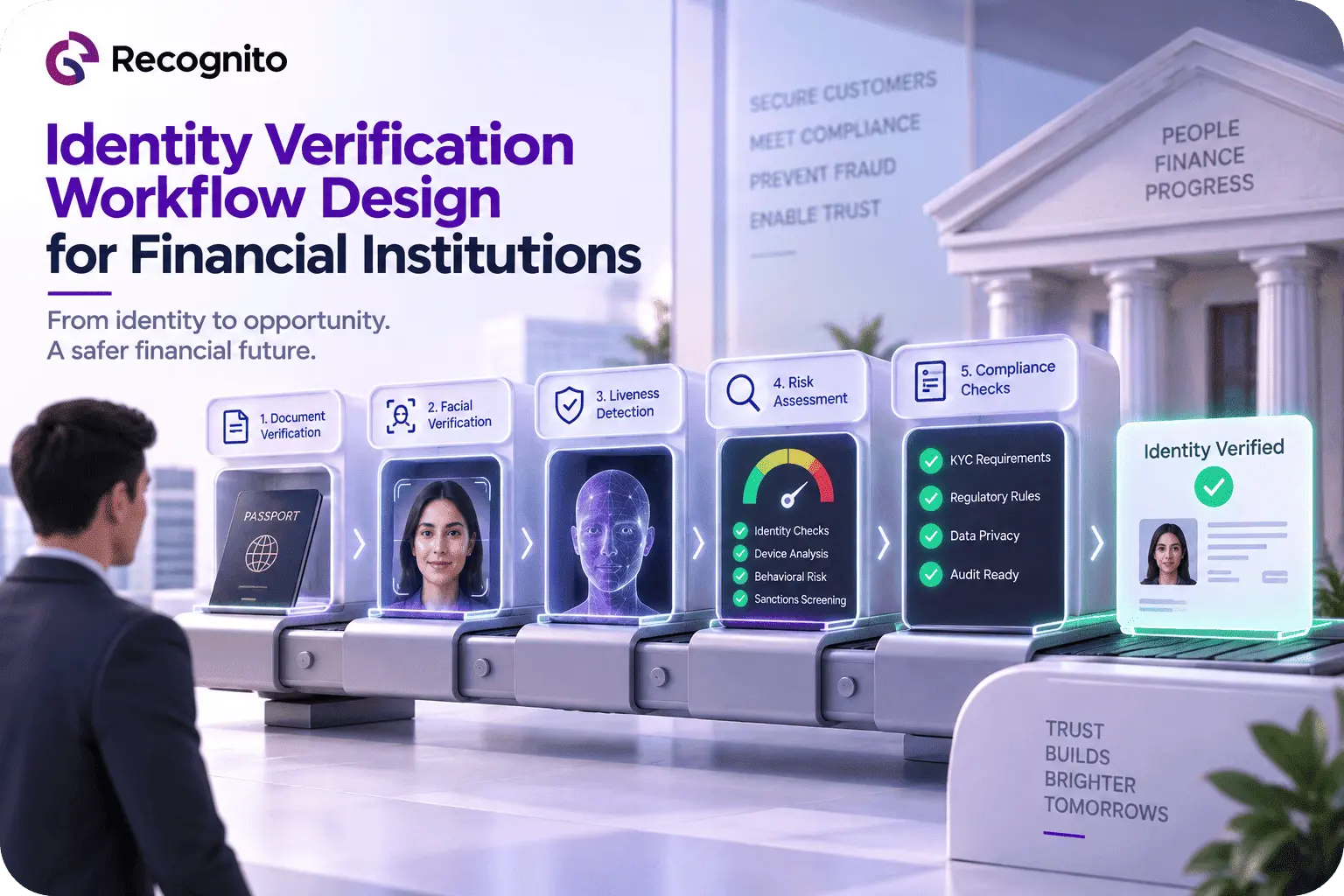
A user might first submit a government-issued identity document. The platform then captures a selfie and checks whether the face corresponds to the portrait associated with the document. Liveness provides evidence that the selfie comes from a live subject.
This produces a sequence that looks conceptually like:
Document → Face Match → Liveness → Risk Decision
Each stage answers a different question.
The document establishes identity information.
Face matching evaluates biometric similarity.
Liveness helps establish that the biometric capture is genuine.
Risk rules determine whether the combined evidence is sufficient for the business decision.
This separation is important because it prevents a common design mistake: assuming that a successful face match proves the whole transaction is trustworthy.
For a broader view of the technology, how face recognition and liveness detection work together explores the relationship between matching and live-subject detection.
Presentation Attacks Are the Main Security Concern
Liveness detection is primarily concerned with presentation attacks.
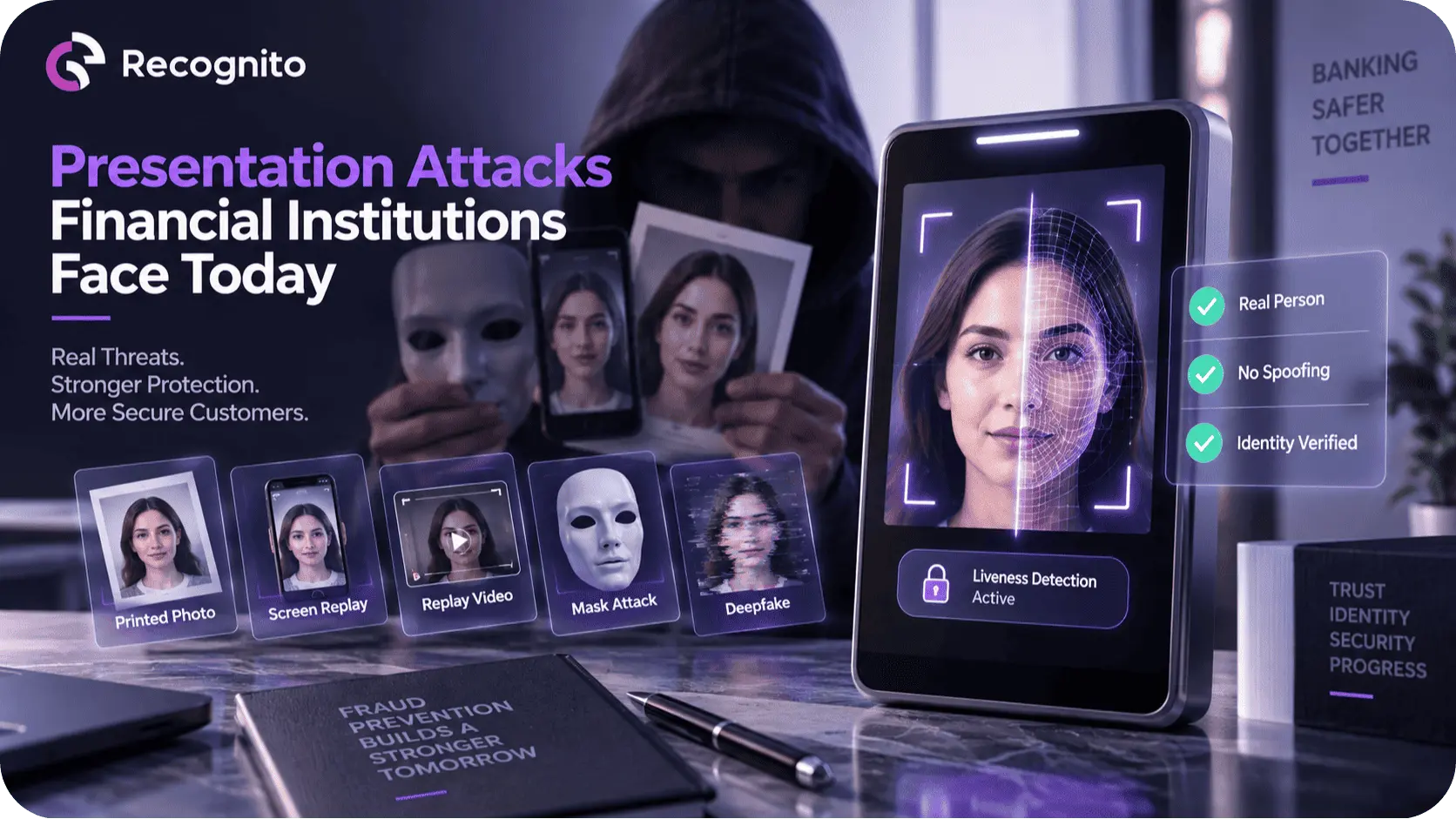
A presentation attack occurs when someone presents an artifact or manipulated representation to a biometric capture system with the intention of impersonating another person.
Common examples include:
- printed photographs
- images displayed on another screen
- replayed videos
- masks or other physical representations
- manipulated facial media
- sophisticated camera-level presentations
ISO/IEC 30107 provides the main international framework for biometric presentation attack detection. The ISO/IEC 30107-1 framework establishes terminology and concepts for specifying, characterizing, and evaluating presentation attack detection methods, while the ISO/IEC 30107-3 testing and reporting standard defines principles for assessing PAD performance and reporting test results.
These standards are useful because they reinforce an important point: anti-spoofing should be evaluated as a distinct security capability, not assumed from general biometric accuracy.
Why an SDK Matters to Developers
A liveness algorithm is only useful when it works reliably inside the application where verification actually happens.
That creates several engineering challenges.
Camera integration
The SDK must interact reliably with device cameras and application permissions. Mobile operating systems, camera hardware, and environmental conditions can all affect capture behavior.
Real-time processing
Liveness generally operates while frames are being captured. Excessive latency can make the user experience feel slow or uncertain.
Capture guidance
Users need to know how to position themselves. Poor framing, extreme angles, motion blur, and inadequate lighting can cause legitimate attempts to fail.
Platform support
Fintech and identity applications often need to support multiple mobile operating systems and device generations. The more fragmented the device landscape, the more important SDK consistency becomes.
Result handling
The application needs more than a simple pass/fail response. Developers should understand what happens when a capture is inconclusive, when image quality is insufficient, or when the user repeatedly fails verification.
For teams assessing biometric components, a face liveness SDK can provide an implementation layer that developers can evaluate against these practical requirements.
Passive and Active Liveness: Choosing the Right Experience
Not every verification flow should ask the user to perform the same actions.
Passive liveness attempts to detect whether a subject is live without requiring a deliberate challenge. This can create a smoother customer experience because the user may simply look toward the camera.
Active liveness introduces an explicit interaction, such as turning the head or following another instruction. The added challenge can provide another signal, but it also increases user interaction.
Neither approach is universally better.
A high-volume consumer onboarding journey may prioritize minimal friction. A higher-risk workflow may accept additional interaction in exchange for stronger controls or layered verification.
The decision should therefore consider fraud exposure, customer expectations, device conditions, accessibility, and the consequences of verification failure.
Liveness Detection Is Not Deepfake Detection
The terms are often mixed together, but they describe different problems.
Liveness detection primarily addresses whether the biometric presentation is genuine at the point of capture.
Deepfake detection focuses on identifying synthetic or manipulated media.
There can be overlap, particularly when attackers use generated or manipulated facial content during a verification attempt. But a liveness engine should not automatically be marketed as a universal deepfake detector.
This distinction matters in system design.
A business facing sophisticated synthetic-media attacks may need a combination of liveness, media-integrity checks, device and application security, and additional fraud controls.
The internal discussion of deepfake attack prevention strategies provides additional context on why biometric security increasingly needs multiple defensive layers.
Where Liveness Detection Creates Business Value
The most obvious value is fraud resistance, but that is only part of the business case.
More trustworthy remote onboarding
When customers verify themselves without visiting a physical location, liveness helps replicate part of the assurance traditionally provided by supervised, in-person interaction.
Reduced dependence on manual checks
Automated liveness can screen large numbers of verification attempts without requiring an employee to inspect every capture.
Better scalability
A software-based control can be deployed across a large customer population without distributing specialized biometric hardware.
Stronger identity assurance
Liveness adds evidence beyond what a static photograph or face comparison can provide.
Improved workflow consistency
The same automated checks can be applied across thousands of applications, reducing the variability associated with fully manual processes.
FIDO’s biometric certification requirements illustrate how biometric performance and presentation-attack detection can be assessed within a formal certification framework.
What a Liveness SDK Does Not Solve
A common mistake is expecting one component to address every identity threat.
A liveness SDK does not automatically determine whether an identity document is genuine. It does not prove that the applicant owns the identity being presented. It does not prevent stolen credentials, account takeover after onboarding, or every form of digital injection.
That is why liveness should sit inside a layered architecture.
A stronger system may combine:
- document recognition and authenticity analysis
- facial matching
- facial liveness
- device and application signals
- fraud rules
- behavioral indicators
- manual escalation
- ongoing account monitoring
Each control should have a defined responsibility.
If a suspicious application reaches the liveness stage, the system should still have other controls available to challenge or reject the transaction.
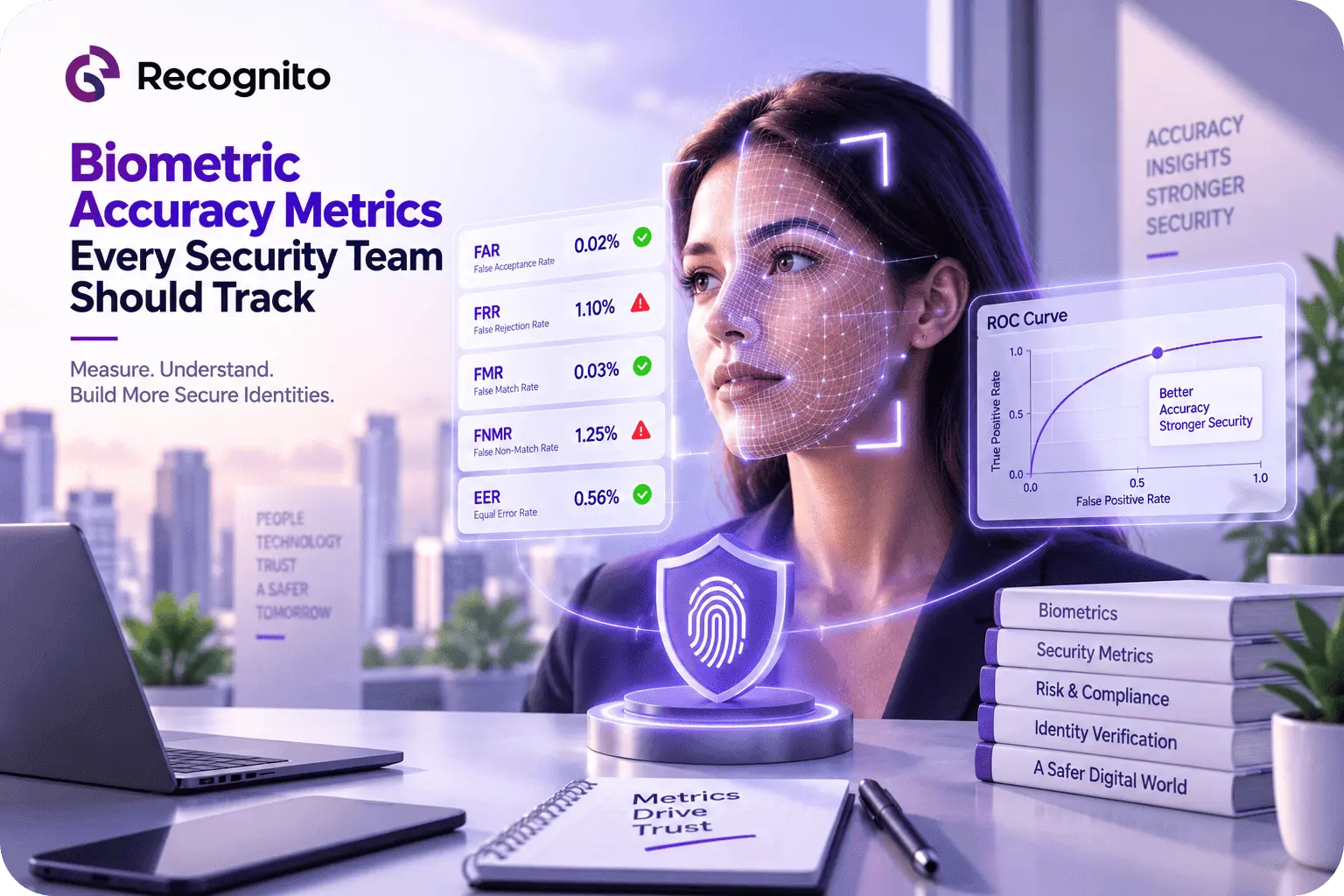
False Accepts and False Rejects Still Matter
Security teams sometimes focus entirely on preventing fraudulent acceptance.
That is understandable, but legitimate-user failure can become a significant operational problem.
A false rejection may happen because a user has poor lighting, an unsupported device, excessive motion, or difficulty following the capture instructions. Repeated failures can increase abandonment, support costs, and manual-review volume.
The goal is therefore not simply to maximize liveness sensitivity.
The system needs an appropriate balance between attack resistance and usability.
That balance should be measured with real data. Teams should monitor unsuccessful attempts, retry rates, manual escalations, confirmed fraud, and legitimate-user completion rates rather than relying only on a vendor’s headline performance claim.
Testing a Liveness SDK Before Production
A successful demo is not enough.
A serious technical evaluation should test the SDK in conditions that resemble the actual deployment.
Test real devices
Use the smartphones, cameras, operating systems, and browsers your customers are likely to use.
Test environmental variation
Evaluate different lighting conditions, backgrounds, camera angles, and motion levels.
Test attack scenarios
Security testing should include the presentation attacks relevant to the application and threat model.
Measure user friction
Record how often users need to retry and how long successful verification takes.
Examine failure states
Determine what the SDK returns when liveness is inconclusive and how the application should respond.
Validate version changes
A model or SDK update can alter performance. Changes should go through regression testing rather than being deployed blindly.
For practical demonstrations and early evaluation, the face biometric playground can provide a useful starting point before deeper application integration.
Privacy and Data Protection Considerations
Liveness processing involves biometric information, which makes data governance part of the technical architecture.
Organizations should establish what data is captured, whether biometric templates or intermediate data are retained, where processing occurs, who can access results, and when information is deleted.
Data minimization is also relevant. The most secure system is not necessarily the one that stores the greatest quantity of biometric information.
Developers and compliance teams should understand the complete data lifecycle rather than focusing solely on the liveness algorithm.
NIST’s current digital identity guidance is useful here because it treats identity proofing as a broader process involving evidence, enrollment, verification, and assurance rather than as an isolated biometric operation.
How to Evaluate a Liveness Detection SDK
When comparing providers, technical teams should look beyond the existence of a liveness feature.
Consider:
Detection capability: What presentation attacks are covered, and how has the capability been tested?
Performance: How does the system behave under different capture conditions?
Latency: Can it deliver results quickly enough for the intended customer journey?
Platform support: Does it work across the devices and application environments you support?
Integration effort: How difficult is the SDK to embed and maintain?
Failure handling: Can the application distinguish poor capture quality from a security-related liveness failure?
Privacy architecture: What data is processed and retained?
Monitoring: Can the business measure verification outcomes after deployment?
Independent assurance: Are relevant performance and PAD claims supported by recognized testing or certification?
The last point deserves particular attention. Independent assessment does not replace your own testing, but it gives procurement teams stronger evidence than marketing claims alone.
Where Liveness Detection Fits in the Future of Digital Identity
Digital verification is becoming increasingly automated, but attackers are becoming more capable at the same time.
That creates a shift from simple biometric matching toward multi-layer identity assurance.
Liveness is an important part of that model because it helps establish that the biometric capture represents a genuine interaction with a live subject.
But its role is complementary.
The most resilient systems combine live biometric capture with trusted identity evidence, document validation, fraud intelligence, secure application architecture, and risk-based decisioning.
For developers implementing these workflows, the Recognito GitHub repository can complement SDK documentation and testing during technical evaluation.
Conclusion
A liveness detection SDK is not simply another biometric feature. It provides the software layer needed to integrate live-subject detection into digital verification workflows where customers and attackers interact remotely.
Its role is especially important because facial matching alone cannot establish that the person presenting the biometric is physically present. Liveness adds a distinct security signal against presentation attacks and strengthens the overall identity decision.
The strongest implementation is not based on liveness in isolation. It combines document evidence, face matching, liveness, fraud controls, privacy governance, and appropriate human review.
For organizations building secure biometric verification workflows, Recognito provides technologies that can support practical liveness and identity-verification implementations.
Frequently Asked Questions
What is a liveness detection SDK?
A liveness detection SDK is a software component that developers integrate into an application to assess whether a captured biometric sample appears to come from a live person rather than a presentation attack.
Is liveness detection the same as facial recognition?
No. Facial recognition compares biometric characteristics to determine similarity or identity. Liveness detection assesses whether the biometric presentation appears genuine and live.
Is passive or active liveness better?
Neither is universally better. Passive approaches can reduce friction, while active approaches can introduce additional challenges. The right choice depends on the threat model, user experience, and verification workflow.
Can liveness detection stop deepfakes?
Liveness can contribute to defense against manipulated biometric presentations, but it should not be treated as a complete deepfake-defense system. Sophisticated environments may require additional media, device, and fraud controls.
Should businesses test a liveness SDK before deployment?
Yes. Testing should cover real devices, capture conditions, relevant attack scenarios, latency, retry behavior, failure states, privacy requirements, and the user population expected in production.