
A biometric system can recognize the right face and still authenticate the wrong person.
That is the central weakness liveness face detection is designed to address. Facial recognition determines whether a captured face resembles a trusted biometric reference. Liveness detection asks a different question: Is the face being presented by a real person who is actually present at the point of capture?
Without this additional check, an attacker may try to authenticate with a photograph, recorded video, manipulated media, mask, or other presentation attack. The face matcher may perform exactly as designed while the overall authentication process is compromised.
Liveness therefore acts as a security layer around facial recognition rather than replacing it. In remote authentication, account recovery, digital onboarding, and high-risk transactions, that distinction can determine whether biometric verification is merely convenient or genuinely resistant to common spoofing attempts.
Why Facial Recognition Alone Is Not Enough
Facial recognition is fundamentally a matching problem.
A system receives a facial sample, converts it into measurable features, and compares those features with a reference. If the similarity exceeds a chosen threshold, the system may return a match.
The problem is that biometric characteristics are not secrets. NIST’s current Digital Identity Guidelines explicitly recognize that facial images and other biometric characteristics can be obtained and potentially used in attacks.
A photograph of a legitimate user may therefore resemble the enrolled face closely enough to challenge a poorly protected authentication workflow. Recorded video can introduce another attack path, especially when the system is designed for remote access.
This leads to a critical distinction:
Face recognition establishes similarity. Liveness establishes presence.
A secure biometric authentication architecture needs both when the threat model includes presentation attacks.
What Liveness Face Detection Actually Does
Liveness face detection, often discussed as a form of Presentation Attack Detection (PAD), analyzes the biometric input to determine whether it appears to originate from a genuine live subject rather than an artifact or manipulated presentation.
NIST defines PAD as the automated determination of a presentation attack and describes liveness techniques as methods that can analyze anatomical characteristics or voluntary and involuntary reactions to determine whether a biometric sample is being captured from a living subject at the point of capture. The definition appears in the current NIST Digital Identity Guidelines glossary.
In practical terms, liveness may examine characteristics such as:
- natural facial movement
- subtle changes across frames
- three-dimensional facial structure
- texture and depth cues
- reflections and illumination behavior
- eye or other involuntary responses
- inconsistencies associated with displayed or replayed media
The exact methods vary between systems. The objective remains the same: make it harder for an attacker to substitute an artificial representation for a live biometric subject.
The Main Attacks Liveness Helps Address
The threat landscape is broader than simply holding up a printed photograph.
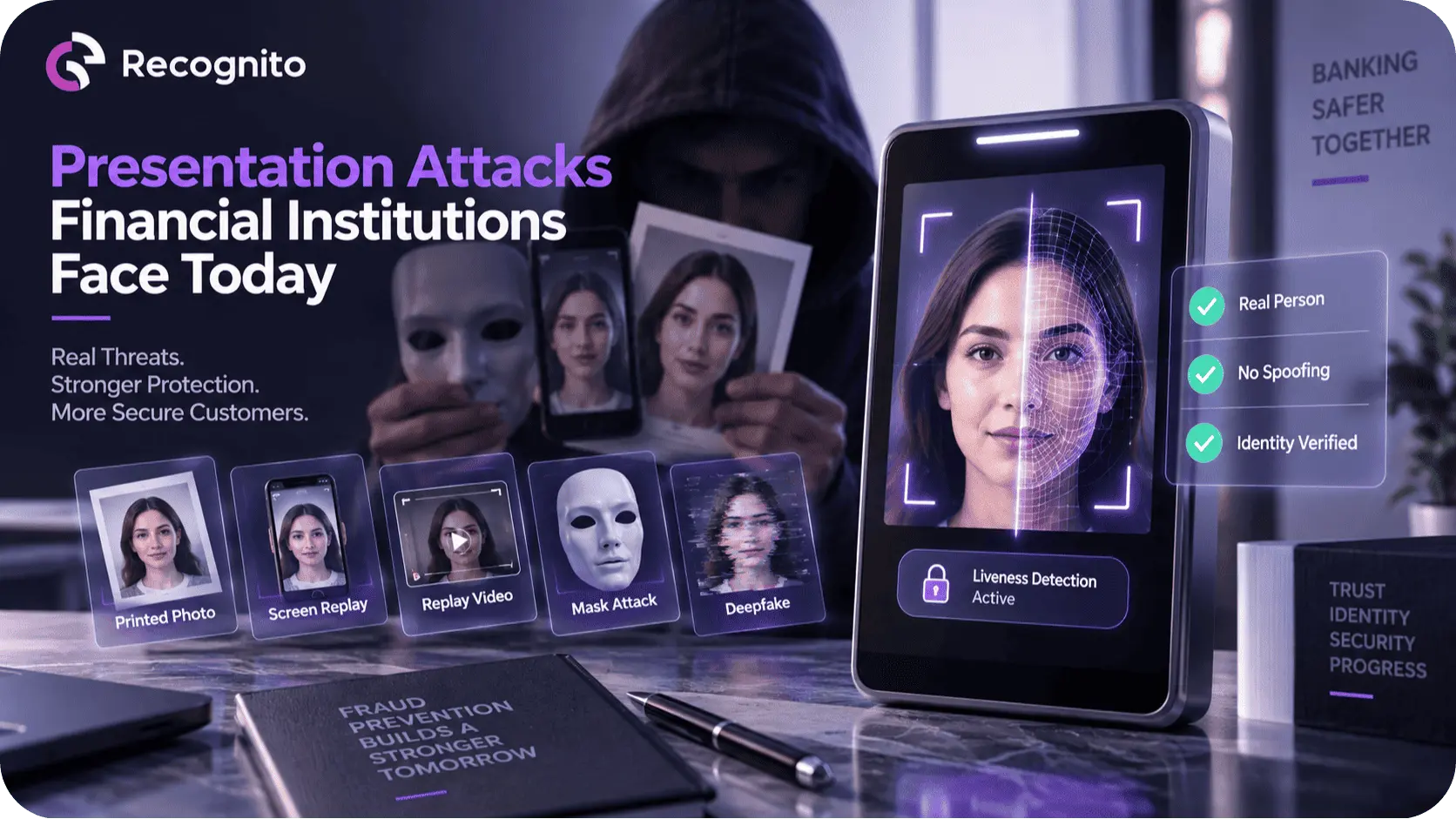
Printed and Digital Photos
A basic spoof may use a printed photograph or an image displayed on another screen. A liveness mechanism can examine visual properties and behavior that distinguish a real face from a flat representation.
Replay Attacks
An attacker may present recorded video instead of performing a genuine authentication session. Video-based attacks are particularly relevant to remote systems because cameras are inherently two-dimensional capture devices.
Masks and Artificial Representations
More sophisticated attacks may attempt to reproduce facial appearance with masks or other physical artifacts. Stronger PAD systems are designed to identify characteristics inconsistent with a genuine live face.
Deepfake and Synthetic Media
Generative AI introduces another challenge. A manipulated video can potentially create convincing facial movements without the real person participating in the session.
This does not mean conventional liveness is automatically defeated. It means organizations must understand which attack classes their chosen system has actually been evaluated against rather than assuming that “liveness enabled” covers every modern threat.
The broader anti-spoofing problem is explored in deep learning for face anti-spoofing.
Passive vs Active Liveness Detection
Liveness systems are commonly divided into passive and active approaches.
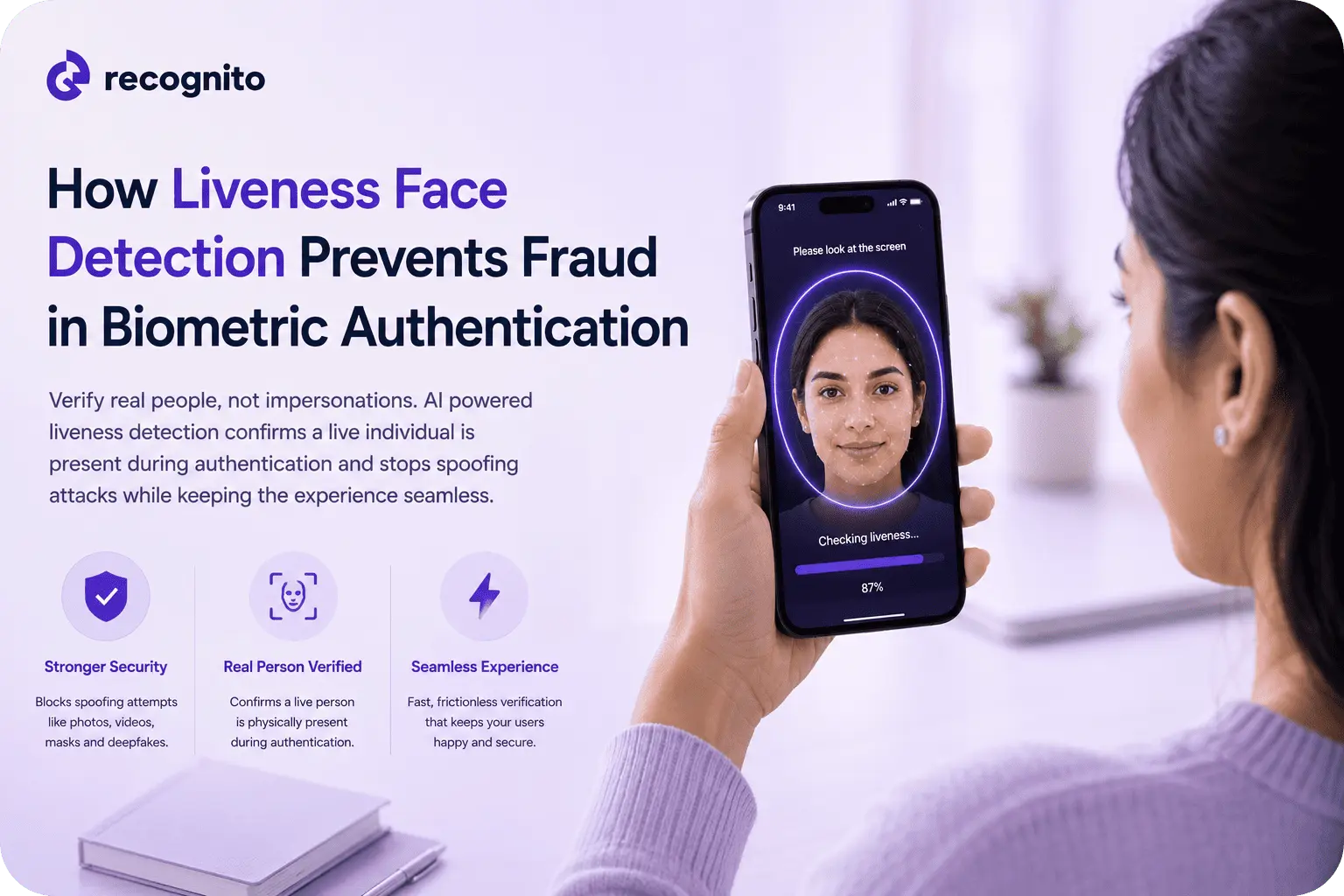
Passive liveness attempts to determine whether the subject is genuine without requiring a deliberate action. The customer may simply look at the camera while the system analyzes the captured data.
Active liveness asks the user to perform an action, such as moving their head or following an on-screen instruction.
The distinction affects both security and usability.
Passive methods can provide a smoother customer experience because the user does not have to complete an explicit challenge. Active methods can introduce additional signals, but every extra instruction creates another opportunity for confusion, failure, or abandonment.
There is no universal winner. The appropriate design depends on the attack model, risk level, device environment, and customer journey.
A detailed comparison of the two approaches is available in active vs passive liveness detection.
How Liveness Fits Into Biometric Authentication
A robust authentication flow typically separates several decisions.
First, the system captures the user’s face.
Second, liveness determines whether the input appears to represent a live subject.
Third, facial recognition compares the captured biometric with the enrolled reference.
Finally, the authentication system evaluates the result within a broader security policy.
This separation is important because a successful match should not automatically mean successful authentication.
Consider an account recovery scenario. An attacker may obtain a victim’s public photograph and attempt to use it during verification. Facial matching may produce a strong similarity score. A properly functioning liveness layer should challenge or reject the presentation before the result reaches the final authentication decision.
The combination therefore looks like:
Live person → liveness passes → face matches → policy permits authentication
rather than simply:
Face matches → authentication succeeds
Liveness Is Not the Same as Identity Verification
Another common mistake is treating liveness as proof of identity.
A liveness result can indicate that a live subject is present, but it does not prove that the subject is the person associated with the account.
Suppose an attacker presents their own real face. Liveness may correctly determine that a genuine human is present, but face comparison should then determine that the person does not match the enrolled identity.
This is why the two technologies complement each other.
| Security layer | Main question | Primary purpose |
| Face detection | Is a face present? | Locate the biometric subject |
| Liveness detection | Is the presented face genuinely live? | Resist presentation attacks |
| Face recognition | Does the face match the reference? | Establish biometric identity |
| Authentication policy | Should access be granted? | Apply risk and access rules |
Each layer addresses a different failure mode.
Why Remote Authentication Needs Stronger Controls
Physical environments often provide additional context. A controlled facility may have dedicated hardware, supervised enrollment, restricted networks, and trained staff.
Remote authentication does not have those advantages.
The camera may be a consumer device. The user may be somewhere outside the organization’s control. The network and endpoint introduce additional attack surfaces.
NIST’s current requirements for remote biometric identity proofing recognize this risk. The remote identity-proofing requirements require presentation attack detection when biometric characteristics are collected and compared remotely, alongside controls intended to increase confidence that media is being produced by a genuine sensor.
That is a useful architectural principle even outside formal NIST compliance scenarios: the farther the capture process moves away from a controlled environment, the more important it becomes to validate the authenticity of the input.
Liveness and Deepfake Attacks
Deepfakes change the problem because modern attackers can manipulate imagery rather than simply present a static artifact.
A deepfake may attempt to make one person’s face appear as another person’s face within a video stream. From an authentication perspective, the system must distinguish genuine biometric behavior from synthetic or replayed content.
This is why a strong liveness implementation should not be evaluated purely through marketing language.
Ask:
- Which attack types were tested?
- Were replay and digital-display attacks included?
- How was deepfake resistance evaluated?
- Was testing performed under realistic mobile conditions?
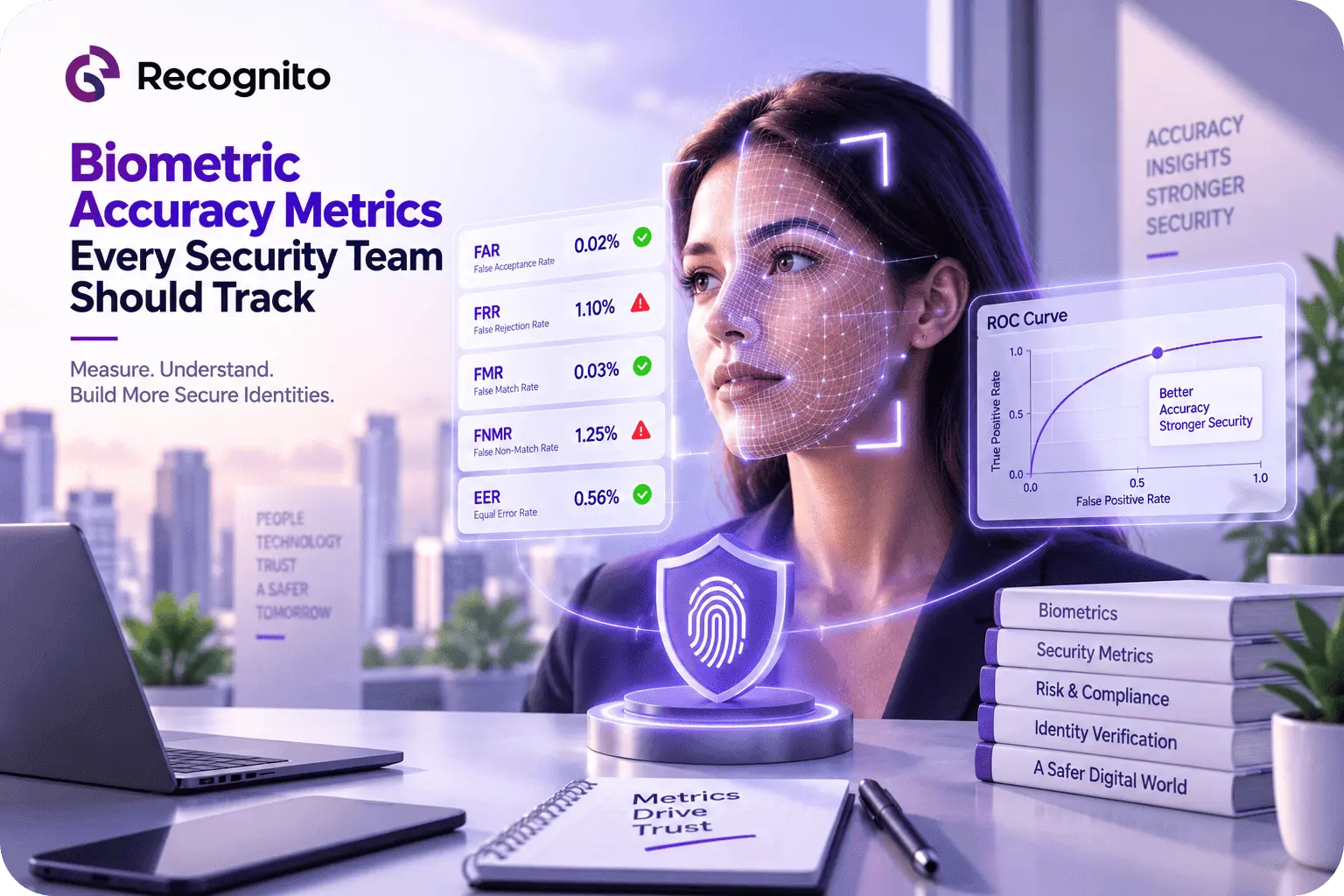
- What are the false-reject and false-accept trade-offs?
- How frequently does legitimate capture fail?
The latest ISO/IEC 30107-1:2023 framework establishes terminology and a framework for biometric presentation attack detection. Its companion ISO/IEC 30107-3:2023 testing and reporting standard provides principles for evaluating PAD mechanisms and reporting results.
These standards are useful because they help organizations distinguish between an advertised feature and measurable presentation-attack resistance.
Liveness Must Balance Security and User Experience
A liveness system can become counterproductive when legitimate users repeatedly fail verification.
Excessively strict detection may reject genuine customers because of poor lighting, camera limitations, motion, facial positioning, or environmental conditions.
The result is a familiar security trade-off: stronger controls may reduce attack acceptance but increase false rejects.
The answer is not to weaken liveness blindly. It is to design the capture experience around the actual conditions users face.
Effective implementations typically provide:
- clear camera guidance
- feedback when positioning is poor
- sensible retry handling
- support for common mobile environments
- secure escalation for exceptional cases
- monitoring of failed verification attempts
A legitimate customer should understand what went wrong and have a safe path forward. A suspicious session should not simply receive unlimited retries until one succeeds.
What Businesses Should Evaluate in a Liveness Solution
A successful product evaluation should cover more than whether the demo works.
Attack resistance
Determine which presentation attacks the system has been tested against and under what conditions.
False rejection behavior
Measure how often genuine users are incorrectly challenged or rejected.
Device compatibility
Test the cameras, operating systems, browsers, and hardware configurations customers actually use.
Processing and latency
Authentication happens in real time. Delays can damage user experience, particularly when liveness analysis occurs on constrained mobile hardware or requires network communication.
Integration
The liveness result should integrate cleanly into the broader authentication decision rather than becoming an isolated score that developers struggle to interpret.
For teams integrating biometric capabilities directly into applications, a face liveness SDK can provide the liveness layer as part of the application stack.
A practical evaluation can also benefit from hands-on testing through a face biometric playground before implementation decisions are finalized.
Independent Testing Matters
A vendor’s own performance claims should not be the only evidence behind a biometric security decision.
FIDO’s Biometric Certification Requirements include requirements for biometric performance and Presentation Attack Detection. Independent assessment gives procurement and security teams a more meaningful basis for comparing vendors.
The value of testing is not limited to identifying the strongest model. It can reveal trade-offs between security, usability, demographic performance, and attack resistance.
That is particularly important when authentication protects high-value accounts or sensitive actions.
Liveness Is One Layer in a Larger Security Architecture
The strongest authentication systems do not assume that one biometric control will stop every fraud attempt.
Liveness should operate alongside device security, secure communication, rate limits, account monitoring, fraud detection, strong enrollment processes, recovery controls, and appropriate authentication factors.
This matters because some threats occur outside the biometric capture stage.
An attacker might compromise an endpoint, manipulate an application, exploit an enrollment process, steal account credentials, or target account recovery. ISO’s PAD framework specifically focuses on attacks occurring at the biometric capture stage rather than presenting itself as a complete system-level security assessment.
That boundary is worth remembering: successful liveness detection is necessary in many biometric scenarios, but it is not a complete fraud-prevention strategy.
Implementation Considerations for Development Teams
Engineering teams should treat liveness as a production security component rather than a visual feature.
During implementation, test:
- successful live captures
- low-light conditions
- different camera qualities
- movement and pose variation
- replay attempts
- displayed images and videos
- network interruptions
- repeated failures
- timeout behavior
- fallback authentication
- logging and monitoring
Also define what the application should do with each outcome.
A liveness failure might mean a suspected presentation attack, poor capture quality, unsupported device behavior, or an inconclusive result. Those situations should not automatically be treated as identical.
For developers evaluating implementation resources, the Recognito GitHub repository can complement technical testing and integration work.
Measuring Whether Liveness Actually Reduces Fraud
Deployment does not end when the feature goes live.
Security teams should monitor:
Liveness pass rate: How frequently do legitimate users complete capture successfully?
False-reject rate: How often are genuine users incorrectly blocked?
Attack detection rate: How frequently are known presentation attacks stopped?
Retry rate: How often do users repeat capture attempts?
Escalation rate: How many cases require alternative verification?
Post-authentication fraud: Do suspicious accounts still appear after successful biometric authentication?
These measurements help determine whether liveness is strengthening the actual security outcome or simply adding another step to the customer journey.
Conclusion
Liveness face detection prevents an important class of biometric fraud by addressing a weakness that face matching alone cannot solve: the possibility that an attacker is presenting an artificial or manipulated representation of a legitimate user.
The strongest approach separates three questions: Is there a face? Is the face genuinely live? Does that face belong to the claimed identity?
That layered design helps defend against photographs, replay attacks, masks, manipulated media, and evolving presentation threats while preserving a practical authentication experience.
For organizations building secure biometric authentication workflows, Recognito provides technologies that can support facial verification and liveness as part of a broader identity-security architecture.
Frequently Asked Questions
Does liveness detection guarantee protection against deepfakes?
No. Liveness reduces the risk of presentation attacks but should not be treated as an absolute guarantee. Organizations should evaluate the specific attack types, testing methods, and operational conditions relevant to their threat model.
Is liveness detection required for every facial recognition system?
Not every application has the same risk profile, but liveness becomes particularly important when facial biometrics are used for remote authentication, identity proofing, or other unattended workflows where presentation attacks are possible.
What is the difference between face recognition and liveness detection?
Face recognition determines whether a facial sample matches a reference. Liveness detection determines whether the presented biometric appears to originate from a genuine live subject.
Can liveness detection create authentication friction?
Yes. Poor capture conditions or overly strict controls can cause legitimate users to fail. Effective implementations balance attack resistance with capture guidance, retry handling, and secure fallback options.
What should businesses look for in a liveness solution?
Evaluate presentation-attack resistance, false-reject behavior, device compatibility, latency, independent testing, integration quality, monitoring, and performance under the real conditions in which customers will authenticate.