
Identity verification has traditionally depended on organizations collecting personal information, examining identity documents, and repeatedly asking customers to prove who they are.
Digital identity wallets are beginning to change that model.
Instead of presenting the same documents and personal information to every service provider, a person can hold verified digital credentials in a wallet and present the information required for a particular transaction. Depending on the implementation, the verifier can validate the credential and its issuer without necessarily repeating the entire identity collection process from the beginning.
This shift connects several technologies that are becoming increasingly important in digital identity: digital identity wallets, decentralized identity, verifiable credentials, biometric verification, and privacy-preserving identity systems.
The European Digital Identity Wallet initiative is one prominent example. The European Commission describes wallets that can allow people to identify themselves with public and private services, store and present digital documents, and share only the information required for a particular interaction. (European Commission)
For businesses, however, the important question is not simply whether digital identity wallets are emerging.
It is how these technologies will change identity verification, onboarding, authentication, fraud prevention, and the role of traditional identity verification systems.
What Is a Digital Identity Wallet?
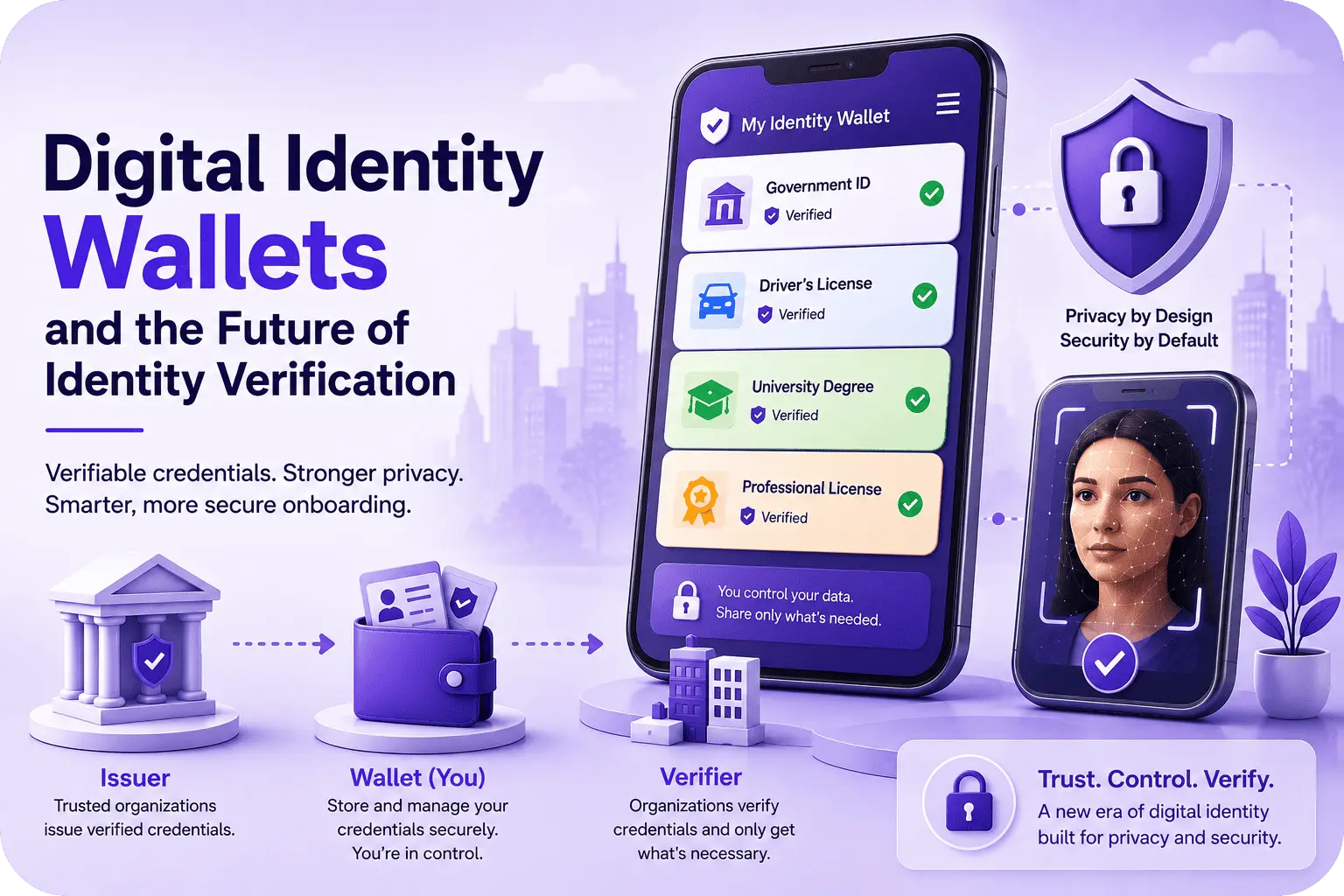
A digital identity wallet is a digital environment that allows an individual to store, manage, and present identity information and digital credentials.
Instead of repeatedly submitting a passport image, driver’s license, address, or other personal information to different organizations, a wallet can act as a reusable identity layer.
The information stored in a wallet may include credentials issued by trusted organizations, such as:
- Government identity credentials
- Driving credentials
- Education qualifications
- Professional certifications
- Membership credentials
- Other verified attributes
The wallet itself does not automatically make every credential trustworthy.
Trust depends on the issuer, the credential format, cryptographic protections, verification process, and the rules governing the ecosystem.
This is why digital identity wallets should be understood as part of a broader identity architecture rather than simply as another mobile application.
How Digital Identity Wallets Change Identity Verification
Traditional identity verification often requires the user to submit information directly to every organization that wants to establish their identity.
A typical process may involve uploading an identity document, capturing a selfie, completing biometric verification, and providing additional information.
That model can work effectively, but it also creates repeated verification events and requires organizations to process sensitive personal information themselves.
Digital identity wallets introduce a different possibility.
The wallet can hold a credential that was previously issued by a trusted source. The individual can then present that credential to another organization, which verifies the credential and its associated cryptographic evidence.
Instead of repeatedly asking:
“Can you prove who you are from the beginning?”
a system can increasingly ask:
“Can you present a trusted credential that proves the attribute we need?”
That distinction could significantly change the design of digital onboarding.
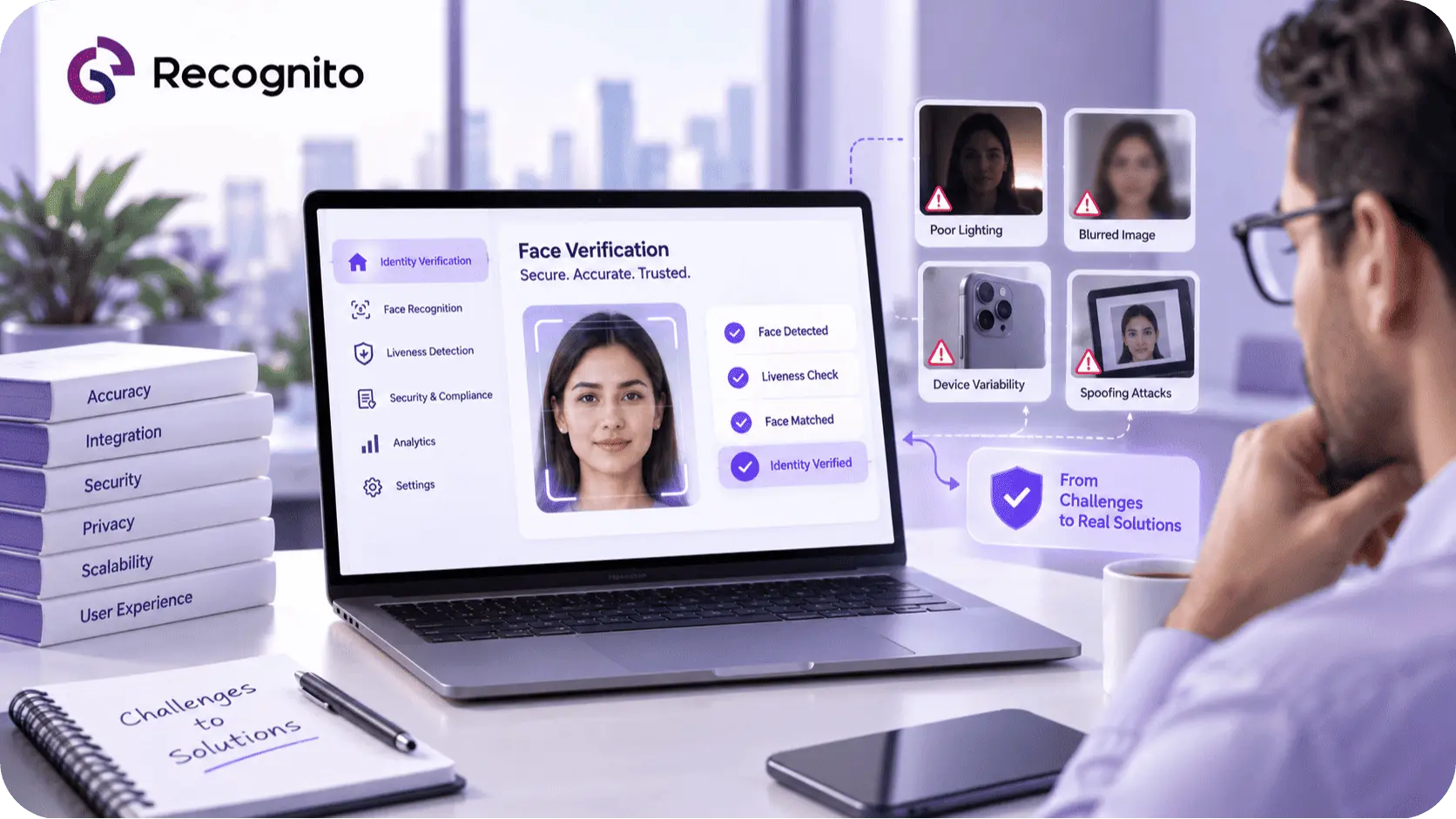
Organizations exploring these changes should also understand the broader digital identity verification challenges and solutions, because wallet-based identity does not eliminate the need for strong trust, fraud detection, and verification controls.
What Are Verifiable Credentials?
Verifiable credentials are structured digital credentials that can be cryptographically protected and machine-verifiable.
The W3C’s Verifiable Credentials Data Model 2.0 became a W3C Recommendation in May 2025. The specification defines a model for expressing credentials in a way that supports cryptographic security, privacy, and machine verification. (W3C)
A verifiable credential can represent information such as a qualification, government-issued document, or another claim made by an issuer.
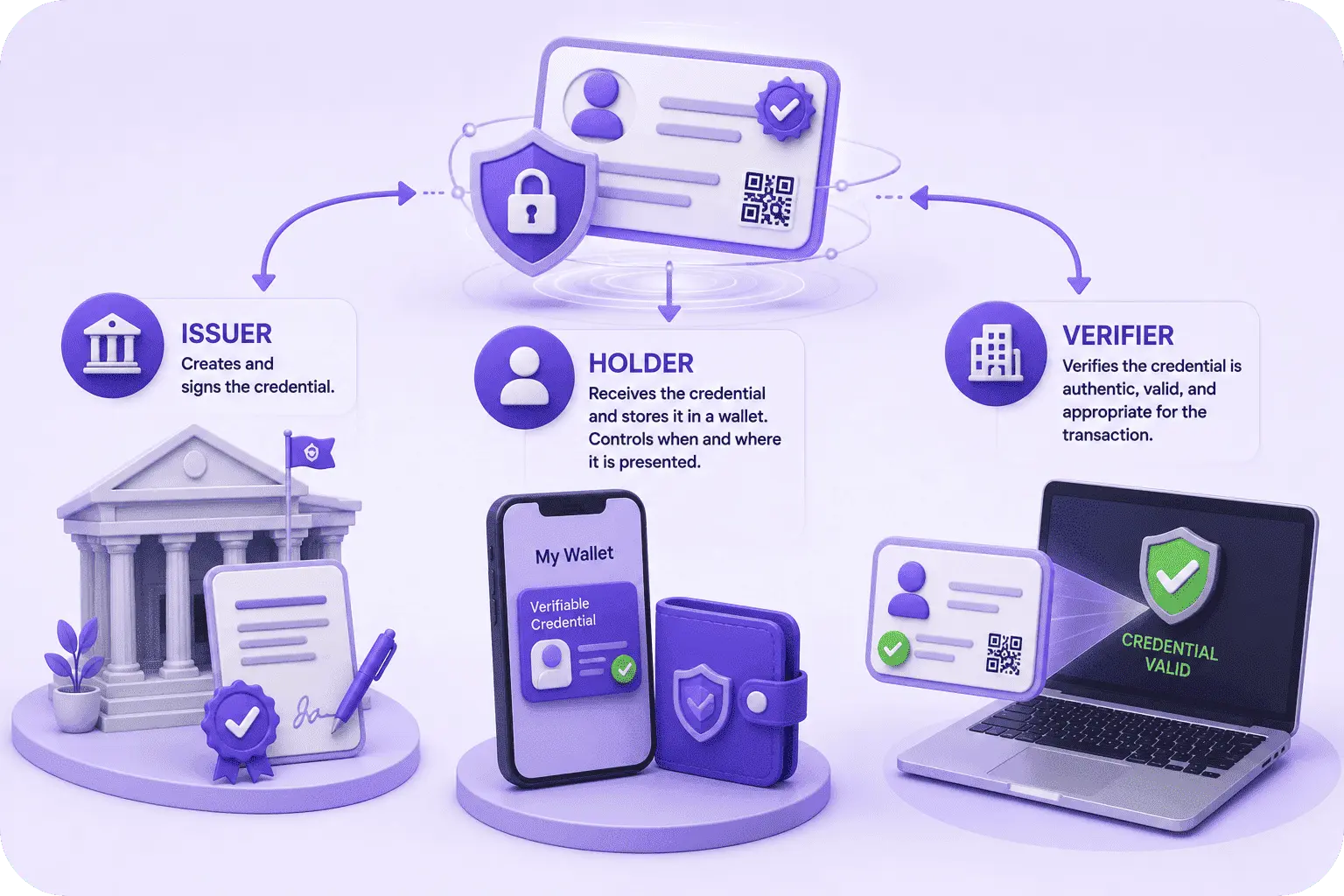
A simplified ecosystem involves three participants:
Issuer
The issuer creates and signs the credential.
This could be a government agency, university, employer, bank, or another trusted institution.
Holder
The holder receives the credential and keeps it in a compatible wallet.
The individual controls when and where the credential is presented, subject to the rules of the ecosystem.
Verifier
The verifier receives the credential or its presentation and checks whether it is authentic, valid, and appropriate for the transaction.
This model can reduce the need for every organization to independently recreate the same identity assertion.
How Decentralized Identity Fits Into the Model
Decentralized identity is often discussed alongside digital identity wallets and verifiable credentials, but the terms are not interchangeable.
A digital identity wallet is a user-facing environment for managing identity information and credentials.
Verifiable credentials are the digital credentials that can be issued and verified.
Decentralized identity describes a broader approach to identity management in which individuals can have greater control over how identity information and credentials are managed and presented, rather than relying entirely on centralized identity databases.
The relationship can therefore be thought of as:
Identity ecosystem → decentralized identity principles → verifiable credentials → wallet-based presentation
The exact architecture depends on the technologies and governance model used by the ecosystem.
This distinction matters because organizations should evaluate the actual trust model instead of assuming that every wallet automatically provides decentralized identity.
Why Privacy Is One of the Biggest Advantages
One of the strongest arguments for digital identity wallets is the possibility of sharing less information.
Traditional verification frequently involves providing an organization with a complete document or a large amount of personal information when only one attribute is necessary.
A wallet-based system can potentially support more precise disclosure.
For example, a service may only need to establish that a person is over a particular age rather than receiving the person’s complete date of birth.
The European Commission specifically highlights the ability of European Digital Identity Wallets to give users greater control over how much information they share and with whom. (European Commission)
This principle can reduce unnecessary data collection and potentially improve privacy.
However, privacy is not automatic.
A wallet ecosystem still needs appropriate governance, credential policies, security controls, revocation mechanisms, and rules governing how verifiers handle the information they receive.
Digital Identity Wallets vs Traditional Identity Verification
Digital identity wallets are not necessarily a replacement for every existing identity verification technology.
Instead, they can change where trust is established and how that trust is reused.
| Area | Traditional Identity Verification | Wallet-Based Identity |
| Identity data | Collected repeatedly by each organization | Reusable credentials can be presented |
| User experience | Repeated document and verification steps | Potentially faster credential presentation |
| Privacy | Often requires broader data collection | Can support more selective disclosure |
| Trust | Established separately by each verifier | Can rely on trusted credential issuers |
| Fraud controls | Document, biometric, database and risk checks | Credential verification plus additional controls |
| Onboarding | Often repeated for each service | Potentially reusable identity evidence |
The important word is potentially.
A digital identity wallet does not automatically make an onboarding process faster or safer. The outcome depends on the ecosystem, credential quality, verifier implementation, fraud controls, and user experience.
Will Digital Identity Wallets Replace Biometric Verification?
Probably not.
Biometrics solve a different problem.
A verifiable credential can provide evidence that an identity attribute was issued by a trusted organization. Biometric verification can help establish whether the person presenting that identity is the legitimate holder.
This creates a powerful combination.
A wallet could hold an identity credential, while a biometric check helps confirm that the individual presenting the wallet credential is the person associated with it.
For businesses building high-assurance onboarding workflows, technologies such as a face recognition SDK can therefore remain relevant even as wallet adoption grows.
The same principle applies to liveness.
If a biometric check is used remotely, a face liveness detection SDK can add protection against attempts to present a photograph, replay, or other artificial biometric sample.
Wallets and biometrics should therefore be viewed as complementary technologies rather than competing solutions.
The Role of Document Verification in a Wallet-Based Ecosystem
A digital identity wallet also does not eliminate the importance of document verification.
There are situations where a credential must first be issued based on an established identity document.
For example, a government or authorized identity provider may need to examine a passport or national ID before issuing a digital credential.
In that context, document recognition can remain an important part of the identity lifecycle even if the end user later presents a digital credential instead of the physical document.
Automated ID document recognition can support the initial establishment of identity, while document liveness capabilities can provide additional protection when the organization needs to establish that a submitted document is genuine and physically present.
This means the move toward digital wallets does not necessarily make traditional identity technologies obsolete.
Instead, their roles may shift earlier in the identity lifecycle.
How Digital Identity Wallets Could Improve Customer Onboarding
Repeated identity verification is a common source of friction in digital customer onboarding.
A user may already have successfully verified their identity with one trusted institution but still be asked to repeat document capture, selfie capture, and verification when opening another account.
A reusable credential model could reduce some of that duplication.
Instead of recreating the entire onboarding process, a verifier may be able to request a trusted credential and validate it.
This could provide benefits such as:
- Faster onboarding
- Less repetitive document submission
- Reduced data collection
- Potentially lower verification friction
- Greater user control over shared information
However, organizations will still need risk-based verification.
A high-value financial transaction, for example, may require additional authentication or biometric checks even if the initial identity credential is valid.
That means digital identity wallets may reduce repetitive onboarding steps without eliminating the wider risk management process.
Security Challenges Digital Identity Wallets Must Address
A wallet can simplify identity management, but it also creates a valuable target.
If an attacker gains control of a user’s wallet or presentation mechanism, they could potentially attempt to misuse legitimate credentials.
Security therefore needs to extend across the complete ecosystem.
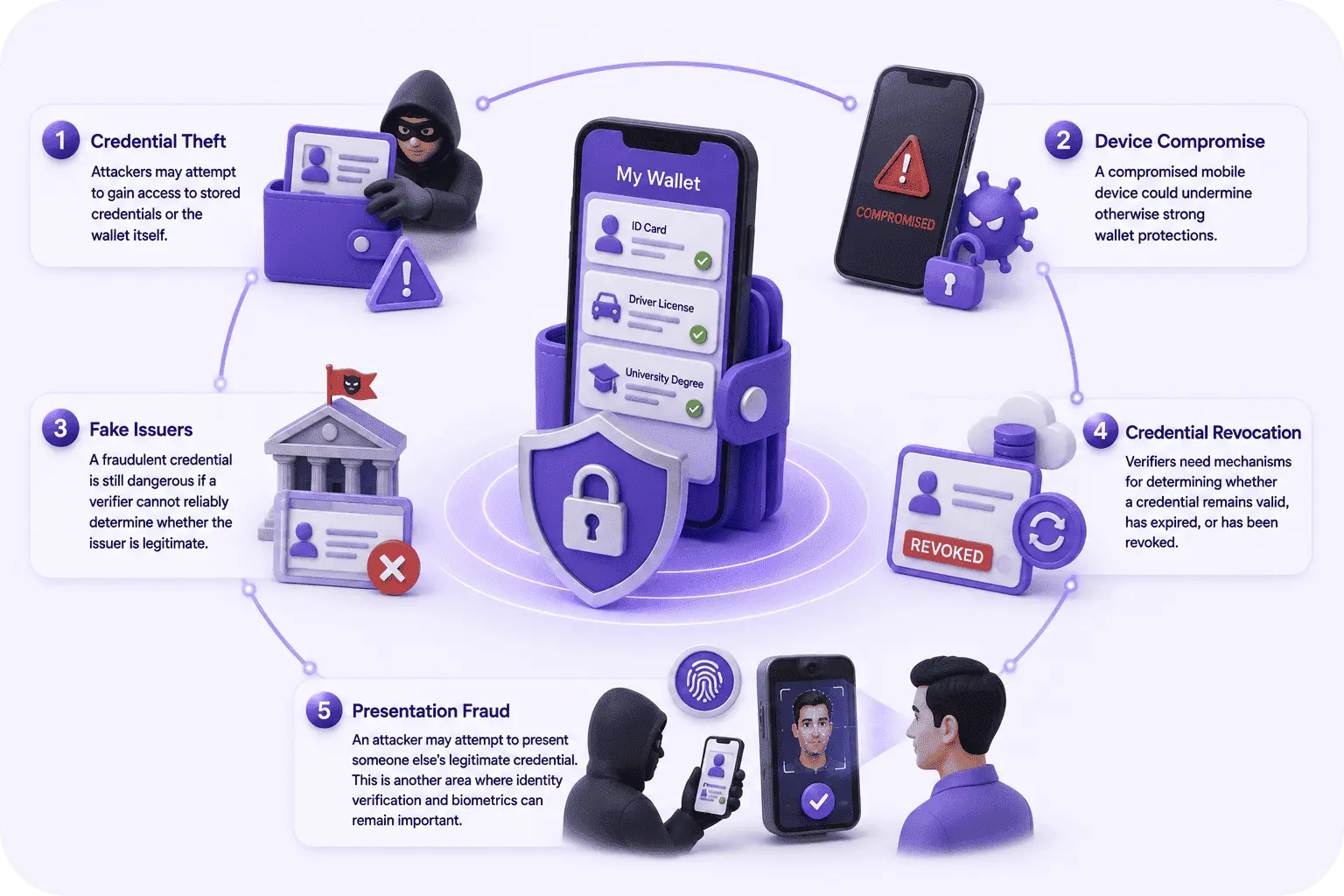
Key concerns include:
Credential Theft
Attackers may attempt to gain access to stored credentials or the wallet itself.
Device Compromise
A compromised mobile device could undermine otherwise strong wallet protections.
Fake Issuers
A fraudulent credential is still dangerous if a verifier cannot reliably determine whether the issuer is legitimate.
Credential Revocation
Verifiers need mechanisms for determining whether a credential remains valid, has expired, or has been revoked.
Presentation Fraud
An attacker may attempt to present someone else’s legitimate credential.
This is another area where identity verification and biometrics can remain important.
A trusted credential answers one question: was this credential legitimately issued?
It does not necessarily answer every question about who is presenting it right now.
What Happens to KYC and Identity Verification?
Digital identity wallets are particularly interesting for industries with repeated identity verification requirements.
Banks, fintech platforms, insurance companies, telecommunications providers, marketplaces, and other regulated businesses may be able to use reusable credentials to simplify parts of customer onboarding.
However, KYC does not disappear.
Organizations still need to establish who their customers are, assess risk, meet applicable regulatory requirements, and monitor relationships where required.
For example, customer due diligence requirements for modern KYC programs remain relevant because establishing identity is only one part of broader financial crime controls.
Likewise, businesses considering digital onboarding should understand how eKYC requirements for fintech platforms interact with newer identity technologies.
Wallets may change the mechanics of identity verification without removing the underlying compliance obligations.
Digital Identity Wallets and the Future of Fraud Prevention
Digital identity wallets could improve fraud prevention by making certain identity attributes harder to fabricate.
A cryptographically verifiable credential can provide stronger evidence than a manually uploaded image, particularly when the issuer and credential status can be independently verified.
But fraud prevention still requires multiple layers.
Attackers may attempt to compromise devices, steal credentials, exploit weak verifier implementations, or manipulate the surrounding application.
This is why modern identity architecture is likely to remain layered.
A future onboarding process could combine:
- Trusted digital credentials
- Credential and issuer verification
- Identity risk assessment
- Biometric verification
- Liveness detection
- Device intelligence
- Fraud monitoring
The exact combination will depend on the risk level and use case.
How Standards Are Shaping the Ecosystem
Interoperability is one of the biggest challenges facing digital identity wallets.
If each organization creates a completely different credential format or wallet architecture, reusable identity becomes difficult.
Standards can help solve this problem.
The W3C’s Verifiable Credentials Data Model 2.0 provides a standardized framework for expressing credentials and exchanging verifiable information. The W3C also describes a three-party model involving issuers, holders, and verifiers. (W3C)
Other ecosystems may use additional standards and trust frameworks.
For enterprises, interoperability matters because the value of a digital identity wallet increases when credentials can be recognized across multiple services.
How Enterprises Should Prepare for Digital Identity Wallets
Organizations do not necessarily need to rebuild their identity infrastructure immediately.
A better approach is to understand where wallet-based credentials could fit into existing workflows.
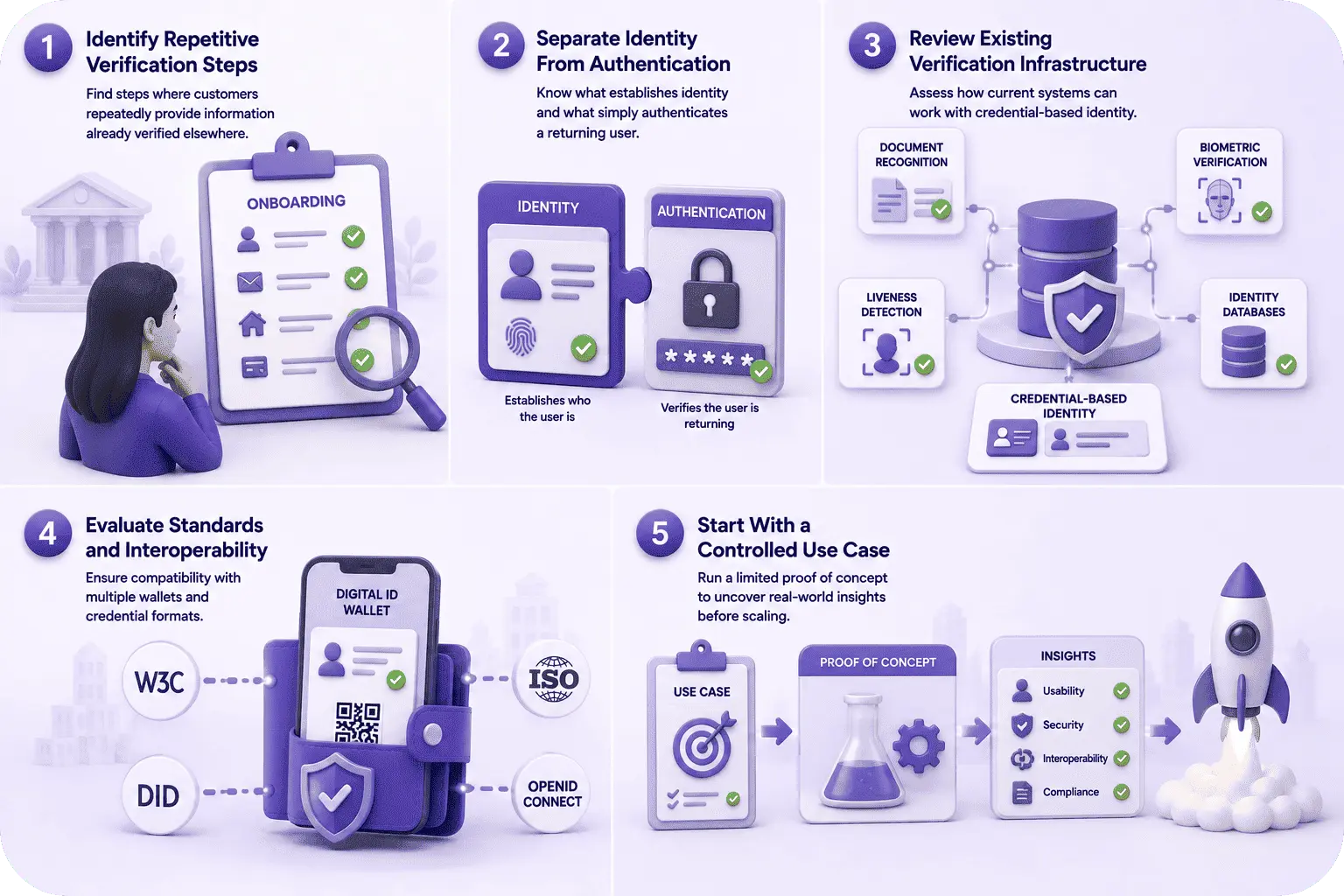
1. Identify Repetitive Verification Steps
Look for parts of onboarding where customers repeatedly provide information that has already been verified elsewhere.
2. Separate Identity From Authentication
Determine which processes establish identity and which processes simply authenticate a returning user.
3. Review Existing Verification Infrastructure
Organizations should assess how document recognition, biometric verification, liveness, and identity databases could interact with credential-based identity.
4. Evaluate Standards and Interoperability
Avoid building a closed system that only works with one wallet or credential format unless there is a specific business reason.
5. Start With a Controlled Use Case
A limited proof of concept can reveal usability, security, interoperability, and compliance issues before a broader rollout.
Development teams can also examine Recognito’s GitHub repository when evaluating how existing biometric technologies could fit into broader identity architectures.
The Future of Digital Identity Verification
Digital identity wallets are likely to change the way identity is presented online, but the transition will not happen overnight.
Adoption depends on several factors, including interoperability, government participation, issuer trust, verifier adoption, consumer experience, security, and regulatory requirements.
The direction is nevertheless becoming clearer.
Identity verification is moving from a model where users repeatedly submit raw identity information toward models where trusted digital credentials can potentially be reused across services.
At the same time, biometric verification remains valuable because digital credentials still need to be connected to the person presenting them in higher-assurance scenarios.
This suggests that the future may not be:
Wallets instead of biometrics
or:
Wallets instead of identity verification
It may instead be:
Wallets + verifiable credentials + biometrics + risk-based verification
That combination could create identity systems that are both more reusable and more privacy-conscious while maintaining strong assurance for higher-risk transactions.
Conclusion
Digital identity wallets have the potential to fundamentally change identity verification by making trusted identity information more reusable, portable, and user-controlled.
Verifiable credentials provide the foundation for expressing identity claims in machine-verifiable formats, while decentralized identity approaches can give individuals greater control over how those credentials are managed and presented.
For enterprises, the biggest opportunity is reducing repetitive identity verification while maintaining trust, security, privacy, and regulatory compliance.
Wallets will not eliminate the need for biometric verification, document recognition, liveness detection, or fraud prevention. Instead, these technologies can work together at different stages of the identity lifecycle.
Organizations evaluating this transition can explore the broader biometric and identity technologies available from Recognito as they consider how digital identity wallets may fit into future verification workflows.
Frequently Asked Questions
What is a digital identity wallet?
A digital identity wallet is a digital environment that allows individuals to store, manage, and present identity information and credentials. Depending on the ecosystem, it can allow users to present verified information to public and private services.
What are verifiable credentials?
Verifiable credentials are structured digital credentials that can be cryptographically secured and machine-verified. They can represent claims such as identity information, qualifications, licenses, or other attributes issued by trusted organizations.
Will digital identity wallets replace traditional identity verification?
Not completely. Wallets can reduce repeated identity checks, but organizations may still need document verification, biometric verification, liveness detection, fraud screening, and risk assessment depending on the use case.
Are digital identity wallets secure?
Security depends on the complete ecosystem, including the wallet, device, credential issuer, cryptographic mechanisms, verifier, credential status, and surrounding application controls. A wallet should not be treated as secure simply because it stores digital credentials.
How will digital identity wallets affect business onboarding?
Wallets could reduce repeated document submission and identity checks by allowing customers to present previously issued credentials. This may reduce friction and data collection, but businesses will still need appropriate identity, risk, compliance, and fraud controls.