
The fintech industry continues to transform how consumers access financial services. From digital banking and lending platforms to payment providers and cryptocurrency exchanges, customers now expect to open accounts, verify identities, and access services within minutes.
This demand for frictionless digital experiences has accelerated the adoption of Electronic Know Your Customer (eKYC) processes.
However, as onboarding becomes increasingly digital, fraudsters are leveraging synthetic identities, deepfake technology, stolen credentials, and document forgery to exploit weaknesses in verification systems.
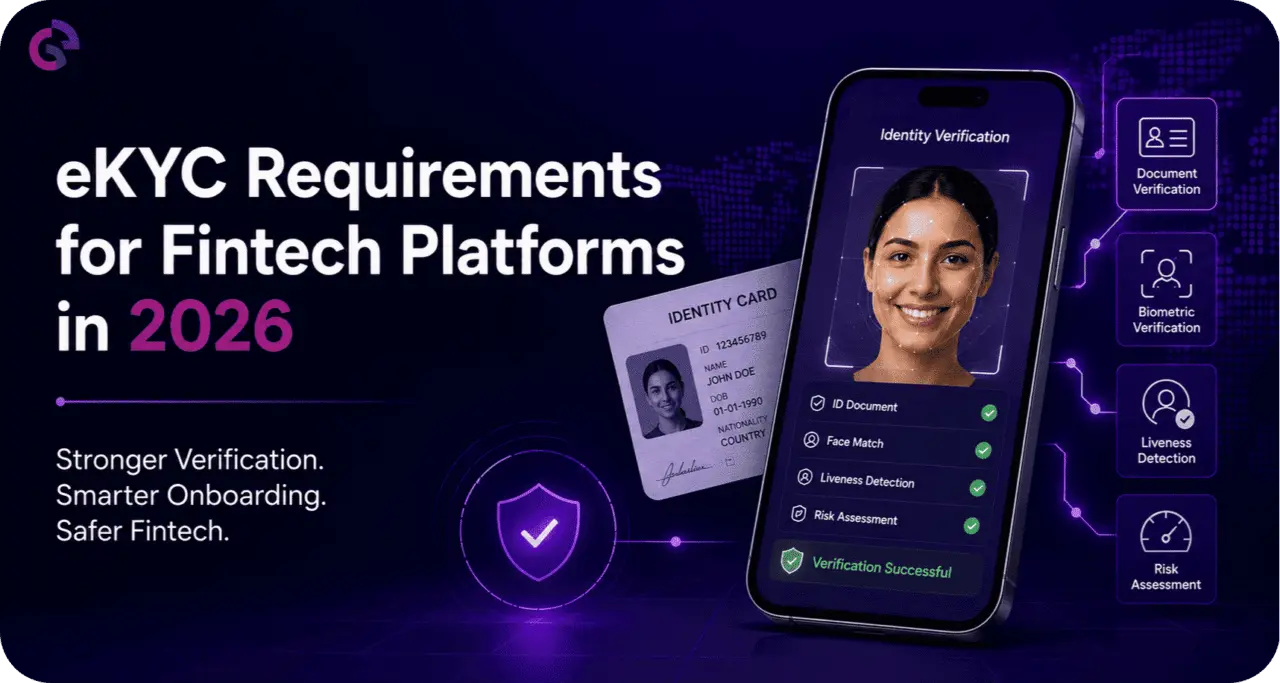
As a result, eKYC requirements for fintech platforms have become significantly more advanced in 2026. Organizations must now balance regulatory compliance, customer experience, fraud prevention, and operational efficiency while maintaining secure onboarding workflows.
Modern fintech platforms increasingly rely on biometric verification, document authentication, liveness detection, and AI-powered fraud prevention technologies to meet these evolving requirements.
What Is eKYC?
Electronic Know Your Customer (eKYC) is the digital process of verifying a customer’s identity during onboarding without requiring an in-person visit.
Instead of manually reviewing physical documents, organizations use technology to verify identities remotely through digital channels.
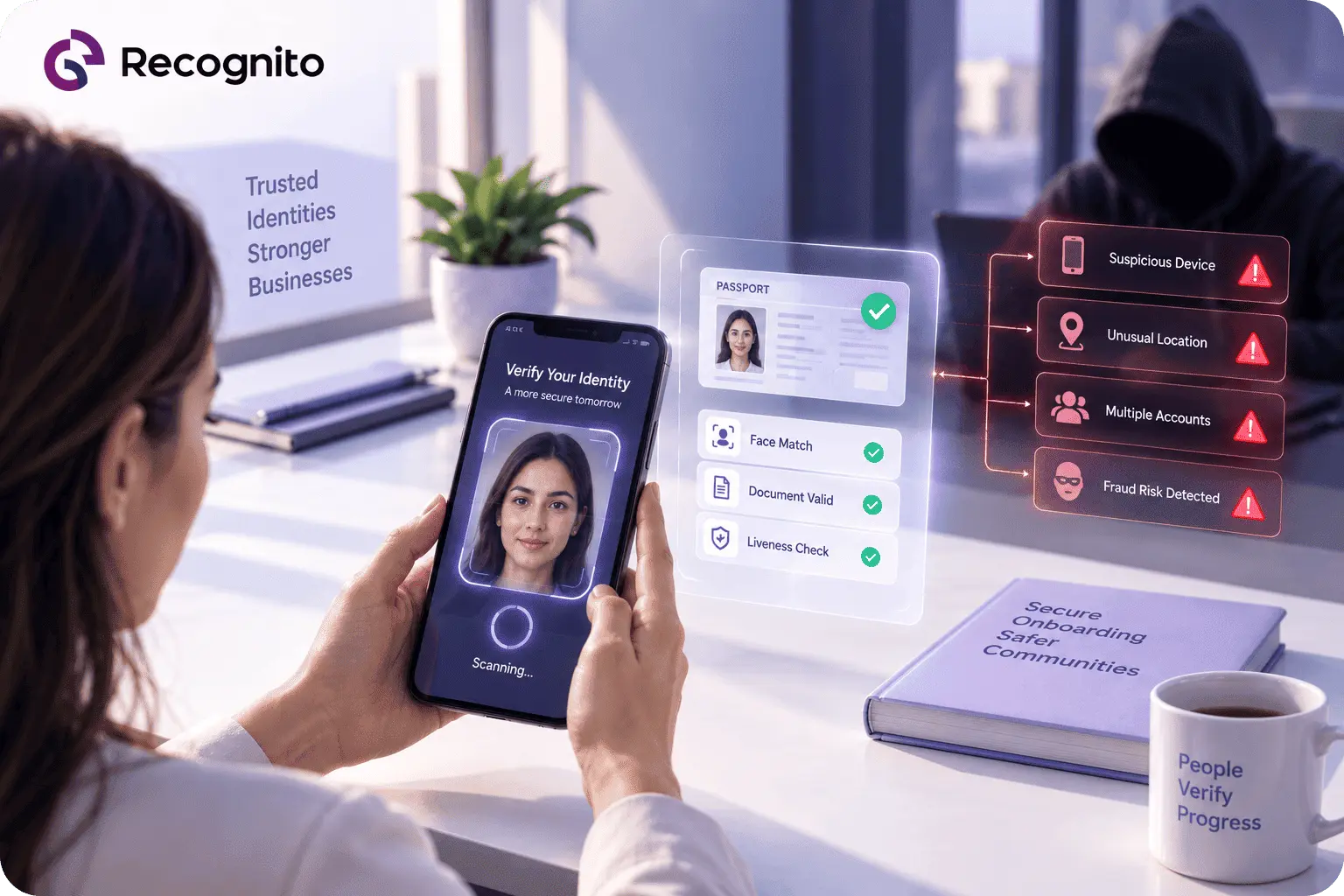
A typical eKYC process may include:
- Identity document verification
- Facial recognition
- Biometric verification
- Liveness detection
- Risk assessment
- Sanctions screening
- Ongoing monitoring
eKYC enables organizations to onboard customers faster while maintaining compliance with KYC and AML regulations.
For businesses implementing digital identity programs, understanding the relationship between identity validation and verification is essential. Our guide on Identity Proofing vs Identity Verification Explained explores these concepts in greater detail.
Why eKYC Is Essential for Fintech Platforms
Traditional onboarding methods often involve manual reviews, physical documentation, and lengthy approval processes.
These approaches are no longer practical for modern fintech companies operating in highly competitive markets.
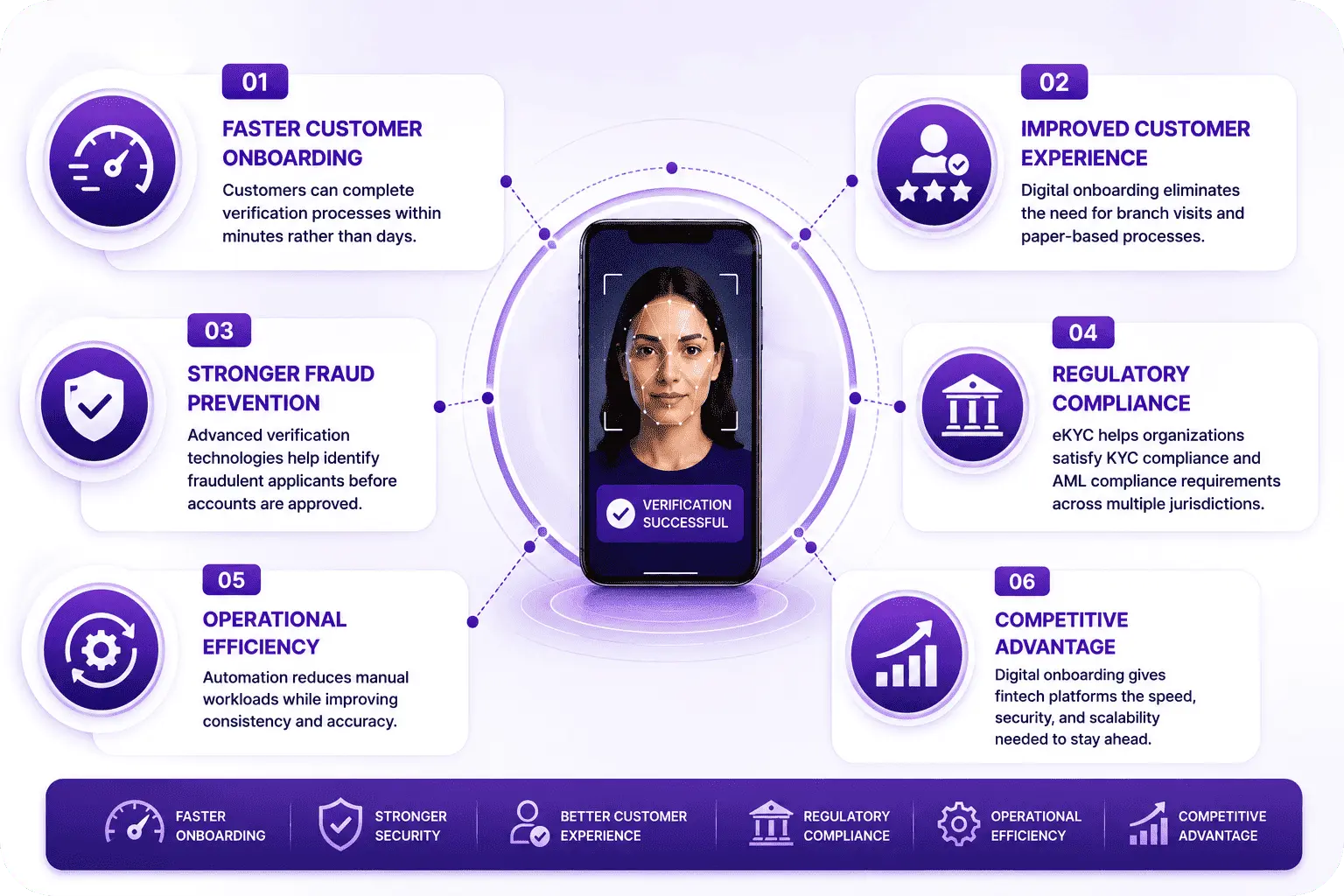
eKYC provides several advantages:
Faster Customer Onboarding
Customers can complete verification processes within minutes rather than days.
Improved Customer Experience
Digital onboarding eliminates the need for branch visits and paper-based processes.
Stronger Fraud Prevention
Advanced verification technologies help identify fraudulent applicants before accounts are approved.
Regulatory Compliance
eKYC helps organizations satisfy KYC compliance and AML compliance requirements across multiple jurisdictions.
Operational Efficiency
Automation reduces manual workloads while improving consistency and accuracy.
These benefits explain why digital onboarding has become a competitive necessity rather than a technological advantage.
Core eKYC Requirements in 2026
Regulators increasingly expect fintech companies to implement multiple verification layers rather than relying on a single authentication method.
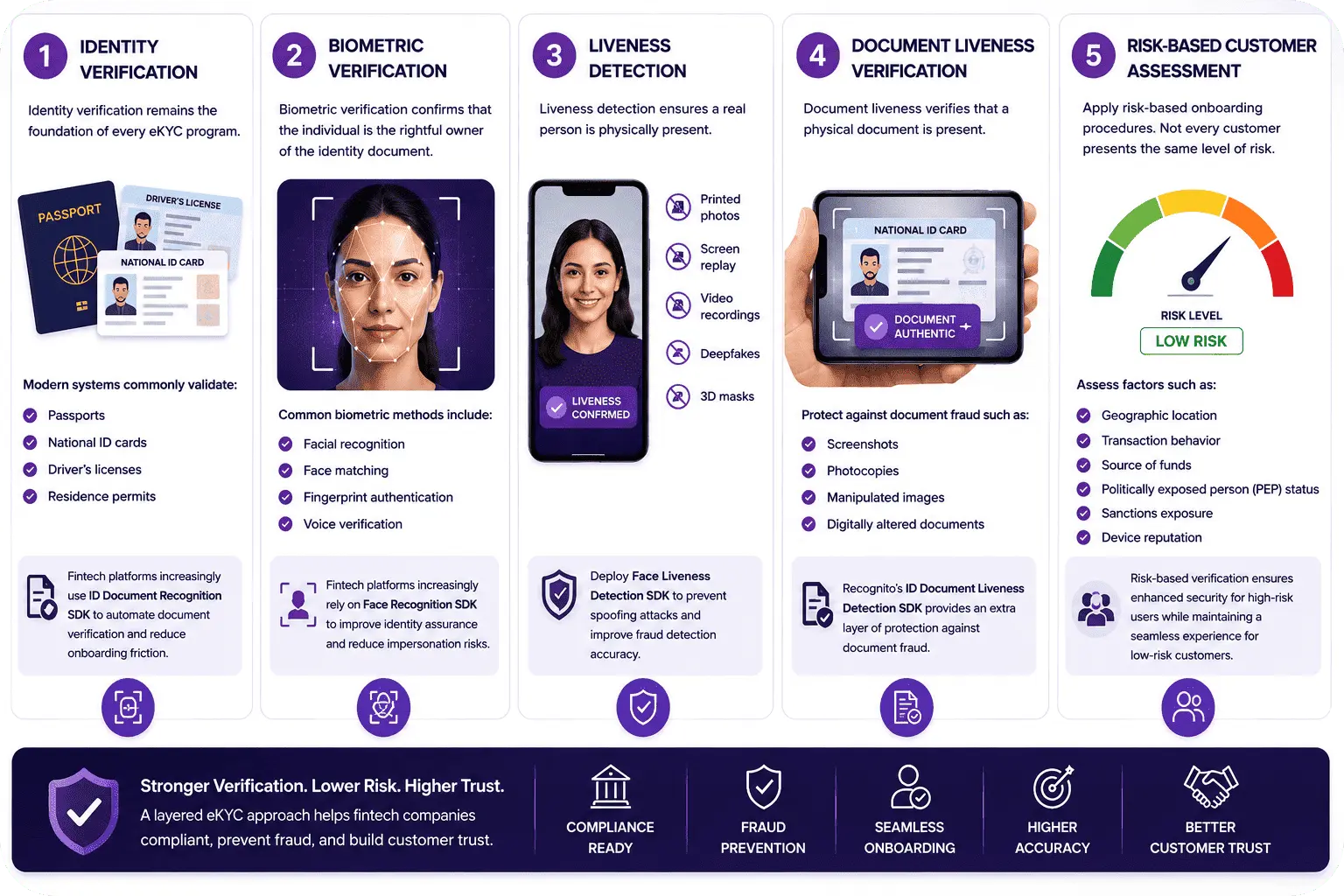
1. Identity Verification
Identity verification remains the foundation of every eKYC program.
Organizations must confirm that customers are who they claim to be before providing access to financial services.
Modern identity verification systems commonly validate:
- Passports
- National ID cards
- Driver’s licenses
- Residence permits
Fintech platforms increasingly use solutions such as ID Document Recognition SDK to automate document verification and reduce onboarding friction.
Organizations that fail to verify identities effectively often experience increased fraud rates, compliance risks, and customer onboarding failures.
2. Biometric Verification
Document verification alone is no longer sufficient.
Fraudsters frequently obtain stolen credentials or create convincing document forgeries.
Biometric verification helps confirm that the individual presenting an identity document is its rightful owner.
Common biometric verification methods include:
- Facial recognition
- Face matching
- Fingerprint authentication
- Voice verification
Modern fintech onboarding platforms increasingly rely on Face Recognition SDK to improve identity assurance and reduce impersonation risks.
Independent testing initiatives such as the NIST Face Recognition Vendor Test (FRVT) continue to demonstrate significant improvements in biometric accuracy across the industry.
3. Liveness Detection
One of the biggest challenges facing fintech onboarding systems is the rise of presentation attacks.
Fraudsters attempt to bypass verification processes using:
- Printed photographs
- Screen replay attacks
- Video recordings
- Deepfakes
- 3D masks
Liveness detection helps determine whether a real person is physically present during verification.
Organizations increasingly deploy Face Liveness Detection SDK to prevent spoofing attacks and improve fraud detection accuracy.
For a detailed comparison of current liveness technologies, see our article on Active vs Passive Liveness Detection.
4. Document Liveness Verification
Document fraud remains a major challenge in digital onboarding.
Criminals frequently submit:
- Screenshots
- Photocopies
- Manipulated images
- Digitally altered documents
Document liveness verification helps determine whether a physical document is present during the onboarding process.
Recognito’s ID Document Liveness Detection SDK provides an additional layer of protection against document fraud.
Organizations seeking stronger onboarding controls should also review Why Document Liveness Detection Is Essential for KYC Verification.
5. Risk-Based Customer Assessment
Regulators increasingly expect fintech companies to apply risk-based onboarding procedures.
Not every customer presents the same level of risk.
Organizations typically assess factors such as:
- Geographic location
- Transaction behavior
- Source of funds
- Politically exposed person (PEP) status
- Sanctions exposure
- Device reputation
Risk-based verification allows organizations to apply enhanced verification measures where necessary while maintaining efficient onboarding for lower-risk customers.
Emerging Fraud Challenges Affecting eKYC
The threat landscape continues to evolve rapidly.
Synthetic Identity Fraud
Synthetic identities combine genuine and fabricated information to create fraudulent customer profiles.
These identities can often bypass weak onboarding controls.
Organizations looking to strengthen fraud prevention should review our article on How Financial Institutions Detect Synthetic Identity Fraud.
Deepfake Attacks
AI-generated deepfakes have become increasingly realistic.
Modern eKYC programs must incorporate liveness detection and biometric verification to defend against these attacks.
Additional guidance is available in our article on Deepfake Attack Prevention Strategies.
Account Takeover Fraud
Criminals increasingly target existing customer accounts using stolen credentials and social engineering techniques.
Continuous verification and behavioral analytics help reduce these risks.
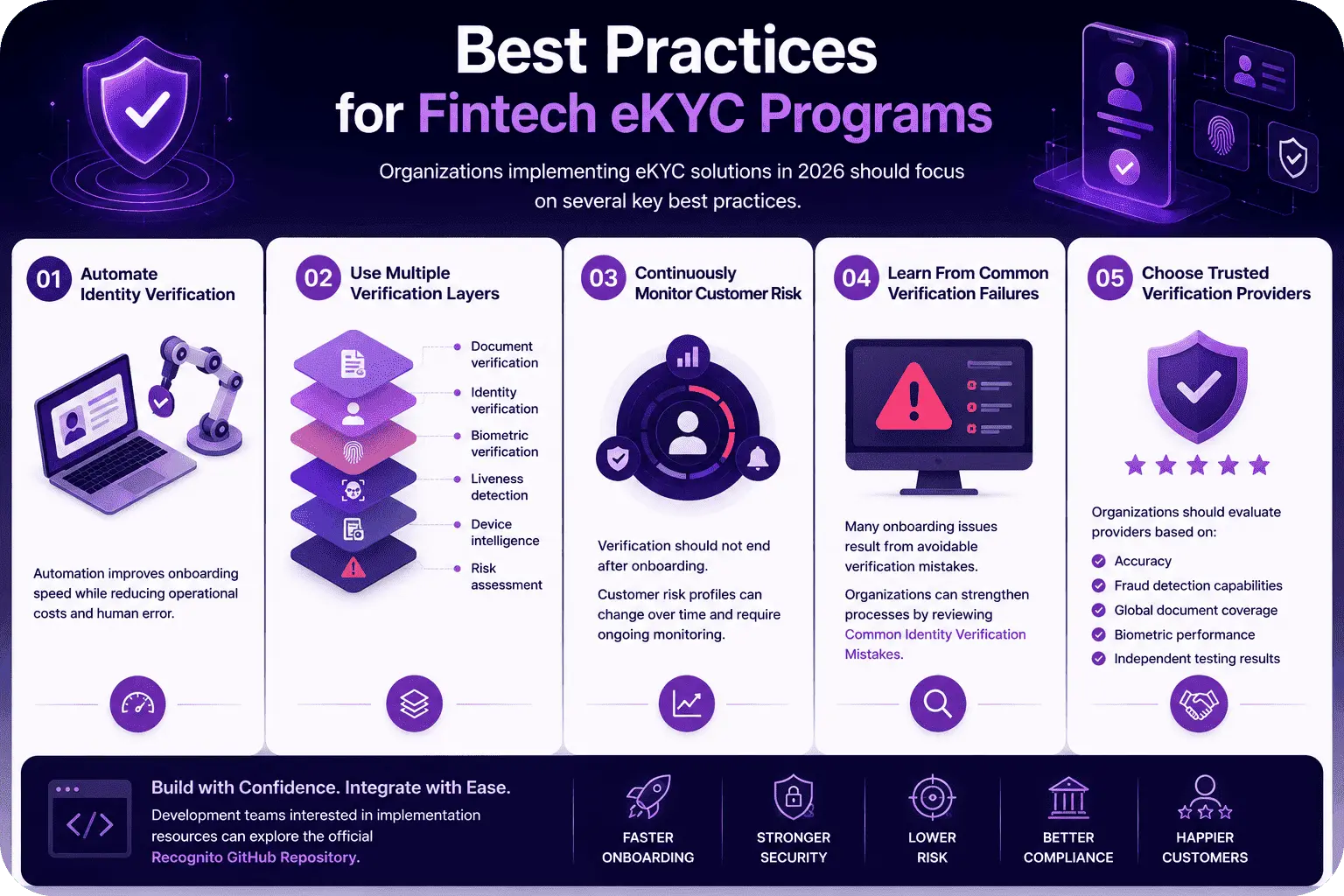
Best Practices for Fintech eKYC Programs
Organizations implementing eKYC solutions in 2026 should focus on several key best practices.
1. Automate Identity Verification
Automation improves onboarding speed while reducing operational costs and human error.
2. Use Multiple Verification Layers
The strongest eKYC programs combine:
- Document verification
- Identity verification
- Biometric verification
- Liveness detection
- Device intelligence
- Risk assessment
3. Continuously Monitor Customer Risk
Verification should not end after onboarding.
Customer risk profiles can change over time and require ongoing monitoring.
4. Learn From Common Verification Failures
Many onboarding issues result from avoidable verification mistakes. Organizations can strengthen processes by reviewing Common Identity Verification Mistakes.
5. Choose Trusted Verification Providers
Organizations should evaluate providers based on:
- Accuracy
- Fraud detection capabilities
- Global document coverage
- Biometric performance
- Independent testing results
Development teams interested in implementation resources can explore the official Recognito GitHub Repository.
Regulatory Considerations for eKYC in 2026
Fintech companies must comply with evolving regulatory frameworks across multiple jurisdictions.
Key compliance areas include:
- KYC compliance
- AML compliance
- Customer identification requirements
- Data protection regulations
- Sanctions screening obligations
Organizations operating internationally should align their onboarding processes with regulations such as the General Data Protection Regulation (GDPR).
Global standards published by the Financial Action Task Force (FATF) continue to influence regulatory expectations worldwide.
The Future of eKYC
The future of eKYC will be shaped by increasing automation and AI-driven decision-making.
Emerging trends include:
- Continuous identity verification
- Passive liveness detection
- Behavioral biometrics
- AI-powered fraud scoring
- Real-time risk intelligence
- Decentralized identity solutions
Organizations that invest in these technologies today will be better positioned to meet future compliance and fraud prevention challenges.
Conclusion
eKYC has become a critical component of digital onboarding for fintech platforms in 2026. Regulatory expectations, fraud risks, and customer demands continue to evolve, requiring organizations to implement more sophisticated verification frameworks.
By combining identity verification, biometric verification, liveness detection, document authentication, and risk-based assessment, fintech companies can strengthen compliance, improve fraud prevention, and create a seamless onboarding experience for legitimate customers.
Advanced solutions such as Recognito identity verification and biometric technologies provide fintech organizations with the tools needed to meet modern eKYC requirements while maintaining security and operational efficiency.
Frequently Asked Questions
What is eKYC?
eKYC, or Electronic Know Your Customer, is the digital process of verifying customer identities remotely through online channels.
Why is eKYC important for fintech platforms?
eKYC helps fintech companies onboard customers faster, improve compliance, reduce fraud, and enhance customer experience.
What technologies are commonly used in eKYC?
Modern eKYC systems commonly use document verification, facial recognition, biometric verification, liveness detection, and risk assessment technologies.
How does liveness detection improve eKYC?
Liveness detection verifies that a real person is physically present during onboarding and helps prevent spoofing attacks involving photos, videos, and deepfakes.
What regulations affect eKYC programs?
eKYC programs are influenced by KYC regulations, AML requirements, FATF recommendations, GDPR requirements, and local financial regulations.
How can fintech companies improve digital onboarding security?
Fintech companies can improve onboarding security by combining document verification, biometric verification, liveness detection, fraud analytics, and continuous monitoring.