
As digital services become the standard across banking, fintech, healthcare, telecommunications, and online marketplaces, organizations face an increasingly important challenge: verifying that customers are genuinely who they claim to be.
A secure onboarding process is no longer just a compliance requirement; it is a critical component of fraud prevention, customer trust, and business growth.
Two concepts play a central role in modern digital onboarding: identity proofing and identity verification. Although these terms are often used interchangeably, they serve different purposes within a digital identity ecosystem.
Understanding the difference between identity proofing and identity verification can help organizations build stronger onboarding processes, reduce fraud risk, and improve regulatory compliance while maintaining a smooth customer experience.
What Is Identity Proofing?
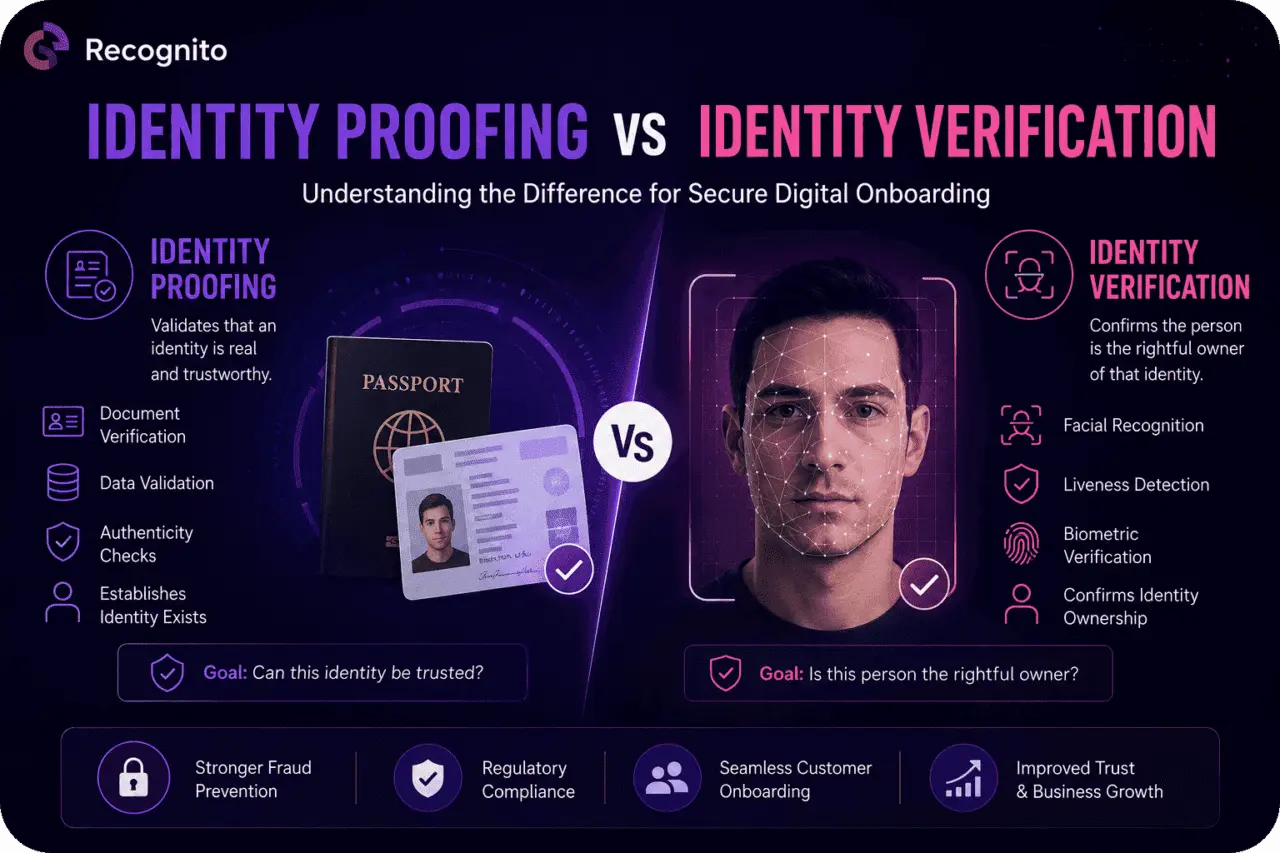
Identity proofing is the process of establishing that a claimed identity belongs to a real person.
Before granting access to a service, businesses need to determine whether the identity information provided by an applicant is authentic and trustworthy. Identity proofing focuses on validating identity evidence such as government-issued documents and supporting data sources.
The primary objective is simple:
Can this identity be trusted?
During identity proofing, organizations typically evaluate:
- Government-issued identity documents
- Passport information
- Driver’s licenses
- National ID cards
- Address information
- Phone numbers
- Email addresses
- Database records
For example, when a customer submits a passport during account creation, the onboarding system analyzes the document’s authenticity, security features, and consistency with other submitted information.
Solutions such as Recognito’s ID Document Recognition SDK help organizations automate this process by validating identity documents from around the world.
Identity proofing is often the first step in customer onboarding because it establishes whether the identity itself is legitimate.
Organizations implementing digital identity systems frequently align their processes with the NIST Digital Identity Guidelines, which provide internationally recognized standards for identity proofing and assurance.
What Is Identity Verification?
Identity verification occurs after identity proofing.
While identity proofing determines whether an identity is legitimate, identity verification confirms that the person presenting that identity is its rightful owner.
This distinction is extremely important.
A fraudster may possess a genuine identity document, but that does not necessarily mean they are the legitimate owner of that document.
Identity verification answers the question:
Is this person actually the owner of the identity being presented?
Modern identity verification commonly relies on:
- Facial recognition
- Biometric verification
- Face matching
- Liveness detection
- Multi-factor authentication
- One-time passcodes
- Behavioral analysis
For example, after a passport is verified, the customer may be asked to take a selfie. Facial recognition technology then compares the live image with the passport photograph.
Organizations increasingly use technologies such as Recognito’s Face Recognition SDK to perform highly accurate biometric verification during customer onboarding.
Independent testing through the NIST Face Recognition Vendor Test (FRVT) continues to demonstrate the growing accuracy and reliability of modern facial recognition systems.
Identity Proofing vs Identity Verification: What’s the Difference?
Although both processes contribute to digital trust, they address different security challenges.
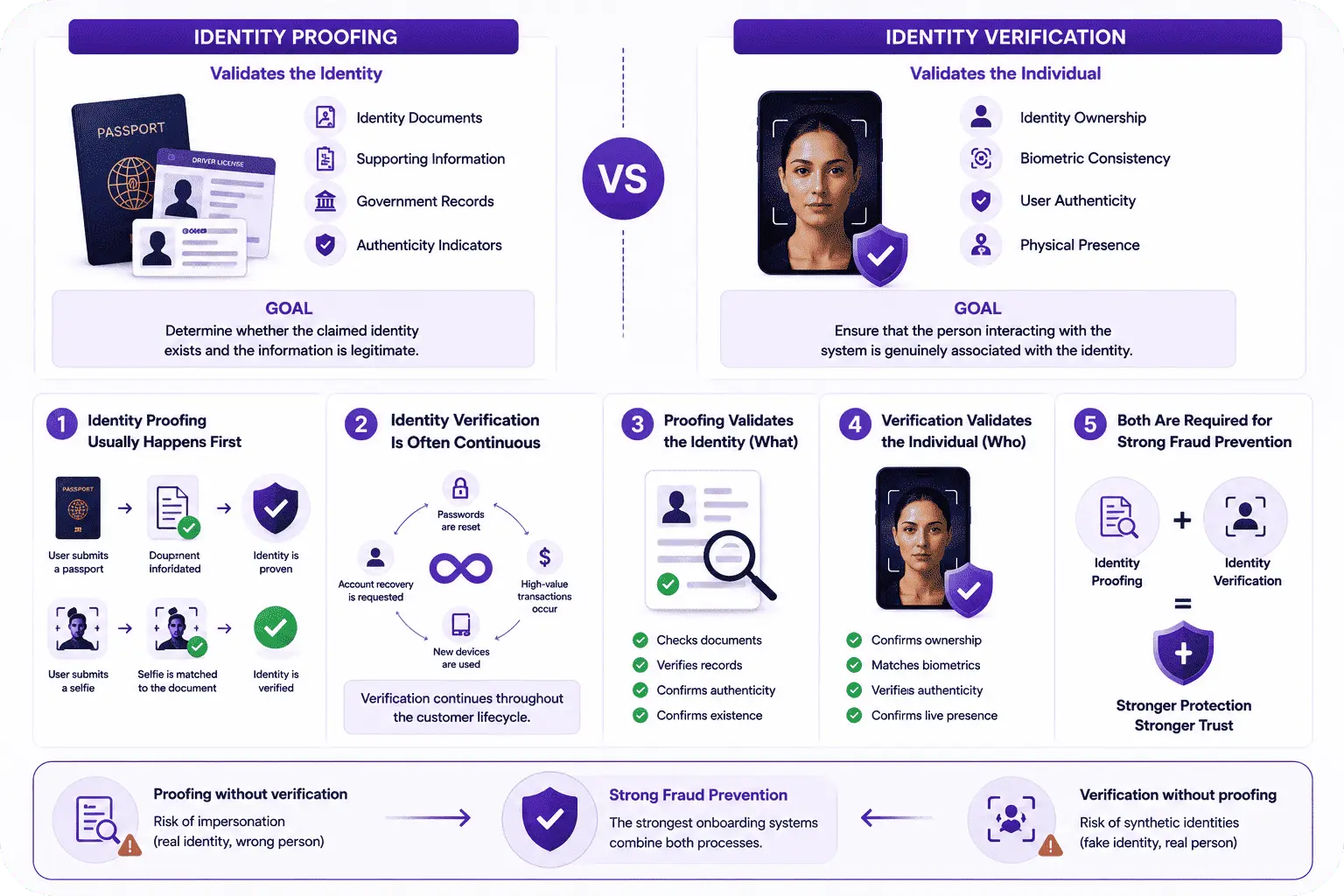
1. Identity Proofing Validates the Identity
Identity proofing focuses on the identity itself.
The process examines:
- Identity documents
- Supporting information
- Government records
- Authenticity indicators
The goal is to determine whether the claimed identity exists and whether the information provided is legitimate.
2. Identity Verification Validates the Individual
Identity verification focuses on the person presenting the identity.
The process confirms:
- Identity ownership
- Biometric consistency
- User authenticity
- Physical presence
The goal is to ensure that the person interacting with the system is genuinely associated with the verified identity.
3. Identity Proofing Usually Happens First
Most onboarding workflows begin with identity proofing.
Before verifying a person’s identity, organizations must first determine whether the identity itself is valid.
For example:
- The user submits a passport.
- The document is validated.
- The identity is proven.
- The user submits a selfie.
- The selfie is matched to the document.
- The identity is verified.
4. Identity Verification Is Often Continuous
Identity proofing typically occurs once during onboarding.
Identity verification may continue throughout the customer lifecycle.
For example, banks may periodically re-verify users when:
- Passwords are reset
- High-value transactions occur
- New devices are used
- Account recovery is requested
5. Both Are Required for Strong Fraud Prevention
Identity proofing without identity verification leaves organizations vulnerable to impersonation attacks.
Identity verification without identity proofing leaves organizations vulnerable to synthetic identities and fraudulent documents.
The strongest onboarding systems combine both processes.
Why Identity Proofing Matters in Customer Onboarding
Customer onboarding is one of the highest-risk stages of the customer lifecycle.
Fraudsters often attempt to exploit weaknesses during account creation because verification controls are not always mature.
Strong identity proofing helps organizations:
- Detect fraudulent applications
- Prevent synthetic identity fraud
- Reduce compliance risks
- Improve KYC processes
- Protect customer accounts
Businesses that rely solely on manual reviews often struggle to scale onboarding efficiently.
Automated identity proofing technologies allow organizations to verify customers quickly while maintaining security standards.
Financial institutions can also benefit from understanding common onboarding failures discussed in Recognito’s guide on Common Identity Verification Mistakes.
Why Identity Verification Is Essential for Fraud Prevention
Identity verification plays a critical role in protecting organizations against impersonation attacks.
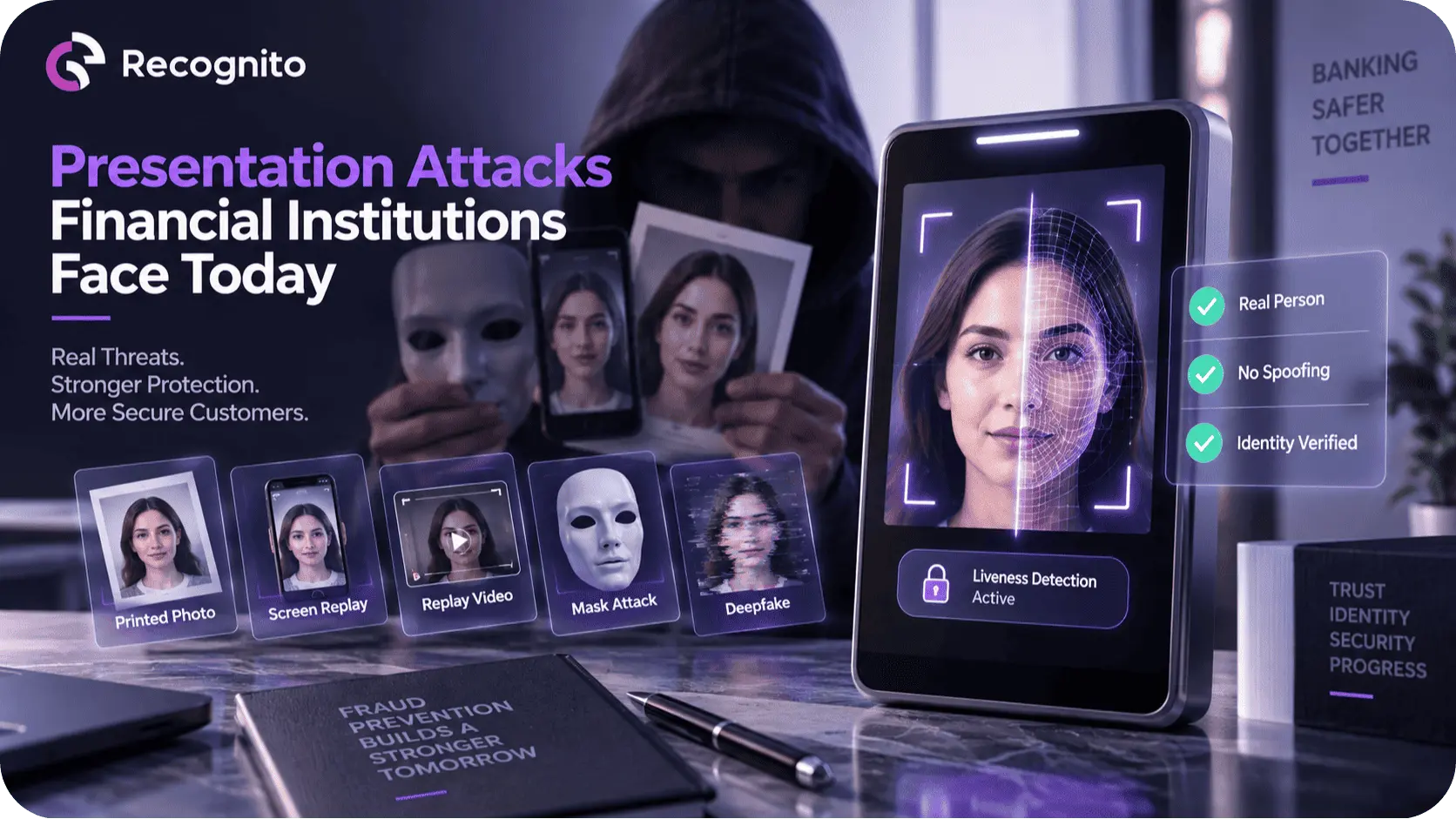
Modern fraudsters use increasingly sophisticated methods, including:
- Deepfakes
- Stolen identity documents
- Screen replay attacks
- Printed photographs
- AI-generated facial imagery
To address these threats, organizations increasingly implement biometric verification technologies.
1. Facial Recognition
Facial recognition compares a user’s live image with a verified identity document.
This process helps ensure that the person presenting the identity is its legitimate owner.
Businesses seeking highly accurate facial recognition capabilities often evaluate solutions based on independent benchmark testing such as the NIST FRVT rankings.
2. Face Liveness Detection
Face matching alone is no longer sufficient.
Fraudsters frequently attempt to bypass verification systems using photos, videos, and deepfakes.
Modern onboarding workflows increasingly rely on Recognito’s Face Liveness Detection SDK to verify that a real person is physically present during verification.
Organizations interested in this topic can also explore our guide on Active vs Passive Liveness Detection.
3. Behavioural Analysis
Behavioural analytics evaluates how users interact with devices and applications.
Suspicious behaviour patterns can indicate fraud even when identity documents appear legitimate.
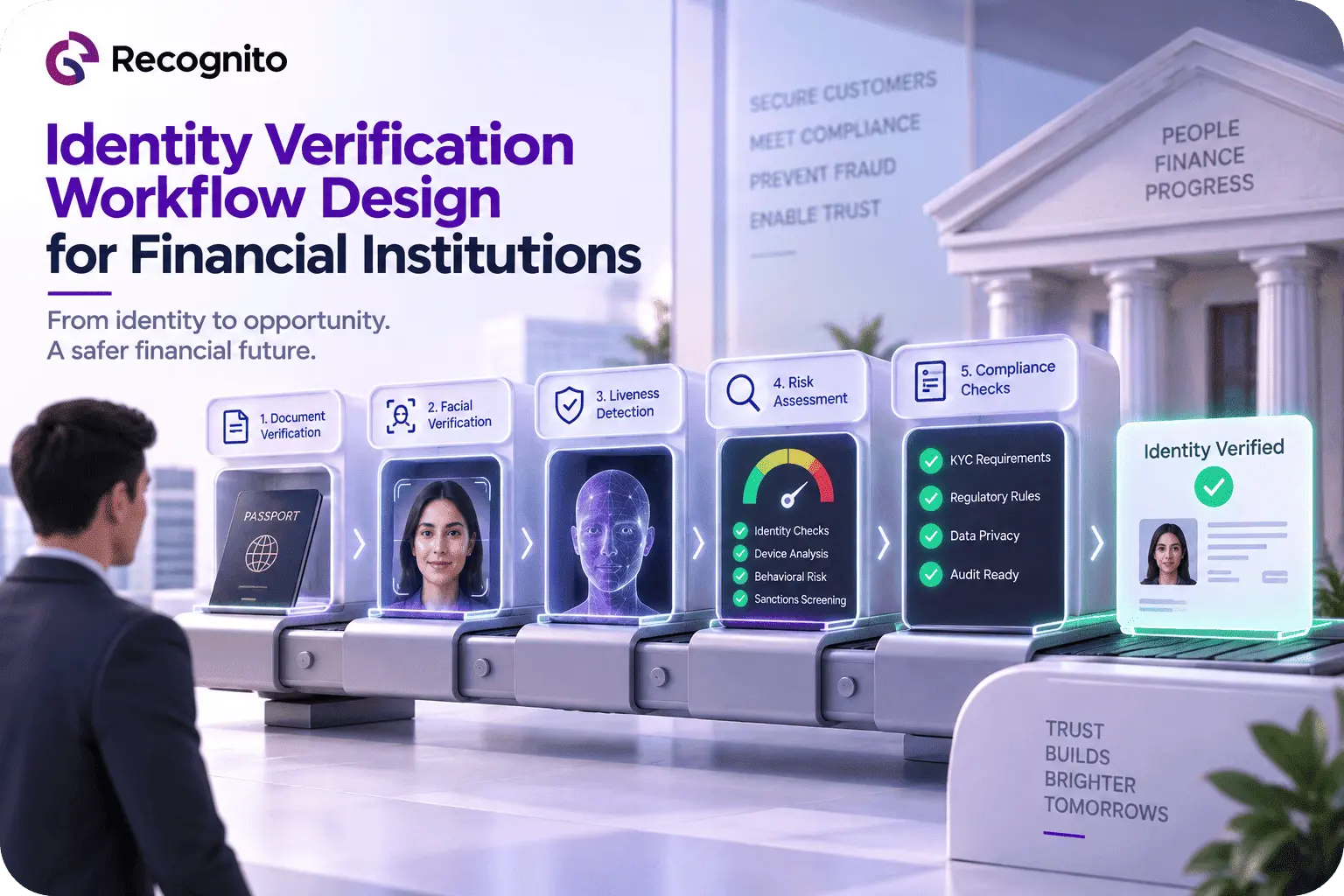
How Digital Identity Verification Works
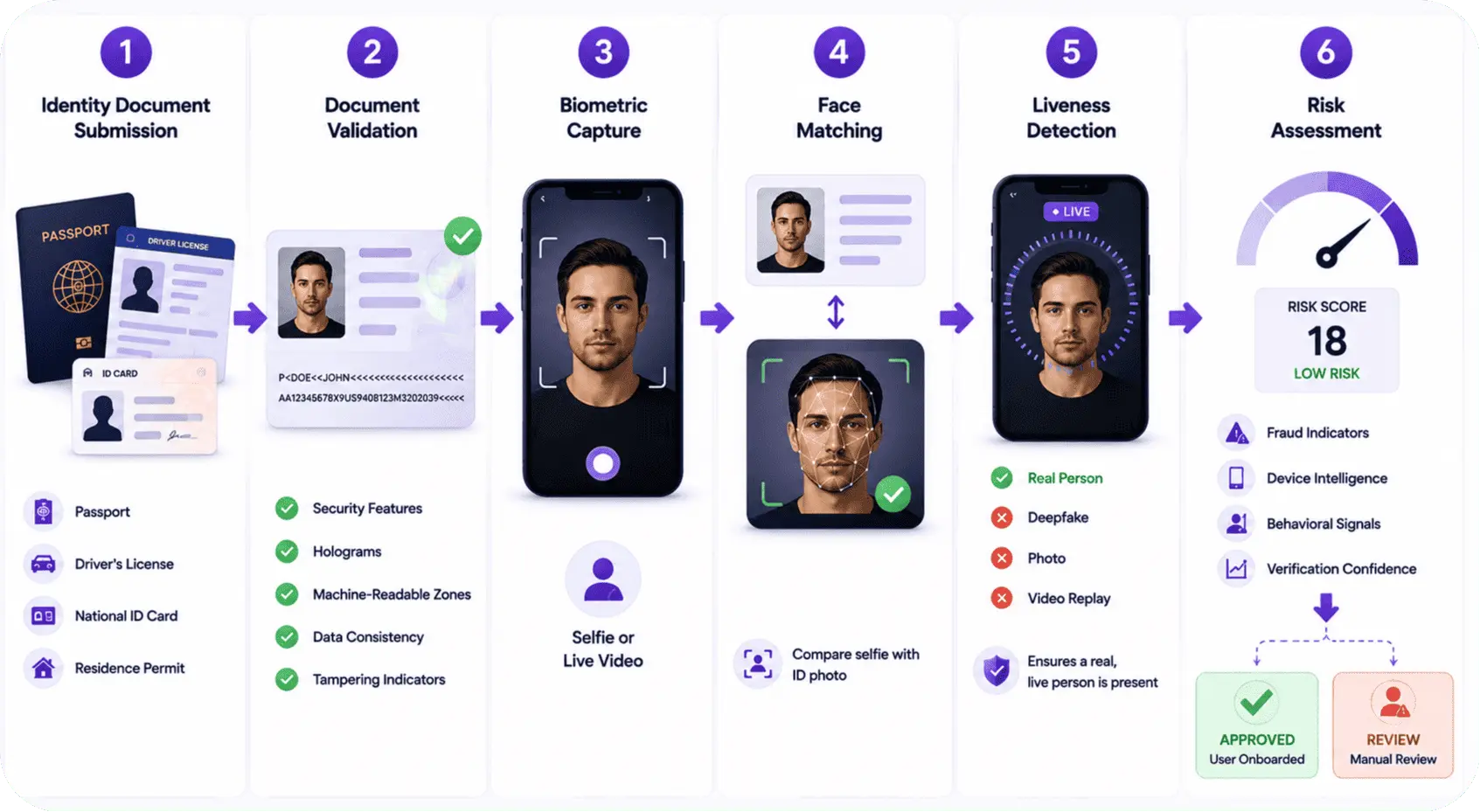
Modern digital identity verification combines identity proofing and identity verification into a single workflow.
Step 1: Identity Document Submission
The user uploads:
- Passport
- Driver’s license
- National ID card
- Residence permit
Step 2: Document Validation
The system validates:
- Security features
- Holograms
- Machine-readable zones
- Data consistency
- Tampering indicators
Organizations can automate this process using technologies such as the ID Document Recognition SDK.
Step 3: Biometric Capture
The user provides a selfie or live video.
Step 4: Face Matching
The biometric image is compared with the identity document photograph.
Step 5: Liveness Detection
The system verifies that a real person is present and not a spoofing attempt.
Organizations implementing secure onboarding workflows frequently combine facial matching with ID Document Liveness Detection to strengthen fraud prevention.
Step 6: Risk Assessment
The onboarding platform evaluates:
- Fraud indicators
- Device intelligence
- Behavioral signals
- Verification confidence scores
A final decision is then generated.
Emerging Challenges in Identity Verification
The digital identity landscape continues to evolve.
Organizations must prepare for several emerging challenges.
1. Synthetic Identity Fraud
Synthetic identities combine real and fabricated information to create fraudulent accounts.
Businesses can reduce exposure by combining identity proofing, biometric verification, and fraud analytics.
2. Deepfake Attacks
AI-generated deepfakes are becoming increasingly realistic.
Organizations should incorporate liveness detection and deepfake detection technologies into onboarding workflows.
For additional insights, read our article on Deepfake Attack Prevention Strategies.
3. Global Compliance Requirements
Businesses operating internationally must comply with evolving regulations across multiple jurisdictions.
Frameworks such as the General Data Protection Regulation (GDPR) continue to shape how organizations collect, process, and store identity data.
Best Practices for Identity Proofing and Identity Verification
Organizations looking to improve customer onboarding should consider the following best practices.
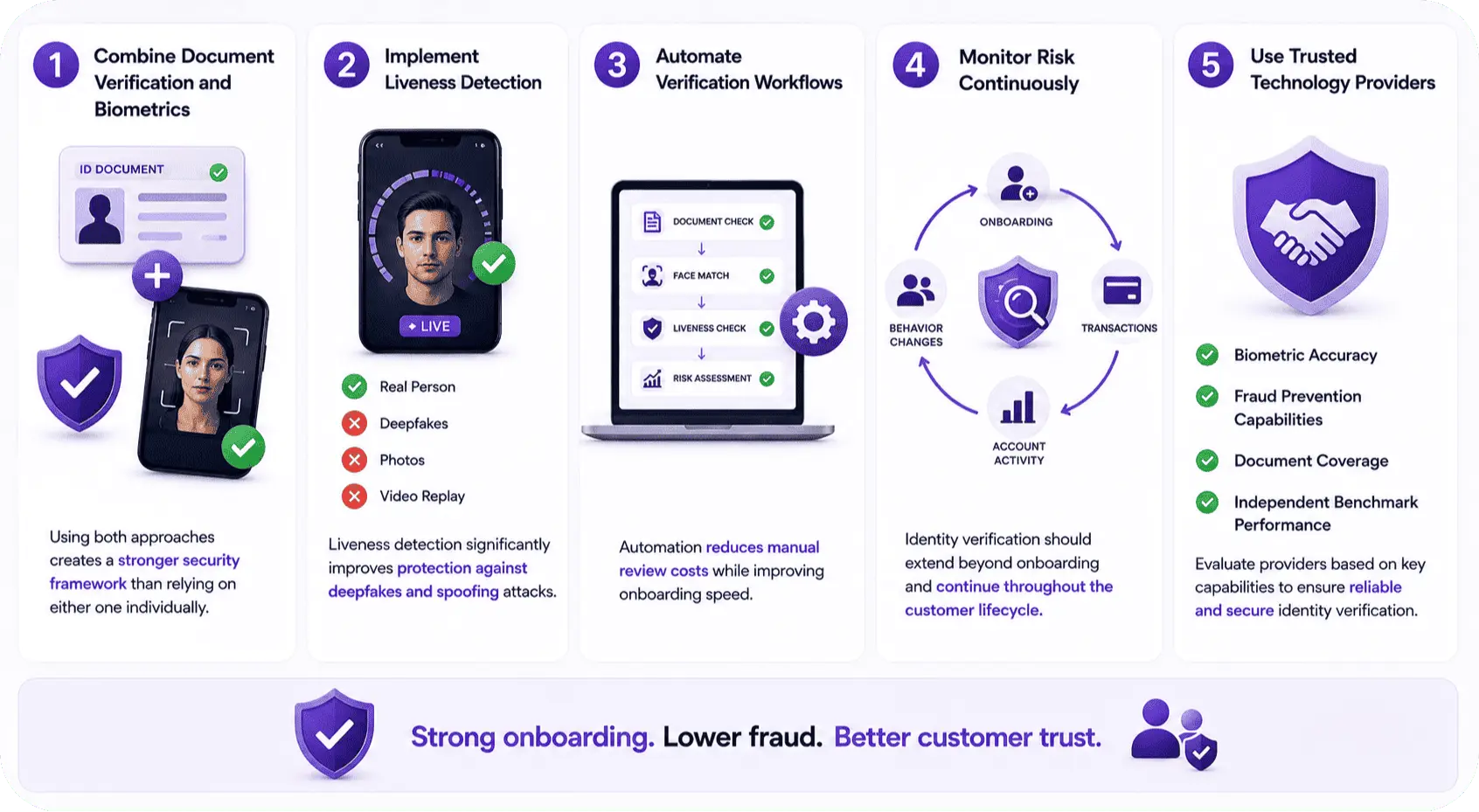
1. Combine Document Verification and Biometrics
Using both approaches creates a stronger security framework than relying on either one individually.
2. Implement Liveness Detection
Liveness detection significantly improves protection against deepfakes and spoofing attacks.
3. Automate Verification Workflows
Automation reduces manual review costs while improving onboarding speed.
4. Monitor Risk Continuously
Identity verification should extend beyond onboarding and continue throughout the customer lifecycle.
5. Use Trusted Technology Providers
Organizations should evaluate providers based on biometric accuracy, fraud prevention capabilities, document coverage, and independent benchmark performance.
Development teams interested in biometric implementation resources can also explore the official Recognito GitHub repository.
Conclusion
Identity proofing and identity verification are both essential components of modern customer onboarding. While identity proofing establishes that an identity is legitimate, identity verification confirms that the individual presenting that identity is its rightful owner.
Organizations that combine document validation, biometric verification, facial recognition, liveness detection, and continuous risk assessment are significantly better positioned to prevent fraud and maintain regulatory compliance.
As digital onboarding continues to expand across industries, technologies such as Recognito facial recognition, liveness detection, and document verification solutions provide the foundation for secure, scalable, and user-friendly identity verification processes.
Frequently Asked Questions
What is identity proofing?
Identity proofing is the process of validating that a claimed identity belongs to a real person using documents, databases, and supporting evidence.
What is identity verification?
Identity verification confirms that the person presenting an identity credential is the legitimate owner of that identity.
What is the difference between identity proofing and identity verification?
Identity proofing validates the identity itself, while identity verification validates the individual claiming that identity.
Why are identity proofing and identity verification important?
Together, they help prevent fraud, improve compliance, strengthen customer onboarding, and build trust in digital services.
How does biometric verification support identity verification?
Biometric verification uses characteristics such as facial recognition and liveness detection to confirm identity ownership.
Can identity proofing prevent synthetic identity fraud?
Identity proofing helps identify fraudulent identities, but the strongest protection comes from combining identity proofing with biometric verification and ongoing fraud monitoring.